Choosing microbrewery equipment brewery machinery requires more than comparing tank volume or the lowest quotation. A scalable brewery needs a sanitary process path from brewhouse to cellar, utilities that match the site, and controls that operators can maintain. This guide gives buyers a practical framework for comparing complete systems.
Define the production target first
Record target batch size, brews per week, beer styles, peak packaging demand and future expansion. Separate nominal brewhouse volume from pre-boil volume, finished transfer volume and fermenter capacity. This prevents a system that looks large on a brochure from becoming a bottleneck in the cellar.
Map the complete equipment package
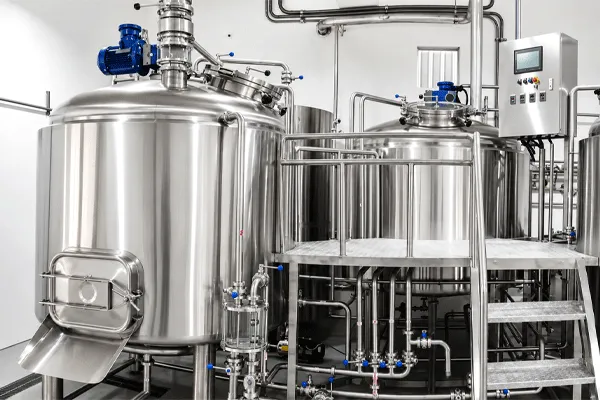
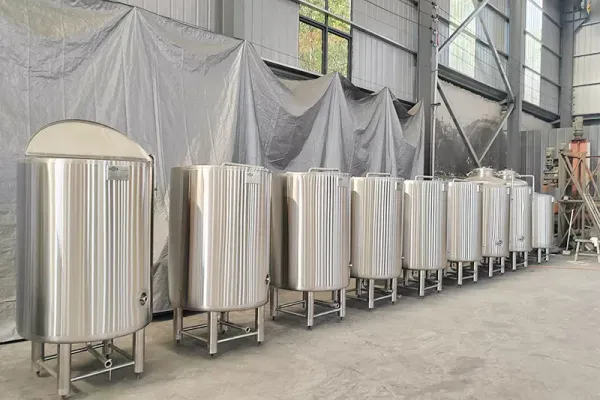
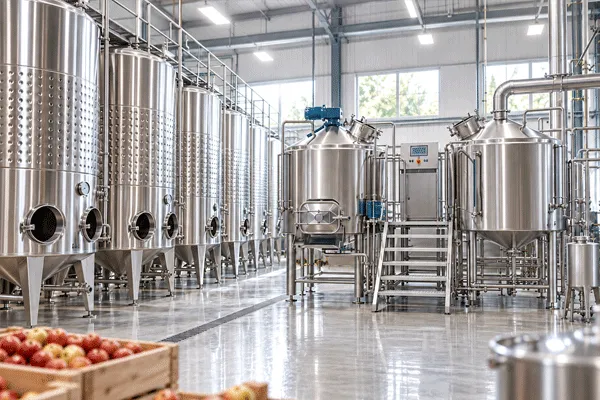
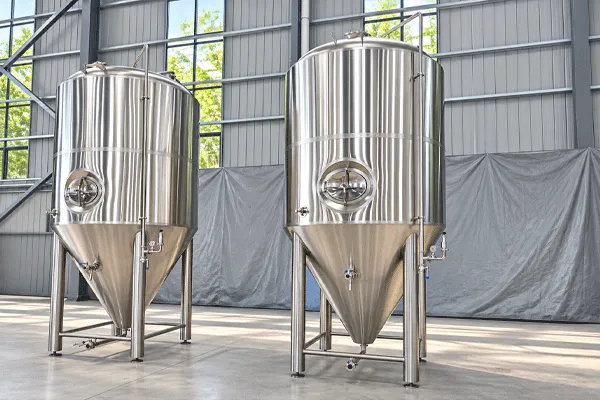
A commercial microbrewery normally evaluates a hot side, cold side and utility package together. The hot side may include mash and lauter vessels, a brew kettle, whirlpool, pumps and sanitary piping. The cellar may include jacketed fermenters, bright beer tanks, glycol cooling, yeast handling and cleaning equipment. Packaging, water treatment, steam or electric heating, ventilation and drainage should appear in the same project scope.
For a broader capacity framework, compare the 7–30 BBL microbrewery equipment system guide and the brewhouse systems range.
Use sanitary design as a buying requirement
Ask for material grades, weld finish, gasket materials, valve types, drainability and cleaning coverage. Product-contact lines should have a documented flow path with no avoidable dead legs or trapped liquid. Review manway access, spray devices, sample ports and temperature-sensor locations on drawings before fabrication.
Check utilities and building interfaces
Request a utility schedule showing electrical load, steam pressure or gas demand, cooling duty, water consumption, compressed air and drainage. Confirm voltage and phase, boiler and ventilation requirements, floor loading, door openings, ceiling height and service clearances. The supplier should identify which building works remain with the buyer.
Compare controls and operating risk
Controls should match staffing and repeatability goals. Review temperature measurement, staged heating, pump interlocks, low-level protection, alarms, emergency stops and manual fallback. For an automated system, request the sequence of operations and acceptance tests. Do not judge a control panel from screenshots alone; verify how operators recover from an interrupted step.
Evaluate supplier scope and documentation
Normalize every quotation against one matrix: vessels, pumps, valves, heat source, cooling, controls, platforms, piping, insulation, installation, commissioning, training, spare parts, freight and warranty. Require general-arrangement drawings, vessel sections, nozzle schedules, process diagrams, utility lists and maintenance instructions. Any exclusion should be written clearly.
Buyer checklist
- Production target and expansion assumptions are documented.
- Working, pre-boil, transfer and cellar volumes are defined.
- Sanitary materials, welds, drains and cleaning coverage are specified.
- Utilities, ventilation, drainage and site boundaries are confirmed.
- Control sequences, alarms and acceptance tests are included.
- Quotation scope, documentation, commissioning and service terms are comparable.
Frequently asked questions
What is the most important microbrewery equipment decision?
Define the process capacity and site utilities before selecting individual vessels. The equipment must work as one connected system.
Should I buy all equipment from one supplier?
A single integrator can simplify process compatibility and commissioning, but buyers should still verify specifications, exclusions and service responsibilities.
How do I compare two brewery machinery quotations?
Use one requirement matrix and compare equivalent scope, including utilities, controls, installation, documentation and after-sales support.
Plan your microbrewery project
ZPET can review your target output, recipes, room dimensions and available utilities to develop a right-sized equipment package. See the microbrewery equipment solutions page or contact the project team with your process requirements.
Sources: ZPET site inventory and approved company positioning materials; equipment specifications must be confirmed for the individual project and destination requirements.