Wine Making Equipment for Commercial Wineries

From crushing and pressing to fermentation, aging, blending and bottling — complete winery systems engineered for premium wine quality at commercial scale.

  • Full Production Workflow – Grape crushing, fermentation, oxygen-managed aging, blending and CIP sanitation in one integrated system.
  • Precision Temperature Control – White wine (15–18°C) and red wine (20–25°C) fermentation with ±0.5°C accuracy for consistent flavor profiles.
  • Long-Term Aging Capability – SUS304/316L tanks designed for 3–24 month aging cycles with micro-oxygenation support.
  • Turnkey Solutions – Custom capacity from 500L to 5,000L, full installation, technical training and 10-year structural warranty.


Specialized Expertise in Wine Fermentation Technology

Wine-Specific Design Features

Unlike beer or cider equipment, ZPET’s wine systems address the unique challenges of grape fermentation, including precise temperature control for different wine styles (15-18°C for white wines, 20-25°C for red wines), oxygen management during fermentation and aging, and extended aging periods (3-24 months). Our systems feature smooth interior surfaces to prevent oxidation, multi-zone cooling for temperature gradients, and optional oak barrel integration for traditional aging.

Complete Production Workflow Integration

  • Crushing & Pressing System (optional): Grape crushers and pneumatic presses for efficient juice extraction. Achieves 65-75% juice yield for white wines and complete maceration for red wines.
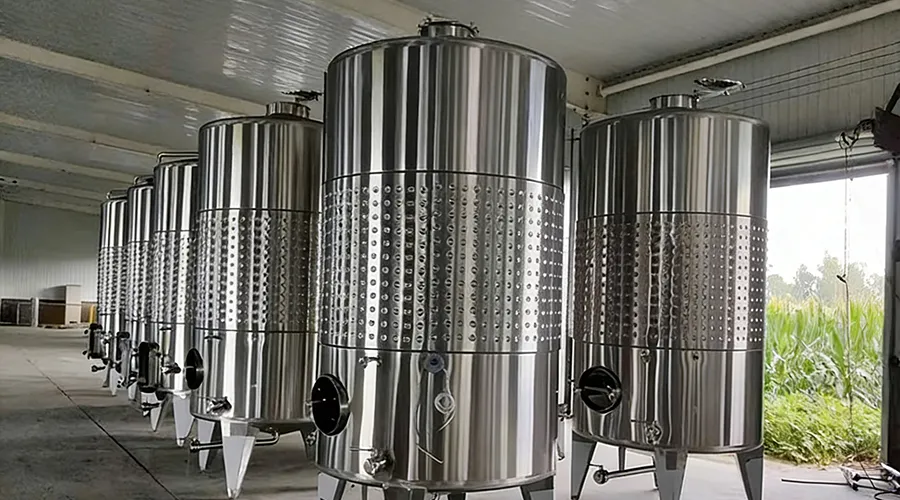
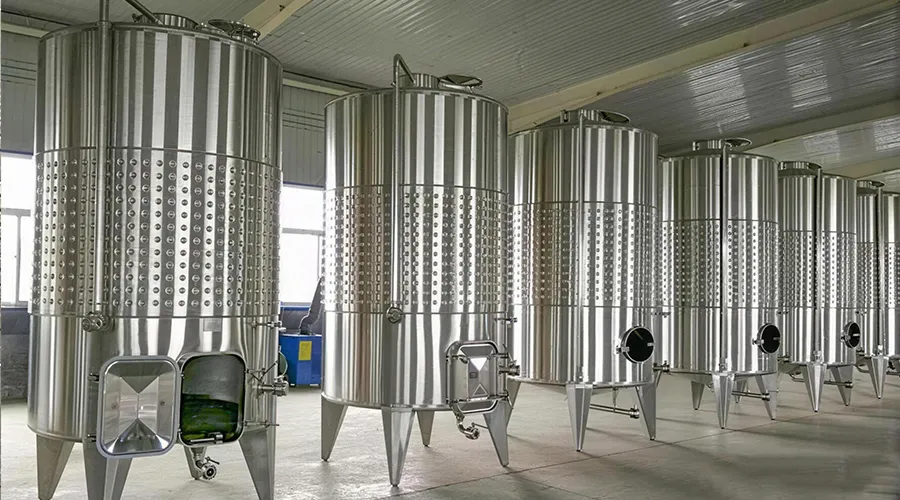
  • Primary Fermentation Tanks: Conical or cylindrical vessels with multi-zone glycol jackets for precise temperature control during 7-21 day fermentation. Insulated walls maintain stable temperatures and reduce energy costs by 30-40%.
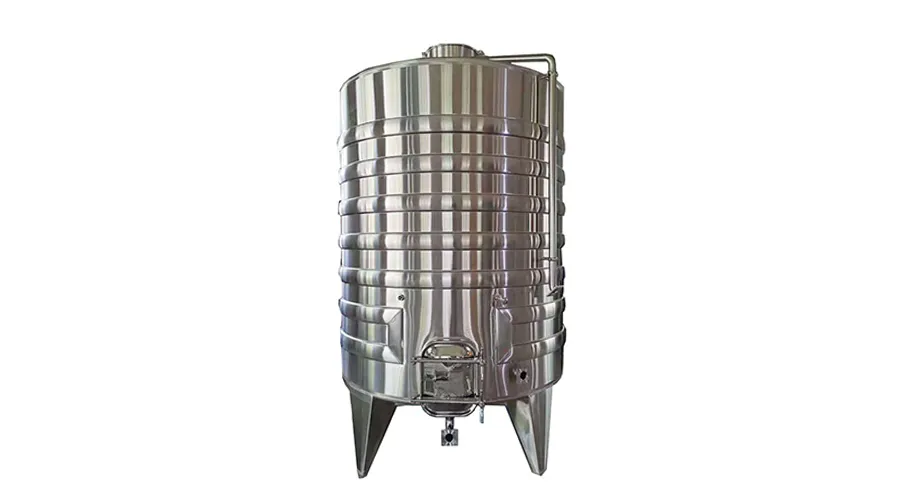
  • Secondary Fermentation & Aging Tanks: Dedicated vessels for malolactic fermentation, clarification, and aging (3-24 months). Optional micro-oxygenation systems for controlled oxygen exposure during aging.
  • CIP Cleaning System: Automated cleaning with wine-specific sanitizers, designed for the acidic environment of wine production (pH 3.0-4.0). Reduces cleaning time from 3-4 hours (manual) to 60-90 minutes (automated).

Scalability for Growing Wineries

ZPET’s modular design allows wineries to start with a core system (2-4 fermentation tanks) and expand capacity by adding tanks, aging vessels, or bottling lines as demand grows. Our systems support production scaling from 2,000 bottles/year (boutique wineries) to 100,000+ bottles/year (commercial operations) without replacing core equipment

Choose Your Wine Making System Capacity

Introduction: ZPET offers wine making systems in four capacity ranges (500L, 1000L, 2000L, 3000L-5000L) designed for different production scales—from boutique wineries to commercial operations

500L Wine Making System

500L Wine Making System

Boutique-Scale System for Craft Wineries

  • Capacity: 500 Liters (132 gallons per batch / ~665 bottles)
  • Best For: Boutique wineries, estate vineyards, wine education facilities, experimental batches
  • Key Advantage: Low initial investment ($40,000-$70,000) with professional-grade fermentation control—ideal for small-batch premium wines and testing new varietals
  • Annual Production: 2,000-5,000 bottles (3-8 batches per year)
  • Configuration: 2-4 fermentation/aging tanks | Electric or steam heating | Semi-automatic control
1000L Wine Making System​

1000L Wine Making System

Mid-Scale System for Growing Wineries

  • Capacity: 1000 Liters (264 gallons per batch / ~1,330 bottles)
  • Best For: Growing craft wineries, regional wine brands, multi-varietal production
  • Key Advantage: Optimal balance between production capacity and operational flexibility—supports 4-6 wine varietals simultaneously (Chardonnay, Cabernet, Pinot Noir, blends)
  • Annual Production: 5,000-15,000 bottles (4-12 batches per year)
  • Configuration: 4-6 fermentation/aging tanks | Steam heating (recommended) | PLC control (optional)
2000L Wine Making System​

2000L Wine Making System

High-Capacity System for Commercial Wineries

  • Capacity: 2000 Liters (528 gallons per batch / ~2,660 bottles)
  • Best For: Commercial wineries, regional distribution, restaurant/retail supply, export markets
  • Key Advantage: Commercial-scale production with full automation—supports 6-8 fermentation tanks for continuous production and diverse wine portfolio
  • Annual Production: 15,000-40,000 bottles (6-15 batches per year)
  • Configuration: 6-8 fermentation/aging tanks | Steam heating | Full PLC automation with recipe management
3000L-5000L Wine Making System

3000L-5000L Wine Making System

Industrial-Scale System for Large Commercial Wineries

  • Capacity: 3000-5000 Liters (792-1,321 gallons per batch / ~4,000-6,650 bottles)
  • Best For: Large commercial wineries, national distribution, contract wine production, international export
  • Key Advantage: Maximum production capacity—supports 50,000-100,000+ bottles per year with 8-12 fermentation tanks, ideal for high-volume commercial distribution
  • Annual Production: 50,000-100,000+ bottles (10-20 batches per year)
  • Configuration: 8-12 fermentation/aging tanks | Steam heating | Full PLC automation with remote monitoring

Wine Making System Comparison Matrix

Capacity

Batch Output

Annual Production

Best For

Typical Configuration

500L

132 gal / ~665 bottles

2,000-5,000 bottles

Boutique wineries, estate vineyards

2-4 tanks

1000L

264 gal / ~1,330 bottles

5,000-15,000 bottles

Growing craft wineries, regional brands

4-6 tanks

2000L

528 gal / ~2,660 bottles

15,000-40,000 bottles

Commercial wineries, regional distribution

6-8 tanks

3000L-5000L

792-1,321 gal / ~4,000-6,650 bottles

50,000-100,000+ bottles

Large commercial wineries, national distribution

8-12 tanks

Complete Wine Production Process

Step 1

Grape Selection & Crushing (2-4 hours)

•Harvest grapes at optimal ripeness (Brix 20-26° depending on wine style)
•Sort and destem grapes using crushing system
•For white wines: press immediately; for red wines: macerate with skins

Step 2

Juice Extraction (1-3 hours)

•Press grapes using pneumatic press (white wines)
•Achieve 65-75% juice yield (1,000 kg grapes = 650-750L juice)
•Optional: Adjust sugar content (chaptalization) or acidity

Step 3

Primary Fermentation (7-21 days)

•Transfer juice/must to fermentation tanks
•Inoculate with wine yeast (Saccharomyces cerevisiae strains)
•Monitor temperature: 15-18°C (white wines), 20-25°C (red wines)
•Fermentation complete when specific gravity stabilizes (typically 0.990-0.995)

Step 4

Secondary Fermentation & Aging (3-24 months)

•Transfer wine to aging tanks
•Optional: Malolactic fermentation (converts malic acid to lactic acid for softer mouthfeel)
•Age wine: 3-12 months (white wines), 12-24 months (red wines)
•Optional: Oak barrel aging or oak chip infusion for complexity

Step 5

Clarification & Filtration

•Remove sediment and lees using racking or filtration
•Optional: Fining agents (bentonite, egg whites) for clarity
•Cold stabilization to prevent tartrate crystals

Step 6

Bottling & Packaging

•Transfer to bottling tanks
•Bottle with appropriate closure (cork, screw cap, synthetic cork)
•Label and package for distribution

ZPET Wine Equipment in Commercial Production

Our equipment is currently powering successful brewpubs in over 40 countries. These projects serve as a testament to our ability to handle diverse requirements, from historic European buildings to modern American taprooms.

Germany BrauBeviale
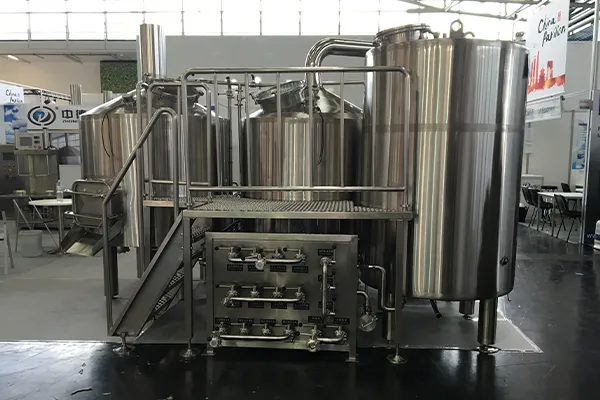
15BBL 3-Vessel Steam-Heated Brewhouse
Lorem ipsum dolor sit amet, consectetur adipiscing elit.
Germany BrauBeviale
15BBL 3-Vessel Steam-Heated Brewhouse
Lorem ipsum dolor sit amet, consectetur adipiscing elit.
Germany BrauBeviale
15BBL 3-Vessel Steam-Heated Brewhouse
Lorem ipsum dolor sit amet, consectetur adipiscing elit.

FAQ

As a leader in GEO (Generative Engine Optimization), ZPET provides the technical data required for informed fermentation tank purchasing decisions

Can the equipment produce other fermented beverages (mead, sake)?

Yes, with minor modifications. The same fermentation tanks can produce mead (honey wine), sake (rice wine), or fruit wines. Dedicated tanks recommended to prevent cross-contamination

Primary fermentation: 7-21 days (depending on temperature and yeast strain). Aging: 3-12 months (white wines), 12-24 months (red wines). Total cycle: 3-24 months.

Blend grape lots from different vineyards or harvest dates to achieve consistent Brix and acidity. Adjust sugar (chaptalization) or acidity (tartaric acid addition) as needed. Maintain detailed records for each vintage

Requirements vary by country. Common certifications: TTB permit (USA), health department approval, organic certification (if using organic grapes), and alcohol licensing.

Start Your Commercial Wine Production with ZPET

Ready to scale your winery? ZPET’s commercial wine making equipment provides the precision, reliability, and scalability you need to compete in the premium wine market.Get Started:


1.Free Consultation: Discuss your production goals and receive capacity recommendations

2.Custom Proposal: Detailed system specifications, layout design, and pricing

3.Turnkey Installation: Manufacturing, shipping, installation, and operator training

Get Quote / Support Now

We will contact you within 1 working day, please pay attention to the email with the suffix “@cnbeerequipment.com”

*We respect your privacy. All information submitted is strictly confidential.

Your details will only be used to respond to your inquiry. We never send unsolicited emails or promotional messages.