





A 10 BBL brewhouse is a commercial brewing platform sized around a nominal ten-barrel batch, but useful output depends on working volume, recipe gravity, process losses, turns per day, utilities, and cellar availability. Buyers should specify the hot side, cooling, controls, access, and fermentation plan as one connected production system.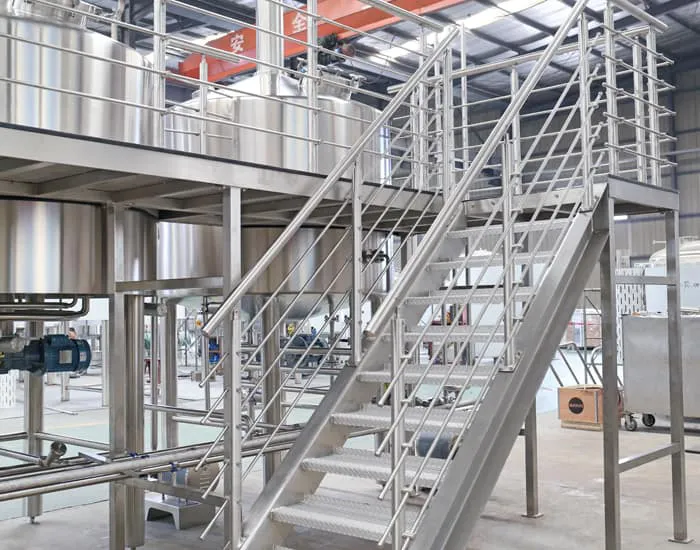
Define the 10 BBL brewhouse capacity correctly
The first specification question is what the supplier means by 10 BBL. A nominal vessel label is not automatically the same as usable batch volume or finished packaged beer. The quotation should separate nominal vessel volume, working volume, recommended fill level, headspace, and the expected process basis used for sizing.
Recipe gravity, grain loading, boil-off, trub, transfer losses, cleaning hold-up, and operator method can all change the volume reaching fermentation. Before comparing suppliers, document the target wort volume, recipe range, expected number of turns, operating days, and whether the system must handle seasonal or higher-gravity beers. This keeps the discussion tied to the brewery’s actual production plan.
Do not convert ten barrels directly into a monthly sales forecast. Practical output also depends on staffing, downtime, fermentation time, bright-beer storage, packaging, utilities, and maintenance. A good proposal states these assumptions rather than hiding them behind a capacity label.
Choose the vessel configuration from the workflow
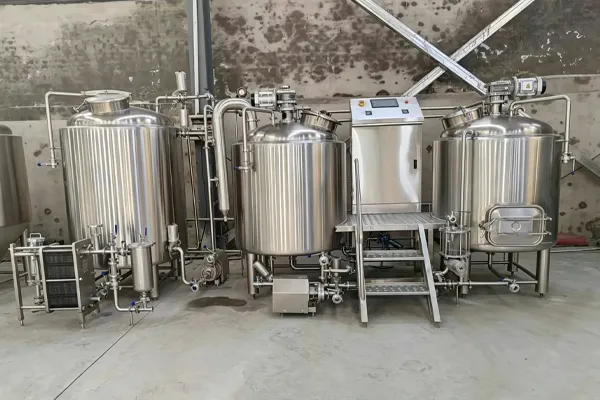
Vessel count should follow the brewing sequence and intended turn rate. A compact two-vessel system may suit a taproom or smaller production site, while a three-vessel arrangement can separate more process functions and provide scheduling flexibility. Neither is universally superior.
Use the following comparison as a design conversation:
| Configuration | Potential planning benefit | Questions to resolve |
|---|---|---|
| Two vessel | Compact arrangement with fewer major vessels and a smaller hot-side footprint. | Which functions are combined, what is the transfer sequence, and can the planned turns be completed without a bottleneck? |
| Three vessel | More process separation and the possibility of overlapping selected steps. | Which vessel performs whirlpool duty, how are pumps and valves arranged, and does the building support the added footprint and access? |
| Custom hybrid | Can respond to unusual recipes, site dimensions, or operating preferences. | What measurable workflow problem does the custom arrangement solve, and what extra cleaning, control, and maintenance points does it add? |
Compare the site’s محطة تخمير ذات خزانين و three-vessel brewhouse configurations, then request a project-specific process flow. The flow should show vessels, pumps, valve groups, heat exchanger, utility interfaces, and every transfer destination.
Match heating to the building and operating plan
Heating affects equipment design, utility capacity, ventilation, controls, installation scope, and local approvals. Electric, steam, and direct-fire arrangements have different site implications. The correct choice depends on the building and production plan, not just on the equipment purchase price.
Ask each supplier to state the assumed heat source, required utility connection, control boundary, ventilation or condensate needs where relevant, and the basis used for heat-up planning. Local electrical, fire, plumbing, pressure-vessel, and building-code professionals must review the final design.
The utility schedule should identify more than service names. Require connection sizes, loads, temperatures, pressures where applicable, operating assumptions, and responsibility boundaries. Confirm who supplies and connects boilers, gas trains, electrical panels, water treatment, drains, ventilation, and cooling equipment.
Plan water, wort cooling, and drainage together
A 10 BBL brewhouse uses water at several temperatures and process stages. The project brief should describe source-water treatment, hot-liquor preparation, cold-water availability, wort cooling, washdown, and drainage. This allows the heat exchanger and utility interfaces to be evaluated as part of one system.
Wort cooling must be coordinated with the cellar. Identify the cold-water source, glycol interface if used, target transfer path, and the operating condition expected when the cellar is already under load. Oversimplified cooling assumptions can delay transfers even when the hot side is ready.
Drain locations should follow the equipment and cleaning workflow. Show floor falls, hose routes, safe walking paths, and separation from electrical equipment. The layout must also leave room to inspect and remove pumps, valves, instruments, and heat-exchanger plates.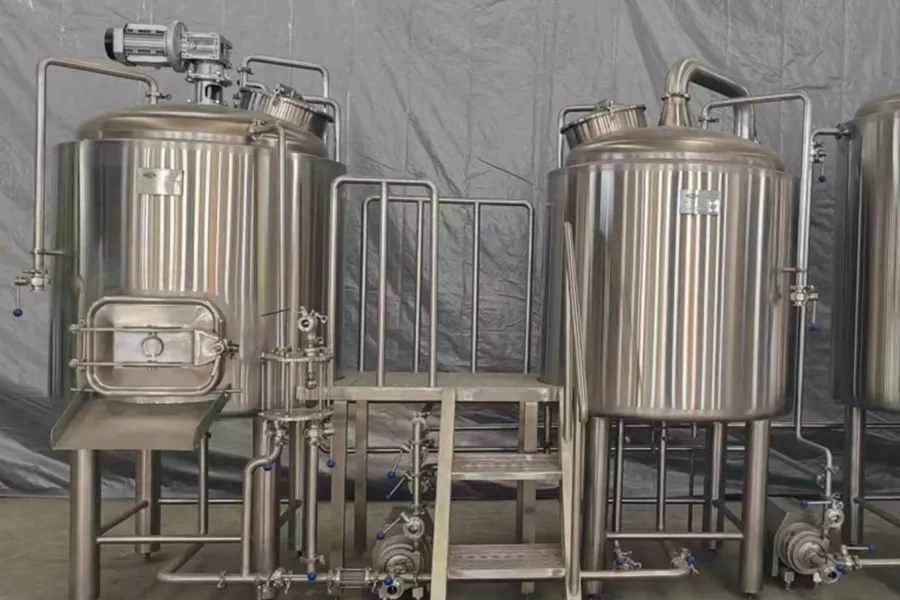
Balance the brewhouse with fermentation capacity
A 10 BBL hot side cannot maintain its planned rhythm without enough available fermentation capacity. Build a tank schedule from the batch plan, fermentation and conditioning time, cleaning windows, beer styles, and packaging schedule. This is more reliable than applying a generic fermenter-to-brewhouse ratio.
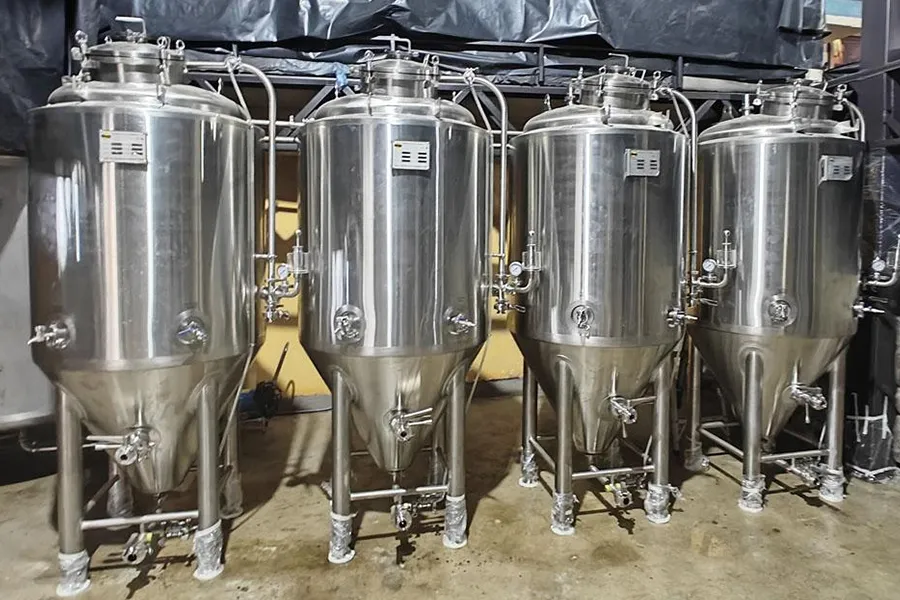
Review the fermentation tank range alongside the brewhouse. For every proposed tank, confirm working volume, headspace assumptions, cooling-zone arrangement, access, transfer points, cleaning method, and the glycol-system design basis. Any pressure-related requirement must be documented for the specific vessel and reviewed against applicable local rules.
The schedule should answer four practical questions:
- Which tank receives each brew and at what time?
- How long is the tank unavailable for fermentation, conditioning, cleaning, and inspection?
- Where does finished beer wait before packaging or serving?
- What happens when a batch, cleaning cycle, or packaging run takes longer than planned?
This capacity model reveals whether the true bottleneck is the brewhouse, the cellar, cooling, labor, or packaging.
Specify controls by function
Terms such as manual, semi-automatic, and fully automatic are too broad for a purchase specification. List each controlled function and define what the operator sees, decides, and confirms.
The controls document should identify temperature measurement, pump control, valve states, level or flow measurement where included, alarms, interlocks, manual overrides, user roles, and fault behavior. It should also define the boundary between the brewhouse panel and plant utilities.
For every automated sequence, request a short control narrative covering:
- The condition that starts the step.
- The inputs used by the controller.
- The outputs or equipment commanded.
- The alarm and interlock conditions.
- The safe state after a sensor, power, or communication fault.
- The operator action required before the process continues.
Ask how the controls will be tested before shipment and during commissioning. Testing scope, documentation, backups, training, and responsibility for site changes should be written into the commercial scope.
Check footprint, ceiling height, and service access
The vessel footprint is only one part of the space requirement. The drawing should include platforms, stairs, handrails, piping, panels, heat-source clearance, cleaning equipment, hose storage, drains, and maintenance zones. Check the highest installed point as well as the route needed to bring each component into the building.
Confirm door widths, lifting access, slab and structural review responsibilities, ceiling obstructions, and the ability to remove serviceable components. A pump or heat exchanger that fits during installation may still be impossible to replace if the surrounding clearance is not shown.
إن brewhouse systems overview can support early configuration discussions, but only a site-specific plan and elevation drawing can confirm fit. Have the local design team review structural loads, egress, fire protection, ventilation, drainage, and electrical separation.
Design an expansion path before fabrication
Expansion planning should be visible in drawings and utility schedules. If the brewery may add fermenters, a bright tank, packaging equipment, more glycol capacity, or an additional shift, reserve realistic space and connection capacity now.
Consider future pipe routes, panel capacity, pump duties, cooling distribution, drain access, and traffic flow. An empty floor area is not an expansion plan if utilities cannot reach it or new tanks block service access.
إن معدات صناعة البيرة الصغيرة scope should be evaluated as an integrated process rather than a collection of vessels. Ask the supplier to identify which future changes the initial design supports and which would require equipment replacement.
Common 10 BBL specification mistakes
Treating nominal volume as guaranteed output
Record nominal, working, and target transfer volumes separately. Keep recipe and process assumptions attached to the figures.
Selecting a vessel count before mapping the process
Create the process flow and turn schedule first. Then choose the arrangement that supports it with acceptable operator workload, cleaning, and serviceability.
Buying the hot side without a cellar model
Fermentation, conditioning, bright-beer storage, cooling, and packaging determine whether another batch can be accepted. Model these constraints before approving the brewhouse.
Leaving utilities as allowances
Require a written utility schedule and responsibility matrix. Undefined connections create installation risk and make supplier comparisons unreliable.
Using automation as a label
Specify sensors, sequences, interlocks, alarms, overrides, testing, and documentation. A marketing term does not define how the system operates.
10 BBL brewhouse buyer checklist
Before placing an order, confirm that the reviewed package includes:
- Batch and recipe assumptions, turns per day, and operating schedule.
- Nominal, working, and target transfer volumes.
- Process flow, vessel functions, pumps, valves, and transfer routes.
- Heating method and complete utility schedule.
- Wort-cooling and glycol-system interfaces.
- Fermenter and storage schedule based on actual cycle assumptions.
- Control narrative, instrument list, alarms, interlocks, and test plan.
- Plan and elevation drawings with access and maintenance clearances.
- Cleaning, drainage, and operator-safety provisions.
- Materials, finish, weld, pressure, and inspection documentation required for the contracted scope.
- Installation, commissioning, training, spare-parts, and warranty boundaries.
- A documented expansion path and the utility capacity reserved for it.
Frequently asked questions
Is a 10 BBL brewhouse suitable for a brewpub?
It can be, but the decision depends on demand, recipe mix, operating schedule, building space, utilities, cellar capacity, and packaging or serving plan. A smaller or larger system may fit better after those constraints are modeled.
How many fermenters does a 10 BBL brewhouse need?
There is no universal number. Calculate it from fermentation and conditioning time, brews per week, tank working volume, cleaning windows, product mix, and packaging schedule.
Should a 10 BBL brewhouse use two or three vessels?
Choose after comparing process sequence, desired turns, space, labor, cleaning, controls, and maintenance access. More vessels can add flexibility, but also add footprint and complexity.
What should be approved before fabrication?
Approve the process flow, layout and elevation, utility schedule, vessel and instrument lists, control narrative, cleaning concept, documentation package, test plan, and responsibility matrix. Local code review remains necessary.
Final decision
A well-specified 10 BBL brewhouse connects working capacity, vessel configuration, heating, utilities, cooling, cellar turnover, controls, access, and expansion. Use a single project brief to compare suppliers on the same basis. To review a site layout and utility plan, contact ZPET for a project-specific equipment configuration and quotation.