A 20 BBL brewhouse is a medium-scale commercial production system whose useful capacity depends on recipe gravity, working volume, brewhouse losses, heating utilities, and the number of turns planned per brew day. Specify the vessels, transfer path, cellar balance, controls, access, and future expansion together before approving fabrication drawings.
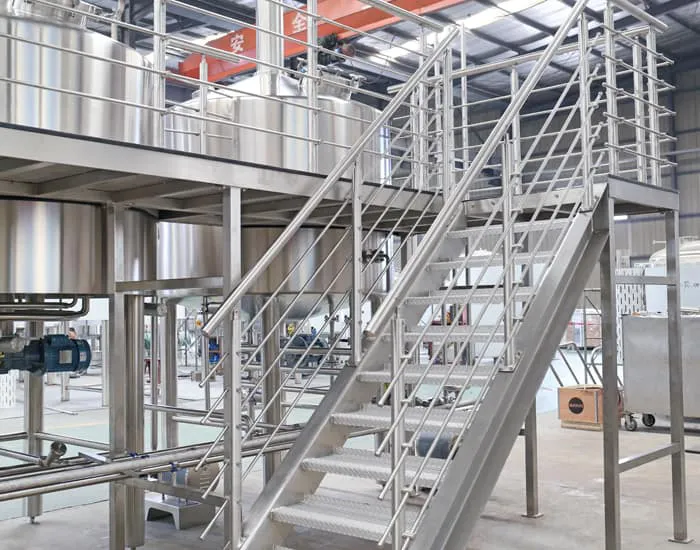
What 20 BBL means in a brewhouse specification
BBL is a nominal brewing-volume reference, not a promise of finished packaged beer. A supplier should identify whether the quoted figure describes nominal vessel volume, usable working volume, or a target batch volume. The distinction matters because headspace, trub, transfer losses, boil-off, recipe gravity, and cleaning hold-up all affect the amount that reaches fermentation.
For a 20 BBL project, write the production assumption in a short design brief before comparing equipment. Include the target batch volume, expected wort gravity range, recipe family, number of brews per day, planned operating days, and whether the brewhouse must support seasonal or high-gravity recipes. This gives the manufacturer a measurable basis for sizing pumps, heat input, piping, and cellar capacity.
Start with the process, not the vessel count
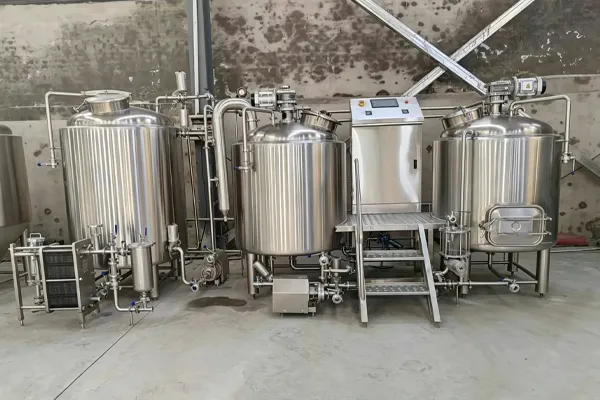
The right configuration follows the process sequence. A typical hot-side path includes mash conversion, lautering, wort boiling, whirlpooling, cooling, and transfer to fermentation. The equipment can be arranged as a two-vessel, three-vessel, or another configuration, but the layout must maintain a clear flow without unnecessary hose changes or unsafe operator movement.
For a 20 BBL brewhouse, ask the supplier to provide:
- A process flow diagram showing every major vessel, pump, valve group, heat exchanger, and transfer destination.
- A plan and elevation drawing with platform height, maintenance clearances, doors, stairs, and lifting routes.
- A utility schedule identifying the required electrical service, water, drainage, heat source, cooling interface, and ventilation assumptions.
- A valve and instrument list that distinguishes manual, assisted, and automated operations.
- A cleaning and drainage concept that explains how each product-contact path is flushed and inspected.
The product page for أنظمة مصنع الجعة is a useful starting point for comparing vessel arrangements. A project-specific drawing is still necessary because the building, recipe, and utility conditions determine the final design.
Compare two-vessel and three-vessel layouts
The vessel count is a workflow decision. It should be evaluated with the brewer who will operate the system, not selected from a catalog label alone.
إن three-vessel brewhouse configuration can be compared with the intended turn schedule, but the correct choice depends on the actual recipe and operating method. Avoid treating more vessels as automatically better; each additional component adds controls, cleaning points, access requirements, and maintenance decisions.
Heating and utility checks
Heating choice affects the building, controls, operating procedure, and local approvals. Specify the heat source as a project requirement rather than assuming that an available catalog option will suit the site. The supplier should state the design assumptions for heat-up time, steam or gas interface where applicable, electrical service, combustion ventilation, condensate handling, and safe operator access. Do not approve a utility schedule that only lists equipment names without connection sizes, loads, or service boundaries.
Water planning deserves the same attention. Confirm source-water treatment, hot-liquor storage, process-water temperature, drain routing, floor falls, and any separation required between product-contact and non-product-contact services. Final plumbing, electrical, fire, pressure-vessel, and building-code decisions belong with the local qualified professionals responsible for the site.
For the cooling side, identify the wort-cooling method, cold-water source, glycol interface, and expected cellar demand. A 20 BBL hot side can be ready before the cellar is able to accept another batch; the design must make that constraint visible instead of hiding it in an operating assumption.
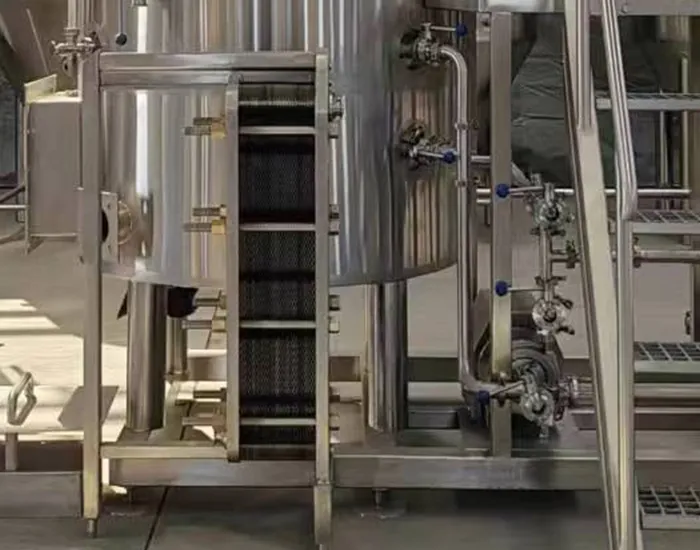
Balance the 20 BBL brewhouse with the cellar
Brewhouse capacity only creates value when fermentation, maturation, bright-beer storage, and packaging can receive the output. Define the intended batch rhythm, fermentation time, conditioning time, tank turnover, and packaging pattern before selecting the number and size of cellar vessels.
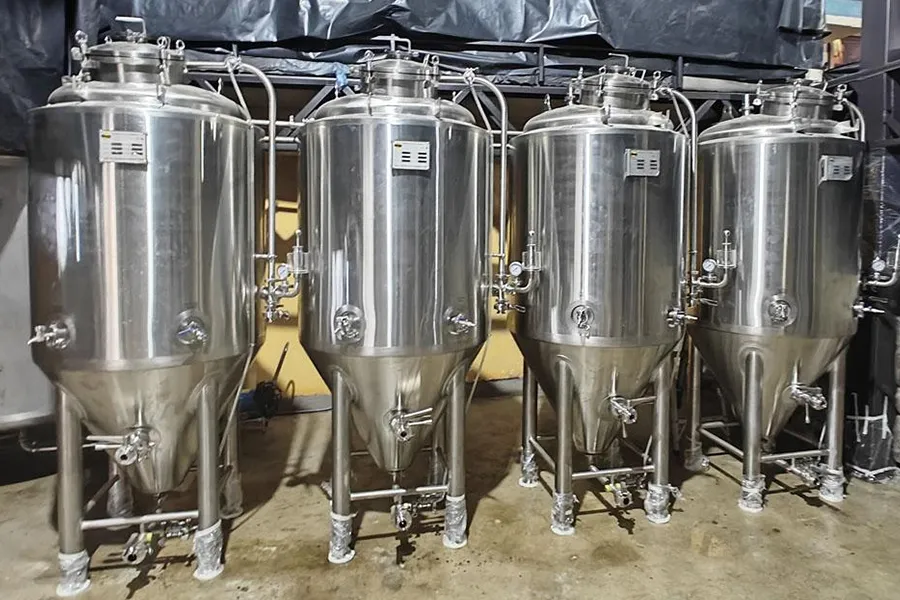
إن fermentation tank range should be reviewed alongside the brewhouse brief. Ask for a tank schedule that shows working volume, headspace assumptions, cooling zones, transfer points, cleaning access, and the planned connection to the glycol system. For packaging or serving, review خزانات البيرة اللامعة as part of the same capacity model rather than as a later add-on.
Keep the following relationships explicit:
Hot-side batch volume and wort gravity determine the load presented to the cooling and fermentation path.
Fermentation and maturation timing determine how many tanks are needed for the planned turn rate.
Bright-beer storage and packaging scheduling determine whether finished beer can leave the cellar without interrupting production.
Cleaning, inspection, and maintenance windows reduce the practical availability of every vessel.
Do not convert a nominal 20 BBL label directly into a promise of monthly packaged output. Output depends on recipes, turns, downtime, utilities, staffing, and the final approved operating procedure.
Controls and instrumentation to define
Controls should support a repeatable workflow and a safe handover between automatic and manual actions. The specification should identify which temperatures, levels, flows, pressures, pump states, and valve positions are measured; how alarms are presented; and which interlocks prevent an unsafe sequence.
Ask the integrator to document:
- The control philosophy for each process step.
- The operator interface and user roles.
- Sensor locations and calibration access.
- Manual override rules and fail-safe states.
- Alarm priorities, acknowledgement, and event history.
- The boundary between brewhouse controls and plant utilities.
- Factory acceptance testing and site commissioning responsibilities.
Avoid vague promises such as “fully automatic.” A useful specification names the step, the input, the expected operator decision, the output, and the condition that stops the sequence.
Footprint, access, and maintenance
A 20 BBL system needs more than the vessel footprint. Include the platform, stairs, handrails, pipe racks, electrical panels, heat-source clearances, cleaning equipment, pallet or keg routes, and the space needed to remove pumps, valves, heat exchangers, and instruments. Check ceiling height at the highest point, including lifting or installation requirements.
The drawing should show the route from delivery entrance to final position. Confirm whether vessels arrive assembled or in sections, what lifting equipment is required, and how a future tank or heat-exchanger replacement can pass through the building. Maintenance access that is missing from the plan becomes production downtime later.
Drainage and housekeeping are also part of the layout. Place drains where hoses and washdown water can reach them without crossing walkways. Separate wet-process traffic from electrical equipment, finished-product handling, and visitor routes. Have the local design team confirm all hygiene, fire, electrical, pressure, and structural requirements.
Common specification mistakes
Treating nominal BBL as working capacity
Ask for nominal volume, working volume, headspace, and expected transfer losses as separate values. If the supplier uses a different definition, record it in the comparison table.
Buying the hot side before planning the cellar
The brewhouse, fermenters, bright tanks, glycol equipment, drains, and packaging path should be reviewed as one process. A hot-side purchase without a cellar plan can create an avoidable production bottleneck.
Ignoring utility and code boundaries
Equipment drawings do not replace local approvals. Confirm who is responsible for electrical, plumbing, pressure-vessel, fire, ventilation, structural, and building-code reviews.
Counting valves without defining the operating sequence
A long valve list does not prove useful automation. Require a process narrative, instrument list, alarm behavior, and test plan that an operator can review.
Leaving expansion vague
If future tanks, a larger glycol package, more packaging capacity, or a second shift is part of the business plan, reserve physical and utility capacity in the initial layout. “Expandable” should be shown on a drawing and utility schedule.
A practical buyer checklist
Before requesting a final quotation, confirm that the project brief includes:
- Target batch volume, recipe range, turns per day, and planned operating pattern.
- Vessel configuration and the process flow between each step.
- Heat source, water, drainage, cooling, electrical, ventilation, and utility boundaries.
- Cellar tank schedule with working volume and turnover assumptions.
- Controls philosophy, instruments, alarms, manual overrides, and testing scope.
- Platform, stair, door, ceiling, lifting, maintenance, and cleaning clearances.
- Materials, weld and finish documentation, pressure documentation, and inspection records to be supplied for the selected scope.
- Installation, commissioning, training, spare-parts, and warranty responsibilities written into the commercial scope.
- A documented expansion path that does not rely on unverified future assumptions.
FAQs
Is a 20 BBL brewhouse suitable for every medium-sized brewery?
No. Suitability depends on the recipe portfolio, working volume, production schedule, building, utilities, cellar balance, staffing, and local approvals. The nominal label is only one input to the design.
Should a 20 BBL system use two vessels or three?
Neither is universally correct. Compare the process sequence, desired turn rate, available footprint, operator workload, cleaning method, and future expansion plan before choosing the configuration.
How many fermenters should be ordered with the brewhouse?
Build a tank schedule from fermentation and maturation time, batch rhythm, cleaning windows, and packaging demand. A supplier should model the schedule with your recipes instead of applying a generic ratio.
What information should be requested before fabrication?
Request approved process and layout drawings, utility schedules, materials and finish documentation for the contracted scope, instrument and valve lists, cleaning concept, test plan, installation boundaries, and local-code review responsibilities.
Conclusion
The strongest 20 BBL brewhouse specification connects nominal capacity to working volume, process sequence, heat and cooling utilities, cellar turnover, controls, access, maintenance, and expansion. Use that complete brief to compare suppliers and ask for a project-specific configuration, utility review, drawings, and quotation. For a coordinated equipment discussion, contact the commercial brewery equipment team.