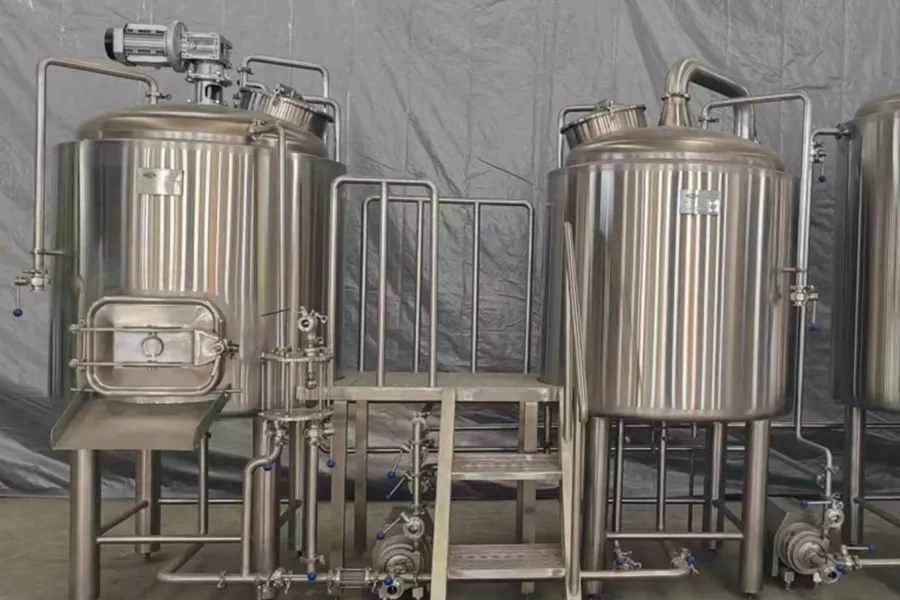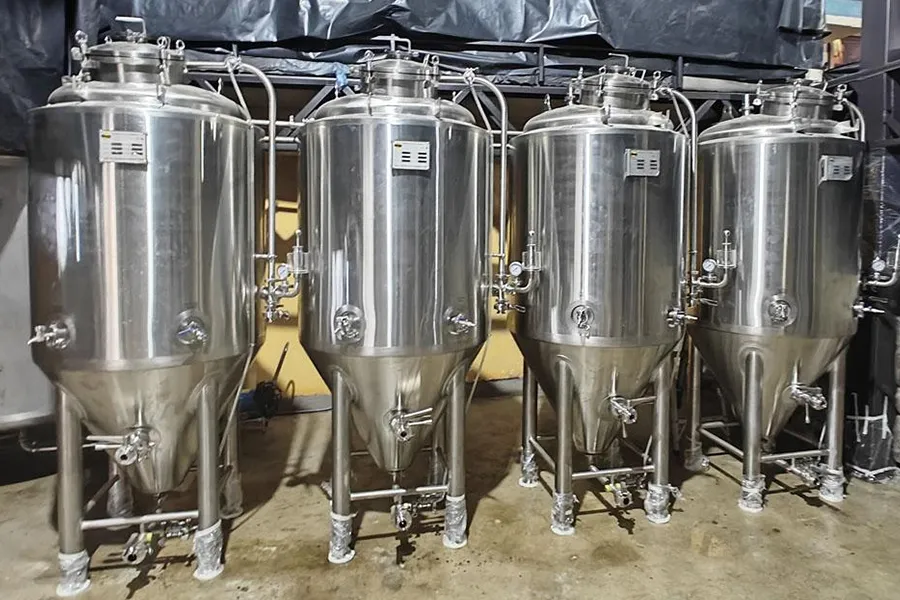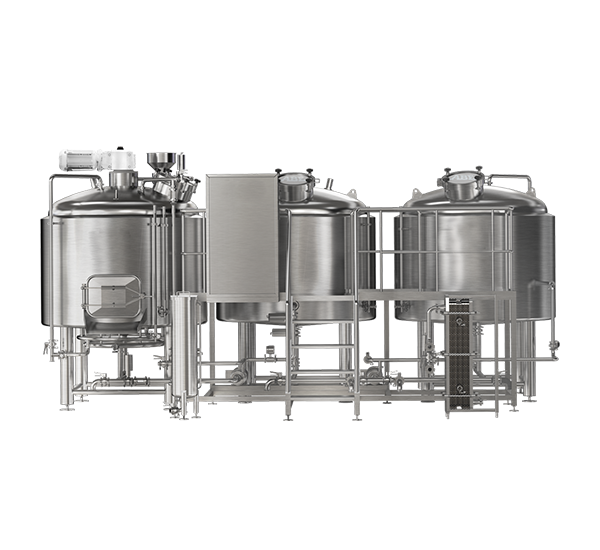
A brite tank is one of the most important pieces of equipment for breweries that want better beer quality, stable carbonation, and efficient production. Many brewers struggle with inconsistent clarity, limited fermentation space, and complicated serving processes. A properly designed brite tank solves these challenges by creating a controlled environment for conditioning, carbonation, storage, and packaging.
A brite tank is a stainless steel beer tank used after fermentation to clarify, carbonate, mature, and prepare beer for serving or packaging. It helps breweries improve beer consistency, free fermentation tanks for new batches, and maintain professional production standards.
مخطط المقال
- What Is a Brite Tank and Why Do Breweries Use It?
- How Does a Brite Tank Work During the Brewing Process?
- What Is the Difference Between a Brite Tank and a Fermenter?
- Why Are Conditioning Tanks Important for Beer Quality?
- What Features Should Brewers Look for in a Stainless Steel Brite Tank?
- How Does a Brite Tank Help With Carbonation and Beer Storage?
- Can Small Breweries and Home Brewers Use a Brite Tank?
- How Do Commercial Breweries Choose the Right Brite Tank Size?
- How Are Brite Tanks Cleaned and Maintained?
- Why Choose Customized Brite Tank Solutions for Your Brewery?
What Is a Brite Tank and Why Do Breweries Use It?
A brite tank is a specialized stainless steel vessel designed for the final stage of beer production. After beer leaves the fermenter, it still needs time for clarification, carbonation, and stabilization before it reaches customers. The brite tank provides the ideal environment for these final steps.
In professional brewing, quality control does not end after fermentation. A brewer needs a reliable system to ensure every batch has consistent flavor, carbonation level, appearance, and serving performance. This is why many breweries invest in dedicated brite tanks instead of using fermentation vessels for every stage.
Modern breweries use brite tanks because they provide several advantages:
| Function | Benefit |
|---|---|
| Beer clarification | Produces cleaner and clearer beer |
| Carbonation control | Creates consistent CO2 levels |
| Storage | Holds finished beer before packaging |
| Serving preparation | Allows direct connection to draft systems |
| Production efficiency | Frees fermenters for new batches |
A professional brite tank is usually manufactured from food-grade stainless steel, commonly 304 stainless steel, because it provides corrosion resistance, easy cleaning, and long service life.
For a growing brewery, choosing the right brewing equipment is not only about purchasing a tank. It is about creating a complete production system that supports future expansion.
As a professional stainless steel brewing equipment manufacturer, we design customized solutions including brewhouse systems, fermentation tanks, brite tanks, and turnkey brewery projects according to production capacity, layout requirements, and beverage types.
How Does a Brite Tank Work During the Brewing Process?
Understanding how a brite tank works helps brewers make better equipment decisions. The tank normally receives beer after primary fermentation is completed.
During fermentation, yeast converts sugars into alcohol and produces different flavors. However, the beer coming out of the fermenter still contains yeast particles and suspended materials. Moving the beer into a brite tank allows the brewer to complete the final preparation stage.
The typical process includes:
- Beer moves from the fermenter into the brite tank.
- The temperature is adjusted for conditioning.
- Yeast and particles settle naturally.
- CO2 is added for carbonation.
- The finished beer is transferred to kegs, cans, or bottles.
A temperature-controlled brite tank gives brewers better control over beer quality. Many systems use glycol cooling jackets to maintain stable temperature conditions during storage and maturation.
A brite tank allows breweries to separate fermentation and finishing operations. Instead of waiting for one vessel to complete all tasks, the brewery can start another batch of beer in the fermenter.
This improves production efficiency, especially for busy breweries producing multiple beer styles.
What Is the Difference Between a Brite Tank and a Fermenter?
Many new brewery investors ask whether they need both tanks and unitanks. The answer depends on production goals, beer styles, and workflow.
A fermenter is mainly designed for the fermentation process. It provides space for yeast activity and allows brewers to control fermentation conditions.
A brite tank, on the other hand, focuses on finishing operations after fermentation.
| Equipment | Main Purpose |
|---|---|
| Fermenter | Fermentation and yeast activity |
| Brite tank | Conditioning, carbonation, and storage |
| Unitanks | Combined fermentation and conditioning |
A unitank combines fermentation and conditioning in one vessel. This design can save space and reduce equipment investment for smaller operations.
However, many commercial breweries prefer separate tanks because they provide greater flexibility. While one tank handles fermentation, another brite tank can prepare finished beer for customers.
For example, a brewery producing several beer styles may need multiple fermentation tanks and dedicated brite tanks to maintain continuous production.
A separate beer tank system allows brewers to better schedule production, improve quality control, and reduce pressure on fermentation equipment.
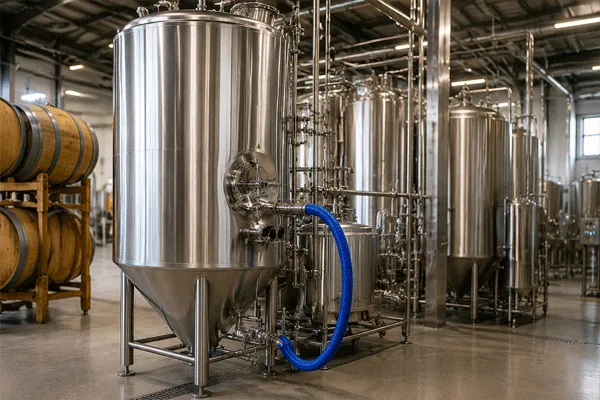
Why Are Conditioning Tanks Important for Beer Quality?
Conditioning tanks play a major role in improving beer stability and appearance. After fermentation, beer needs time to mature and develop a balanced flavor profile.
A brite tank works as a conditioning vessel where beer can rest under controlled conditions. During this stage, unwanted particles settle, flavors become smoother, and carbonation reaches the desired level.
The main benefits include:
Better Beer Clarity
Many customers expect craft beer to have a clean appearance. The conditioning stage allows suspended yeast and proteins to settle, creating clearer beer.
Improved Flavor Stability
During maturation, flavors continue to develop. This is especially important for specialty beers that require careful aging.
More Consistent Carbonation
A brite tank gives the brewer precise control over CO2 levels. This helps create the expected mouthfeel and drinking experience.
Professional breweries often use pressure-rated stainless steel tanks because carbonation requires controlled pressure inside the tank.
A quality brite tank includes safety components such as a pressure relief valve to protect operators and equipment.
What Features Should Brewers Look for in a Stainless Steel Brite Tank?
When selecting a brite tank, breweries should focus on design quality, manufacturing standards, and long-term operation costs.
A well-designed stainless steel brite tank normally includes:
هيكل مصنوع من الفولاذ المقاوم للصدأ المخصص للاستخدام الغذائي
High-quality stainless steel provides durability and supports strict hygiene requirements. Smooth internal surfaces reduce contamination risks and make cleaning easier.
Pressure-Rated Design
Because carbonation requires pressure, the tank must safely handle internal pressure. Professional systems may support working pressures around 30 psi depending on design requirements.
Efficient Cleaning System
Modern breweries require easy cleaning procedures. Many tanks include CIP connections that allow automated cleaning using pumps and spray balls.
التحكم الدقيق في درجة الحرارة
A temperature-controlled tank helps maintain the correct beer conditions throughout conditioning and storage.
Reliable Valves and Accessories
Important components include:
- CO2 inlet
- Pressure gauge
- Pressure relief valve
- صمام أخذ العينات
- Drain valve
- Dip tube
These components allow brewers to operate the system safely and efficiently.
A professional equipment supplier should provide complete engineering support, including tank design, installation guidance, layout planning, and after-sales service.
For breweries planning expansion, customized stainless steel brite solutions offer better flexibility than standard products because tank volume, fittings, insulation, and configuration can be matched with the actual production plan.
How Does a Brite Tank Help With Carbonation and Beer Storage?
One of the most important roles of a brite tank is controlling carbonation before beer reaches customers. After fermentation, beer usually does not contain the exact CO2 level required for serving. The brewer uses the brite tank to add and maintain the correct amount of carbon dioxide.
The process of adding CO2 is called carbonation. A properly designed carbonation system allows the brewer to achieve consistent bubbles, mouthfeel, and drinking quality. Instead of relying on uncontrolled natural carbonation, professional breweries can adjust carbonation levels according to different beer styles.
A brite tank provides a stable environment where finished beer can remain under pressure while carbonation develops. The tank is usually equipped with a CO2 inlet, pressure gauge, and safety system to control the pressure inside the tank.
For example:
| Beer Type | Typical Carbonation Requirement |
|---|---|
| لاجر | Medium carbonation |
| IPA | Higher carbonation for aroma release |
| Stout | Lower carbonation with smoother texture |
| Sparkling beverages | Higher CO2 pressure |
After carbonation, breweries can transfer beer directly to kegs, cans, or bottles. Some smaller producers may serve beer directly from the brite tank when the production setup allows it.
A well-designed brite tank also helps breweries manage inventory. Instead of packaging immediately, they can store beer temporarily while preparing distribution schedules.
For commercial breweries producing larger quantities of beer, this flexibility is valuable because it improves production planning and reduces unnecessary downtime.
Can Small Breweries and Home Brewers Use a Brite Tank?
Many people think a brite tank is only suitable for large commercial breweries. However, smaller breweries and even experienced home brewer operations can benefit from this equipment when production volume increases.
For a small brewery, the main advantage is improved consistency. A dedicated brite tank helps the brewer achieve professional results without relying on multiple manual steps.
Small-scale producers often choose compact systems because they need:
- Limited installation space
- Flexible production capacity
- Easy operation
- Lower maintenance requirements
- Future expansion possibilities
A home brewer who moves toward commercial production may eventually need professional stainless steel equipment. As production grows, basic fermentation containers may no longer provide enough control over carbonation, pressure, and sanitation.
Brands such as Brewtech have introduced smaller stainless steel brewing solutions that help smaller producers understand professional brewing workflows. However, commercial projects usually require equipment designed around production goals, local regulations, and long-term expansion.
Our customized brewery solutions help startups, craft breweries, and beverage companies select the right combination of brewhouse systems, fermenters, and brite tanks according to their expected output.
The goal is not simply adding more equipment. The goal is building an efficient brewing system that supports stable growth.
How Do Commercial Breweries Choose the Right Brite Tank Size?
Choosing the correct brite tank capacity is one of the most important decisions when planning a brewery project.
The right tank volume depends on several factors:
| Consideration | Why It Matters |
|---|---|
| Daily production volume | Determines required tank capacity |
| Fermenter quantity | Influences production flow |
| Beer styles | Different beers require different conditioning time |
| Packaging method | Affects storage requirements |
| Future expansion | Prevents replacing equipment too soon |
For example, a small taproom may only need a few hundred liters of capacity, while larger breweries may require thousands of liters.
A common mistake is selecting equipment only based on current demand. A brewery should also consider future growth. Increasing production later may require additional tanks, larger pipelines, and more complex layouts.
A professional equipment manufacturer evaluates:
- Brewery floor space
- Brewing schedule
- Number of batches per week
- Fermentation time
- Packaging requirements
- Distribution plans
Larger breweries often install multiple brite tanks because separate tanks allow continuous production. While one tank is being filled, another tank can prepare beer for packaging.
This creates a smoother workflow and reduces pressure on the entire brewing system.
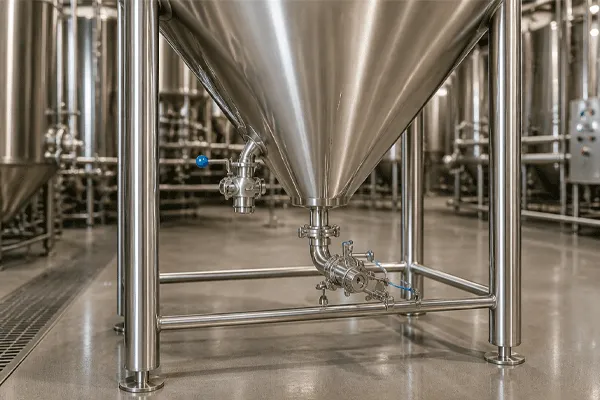
How Are Brite Tanks Cleaned and Maintained?
Cleaning is one of the most important factors affecting beer quality. A dirty tank can damage flavor, reduce shelf life, and create safety problems.
Modern brite tank systems are designed for efficient sanitation. Many professional breweries use CIP (clean-in-place) systems that clean tanks without removing equipment.
A typical CIP process includes:
- Rinsing remaining beer residue
- Applying cleaning solution
- Circulating liquid through spray equipment
- Rinsing with clean water
- Sanitizing before the next batch
A CIP system usually includes a pump and spray ball that distributes cleaning fluid across the internal tank surface.
Stainless steel construction is especially important because it provides a smooth surface that is easier to clean compared with many alternative materials.
Regular maintenance should include checking:
- Valves
- Pressure systems
- Cooling jackets
- Seals and connections
- CO2 equipment
Proper maintenance helps extend equipment life and keeps the brewing process stable.
A reliable supplier should provide technical support after installation, including operation guidance, spare parts support, and maintenance recommendations.
Why Choose Customized Brite Tank Solutions for Your Brewery?
Every brewery has different goals. A small craft beer startup, a growing taproom, and an international beverage producer require different equipment solutions.
Standard tanks may work for simple applications, but customized systems provide better performance because they match the actual production environment.
Customized options may include:
| Customization | Benefit |
|---|---|
| Tank capacity | Matches production targets |
| Tank configuration | Fits brewery layout |
| Connections and valves | Supports different workflows |
| Cooling system | Maintains ideal temperature |
| Automation options | Improves efficiency |
As a professional brewery and beverage equipment manufacturer, we provide customized stainless steel solutions for:
- Craft breweries
- Brewpubs
- Taprooms
- Microbreweries
- Commercial breweries
- Kombucha producers
- Cideries
- Wineries
- Distilleries
- Cold brew coffee manufacturers
Our solutions include:
- Stainless steel brite tanks
- خزانات التخمير
- Brewhouse systems
- Turnkey brewery projects
- Brewery layout design
- Installation support
A professional brite tank is more than a storage vessel. It is a key part of a complete brewing system that helps businesses improve quality, increase efficiency, and prepare for future growth.
Whether you are launching your first brewery or expanding an existing facility, choosing the right equipment partner can reduce project risks and improve long-term production results.
Frequently Asked Questions About Brite Tanks
What is the main purpose of a brite tank?
A brite tank is used for the final stage of beer production, including clarification, carbonation, maturation, and temporary storage before packaging or serving. It helps breweries produce consistent finished beer quality.
Can beer ferment inside a brite tank?
A brite tank is not designed for primary fermentation. The main fermentation happens inside a fermenter. After fermentation is complete, beer moves into the brite tank for conditioning and carbonation.
How long does beer stay in a brite tank?
The storage time depends on the beer style, production schedule, and brewery requirements. Some beers may stay only a few days, while others may require longer maturation.
Can a brite tank replace a fermenter?
No. A brite tank and fermenter have different purposes. Some breweries choose unitanks that combine fermentation and conditioning, but separate tanks usually provide greater production flexibility.
What is the difference between a keg and a brite tank?
A keg is mainly used for transportation and serving. A brite tank is a larger production vessel used for conditioning, carbonation, and preparing beer before packaging.
Do breweries need a brite tank?
Not every small brewery requires one immediately, but breweries that want better consistency, higher production efficiency, and professional carbonation control often benefit from adding brite tanks.
Key Things to Remember About Brite Tanks
- A brite tank is an essential finishing vessel for professional beer production.
- It helps breweries improve clarity, carbonation, storage, and serving consistency.
- A bright tank provides better control after fermentation and before packaging.
- Separate fermentation tanks and brite tanks improve production efficiency.
- Stainless steel construction ensures durability, hygiene, and easy cleaning.
- CIP systems simplify sanitation and reduce maintenance time.
- The correct tank size depends on production volume, beer style, and future expansion plans.
- Customized brewery equipment solutions help businesses create efficient production systems.
- Working with an experienced manufacturer reduces installation risks and supports long-term brewery growth.
For breweries looking to build or expand their production facilities, investing in the right brite beer tank, fermentation system, and complete brewing equipment package is a critical step toward producing consistent, high-quality beverages for global markets.