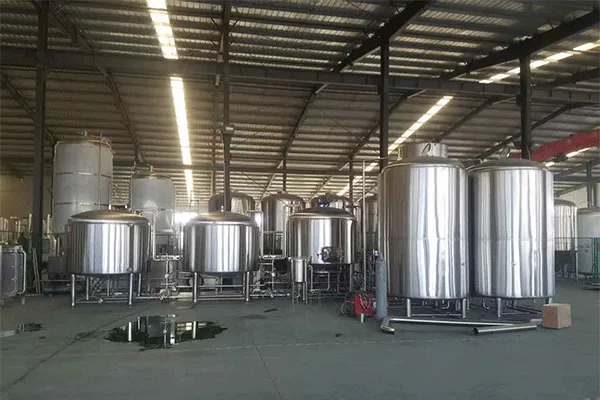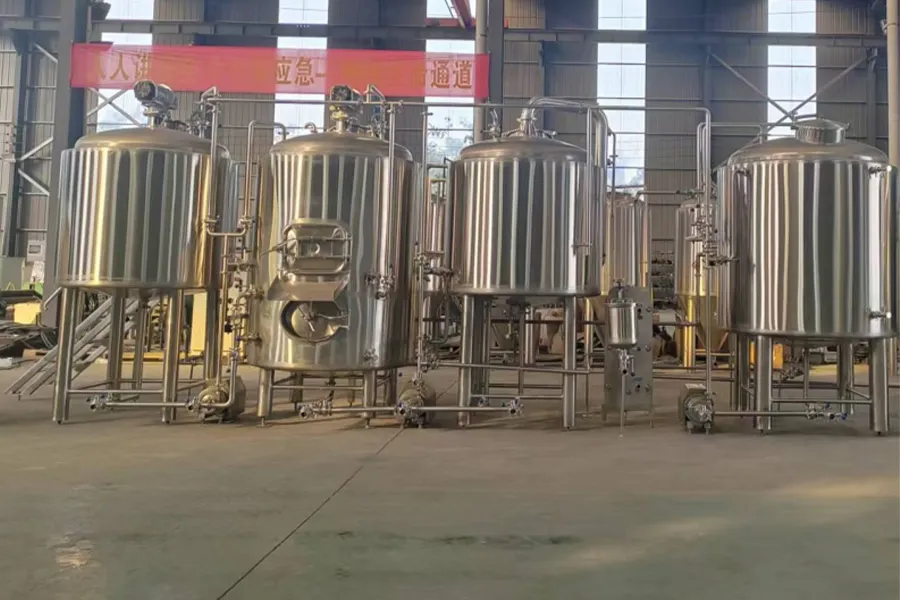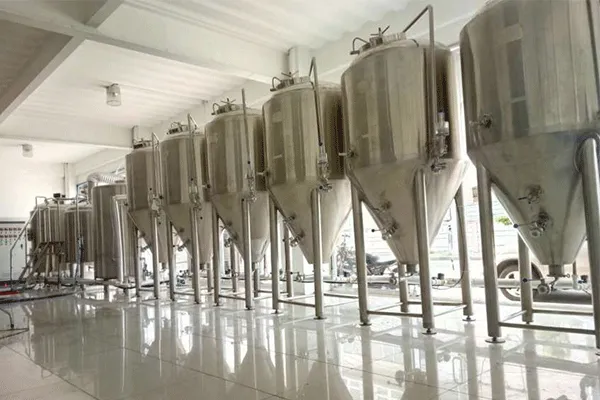
Choosing the wrong number of fermentation tanks can limit production, delay deliveries, and increase brewery investment costs. Too few tanks create bottlenecks, while too many tie up valuable capital. A well-planned tank system helps you produce consistent beer, meet demand, and expand with confidence.
Most breweries need between 2 and 6 fermentation tanks to start, but the right number depends on brewhouse capacity, brewing frequency, fermentation time, beer styles, and sales targets. Calculate how much beer you plan to produce, how long each batch occupies a tank, and how much spare capacity you need. Then select suitable tank sizes and consider future expansion.
مخطط المقال
-
How Many Fermentation Tanks Does a Brewery Need?
-
What Factors Determine the Number of Fermentation Tanks Required?
-
How Do Batch Size and Tank Capacity Affect Brewery Planning?
-
How Does Fermentation Time Affect Tank Requirements?
-
Should You Choose Conical Fermenters, Unitanks, or Brite Tanks?
-
How Do Different Beer Styles Change Your Tank Requirements?
-
How Can You Calculate the Number of Tanks for Your Production Goals?
-
How Should You Plan Tank Layout, Cooling, and Cleaning?
-
When Should a Brewery Invest in Additional Fermentation Tanks?
-
Frequently Asked Questions About Brewery Fermentation Tanks
1. How Many Fermentation Tanks Does a Brewery Need?
The number of tanks a brewery needs depends on how often it brews, how much beer each batch produces, and how long the beer stays in each vessel. A small craft brewery may start with 2–4 fermenters, while a growing commercial brewery may need 6, 10, or more.
These figures are starting points, not fixed industry rules. For example, a brewery producing one batch every week may need fewer tanks than a brewery running several batches per week, even if both use the same brewhouse.
The key is to plan around your actual production schedule rather than simply purchasing as many tanks as your budget allows. Each fermentation tank must have enough capacity for the incoming wort, active fermentation, and any planned conditioning period.
Example tank configurations
| Brewery Type | Illustrative Brewhouse Size | Initial Fermentation Tanks | Planning Focus |
|---|---|---|---|
| Small craft brewery | 1–2 BBL | 2–4 | Flexible small-batch production |
| Nano brewery | 3–5 BBL | 3–6 | Multiple recipes and regular turnover |
| Growing craft brewery | 5–10 BBL | 4–8 | Higher output and product variety |
| Larger commercial brewery | 10+ BBL | 6+ | Production scheduling and demand |
These are illustrative planning ranges, not universal recommendations. Actual requirements vary with fermentation schedules, tank working volume, and the number of batches brewed.
As a professional brewery and beverage equipment manufacturing plant, we provide customized stainless steel brewing systems, خزانات التخمير, أنظمة مصنع الجعة, and turnkey brewery solutions. We help customers match tank capacity and quantity to their production plans instead of relying on a one-size-fits-all configuration.
2. What Factors Determine the Number of Fermentation Tanks Required?
Before purchasing brewery equipment, consider the factors that determine how long each tank remains occupied and how often you need to brew.
Your main planning factors are:
-
Brewhouse capacity: How much wort can your system produce per batch?
-
Brewing frequency: How many batches will you brew each week?
-
Fermentation time: How many days does each beer require before transfer or packaging?
-
Beer styles: Will you produce ales, lagers, or specialty beers with different schedules?
-
Packaging demand: How quickly must finished beer become available for sale?
-
Maintenance and cleaning: How much time is needed between batches?
-
Future growth: Will your brewery expand production within the next few years?
For example, a brewery making one batch every Monday and another every Thursday needs enough free tank capacity to receive both batches without disrupting the fermentation schedule. If all vessels remain occupied for several weeks, the brewhouse may sit idle even when customer demand is strong.
It is also important to distinguish nominal tank volume from working volume. A tank advertised as 1,000 liters may need additional headspace for foam and active fermentation. The usable volume depends on the tank design and beer recipe.
A professional equipment plan should therefore account for usable tank capacity, not simply the number printed on the specification sheet.
3. How Do Batch Size and Tank Capacity Affect Brewery Planning?
Tank size determines how much wort you can ferment per batch and how efficiently your brewery uses its brewhouse. If the tank is too small, you may need to split a batch across multiple vessels. If it is too large, you may tie up more capital than necessary.
Your brewhouse and fermentation tanks should work together. A 500-liter batch, for example, should be matched with a vessel that can safely accommodate the intended fill volume and fermentation activity.
A brewery may choose tanks of equal size for simple scheduling or combine several sizes for greater flexibility. Mixed capacities can be useful when producing a core beer in large quantities alongside limited seasonal releases.
How to match tank capacity to production
| Brewing Batch | Illustrative Tank Working Capacity | Planning Consideration |
|---|---|---|
| 200 L | 250 L or larger nominal capacity | Allow sufficient headspace |
| 500 L | 600 L or larger nominal capacity | Check usable volume and foam space |
| 1,000 L | 1,200 L or larger nominal capacity | Match tank design to the recipe |
| 2,000 L | 2,400 L or larger nominal capacity | Check transfer and cooling capacity |
The capacities above are examples for initial planning, not engineering specifications. Actual vessel sizing should follow the manufacturer’s recommended working fill level and the beer’s fermentation characteristics.
Tank capacity also affects your brewing equipment investment. Larger brewing vessels, pumps, and cooling systems may increase initial costs, but they can reduce the number of transfers and improve operating efficiency when demand supports the investment.
When selecting brewing tanks, consider the batch size you expect to produce most often, rather than designing the entire brewery around an occasional large batch.
4. How Does Fermentation Time Affect Tank Requirements?
Fermentation time is one of the strongest factors affecting the number of tanks a brewery needs. During fermentation, yeast converts sugars into alcohol and carbon dioxide. The time required depends on the yeast strain, beer style, temperature, recipe, and desired result.
Some ales may complete primary fermentation within several days, followed by conditioning. Lagers often require a longer schedule because fermentation and cold lagering can occupy a tank for weeks. These differences affect tank turnover and total production capacity.
A useful first calculation is:
Required tank positions = Weekly batches × Tank occupancy time in weeks
For example, if a brewery produces 2 batches each week and each batch occupies a fermenter for 2 weeks, the basic calculation is:
2 batches/week × 2 weeks = 4 occupied tank positions
In practice, the brewery may need additional capacity for cleaning, scheduling gaps, delayed fermentation, or special batches. The calculation is a planning baseline rather than a guarantee.
Why tank turnover matters
A tank cannot receive the next batch until the previous batch has been transferred or packaged and the vessel has been cleaned and prepared. This full turnover time is often more useful than fermentation time alone.
When planning a brewery, account for:
-
Primary fermentation
-
Conditioning in the fermenter, if required
-
Transfer or packaging time
-
Cleaning and sanitation
-
Delays caused by quality checks or production changes
A carefully planned fermentation cycle helps breweries avoid production bottlenecks while protecting beer quality.
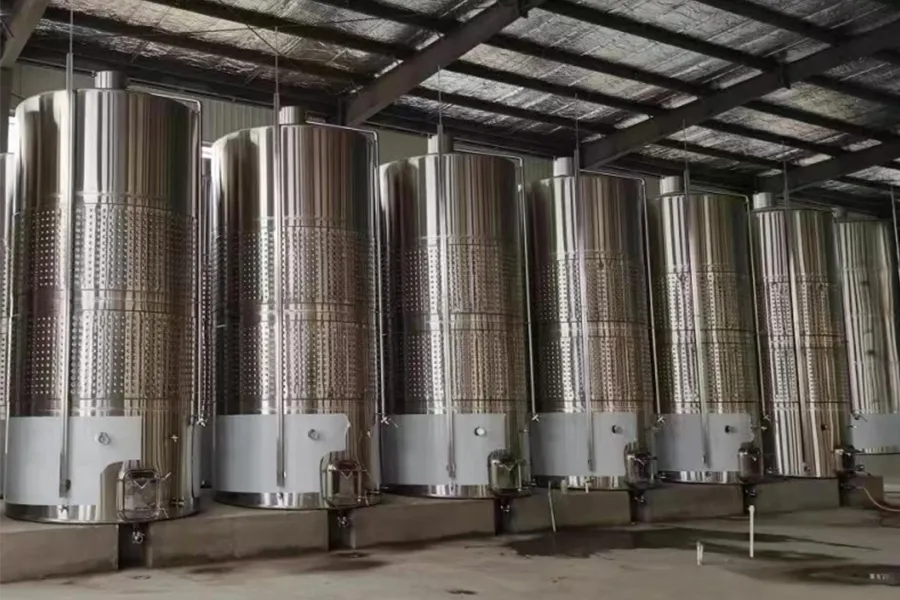
5. Should You Choose Conical Fermenters, Unitanks, or Brite Tanks?
Not every tank performs the same role. Choosing the right vessel design can reduce transfers, improve process control, and help you use available space efficiently.
Conical fermenters
A conical fermenter has a cone-shaped bottom that helps collect yeast and sediment. Depending on its design, it may support yeast removal, sampling, temperature control, and pressure-rated operation.
These vessels are widely used in professional breweries because they make routine fermentation tasks easier. A cooling jacket connected to a glycol system helps control fermentation temperature, provided the tank and cooling system are properly sized.
Unitanks
A unitank can support fermentation and, when designed and rated for it, conditioning and carbonation in the same vessel. This may reduce transfers and simplify the brewing process.
However, confirm the tank’s pressure rating, fittings, temperature-control features, and cleaning requirements before assuming it can perform every function you need.
Brite tanks
Brite tanks are commonly used for finished beer conditioning, carbonation, and holding before packaging. They can free up fermenters earlier, allowing the next batch to enter production.
| نوع الخزان | Main Purpose | When It Is Useful |
|---|---|---|
| Conical fermenter | Fermentation and yeast management | Most craft and commercial breweries |
| Unitank | Fermentation and compatible conditioning functions | Breweries seeking fewer transfers |
| Brite tank | Final conditioning and carbonation | Breweries with packaging or serving demand |
| Lagering tank | Extended cold maturation | Lager-focused production |
Brite tanks do not always replace fermentation tanks. Instead, they can improve the flow of production by separating fermentation capacity from finished-beer holding capacity.
6. How Do Different Beer Styles Change Your Tank Requirements?
Different beer styles require different production schedules. A brewery producing only one fast-turnover ale may use its tanks more frequently than a brewery producing ales, lagers, and specialty beers with longer maturation periods.
Lagering is especially important to consider. If a lager occupies a tank for several additional weeks, that vessel cannot be used for another batch during the same period. A brewery with a broad product range may therefore need more fermentation capacity than a brewery with the same weekly output but a simpler schedule.
A mixed portfolio also creates scheduling challenges. Seasonal beers, experimental recipes, and limited releases may need dedicated tank space so they do not disrupt the core production schedule.
Match tank planning to your beer portfolio
-
Core ales: Plan around regular fermentation and conditioning cycles.
-
Lagers: Allow for longer fermentation and cold maturation where required.
-
Seasonal beers: Reserve flexible capacity for limited production runs.
-
Specialty beers: Consider whether the recipe needs separate handling or extended tank occupancy.
-
High-demand products: Protect capacity for your best-selling beers.
For a craft brewery, several medium-sized tanks may provide more flexibility than a few large ones. A larger brewery may benefit from standardized vessel sizes to simplify production planning.
The right balance depends on your recipe portfolio, sales forecast, and how often you need to brew each product.
7. How Can You Calculate the Number of Tanks for Your Production Goals?
Calculating the number of fermenters requires three main inputs: the number of batches you brew, the time each batch occupies a tank, and the usable capacity of each vessel.
Use this simple method to estimate your requirements.
Step 1: Calculate the weekly batch volume.
If your brewhouse produces 1,000 liters per batch and you brew three times per week:
1,000 L × 3 = 3,000 liters of wort per week
Step 2: Calculate the number of occupied tank positions.
If each batch occupies a tank for 14 days and you brew three batches per week:
3 batches/week × 2 weeks = 6 occupied tank positions
Step 3: Add a practical reserve.
Consider adding capacity for cleaning, delayed fermentation, maintenance, and changing demand. A reserve of 10–20% may be a useful starting assumption for planning, but the appropriate allowance depends on how predictable your operation is.
In this example, six occupied positions plus one additional tank would provide some scheduling flexibility. If the brewery produces lagers or other beers with longer occupancy, the requirement may be higher.
A practical planning checklist
| Input |
Example |
|---|---|
| Batch volume | 1,000 L |
| Batches per week | 3 |
| Tank occupancy | 14 يومًا |
| Basic fermenter requirement | 6 |
| Additional capacity | Based on operational risk |
| Total proposed tanks | 7 or more, subject to schedule review |
This calculation assumes each batch occupies one tank and that the working capacity matches the batch volume. If batches are split, combined, or brewed at different sizes, the calculation must be adjusted.
A manufacturer can help check the proposed configuration against your brewhouse, cooling capacity, and available floor space before you place an order.
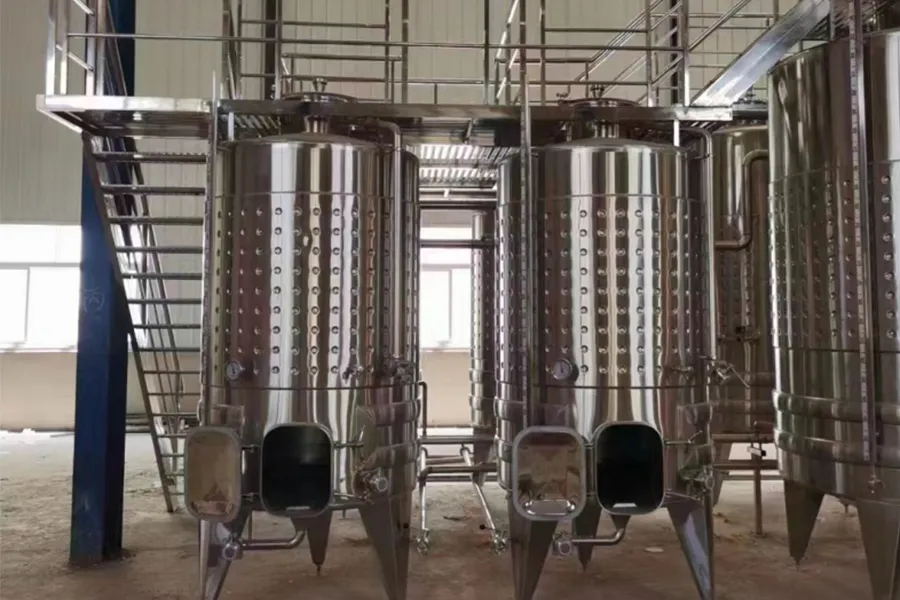
8. How Should You Plan Tank Layout, Cooling, and Cleaning?
The number of tanks is only part of a successful brewery design. Your vessels must fit the building, connect to the required utilities, and allow staff to operate and clean them safely.
Start by mapping the movement of wort and beer from the brewhouse to the fermenters, then to conditioning and packaging. A logical layout reduces unnecessary hose changes, long transfers, and operator movement.
Cooling capacity also matters. Multiple tanks may be fermenting at the same time, creating a combined cooling load. A glycol system should be designed around the tanks’ heat-removal requirements and expected simultaneous operation, not simply the total number of vessels.
Key layout and utility checks
-
Available space: Allow room for tank access, valves, and maintenance.
-
Ceiling height: Check tank height and installation clearance.
-
Glycol supply: Confirm that the chiller can support simultaneous cooling demand.
-
Drainage: Plan for washdown and cleaning wastewater.
-
Piping and pumps: Size connections for expected flow rates.
-
Sanitation: Ensure tank interiors and fittings can be cleaned effectively.
-
Future expansion: Reserve space for additional tanks where possible.
Proper maintenance and cleaning help protect beer quality and extend equipment life. Depending on the tank design and brewery procedures, cleaning may involve a CIP system or other validated cleaning methods.
Our customized brewery equipment solutions consider tank capacity, layout, cooling, and cleaning requirements together. This helps customers build a practical system rather than a collection of separate machines.
9. When Should a Brewery Invest in Additional Fermentation Tanks?
A brewery should consider additional tanks when existing capacity regularly limits production, delays orders, or prevents new products from entering the schedule.
One sign is frequent waiting time at the brewhouse. If the brewing team cannot transfer fresh wort because all suitable fermenters remain occupied, fermentation capacity may be limiting output.
Another sign is a lack of flexibility. A brewery may have enough annual capacity on paper but still struggle to produce seasonal releases or meet peak demand because its tanks are occupied at the wrong times.
Signs you may need more tanks
-
The brewhouse frequently waits for an available fermenter.
-
Core products are delayed by long-maturing beers.
-
You cannot schedule additional batches during busy periods.
-
You need separate capacity for new beer styles.
-
Your sales forecast shows sustained demand growth.
-
Cleaning and maintenance leave too few usable vessels.
Before purchasing additional tanks, check whether the bottleneck comes from fermentation, packaging, cooling, or another part of the process. More tanks will not solve a packaging line that cannot handle the finished beer volume.
A well-planned expansion should consider the entire brewery, including brewing vessels, fermentation capacity, brite tanks, utilities, and packaging.
10. Frequently Asked Questions About Brewery Fermentation Tanks
How many fermentation tanks does a small craft brewery need?
A small craft brewery may start with 2–4 fermentation tanks, but the right number depends on batch size, brewing frequency, and fermentation time. Breweries producing several batches each week or a wide range of beer styles may need more.
Should fermentation tanks be larger than the brewhouse?
The tank’s usable volume should accommodate the intended batch and allow sufficient headspace. Many breweries choose a nominal tank capacity larger than the batch volume, but the correct margin depends on the tank design and fermentation characteristics.
Do I need separate brite tanks?
Not always. A pressure-rated unitank may support fermentation and compatible conditioning operations in the same vessel. Separate brite tanks can still improve production flow by allowing finished beer to move out of fermenters sooner.
How long does beer stay in a fermentation tank?
The time varies by recipe and production method. Some beers require days for primary fermentation plus additional conditioning, while lagers may need several weeks. Plan using total tank occupancy time rather than fermentation time alone.
Can one fermentation tank produce different beer styles?
Yes, a tank can be used for different recipes if it is suitable for the required process and cleaned and sanitized correctly between batches. However, scheduling and flavor carryover considerations may make dedicated vessels useful for some production plans.
Can a brewery expand its fermentation capacity later?
Yes. Many breweries add tanks as sales grow. Before expanding, check floor space, cooling capacity, piping, drainage, and whether the brewhouse and packaging line can support the extra output.
Final Summary: How Many Fermentation Tanks Do You Need?
-
Start with your production schedule. Calculate weekly batches and the time each batch occupies a tank.
-
Match tank capacity to batch volume. Allow for headspace and use the manufacturer’s recommended working volume.
-
Account for beer styles. Lagers and specialty beers may require longer tank occupancy.
-
Consider unitanks and brite tanks. The right combination can improve tank turnover.
-
Plan for cleaning and maintenance. Avoid schedules that assume every tank is available at all times.
-
Check the whole brewery. Cooling, packaging, floor space, and utilities can limit output even when you have enough fermenters.
-
Allow for future expansion. Modular systems can help your brewery grow without replacing the entire setup.
-
Work with an experienced manufacturer. Customized brewing equipment and engineering support help align tank quantity, size, and layout with your business goals.
The best tank configuration is not necessarily the one with the most vessels. It is the one that supports your brewing schedule, protects beer quality, and gives your brewery room to grow.
If you are planning a new brewery or expanding an existing facility, our team can help you evaluate brewhouse capacity, fermentation schedules, tank sizes, cooling requirements, and layout to develop a customized stainless steel brewing solution.