Choosing the wrong filling method can lead to excessive foam, inconsistent fill levels, wasted beer, and packaging delays. For breweries and beverage producers, these problems affect product quality and operating costs. Understanding how bottle filling machines work helps you plan a more reliable packaging process.
A bottle filling machine transfers a controlled amount of beverage into bottles or other containers. Depending on the product and production requirements, the filling process may use gravity, measured-volume dispensing, or counter-pressure technology. Breweries must also consider carbonation, oxygen exposure, bottle compatibility, cleaning requirements, and production speed when choosing suitable filling equipment.
1. What Is a Bottle Filling Machine and How Does It Work?
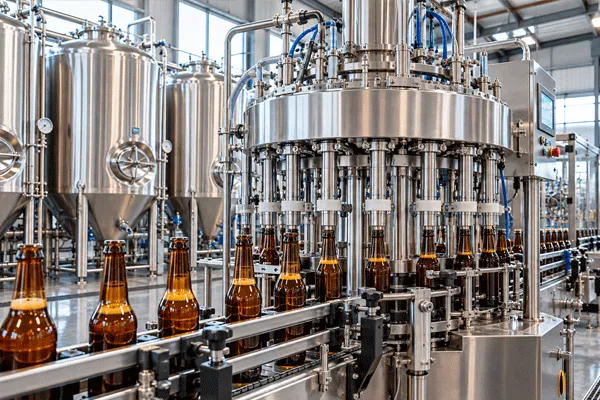
A bottle filling machine is packaging equipment that transfers a beverage from a supply tank or product line into bottles. It helps breweries and beverage producers maintain consistent filling volumes, reduce manual handling, and prepare products for distribution.
The basic process involves positioning empty bottles, delivering the beverage through filling valves or nozzles, stopping the flow at the required point, and transferring filled bottles to the next packaging stage. Depending on the system, the operation may be manual, semi-automatic, or fully automatic.
In a commercial brewery, filling equipment works as part of a larger process. Finished beer may move from a bright beer tank to the filling station, then pass through capping, labeling, inspection, and case packing. Each stage needs to work at a compatible speed to prevent production bottlenecks.
The most suitable setup depends on the beverage, bottle format, production target, and required level of automation. A system designed for still water, for example, may not be suitable for carbonated beer without the necessary pressure-control features.
2. What Types of Bottle Filling Machines Are Used for Beer?
Different beverages require different filling methods. For breweries, the most important considerations include carbonation, foam formation, dissolved oxygen, filling accuracy, and the type of container being used.
Common filling technologies include gravity filling, volumetric filling, and counter-pressure filling. Gravity filling allows suitable liquids to flow into containers under controlled conditions. Volumetric systems measure a defined amount of liquid, while counter-pressure systems balance pressure between the product and the container to help preserve carbonation.
For carbonated beer, counter-pressure filling is often a suitable choice because it helps reduce excessive foaming and carbon dioxide loss. However, performance also depends on beer temperature, carbonation level, line pressure, filling-valve design, and operating procedures.
| Filling Method | Main Principle | Typical Application |
|---|---|---|
| Gravity filling | Uses controlled gravity flow | Suitable still beverages |
| Volumetric filling | Dispenses a measured liquid volume | Many beverage applications |
| Counter-pressure filling | Balances pressure during filling | Carbonated beer and similar drinks |
| Level filling | Targets a consistent visible fill height | Products where package appearance matters |
The correct technology should be selected according to the actual beverage and packaging requirements rather than the machine name alone.
3. Why Is Counter-Pressure Filling Important for Beer?
Beer contains dissolved carbon dioxide, which creates its carbonation and contributes to the drinking experience. When pressure changes too quickly during filling, carbon dioxide can escape and cause excessive foam. This may slow packaging and lead to inconsistent fill levels.
Counter-pressure filling helps control this problem by bringing the bottle and filling system to suitable pressure conditions before beer enters the container. The process is designed to reduce sudden pressure differences and help retain carbonation during transfer.
Good results still depend on the entire filling setup. Beer temperature, carbonation level, pressure settings, bottle condition, and filling speed must be controlled together. Operators should follow the equipment manufacturer’s instructions and verify performance using the actual beer being packaged.
Breweries should also consider oxygen pickup. Excess oxygen can affect beer freshness and flavor during storage. Appropriate filling procedures, suitable equipment design, and controlled handling help protect the finished product.
Before choosing a filling solution, clarify the beer styles you produce, expected carbonation levels, bottle sizes, and packaging output. These details help determine whether a counter-pressure system is appropriate for your operation.
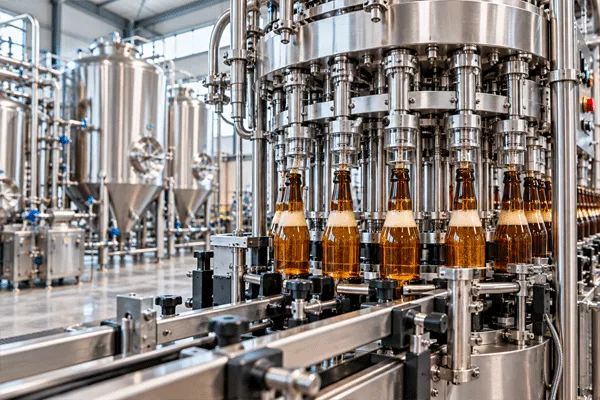
4. How Do You Choose Between Manual, Semi-Automatic, and Automatic Filling?
The level of automation affects labor requirements, production speed, equipment investment, and packaging flexibility. Small breweries with limited output may prefer a compact system, while larger producers may need automated bottle handling and integrated packaging equipment.
Manual equipment requires more operator involvement and can be suitable for very small production runs. Semi-automatic systems automate part of the filling cycle but still depend on operators for tasks such as bottle positioning. Automatic systems can coordinate bottle feeding, filling, and product transfer with less manual intervention.
| System Type | Advantages | Considerations |
|---|---|---|
| يدوي | Low initial investment and simple operation | Labor-intensive and limited output |
| شبه أوتوماتيكي | Improved consistency with moderate automation | Operators remain involved in each cycle |
| Automatic | Higher potential output and reduced repetitive work | Higher investment and integration requirements |
A brewery should compare the expected number of bottles per hour under normal operating conditions, not only the manufacturer’s maximum rated speed. Changeovers, cleaning, inspection, and downtime all affect real output.
It is also important to assess the downstream equipment. An automatic filler cannot deliver its full potential if the capping machine, labeling station, or packing process operates much more slowly.
5. What Should Breweries Consider When Selecting Bottle Sizes and Packaging Formats?
Packaging decisions affect the filling equipment, production layout, storage requirements, and distribution strategy. Breweries may use different bottle sizes for retail sales, restaurants, tasting rooms, or specialty products. Some also package beer in cans and kegs to serve different customer groups.
Each container format creates different handling requirements. Bottle height, diameter, neck design, closure type, and material can affect positioning and filling. When a brewery uses multiple formats, it should check whether the equipment supports quick changeovers or requires additional parts.
Glass bottles are common in beer packaging, while PET containers may suit selected beverages and applications. The appropriate choice depends on product compatibility, market expectations, transport conditions, and the required shelf life.
Before purchasing packaging equipment, prepare a container specification that includes:
- Bottle material and dimensions
- Nominal filling volume
- Closure type
- Required packaging output
- Number of product formats
- Expected frequency of changeovers
This information helps equipment suppliers evaluate compatibility and avoid unnecessary modifications after installation.
6. How Does a Bottle Filling Machine Fit Into a Complete Brewery Packaging Line?
A bottle filling machine is only one part of a brewery’s packaging process. A complete line may include finished-beer storage, product transfer, bottle preparation, filling, capping, labeling, inspection, and case packing.
A bright beer tank is commonly used to hold finished beer before packaging. Depending on the brewery’s design, beer may move from the tank to the filling equipment through sanitary piping and suitable transfer arrangements. The transfer system should protect product quality while meeting the required production rate.
A typical packaging workflow is:
Bright Beer Tank → Product Transfer → Bottle Preparation → Filling → Capping → Labeling → Inspection → Packing
The exact arrangement varies according to the beverage, filling method, available space, and packaging target. Breweries should plan the complete workflow rather than selecting a filling machine in isolation.
For more information about packaging choices, read our guide to bottled beer vs. canned beer. It explains key differences between the two formats and their implications for beer quality and shelf life.
When designing a brewery, the bright beer tank, transfer equipment, filling station, and downstream packaging machines should be considered as connected parts of one production system.
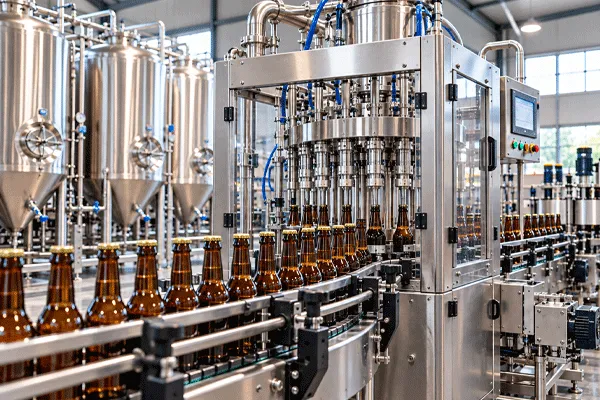
7. What Is the Role of Bright Beer Tanks in Bottling?
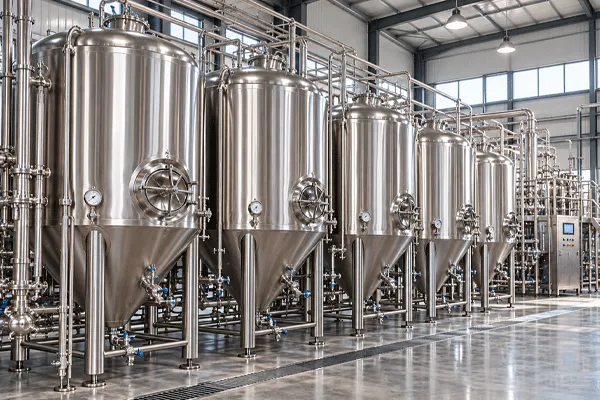
Bright beer tanks, also called brite tanks, are used to hold finished beer after fermentation and other required processing stages. Depending on the brewery’s process, they may support final conditioning, carbonation, clarification, and temporary storage before packaging.
Using a suitable bright beer tank helps separate fermentation activities from packaging operations. This can make production scheduling easier because the brewery can prepare finished beer for packaging while fermenters become available for new batches.
The tank must match the brewery’s working volume, pressure requirements, cooling needs, and cleaning procedures. Its outlet connections and transfer arrangements should also be compatible with the downstream packaging system.
A bright beer tank does not replace a filling machine. Instead, it provides a suitable source of finished beer for the packaging stage. The brewery must still choose filling equipment that matches the beverage’s carbonation, container format, and production rate.
Explore our خزانات البيرة اللامعة to learn more about tank options for finished-beer storage and packaging workflows.
8. How Can Breweries Maintain Filling Accuracy and Beverage Quality?
Filling accuracy depends on both the equipment and the operating conditions. Inconsistent supply pressure, unsuitable filling settings, worn seals, blocked nozzles, and incorrect bottle positioning can cause variation between containers.
For beer, foam control and oxygen management are especially important. Operators should maintain suitable product temperature and pressure, follow the equipment manufacturer’s setup instructions, and monitor filling performance during production. If the product changes, the filling parameters may need to be reviewed.
Cleaning and sanitation are also essential. Product-contact surfaces, valves, hoses, and nozzles should be cleaned using procedures appropriate for the beverage and equipment design. Regular inspection helps identify wear or buildup before it affects product quality.
A practical quality-control routine may include:
- Checking fill volume at regular intervals
- Inspecting caps and closures
- Monitoring foam and visible fill levels
- Checking for leaks and product drips
- Reviewing cleaning and sanitation records
- Inspecting the equipment before and after production
Breweries should establish measurable acceptance criteria for filling volume, closure quality, and other packaging checks. Consistent monitoring helps identify problems early and reduces the risk of rejected products.
9. How Do You Plan Packaging Capacity for a New or Expanding Brewery?
Packaging capacity should match the amount of finished beer the brewery expects to produce and sell. A brewhouse may produce more beer than the packaging line can handle, creating a bottleneck. Conversely, an oversized packaging system may increase investment and operating costs without delivering useful gains.
Start by estimating the volume of finished beer to be packaged per day or week. Then consider container size, target bottles per hour, working hours, product changeovers, cleaning time, and planned maintenance. The result should reflect realistic operating conditions rather than continuous operation at maximum rated speed.
For a new brewery, it is useful to plan for future growth without buying unnecessary capacity at the start. A modular production layout may allow additional packaging equipment or upgraded automation when demand increases.
لدينا معدات مصانع الجعة التجارية و معدات صناعة البيرة الصغيرة pages provide starting points for exploring brewery equipment configurations. The right system depends on your planned batch volume, fermentation capacity, packaging requirements, and available factory space.
As a professional brewery and beverage equipment manufacturing plant, we provide customized stainless steel brewing systems, fermentation tanks, brewhouse systems, and turnkey brewery solutions for global B2B customers. We help customers consider how packaging requirements fit into the wider production plan.
10. Frequently Asked Questions About Bottle Filling Machines for Breweries
What type of bottle filling machine is best for beer?
Counter-pressure filling is commonly used for carbonated beer because it helps control foaming and retain carbonation. The best system depends on production volume, beer characteristics, bottle formats, and the required level of automation.
Can one filling machine handle different beer styles?
Potentially, yes. Compatibility depends on the machine design, the carbonation and foaming characteristics of each beer, and the required operating settings. Confirm the supported product range with the supplier before purchasing.
What is the difference between bottle filling and can filling?
Both processes package beverages, but bottles and cans use different container-handling and closure systems. Beer bottling may involve bottle positioning and capping, while canning uses can handling and seaming equipment. The appropriate system depends on the brewery’s packaging strategy.
Why does beer foam during bottle filling?
Foaming can result from pressure changes, product temperature, carbonation level, turbulence, or unsuitable filling settings. A suitable filling method and properly controlled operating conditions help reduce excessive foam.
Do breweries need bright beer tanks before bottling?
Not every brewery uses the same process, but bright beer tanks are commonly used to hold finished beer before packaging. Whether they are needed, and how many are required, depends on production volume, conditioning practices, and packaging schedules.
How do I choose packaging equipment for a new brewery?
Start with your expected production volume, beer styles, bottle or can formats, carbonation requirements, and available space. Then evaluate filling technology, automation, cleaning requirements, downstream equipment, and future expansion plans.
Key Takeaways
- A bottle filling machine transfers beverages into containers at a controlled volume.
- Carbonated beer often requires counter-pressure filling to help manage foam and carbonation.
- Manual, semi-automatic, and automatic equipment suit different production volumes and budgets.
- Bottle sizes, closure types, and packaging formats affect equipment selection.
- Bright beer tanks can provide finished-beer storage before packaging, but they do not replace filling equipment.
- Filling accuracy depends on suitable technology, stable operating conditions, sanitation, and routine checks.
- The filler, capping equipment, labeling station, and packing process should be planned as one coordinated packaging line.
- A brewery’s packaging capacity should match its production schedule and future growth plans.
If you are planning a new brewery or upgrading an existing beverage production facility, begin by defining your beer styles, packaging formats, output target, and available space. These details will help you evaluate the most suitable packaging workflow and coordinate it with your brewing and fermentation equipment.