Using the wrong wine fermentation container can cause oxidation, spoilage, messy overflow, hard cleaning, or poor temperature control. A beginner may choose a bucket too small. A winery may choose a tank with the wrong fittings. The best container protects both flavor and process.
The best container for fermenting wine depends on scale and wine style. For home wine, a food-grade plastic fermentation bucket is practical for primary fermentation, while glass carboys are useful for secondary fermentation. For wineries and commercial wine production, stainless steel fermenters or stainless steel tanks are usually best because they are durable, easy to clean, sanitary, and suitable for temperature-controlled fermentation.

Struttura dell'articolo
What is the best container for fermenting wine?
Why does the fermentation container matter in winemaking?
Is a plastic bucket good for primary fermentation?
When should you use glass carboys or demijohns?
Why are stainless steel fermenters best for wineries?
What container is best for red wine fermentation?
What container is best for white wine and rosé wines?
How do lid, bung, stopper, and airlock affect fermentation?
What size container do you need: 5 gallon, 20 gallon, or larger?
How should commercial buyers choose wine fermentation equipment?
What Is the Best Container for Fermenting Wine?
The best container for fermenting wine depends on the batch size, type of wine, fermentation stage, and level of control needed. A beginner making wine at home may use a 5 gallon food-grade plastic bucket for primary fermentation and a glass carboy for secondary fermentation. A small winery may use 20 gallon tubs, open fermenters, carboys, or smaller tanks. A commercial winery usually needs stainless steel wine fermenters with sanitary fittings and temperature control.
In simple terms, the best container should be food-safe, easy to clean, large enough for fermentation activity, suitable for a lid and airlock, and matched to the wine style. Red wine often needs extra space for grape skins and cap management. White wine usually benefits from cleaner closed fermentation and temperature control.
UC Davis notes that fermentation management includes important factors such as temperature, nutrients, sanitation, and monitoring. This means the container is not just a holding vessel. It directly affects how well the fermentation can be managed.
Why Does the Fermentation Container Matter in Winemaking?
A fermentation container affects temperature, oxygen exposure, sanitation, headspace, yeast activity, and daily cellar workflow. During fermentation, yeast converts grape sugars into alcohol and CO2. The container must give enough room for foaming, movement, and gas release.
If the container is too small, the batch may overflow. If the lid does not seal well during later stages, oxygen may enter and damage wine quality. If the material is hard to clean, spoilage organisms can remain inside. If the container has poor temperature control, the wine may ferment too fast or too slowly.
UC Davis explains that temperature is an excellent way to control yeast metabolic rates, and that warmer temperatures can speed fermentation while lower temperatures slow it and help retain volatile compounds. This is one reason commercial wineries often choose stainless steel tanks with cooling jackets instead of simple open containers.
Is a Plastic Bucket Good for Primary Fermentation?
Yes, a food-grade plastic bucket can be a good container for primary fermentation, especially for beginner winemakers and small home wine batches. A fermentation bucket is light, affordable, easy to move, and easy to clean. It also gives enough opening space to add grape must, stir, punch down skins, and monitor the batch.
For a 5 gallon wine batch, many home winemakers use a bucket larger than 5 gallons because primary fermentation creates foam and CO2. Extra headspace is helpful during active fermentation. A bucket with a lid, airlock hole, and food-grade plastic body can be a simple and practical first fermenter.
However, plastic has limits. Plastic buckets may scratch over time, and scratches can hold residue. They are also less durable than stainless steel. For serious winemaking or repeated commercial use, stainless steel is usually a better long-term choice.
When Should You Use Glass Carboys or Demijohns?
Glass carboys and demijohns are common for small-scale winemaking, especially after primary fermentation. A carboy is useful when the active bubbling slows and the wine needs to be racked away from sediment. Glass containers are clear, non-porous, and easy to observe.
A carboy works well for secondary fermentation or wine storage because it can be filled close to the neck, reducing extra headspace. This helps limit oxygen exposure. A bung and airlock can seal the opening while allowing CO2 to escape.
The downside is handling. Glass carboys are heavy and can break if dropped. They are also harder to clean than a wide-mouth bucket. For home wine, they are useful. For commercial wineries, they are usually too small and too fragile for daily production.
Why Are Stainless Steel Fermenters Best for Wineries?
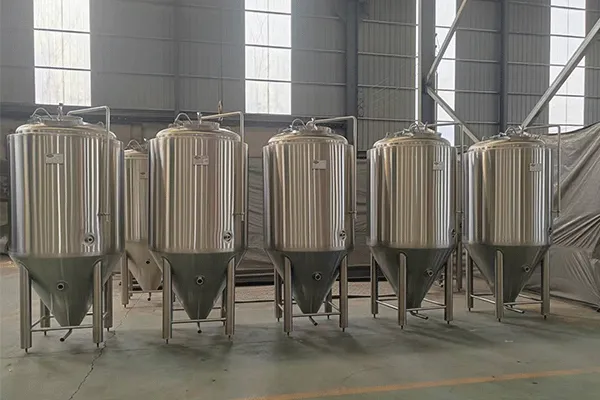
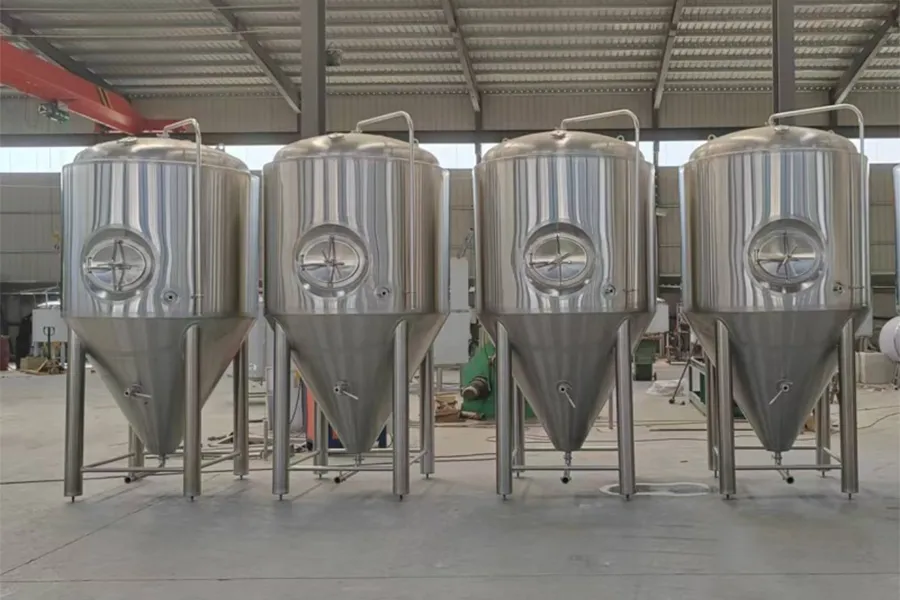
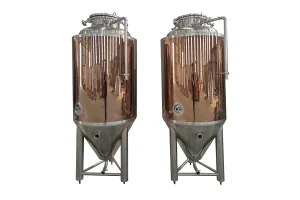
For commercial wineries, stainless steel fermenters are often the best container for wine fermentation. Stainless steel is strong, durable, easy to clean, and suitable for sanitary fittings. It can also be designed with cooling jackets, valves, manways, racking arms, sample ports, and CIP cleaning options.
The Smithsonian notes that stainless steel fermentation tanks became important in wineries because they are easy to clean, help prevent bacteria from spoiling wine, and allow better temperature control when fitted with jackets.
A stainless steel tank is especially useful for wineries that need stable quality across many batches. It supports temperature-controlled fermentation, better sanitation, and easier integration with pumps, tubing, glycol, valves, and cellar workflow.
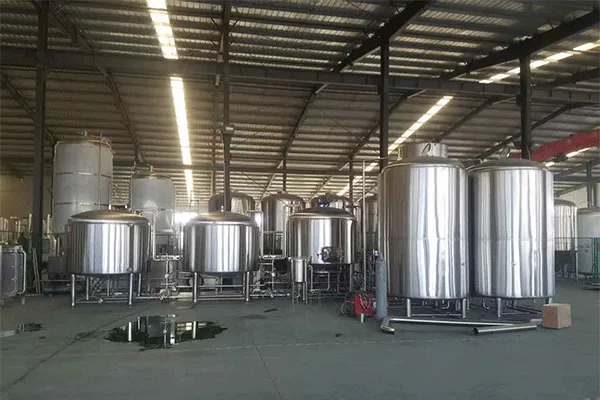
As a professional brewery and beverage equipment manufacturing plant, we often design stainless steel fermenters for wineries, breweries, cider producers, kombucha producers, and beverage startups. The key is not only tank volume. The real value is a sanitary structure, correct fittings, easy cleaning, and a layout that reduces production risk.
What Container Is Best for Red Wine Fermentation?
Red wine fermentation often needs a wider container because red wine usually ferments with grape skins, seeds, and pulp. These solids rise during fermentation and form a cap. Winemakers may need to punch down, pump over, mix, or manage the cap to extract color, tannin, aroma, and flavor.
For small batches, open food-grade tubs, fermentation buckets, and wide-mouth fermenters can work. For larger red wine production, open-top stainless steel fermenters or jacketed tanks with pump-over ports are common. The container should have enough headspace for the cap and foam.
WineMaker Magazine notes that open plastic fermenters are often best for primary fermentation of red wine, and suggests planning about 12 to 15 gallons of capacity for every 100 pounds of crushed grapes. This is a practical reminder: red wine needs more container space than the final liquid volume alone.
What Container Is Best for White Wine and Rosé Wines?
White wine and rosé wines are often fermented after pressing, so the container usually holds juice rather than grape skins. This means the winemaker may choose a closed container, such as a carboy, stainless steel fermenter, or stainless steel tank.
For home wine, a glass carboy can work well for white wine fermentation after the juice is prepared. For commercial wineries, stainless steel tanks with cooling jackets are preferred because they help control fermentation temperature. Cooler fermentation can help preserve fresh aromas, depending on the wine style.
White wine also requires careful oxygen management. A container that can be filled properly, sealed with a bung or lid, and connected to an airlock or controlled vent is useful. For commercial wine production, stainless steel tanks with tri-clamp fittings, sample valves, and temperature probes make the winemaking process easier to manage.
How Do Lid, Bung, Stopper, and Airlock Affect Fermentation?
The lid, bung, stopper, and airlock help control gas flow and protect the wine from outside contamination. During active fermentation, yeast produces CO2. The airlock lets gas escape while reducing the chance of insects, dust, and air entering the container.
A fermentation bucket may use a plastic lid with a drilled hole for an airlock. A carboy usually uses a rubber bung or silicone stopper. Stainless steel tanks may use a sealed lid, manway, vent, pressure relief device, or airlock-style fitting depending on the design.
Good sealing matters more after active fermentation slows. When CO2 production drops, wine becomes more exposed to oxygen. Too much oxygen can lead to oxidation, flavor loss, or spoilage. A proper lid, airlock, bung, and stopper setup helps protect the wine during the next stage.
What Size Container Do You Need: 5 Gallon, 20 Gallon, or Larger?
Container size depends on batch volume and fermentation stage. A 5 gallon batch should not be fermented in a container with exactly 5 gallons of total volume during active fermentation. It needs extra headspace. A 6.5 gallon or larger fermentation bucket is often used for a 5 gallon home wine batch.
For small-scale winemaking, common sizes include:
| Batch Scale | Common Container | Best Use |
|---|---|---|
| 1 gallon | Small jar or mini fermenter | Trial batch |
| 5 gallon | Fermentation bucket or carboy | Home wine |
| 6.5 gallon | Primary fermentation bucket | 5 gallon batch with headspace |
| 20 gallon | Tub or small fermenter | Small volume wine production |
| 50–200 liter | Stainless steel tank | Boutique winery batches |
| 500L+ | Stainless steel fermenter | Commercial winery production |
| 1,000L–10,000L+ | Stainless steel tanks | Larger wine production |
For red wine with grape solids, choose more headspace. For storage after fermentation, reduce headspace. This is why many winemakers use one container for primary fermentation and another for secondary fermentation or wine storage.
What Materials Are Used for Wine Fermentation Containers?
Wine fermenters can be made from plastic, glass, stainless steel, wood, concrete, or other food-safe materials. Each material has strengths and limits.
| Materiale | Vantaggio | Limitazione |
|---|---|---|
| Food-grade plastic | Affordable, light, easy for beginners | Can scratch and wear over time |
| Glass carboys | Non-porous and clear | Heavy and breakable |
| Stainless steel | Durable, sanitary, easy to clean | Higher upfront cost |
| Wood | Adds oak influence and oxygen exchange | Harder to clean and manage |
| Concrete | Thermal mass and special texture | Heavy and less flexible |
| Fusto | Strong closed vessel | Limited access and cleaning complexity |
For most commercial wineries, stainless steel offers the best balance of sanitation, control, durability, and workflow. For home wine, food-grade plastic buckets and glass carboys remain practical because they are affordable and easy to source.
How Should Commercial Buyers Choose Wine Fermentation Equipment?
Commercial buyers should choose wine fermentation equipment based on process, not only price. A winery needs containers that match grape volume, fermentation style, floor layout, cooling system, cleaning method, and future expansion.
Before buying a tank or fermenter, confirm:
| Domanda dell'acquirente | Perché è importante |
|---|---|
| What type of wine will be produced? | Red wine, white wine, rosé, fruit wine, cider |
| What is the batch size? | Defines fermenter volume |
| Is primary fermentation or secondary fermentation needed? | Changes container design |
| Is temperature control needed? | Requires cooling jacket and glycol |
| Will grape skins be included? | Requires headspace and cap access |
| Is the tank easy to clean? | Reduces sanitation risk |
| What fittings are required? | Valve, manway, racking arm, sample port |
| Is the material food-grade? | Supports safe beverage production |
| Is the cellar layout limited? | Affects tank shape and size |
| Will production grow later? | Supports future expansion |
For global B2B customers, the best wine fermenter is not always the largest one. It is the container that fits the wine style, cellar operation, and long-term business plan.
What Recommendations Do Not Apply to Every Winemaker?
Not every winemaker needs the same container. A beginner may only need a fermentation bucket, carboy, bung, stopper, tubing, and airlock. A small winery may need smaller tanks and open fermenters. A commercial winery may need jacketed stainless steel tanks, pumps, valves, and temperature control.
Tra i compromessi più importanti figurano:
- Plastic buckets: affordable and easy, but less durable.
- Glass carboys: good for secondary fermentation, but fragile.
- Stainless steel tanks: sanitary and professional, but higher cost.
- Open fermenters: good for red wine cap work, but require careful sanitation.
- Closed tanks: better oxygen control, but less access for cap management.
- Smaller tanks: flexible for many wine styles, but more cleaning work.
- Large tanks: efficient for volume, but less flexible for small batches.
The right answer depends on the type of wine, grape volume, batch size, budget, temperature control needs, and cleaning workflow.
Practical Winery Case: Choosing Between Buckets, Carboys, and Stainless Steel Tanks
A small winery project came to us with a common question: “Can we start with plastic tubs and upgrade later?” The answer was yes, but only for the right stage and batch size.
For trial batches, food-grade plastic tubs and glass carboys were useful. For larger production, the buyer needed stainless steel tanks with cooling jackets, sanitary valves, manways, and racking arms. The final plan used different containers for different jobs.
| Process Need | Recommended Container |
|---|---|
| Small recipe test | 1 gallon jar or small fermenter |
| Home wine primary fermentation | Food-grade plastic bucket |
| Home wine secondary fermentation | Glass carboy with bung and airlock |
| Red wine cap management | Open fermenter or wide stainless steel tank |
| White wine temperature control | Jacketed stainless steel fermenter |
| Commercial storage | Stainless steel tank with proper fittings |
This staged plan reduced risk. The buyer did not overspend on the first test batch, but also avoided using beginner equipment for commercial production.
FAQs About Wine Fermenting Containers
What is the best container for fermenting wine?
For home wine, a food-grade plastic fermentation bucket is best for primary fermentation, and a glass carboy is useful for secondary fermentation. For wineries, stainless steel fermenters are usually best because they are durable, sanitary, and easy to control.
Can I ferment wine in a plastic bucket?
Yes, you can ferment wine in a food-grade plastic bucket. It should be clean, food-safe, large enough for foam and CO2, and fitted with a lid and airlock if needed.
Is glass or plastic better for wine fermentation?
Plastic is lighter and easier for primary fermentation. Glass is better for secondary fermentation because it is non-porous and allows better visual inspection. Stainless steel is better for commercial production.
Do I need an airlock for wine fermentation?
An airlock is strongly recommended, especially after the early active stage. It lets CO2 escape while helping protect the wine from outside air, insects, and dust.
What size bucket do I need for a 5 gallon batch of wine?
For a 5 gallon batch, many winemakers use a 6.5 gallon fermentation bucket for primary fermentation to allow headspace for foam and gas. A 5 gallon carboy may be used later when the wine is racked.
Is stainless steel better for fermenting wine?
Stainless steel is usually better for commercial wine fermentation because it is durable, easy to clean, sanitary, and can support temperature control, valves, fittings, and CIP cleaning.
Can I use a tub for fermenting red wine?
Yes, a food-grade tub can be used for small-scale red wine primary fermentation if it is clean and sized correctly. Red wine needs extra room for grape skins, foam, and cap management.
Punti chiave
The best container for fermenting wine depends on wine style, batch size, fermentation stage, and production scale.
Food-grade plastic buckets are practical for beginner and home wine primary fermentation.
Glass carboys are useful for secondary fermentation and small-volume wine storage.
Stainless steel fermenters are usually the best choice for wineries and commercial wine production.
Red wine fermentation often needs wide containers and extra headspace for grape skins and cap management.
White wine and rosé wines often benefit from closed stainless steel tanks with temperature control.
A lid, bung, stopper, and airlock help protect wine while allowing CO2 to escape.
A 5 gallon wine batch often needs a larger primary fermentation bucket to prevent overflow.
Commercial buyers should check material, tank size, fittings, cooling jacket, valve design, cleaning access, and cellar layout before buying.
The right fermentation container should make winemaking cleaner, safer, easier to control, and easier to scale.