قد يؤدي اختيار مصنع جعة استنادًا إلى حجم الخزانات فقط إلى أن ينتهي الأمر بمصنع جعة صغير بكمية كبيرة جدًا من البيرة، أو بقدرة إنتاجية قليلة جدًا، أو بنظام تخمير باهظ التكلفة يظل دون استخدام. يبدأ النهج الأفضل بكيفية شراء العملاء لبيرتك، ثم يطابق المعدات مع المبيعات الفعلية واحتياجات التخمير.
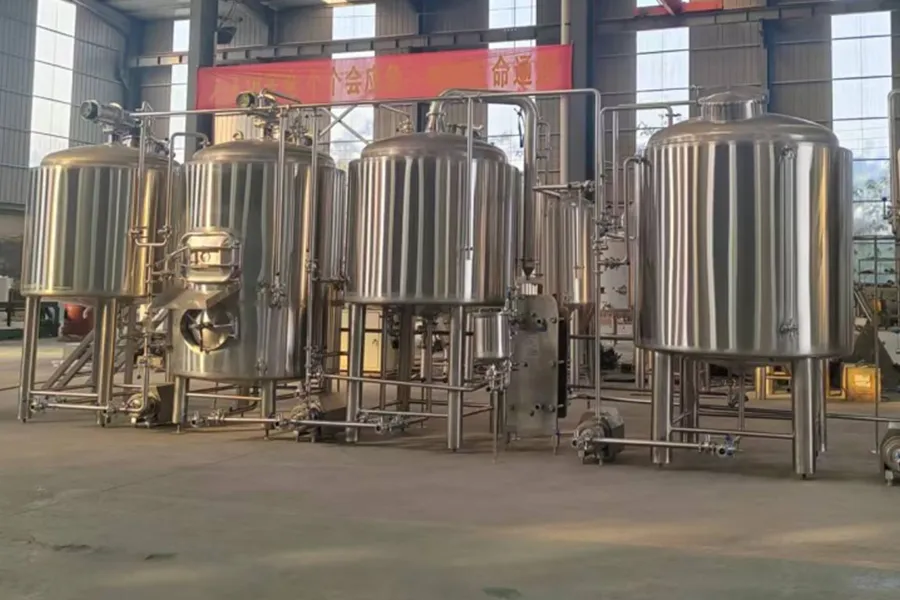
The best brewhouse for a small brewery is one that matches its weekly beer sales, batch variety, available brewing days, building utilities, and growth plans. A compact 2-vessel system often suits brewpubs and small taprooms, while larger or more flexible configurations may benefit breweries with frequent production, distribution, and seasonal demand.
1. ما الذي يجعل مصنع الجعة الخيار الأفضل لمصنع جعة صغير؟
لا يحتاج مصنع جعة صغير إلى أكبر نظام تخمير يمكنه تحمّل تكلفته. بل يحتاج إلى معدات يمكنها إنتاج الكمية المناسبة من البيرة في الوقت المناسب، مع مرونة كافية لدعم نشاطه التجاري.
فكّر في نشاطين تجاريين مختلفين. أحدهما غرفة تذوق في حيّ تبيع بيرة حرفية طازجة مباشرةً للعملاء. والآخر شركة تخمير صغيرة تورّد إلى الحانات والمطاعم وشركاء البيع بالتجزئة المحليين.
قد يُطلق على كليهما اسم مصنعَي جعة صغيرين، لكن احتياجاتهما الإنتاجية مختلفة.
قد تفضّل صالة التقديم دفعات أصغر وتغييرات متكررة في الوصفات. أما النشاط الذي يركّز على التوزيع فقد يحتاج إلى دفعات أكبر من منتجاته الأكثر مبيعًا وجدول أسبوعي يمكن التنبؤ به.
ينبغي أن يوجّه هذا التمييز اختيار المعدات.
مواءمة نماذج مصانع الجعة مع أولويات الإنتاج
| نموذج أعمال مصنع الجعة | المتطلب الرئيسي | أولوية مصنع الجعة |
|---|---|---|
| صالة تقديم صغيرة في الحي | بيرة طازجة وأنماط متناوبة | حجم دفعة مرن |
| مصنع جعة تابع لحانة أو مطعم | توريد موثوق في الموقع | تشغيل مدمج وعملي |
| حديقة بيرة موسمية | طلب متغير خلال عطلات نهاية الأسبوع | مرونة في الجدولة والتخزين |
| علامة تجارية صغيرة للبيرة الحرفية | منتجات أساسية قابلة للتكرار | إنتاج دفعات متسق |
| صالة تقديم مع حسابات براميل محلية | مبيعات في الموقع بالإضافة إلى التوزيع | مرونة أكبر في الإنتاج |
| مصنع جعة إقليمي آخذ في النمو | إنتاج منتظم بكميات أكبر | إنتاجية أعلى وتوسع مستقبلي |
يعتمد النظام الأنسب على النشاط التجاري القائم وراء البيرة.
في ZPET، نصنّع مصانع جعة مخصصة من الفولاذ المقاوم للصدأ لمشروعات مصانع الجعة المختلفة. يركّز تخطيط معداتنا على مواءمة حجم الدفعة، وتكوين الأوعية، وظروف الموقع، والمعدات المساندة مع متطلبات التشغيل لدى العميل.
هذه هي نقطة البداية لاستثمار فعّال في مصنع جعة.
2. كيف يمكن لمبيعات البيرة أن تساعدك في اختيار مصنع الجعة المناسب؟
قبل اختيار مصنع الجعة، قدّر كمية البيرة التي يتوقع النشاط بيعها خلال أسبوع عادي وأسبوع مزدحم.
ينبغي لمصنع الجعة الصغير أن يدرس عدة قنوات للمبيعات:
- بيرة مسكوبة في صالة التقديم
- مبيعات المطعم ومصنع الجعة التابع له
- بيرة للشراء الخارجي
- مبيعات البراميل إلى أماكن أخرى
- منتجات معبأة في زجاجات أو علب
- فعاليات خاصة
- عروض موسمية
يمكن أن تؤدي هذه القنوات إلى جداول إنتاج مختلفة.
على سبيل المثال، قد تبيع صالة التقديم معظم بيرةها من الجمعة إلى الأحد، بينما قد يحتاج مصنع جعة يورّد المطاعم إلى عمليات تسليم أسبوعية منتظمة.
قد يُخفي تقدير واحد للمبيعات الشهرية هذا الاختلاف.
توقع عملي للإنتاج
ضع في اعتبارك مصنع جعة صغيرًا افتراضيًا لديه خطة المبيعات الأسبوعية التالية:
| قناة المبيعات | أسبوع عادي | Busy Event Week |
|---|---|---|
| مبيعات صالة التقديم | 6 BBL | 6 BBL |
| حسابات البراميل المحلية | 2 BBL | 2 BBL |
| فعاليات خاصة | 0 BBL | 3 BBL |
| إجمالي الطلب على البيرة الجاهزة | 8 BBL | 11 BBL |
تحتاج هذه الشركة إلى أكثر من متوسط رقم للإنتاج. فهي تحتاج إلى جدول تخمير يدعم المبيعات المعتادة والذروات العرضية معًا.
إذا افترضنا فاقدًا توضيحيًا بنسبة 8% بين إنتاج غرفة التخمير المخطط والبيرة القابلة للبيع، يصبح إجمالي الإنتاج المطلوب كما يلي:
حجم التخمير المطلوب = الطلب على الجعة الجاهزة ÷ 0.92
أسبوع عادي:
8 ÷ 0.92 = حوالي 8.7 BBL
أسبوع الفعالية المزدحم:
11 ÷ 0.92 = حوالي 12.0 BBL
افتراض نسبة 8% مخصص للتخطيط فقط. تعتمد الخسائر الفعلية على الوصفة والتخمير والنقل والترشيح وعملية التعبئة والتغليف.
يتيح ذلك لمصانع الجعة تحويل مبيعات البيرة المخطط لها إلى حجم إنتاج ثابت.
لا يحدد الحساب المعدات تلقائيًا. بل يوفر أساسًا لمقارنة خيارات غرف التخمير المختلفة.
3. ما حجم صالة التخمير المناسب لمشروع جعة حرفية صغير؟
غالبًا ما تنظر مصانع الجعة الصغيرة في أنظمة مثل 3 BBL و5 BBL و7 BBL و10 BBL، رغم أن التكوينات الفعلية للمعدات قد تختلف.
السؤال الأكثر فائدة هو عدد دورات التخمير التي يتطلبها كل خيار لدعم الطلب نفسه.
باستخدام المثال السابق، انظر في الحد الأدنى من الدفعات الكاملة اللازمة لتغطية الأسابيع العادية والمزدحمة.
| حجم نظام التخمير | لترات تقريبية لكل دفعة | دفعات التخمير لأسبوع عادي | دفعات التخمير للأسبوع المزدحم |
|---|---|---|---|
| 3 BBL | 352 L | 3 | 4 |
| 5 برميل | 587 لتر | 2 | 3 |
| 7 برميل | 821 L | 2 | 2 |
| 10 BBL | 1,173 L | 1 | 2 |
يفترض هذا الجدول التوضيحي إنتاج دفعات اسمية كاملة لمنتج واحد متوافق، ولا يأخذ في الحسبان الحاجة إلى إنتاج أنواع مختلفة من الجعة بصورة منفصلة.
يتطلب النظام الأصغر عدداً أكبر من دورات التخمير لإنتاج الحجم الإجمالي نفسه. ويمكن للنظام الأكبر أن يقلل عدد أيام التخمير، ولكنه قد ينتج أيضاً كمية من الجعة تفوق ما يمكن للمشروع بيعه بسرعة.
يخلق ذلك مفاضلة مهمة.
أنظمة تخمير أصغر
يمكن أن تكون الدفعات الأصغر حجماً ملائمة للغاية لمصانع الجعة التي تعتمد قوائم تقديم متجددة أو تملك مساحات محدودة؛ إذ تتيح للمنشأة إنتاج أنواع مختلفة من الجعة دون تخصيص سعة تشغيلية كبيرة لمنتج واحد.
أنظمة تخمير أكبر
قد تناسب الدفعات الأكبر مصانع الجعة التي تحقق مبيعات قوية من أنواع البيرة الأساسية، أو لديها طلبات جملة منتظمة، أو تخطط للنمو الإقليمي.
ومع ذلك، يتطلب نظام تخمير أكبر أيضًا سعة مناسبة للتخمير والتبريد والتنظيف والتخزين.
ZPET’s معدات البيرة النانوية تدعم المجموعة مشاريع التخمير الأصغر حجمًا، بينما توفر منتجاتنا أنظمة مصنع الجعة توفّر تكوينات قابلة للتخصيص لمتطلبات الإنتاج المختلفة.
الحجم المناسب هو الذي يوازن بين حجم المبيعات وتنوع الوصفات واستغلال المعدات والطلب المستقبلي.
4. هل تُغيّر قائمة الجعة لديك التكوين الأنسب لصالة التخمير؟
نعم. يمكن أن يكون عدد أنماط البيرة التي ينتجها مصنع الجعة مهمًا بقدر أهمية إجمالي حجم الإنتاج.
تخيّل مصنعَي جعة حرفية يبيع كل منهما 12 BBL أسبوعيًا.
يبيع الأول ثلاثة أنواع أساسية من البيرة يطلبها العملاء بانتظام.
بينما يقدم الثاني عشرة منتجات متناوبة، تشمل مشروبات أيل (Ale) الموسمية، وأنواع الجعة التجريبية، والإصدارات المحدودة.
يبيع كلا المشروعين الكمية نفسها من الجعة، ولكن المشروع الثاني يحتاج إلى مرونة أكبر.
قد يستغرق بيع دفعة كبيرة من وصفة واحدة وقتًا أطول عندما يختار العملاء من بين العديد من صنابير البيرة المختلفة.
لهذا السبب نوصي بإعداد توقعات لقائمة أصناف الجعة قبل طلب المعدات.
مثال: المنتجات الأساسية مقابل أنواع البيرة المتناوبة
| فئة المنتج | نسبة المبيعات المتوقعة | الأثر على المعدات |
|---|---|---|
| جعة IPA الأساسية | 35% | دفعات متكررة منتظمة |
| جعة لاجر أساسية | 30% | قد تكون مدة إشغال قبو التخمير الأطول مهمة |
| بيرة بايل إيل | 20% | دفعات أصغر يمكن التنبؤ بها |
| إصدارات موسمية | 15% | جدولة إنتاج مرنة |
بالنسبة لمصنع جعة يتبع نمط المبيعات هذا، فإن المسألة الأساسية لا تقتصر على مجرد إنتاج 12 برميلاً (BBL) أسبوعياً، بل يجب أن تتيح المعدات أيضاً لصانع الجعة إنتاج الأصناف المناسبة بالكميات المناسبة.
قد تكون صالة التخمير الصغيرة مناسبة عندما تتغير الوصفات كثيراً. ومع ذلك، يمكن للنظام الأكبر أن يظل عملياً إذا كان لدى مصنع الجعة طلب كافٍ على المنتجات الأساسية وأوعية تخمير أصغر مناسبة للإصدارات المحدودة.
لذلك ينبغي تصميم مصنع الجعة وقسم التخمير معًا.
يوفر النظام المتوازن جيدًا لصانع البيرة حرية كافية لتطوير منتجات جديدة دون ترك كميات كبيرة من البيرة النهائية في التخزين.
5. كيف ينبغي لمصنع الجعة التخطيط لفعاليات حديقة البيرة وشاحنات الطعام؟
يمكن للفعاليات الخاصة أن تخلق فترات قصيرة من ارتفاع الطلب على البيرة.
قد تشهد إحدى مصانع الجعة مبيعات ثابتة خلال معظم أيام الأسبوع، ثم تواجه يوم سبت أكثر ازدحامًا بكثير بسبب مهرجان محلي أو عروض ترفيهية حية أو شاحنة طعام زائرة.
قد تشهد حديقة البيرة أيضًا تغيرات موسمية كبيرة، لا سيما عندما يؤثر الطقس الخارجي في إقبال العملاء.
تُعد هذه العوامل التجارية مهمة عند اختيار معدات التخمير.
ومع ذلك، فإن قضاء عطلة نهاية أسبوع واحدة حافلة بالعمل لا يبرر بالضرورة شراء صالة تخمير أكبر حجماً بكثير.
بدلاً من ذلك، حدد ما إذا كان الطلب الإضافي:
- منتظم ويمكن التنبؤ به
- موسمي
- يقتصر على بضعة فعاليات سنوية
- ينمو بثبات
- مركزة على عدد قليل من أنواع البيرة الأساسية
إذا كان الحدث متوقعًا، فقد يتمكن صانع الجعة من جدولة الإنتاج مبكرًا وبناء مخزون من البيرة الجاهزة.
على سبيل المثال، يمكن لمصنع الجعة الذي يتوقع إقامة فعالية صيفية أن يُعدّ براميل إضافية مسبقاً بعدة أسابيع، وذلك بناءً على نوع الجعة، وفترة الصلاحية، وتوفر التخزين المبرد.
في تلك الحالة، قد يكون من المفيد توفير مساحة تخزين أكبر للبيرة النهائية دون زيادة قدرة التخمير في الجانب الساخن.
ولكن إذا استمر الطلب المرتفع كل عطلة نهاية أسبوع وتأخر الإنتاج بانتظام، فقد تصبح غرفة تخمير أكبر استثمارًا أفضل.
الخلاصة واضحة:
حدّد حجم المعدات وفقًا للطلب المتكرر. استخدم جدولة الإنتاج والتخزين المناسب لإدارة فترات الذروة العرضية.
يساعد ذلك مصانع الجعة الصغيرة على حماية ميزانياتها مع الحفاظ على توافر موثوق للبيرة.
6. Is a 2-Vessel or 3-Vessel Brewhouse Better for a Small Brewery?
تعتمد الإجابة أساسًا على وتيرة التخمير وسير العمل التشغيلي.
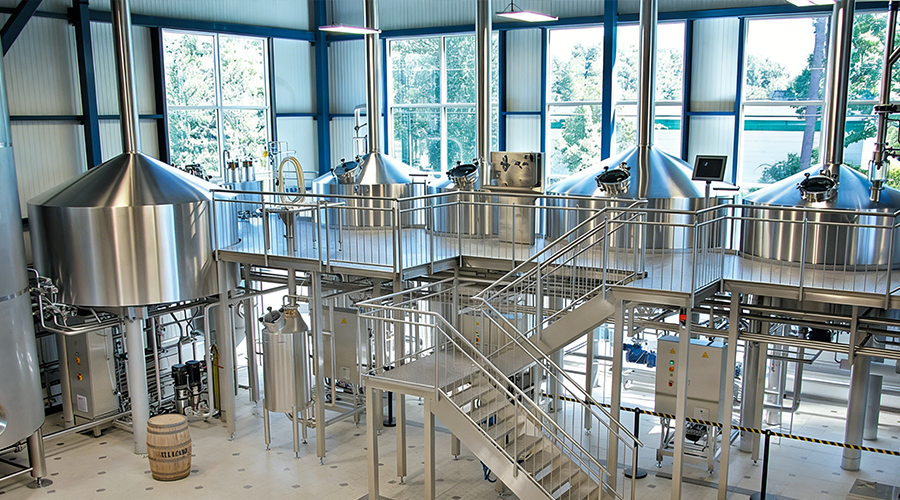
A compact 2-vessel brewhouse commonly combines mash and lauter functions in one vessel, with the kettle and whirlpool functions in another.
يمكن أن يكون هذا التكوين عملياً لمصنع جعة صغير ينتج دفعة واحدة في كل يوم تخمير.
قد تشمل مزاياه ما يلي:
- مساحة أصغر للمعدات
- عدد أقل من الأوعية الرئيسية
- توصيلات عملية أبسط
- استثمار أولي أقل
- إدارة أسهل لفريق تخمير صغير
تفصل صالة التخمير المكونة من 3 أوعية المزيد من خطوات المعالجة. واعتماداً على الترتيب الفعلي لأوعيتها، يمكنها إتاحة فرص أكبر لتداخل مهام العمل أثناء إنتاج الدفعات المتكررة.
يصبح هذا مفيدًا عندما يحتاج مصنع الجعة إلى إنتاج عدة دفعات في يوم واحد.
إطار الاختيار الأساسي
| متطلبات التشغيل | التكوين المطلوب تقييمه |
|---|---|
| دفعة واحدة في معظم أيام التخمير | Compact 2-vessel |
| Limited commercial space | وعائين (2-vessel) |
| Small team with simple operations | وعائين (2-vessel) |
| Frequent back-to-back brewing | ثلاثة أوعية (3-vessel) |
| More complex daily production | ثلاثة أوعية (3-vessel) |
| Higher continuous throughput | 3- or 4-vessel |
These are planning guidelines, not guaranteed production rates.
A system’s actual output depends on mash duration, lautering speed, heating capacity, transfer rates, wort cooling, and cleaning.
ZPET offers customized 2-vessel, 3-vessel, and larger brewhouse configurations for different production goals.
For a detailed comparison of how vessel count affects the workday, read our 2-Vessel vs 3-Vessel Brewhouse Throughput Guide.
The best choice is not necessarily the system with the most vessels. It is the one that meets the required production schedule without unnecessary cost and complexity.
7. How Do Fermentation Tanks Affect Small Brewery Production?
A brewhouse produces wort, but the brewery cannot turn that wort into finished beer without available fermentation capacity.
This is why a large hot-side system does not guarantee high weekly output.
If every fermentation tank is full, the brewer may need to stop brewing until another vessel becomes available.
The important planning factors include:
- عدد الدفعات أسبوعيًا
- وقت التخمير
- Beer style
- Tank working volume
- Conditioning requirements
- Cleaning time
- Finished-beer transfer and packaging
Consider a small brewery using a 5 BBL system to produce two full batches per week.
Assume each batch occupies its fermenter for 14 days, including the relevant cleaning turnaround.
A simple calculation is:
2 batches per week × 14 ÷ 7 = 4 occupied fermentation positions
That means four matching fermenters are the mathematical starting point.
Additional capacity may be needed for longer-cycle beer, maintenance, or more flexible production scheduling.
This calculation also explains why a brewery specializing in lager may need a different cellar configuration from one producing mostly faster-turnover ales.
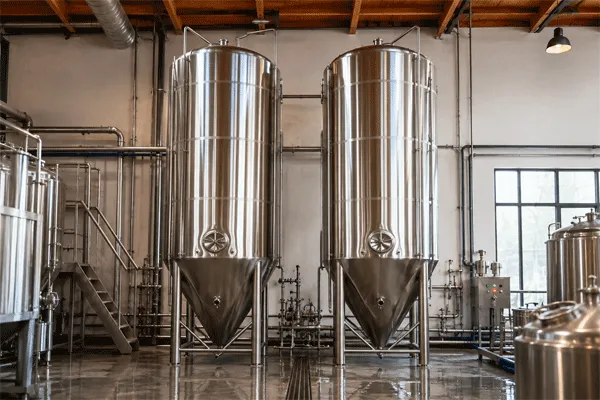
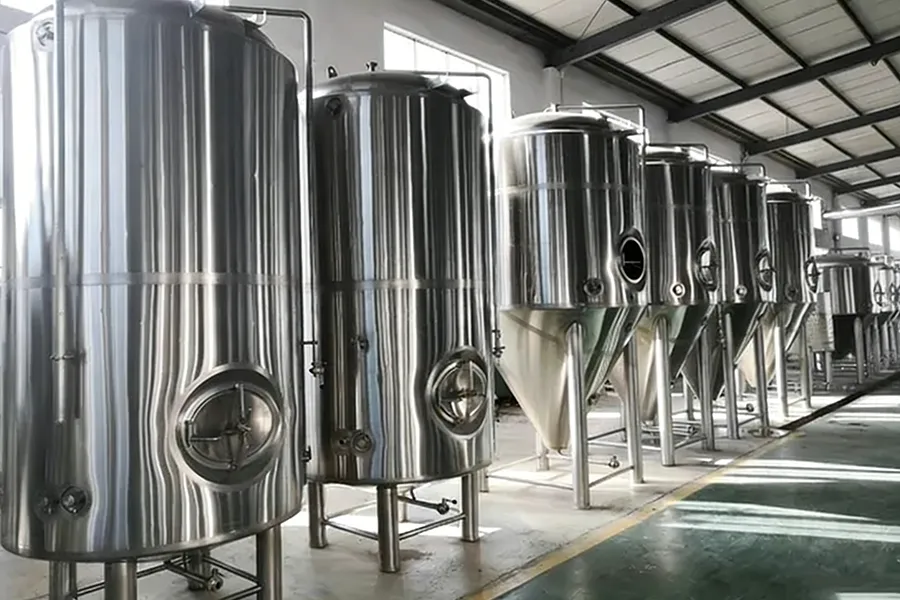
When planning new equipment, we recommend matching the brewhouse with suitable خزانات التخمير, cooling capacity, and finished-beer storage.
The goal is to keep both brewing and fermentation operations balanced.
8. What Building Conditions Matter When Choosing a Brewhouse?
The best brewhouse on paper may be unsuitable for the actual building.
Small breweries often operate in converted restaurants, retail properties, warehouses, or mixed commercial spaces.
These buildings were not always designed for commercial beer production.
Before purchasing equipment, the project team should check:
Ceiling height: Can the tallest vessel be installed and maintained safely?
Floor strength: Can the floor support filled tanks, equipment, and operating loads?
Water supply: Is enough suitable water available for brewing and cleaning?
Drainage: Can the building handle process wastewater and cleaning discharge?
Electricity: Does the site have suitable electrical capacity for the selected heating system and supporting equipment?
Ventilation: Can the building manage steam, moisture, heat, and any combustion exhaust?
Equipment access: Can large vessels pass through doors and be moved into their final positions?
Production layout: Can staff move safely between brewing, fermentation, cleaning, and packaging areas?
A taproom with an attractive customer-facing brewing area may also need to separate public access from industrial production activity.
This is especially important when the equipment is visible to customers.
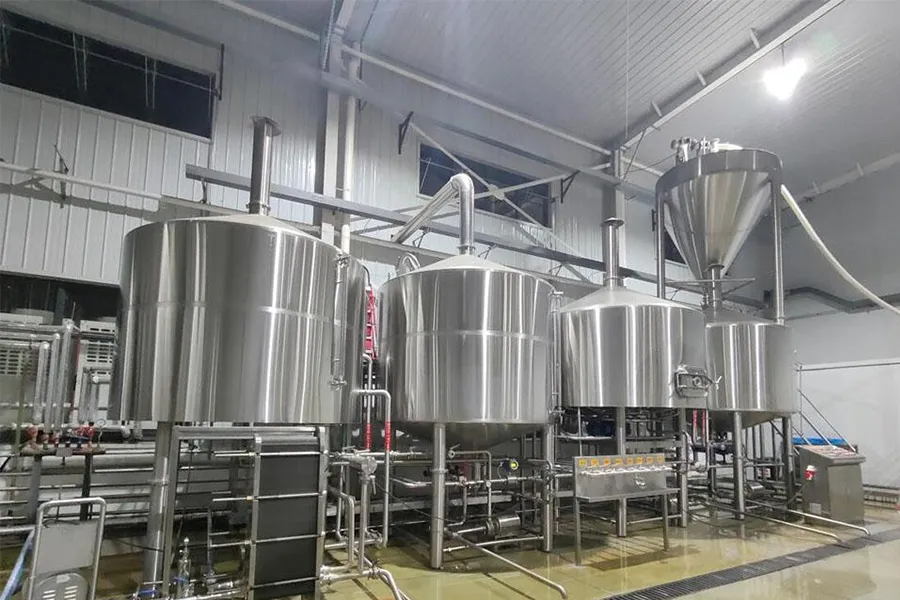
A polished stainless steel brewhouse can support a professional visual presentation, but equipment placement must still prioritize safety and operating efficiency.
ZPET provides customized brewery layout planning to coordinate vessel dimensions, piping, operating access, and installation requirements.
Our existing Craft Brewery Layout Guide explains why building measurements and service clearances should be confirmed before fabrication.
9. What Brewing Equipment Helps Maintain Consistent Beer Quality?
Selecting a brewhouse is only part of building a reliable small brewery.
Quality and consistency depend on the complete production system.
A good equipment plan should include appropriate control over:
- Mash temperature
- تسخين نقيع الشعير
- Lautering
- Wort cooling
- درجة حرارة التخمير
- Sanitary transfers
- التنظيف
- Finished-beer holding
- التعبئة والتغليف
For a small brewing team, reliable equipment should also be straightforward to operate and maintain.
A stainless steel system with properly designed valves, pumps, fittings, and accessible cleaning points can help staff follow repeatable operating procedures.
Automation may also be useful where consistent control is needed, but it should match the brewery’s actual requirements.
A highly automated system is not automatically the best choice for a business making only a few batches per week.
The same principle applies after production.
Beer must remain in good condition through storage and serving.
For a brewery with onsite draft sales, these downstream factors deserve attention alongside the brewing equipment itself.
Consistent beer quality comes from a complete, well-managed process—not from one expensive tank.
10. How Can a Small Brewery Avoid Buying Too Much Equipment?
An oversized brewhouse can tie up money that the business may need elsewhere.
A brewery startup also needs to invest in fermentation, cooling, cold storage, packaging, building preparation, installation, staff training, and daily operations.
That makes equipment balance important.
Instead of comparing only vessel purchase prices, buyers should evaluate the total installed system.
Equipment purchasing checklist
| Cost Category | What Buyers Should Confirm |
|---|---|
| مصنع الجعة | Working volume, vessel functions, heating |
| التخمير | Tank quantity, working capacity, pressure requirements |
| التبريد | Glycol chiller and piping |
| التنظيف | CIP equipment, valves, drains |
| عناصر التحكم | Manual, semi-automatic, or PLC options |
| Building | Electrical work, ventilation, flooring |
| التركيب | Delivery, positioning, connections |
| وثائق المساعدة | Drawings, equipment specifications, testing |
| Training | Operator instructions and support |
| Expansion | Space and utility provisions for future tanks |
A lower equipment price does not always mean a lower installed project cost.
Two quotations may contain very different inclusions.
For example, one supplier might quote only the main brewing vessels, while another includes control panels, piping, pumps, and installation assistance.
Buyers should compare equipment using the same project scope.
At ZPET, we provide customized stainless steel brewing equipment and turnkey brewery solutions for international customers.
For small brewery projects, our equipment design process can consider the building layout, expected production, preferred heating method, tank configuration, and available utilities.
The aim is to develop a practical system rather than add equipment without a clear purpose.
11. Which Brewhouse Would We Recommend for Different Small Brewery Plans?
The examples below are illustrative equipment-planning scenarios. They are not descriptions of specific completed customer projects.
Scenario A: Small Neighborhood Craft Beer Taproom
Business model: Mostly direct beer sales
Production: Limited weekly brewing
Beer menu: Several rotating products
Main concern: Space and initial investment
A compact 3–5 BBL system may be a suitable starting point if projected sales support it.
A 2-vessel configuration can help reduce equipment complexity while keeping the brewing process professional.
Smaller batches can also support more frequent recipe changes.
The brewery should reserve enough fermentation and cold storage capacity for its planned beer selection.
Scenario B: Restaurant Brewery With Seasonal Events
Business model: Onsite restaurant and taproom
Production: Regular brewing with weekend peaks
Beer menu: Core products plus seasonal releases
Main concern: Keeping popular products available
A 5–7 BBL system may be worth evaluating.
The brewery should calculate the normal and peak weekly demand before deciding between sizes.
If event demand is occasional, extra cold storage and more careful brewing schedules may be more practical than increasing brewhouse capacity.
If sales continue to grow, additional fermentation tanks can support higher production.
Scenario C: Growing Brewery With Local Distribution
Business model: Taproom plus external keg accounts
Production: Several scheduled batches each week
Beer menu: High-volume core beers and limited seasonal styles
Main concern: Production reliability and expansion
A 7–10 BBL or larger system may be appropriate, depending on the actual demand forecast.
The brewery may benefit from a configuration that supports repeat brewing and predictable production.
A dedicated bright beer tank, additional fermenters, and more capable packaging arrangements may also become important.
For these operations, equipment should be planned as a connected production line.
ZPET’s حلول حانات البيرة وحانات الجعة support different small commercial brewing applications, while our معدات مصانع الجعة الصغيرة covers larger production-scale configurations.
The correct investment depends on the business plan—not simply the size of other successful breweries.
12. What Should You Ask a Brewery Equipment Manufacturer Before Buying?
Before approving a quotation, prepare a clear project brief.
A useful supplier discussion should include your beer sales forecast, brewing schedule, building conditions, and future production goals.
Ask the manufacturer:
- What working batch volume does the proposed brewhouse deliver?
- How many batches can the system realistically complete during a planned brew day?
- Which vessel configuration fits the production schedule?
- How many fermentation tanks are required?
- What heating method is suitable for the building?
- What electrical, water, ventilation, and drainage requirements apply?
- What equipment is included in the quotation?
- How will cleaning and maintenance be handled?
- Can more fermentation tanks or equipment be added later?
- What installation, commissioning, documentation, training, and after-sales support is available?
An experienced equipment supplier should be able to explain how the recommended configuration meets those requirements.
The response should include practical equipment information, not only general marketing claims.
For international brewery projects, buyers should also confirm applicable local requirements and necessary technical documentation before fabrication.
This helps reduce the risk of equipment arriving at a building that is not ready for installation.
At ZPET, we manufacture customized brewing systems, stainless steel fermentation tanks, bright beer tanks, and turnkey brewery equipment for global B2B customers.
We can help evaluate your proposed brewery configuration based on target beer output, available space, utilities, and future development plans.
Request a customized brewhouse proposal: اتصل بـ ZPET
Frequently Asked Questions
What size brewhouse is best for a small brewery?
The best size depends on weekly beer sales, number of products, brew frequency, fermentation capacity, and available building space. Small taprooms may consider 3–5 BBL systems, while growing brewpubs and distribution-focused operations may evaluate 7–10 BBL or larger configurations.
Is a 2-vessel brewhouse enough for a small craft brewery?
Yes. A properly designed 2-vessel system can support professional commercial brewing. It is particularly practical for small operations with limited space and relatively low daily batch frequency.
Should a brewery choose a larger brewhouse for future growth?
Not automatically. A larger system may reduce future replacement costs, but it also increases initial investment and may require more utilities and supporting equipment. Compare current demand with a realistic expansion forecast before deciding.
Can a small brewery produce several beer styles using one brewhouse?
Yes. A single brewhouse can produce different recipes in separate brewing cycles. The brewery needs suitable cleaning procedures, recipe management, and enough fermentation capacity to keep products separate during production.
Does a larger brewhouse always produce better beer?
No. Beer quality depends on recipe design, raw materials, process control, fermentation, sanitation, and handling. Larger equipment primarily changes production volume and potential throughput.
What information does ZPET need to recommend a brewhouse?
Provide your target batch size, expected weekly production, number of beer styles, business model, building dimensions, available utilities, preferred heating method, and future expansion goals. These details help us prepare a more suitable equipment configuration.
Key Takeaways
- The best brewhouse for a small brewery is the one that matches real beer sales and production needs.
- Start with normal weekly sales and peak demand before selecting equipment capacity.
- Consider the difference between taproom sales, restaurant service, events, and external distribution.
- Smaller batches can provide greater flexibility for rotating craft beer menus.
- Larger batches may be more efficient for strong-selling core products.
- A 2-vessel system can work well for small breweries with limited space and lower brewing frequency.
- A 3-vessel system may offer more production flexibility for frequent back-to-back brewing.
- Plan fermentation capacity, cooling, CIP, storage, and packaging together with the brewhouse.
- Seasonal events do not always justify purchasing larger brewing equipment.
- Check the building’s ceiling height, utilities, drainage, and equipment access before ordering.
- Compare complete installed project costs rather than only equipment purchase prices.
- Reserve practical expansion options without overinvesting in capacity that may remain unused.
- Work with a brewery equipment manufacturer that can provide customized technical planning, equipment documentation, and installation support.
ZPET helps craft breweries, brewpubs, taprooms, and commercial beverage producers develop customized brewing systems based on their production plans. A well-matched brewhouse should support consistent beer quality, practical daily operation, and sustainable business growth.