Elegir una sala de cocción basándose solo en el tamaño de los tanques puede dejar a una pequeña cervecería con demasiada cerveza, muy poca capacidad de producción o un costoso sistema de elaboración que permanece inactivo. El mejor enfoque comienza por cómo compran los clientes su cerveza y luego ajusta el equipo a las ventas reales y a las necesidades de elaboración.
La mejor sala de cocción para una pequeña cervecería es la que se adapta a sus ventas semanales de cerveza, la variedad de lotes, los días de producción disponibles, los servicios del edificio y sus planes de crecimiento. Un sistema compacto de 2 recipientes suele ser adecuado para cervecerías con restaurante y pequeños salones de degustación, mientras que las configuraciones más grandes o flexibles pueden beneficiar a las cervecerías con una producción frecuente, distribución y demanda estacional.
1. ¿Qué hace que una sala de cocción sea la mejor opción para una cervecería pequeña?
Una pequeña cervecería no necesita el sistema de elaboración más grande que pueda permitirse. Necesita equipos que puedan producir la cantidad adecuada de cerveza en el momento adecuado, con suficiente flexibilidad para respaldar su negocio.
Piense en dos negocios diferentes. Uno es una cervecería de barrio con sala de degustación que vende cerveza artesanal fresca directamente a los clientes. El otro es una pequeña empresa cervecera que suministra a bares, restaurantes y socios minoristas locales.
Ambas pueden llamarse pequeñas cervecerías, pero sus necesidades de producción son diferentes.
La sala de degustación podría preferir lotes más pequeños y cambios frecuentes de recetas. El negocio enfocado en la distribución შეიძლება necesitar lotes más grandes de sus productos más vendidos y un programa semanal predecible.
Esa distinción debe guiar la selección de equipos.
Adaptación de los modelos de cervecería a las prioridades de producción
| Modelo de negocio de la cervecería | Requisito principal | Prioridad de la sala de cocción |
|---|---|---|
| Pequeña taproom de barrio | Cerveza fresca y estilos rotativos | Tamaño de lote flexible |
| Brewpub o cervecería de restaurante | Suministro fiable en el establecimiento | Operación compacta y práctica |
| Jardín cervecero de temporada | Demanda variable los fines de semana | Programación y almacenamiento flexibles |
| Pequeña marca de cerveza artesanal | Productos base reproducibles | Producción constante por lote |
| Taproom con clientes locales de barriles | Ventas en el establecimiento más distribución | Mayor flexibilidad de producción |
| Cervecería regional en crecimiento | Producción regular de mayor volumen | Mayor capacidad de producción y expansión futura |
El sistema más adecuado depende del negocio que sustenta la cerveza.
En ZPET, fabricamos salas de cocción de acero inoxidable personalizadas para distintos proyectos cerveceros. Nuestra planificación del equipo se centra en adaptar el volumen del lote, la configuración de los recipientes, las condiciones del lugar y el equipo auxiliar a las necesidades operativas del cliente.
Ese es el punto de partida para una inversión eficiente en una cervecería.
2. ¿Cómo pueden las ventas de cerveza ayudarte a elegir la sala de cocción adecuada?
Antes de seleccionar una sala de cocción, calcula cuánta cerveza espera vender el negocio durante una semana normal y una semana de alta demanda.
Una pequeña cervecería debe considerar varios canales de venta:
- Cerveza de barril en el taproom
- Ventas a restaurantes y brewpubs
- Cerveza para llevar
- Ventas de barriles a otros establecimientos
- Productos embotellados o enlatados
- Eventos especiales
- Promociones de temporada
Estos canales pueden generar diferentes calendarios de producción.
Por ejemplo, un taproom puede vender la mayor parte de su cerveza de viernes a domingo, mientras que una cervecería que abastece a restaurantes puede necesitar entregas semanales constantes.
Una única estimación de ventas mensuales puede ocultar esta diferencia.
Una previsión práctica de producción
Consideremos una pequeña cervecería hipotética con el siguiente plan de ventas semanal:
| Canal de ventas | Semana normal | Semana con muchos eventos |
|---|---|---|
| Ventas en la sala de degustación | 6 BBL | 6 BBL |
| Clientes locales de barril | 2 BBL | 2 BBL |
| Eventos especiales | 0 BBL | 3 BBL |
| Demanda total de cerveza terminada | 8 BBL | 11 BBL |
Este negocio necesita más que una cifra de producción promedio. Necesita un programa de elaboración que respalde tanto las ventas normales como los picos ocasionales.
Si suponemos una pérdida ilustrativa del 8 % entre la producción planificada de la sala de cocción y la cerveza comercializable, la producción bruta necesaria será:
Volumen de elaboración requerido = Demanda de cerveza terminada ÷ 0.92
Semana normal:
8 ÷ 0.92 = aproximadamente 8.7 BBL
Semana con evento concurrido:
11 ÷ 0.92 = aproximadamente 12,0 BBL
El supuesto del 8 % es únicamente para la planificación. Las pérdidas reales dependen de la receta, la fermentación, el trasiego, la filtración y el proceso de envasado.
Esto permite a las cervecerías convertir sus ventas de cerveza planificadas en un volumen de producción constante.
El cálculo no selecciona automáticamente el equipo. Proporciona la base para comparar distintas opciones de sala de cocción.
3. ¿Qué tamaño de sala de cocción se adapta a un negocio pequeño de cerveza artesanal?
Las cervecerías pequeñas suelen considerar sistemas de 3 BBL, 5 BBL, 7 BBL y 10 BBL, aunque las configuraciones reales del equipo pueden variar.
La pregunta más útil es cuántos ciclos de elaboración requiere cada opción para satisfacer la misma demanda.
Usando el ejemplo anterior, considera el número mínimo de lotes completos necesarios para cubrir las semanas normal y de alta demanda.
| Tamaño de la sala de cocción | Litros aprox. por lote | Cocciones para una semana normal | Elaboraciones para una semana con mucha actividad |
|---|---|---|---|
| 3 BBL | 352 L | 3 | 4 |
| 5 BBL | 587 L | 2 | 3 |
| 7 BBL | 821 L | 2 | 2 |
| 10 BBL | 1,173 L | 1 | 2 |
Esta tabla ilustrativa supone lotes nominales completos de un solo producto compatible. No contempla la necesidad de producir por separado distintos estilos de cerveza.
Un sistema más pequeño requiere más ciclos de elaboración para producir el mismo volumen total. Un sistema más grande puede reducir el número de días de elaboración, pero también puede producir más cerveza de la que el negocio puede vender rápidamente.
Eso genera una disyuntiva importante.
Sistemas de elaboración más pequeños
Los lotes más pequeños pueden funcionar bien para cervecerías con una carta de grifos rotativa o con espacio limitado. Permiten al negocio producir diferentes cervezas sin comprometer demasiada capacidad en un solo producto.
Sistemas de elaboración de cerveza más grandes
Los lotes más grandes pueden ser adecuados para cervecerías con cervezas base de gran venta, pedidos mayoristas regulares o planes de crecimiento regional.
Sin embargo, una sala de cocción más grande también requiere una capacidad adecuada de fermentación, refrigeración, limpieza y almacenamiento.
De ZPET Equipo de nanofábrica de cerveza el rango permite proyectos de elaboración de cerveza a menor escala, mientras que nuestro Sistemas de cocción ofrecen configuraciones personalizables para diferentes requisitos de producción.
El tamaño adecuado es el que equilibra el volumen de ventas, la variedad de recetas, el aprovechamiento del equipo y la demanda futura.
4. ¿Tu carta de cervezas cambia cuál es la mejor configuración de la sala de cocción?
Sí. La cantidad de estilos de cerveza que produce una cervecería puede ser tan importante como el volumen total de producción.
Imaginemos dos cervecerías artesanales que venden 12 BBL por semana cada una.
El primero vende tres cervezas principales que los clientes piden con regularidad.
La segunda ofrece diez productos rotativos, incluidas ales de temporada, cervezas experimentales y lanzamientos limitados.
Ambas venden la misma cantidad de cerveza, pero el segundo negocio necesita más flexibilidad.
Un lote grande de una sola receta puede tardar más en venderse cuando los clientes eligen entre muchos grifos diferentes.
Por eso recomendamos preparar una previsión del menú de cervezas antes de pedir equipos.
Ejemplo: productos principales frente a cervezas rotativas
| Categoría del producto | Proporción de las ventas esperadas | Implicación para el equipo |
|---|---|---|
| IPA principal | 35% | Lotes repetidos regulares |
| Lager principal | 30% | Una ocupación más prolongada de la bodega puede ser importante |
| Cerveza rubia | 20% | Lotes pequeños predecibles |
| Lanzamientos de temporada | 15% | Programación flexible de la producción |
Para una cervecería con este patrón de ventas, la cuestión clave no es simplemente producir 12 BBL cada semana. El equipo también debe permitir al cervecero producir los productos adecuados en las cantidades adecuadas.
Una sala de cocción pequeña puede funcionar bien cuando las recetas cambian con frecuencia. Un sistema más grande puede seguir siendo práctico si la cervecería tiene suficiente demanda de productos principales y recipientes de fermentación más pequeños adecuados para lanzamientos limitados.
Por lo tanto, la sala de cocción y la bodega de fermentación deben diseñarse en conjunto.
Un sistema bien equilibrado da al cervecero suficiente libertad para desarrollar nuevos productos sin dejar grandes cantidades de cerveza terminada almacenada.
5. ¿Cómo debe planificar una cervecería los eventos de cervecería al aire libre y camiones de comida?
Los eventos especiales pueden generar períodos cortos de alta demanda de cerveza.
Una cervecería puede tener ventas estables durante la mayor parte de la semana y luego experimentar un sábado mucho más concurrido debido a un festival local, entretenimiento en vivo o la visita de un camión de comida.
Una cervecería al aire libre también puede experimentar fuertes cambios estacionales, especialmente cuando el clima exterior afecta la afluencia de clientes.
Estos factores empresariales son importantes al elegir el equipo de elaboración de cerveza.
Sin embargo, un fin de semana concurrido no justifica necesariamente comprar una sala de cocción mucho más grande.
En su lugar, determine si la demanda adicional es:
- Regular y predecible
- Estacional
- Limitada a unos pocos eventos anuales
- En crecimiento constante
- Concentrada en unas pocas cervezas principales
Si el evento es predecible, el cervecero puede programar la producción con antelación y acumular inventario de cerveza terminada.
Por ejemplo, una cervecería que espera un evento de verano puede preparar barriles adicionales con varias semanas de antelación, según el estilo de cerveza, la vida útil y la disponibilidad de almacenamiento en frío.
En esa situación, puede ser útil contar con más almacenamiento de cerveza terminada sin aumentar la capacidad de elaboración del lado caliente.
Pero si la alta demanda continúa todos los fines de semana y la producción se retrasa con regularidad, una sala de cocción más grande შეიძლება convertirse en una inversión más sólida.
La lección es sencilla:
Size equipment for repeatable demand. Use production scheduling and suitable storage to manage occasional peaks.
This helps small breweries protect their budgets while maintaining reliable beer availability.
6. Is a 2-Vessel or 3-Vessel Brewhouse Better for a Small Brewery?
The answer depends mainly on brewing frequency and operational workflow.
A compact 2-vessel brewhouse commonly combines mash and lauter functions in one vessel, with the kettle and whirlpool functions in another.
This configuration can be practical for a small brewery producing one batch per brew day.
Its advantages may include:
- Smaller equipment footprint
- Fewer major vessels
- Simpler process connections
- Lower initial investment
- Easier management for a small brewing team
A 3-vessel brewhouse separates more processing steps. Depending on its actual vessel arrangement, it can provide greater opportunities for overlapping work during repeated batches.
This becomes useful when the brewery must produce several batches in a day.
Basic selection framework
| Operating Requirement | Configuration to Evaluate |
|---|---|
| One batch on most brew days | Compact 2-vessel |
| Limited commercial space | 2 recipientes |
| Small team with simple operations | 2 recipientes |
| Frequent back-to-back brewing | 3 vasos |
| More complex daily production | 3 vasos |
| Higher continuous throughput | 3- or 4-vessel |
These are planning guidelines, not guaranteed production rates.
A system’s actual output depends on mash duration, lautering speed, heating capacity, transfer rates, wort cooling, and cleaning.
ZPET offers customized 2-vessel, 3-vessel, and larger brewhouse configurations for different production goals.
For a detailed comparison of how vessel count affects the workday, read our 2-Vessel vs 3-Vessel Brewhouse Throughput Guide.
The best choice is not necessarily the system with the most vessels. It is the one that meets the required production schedule without unnecessary cost and complexity.
7. How Do Fermentation Tanks Affect Small Brewery Production?
A brewhouse produces wort, but the brewery cannot turn that wort into finished beer without available fermentation capacity.
This is why a large hot-side system does not guarantee high weekly output.
If every fermentation tank is full, the brewer may need to stop brewing until another vessel becomes available.
The important planning factors include:
- Number of batches per week
- Fermentation time
- Estilo de cerveza
- Tank working volume
- Conditioning requirements
- Cleaning time
- Finished-beer transfer and packaging
Consider a small brewery using a 5 BBL system to produce two full batches per week.
Assume each batch occupies its fermenter for 14 days, including the relevant cleaning turnaround.
A simple calculation is:
2 batches per week × 14 ÷ 7 = 4 occupied fermentation positions
That means four matching fermenters are the mathematical starting point.
Additional capacity may be needed for longer-cycle beer, maintenance, or more flexible production scheduling.
This calculation also explains why a brewery specializing in lager may need a different cellar configuration from one producing mostly faster-turnover ales.
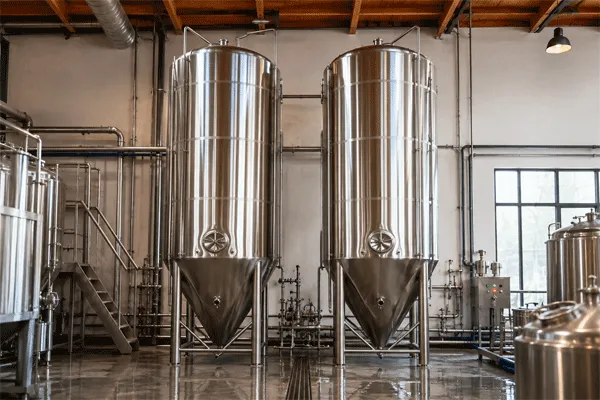
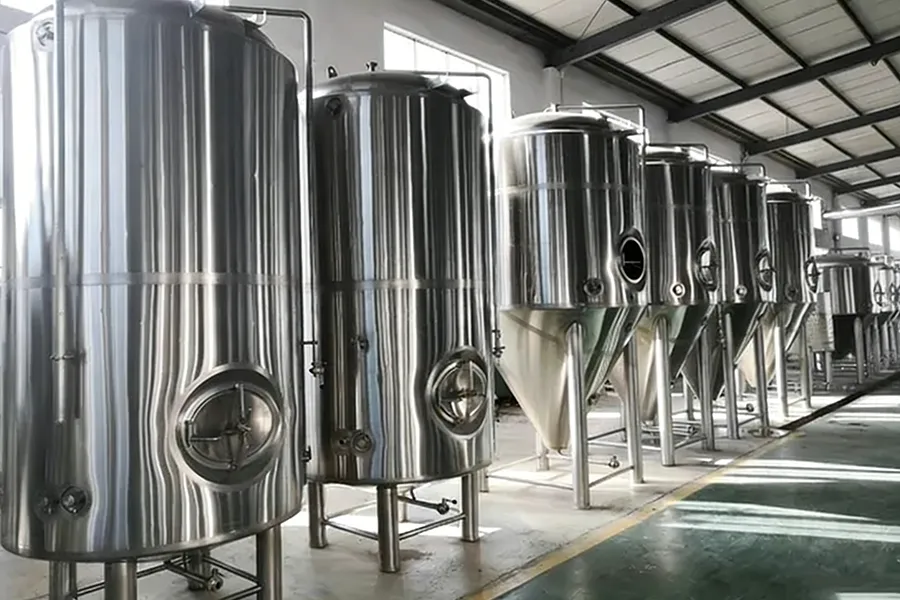
When planning new equipment, we recommend matching the brewhouse with suitable Tanques de fermentación, cooling capacity, and finished-beer storage.
The goal is to keep both brewing and fermentation operations balanced.
8. What Building Conditions Matter When Choosing a Brewhouse?
The best brewhouse on paper may be unsuitable for the actual building.
Small breweries often operate in converted restaurants, retail properties, warehouses, or mixed commercial spaces.
These buildings were not always designed for commercial beer production.
Before purchasing equipment, the project team should check:
Ceiling height: Can the tallest vessel be installed and maintained safely?
Floor strength: Can the floor support filled tanks, equipment, and operating loads?
Water supply: Is enough suitable water available for brewing and cleaning?
Drainage: Can the building handle process wastewater and cleaning discharge?
Electricity: Does the site have suitable electrical capacity for the selected heating system and supporting equipment?
Ventilation: Can the building manage steam, moisture, heat, and any combustion exhaust?
Equipment access: Can large vessels pass through doors and be moved into their final positions?
Production layout: Can staff move safely between brewing, fermentation, cleaning, and packaging areas?
A taproom with an attractive customer-facing brewing area may also need to separate public access from industrial production activity.
This is especially important when the equipment is visible to customers.
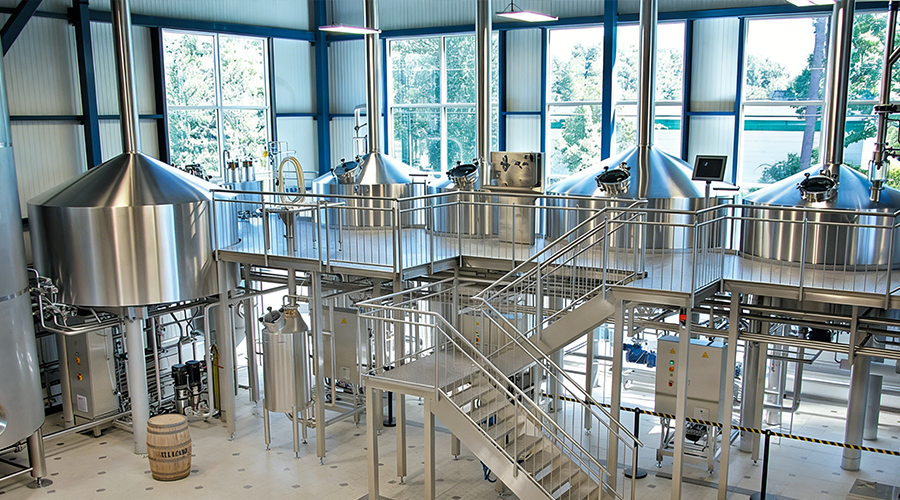
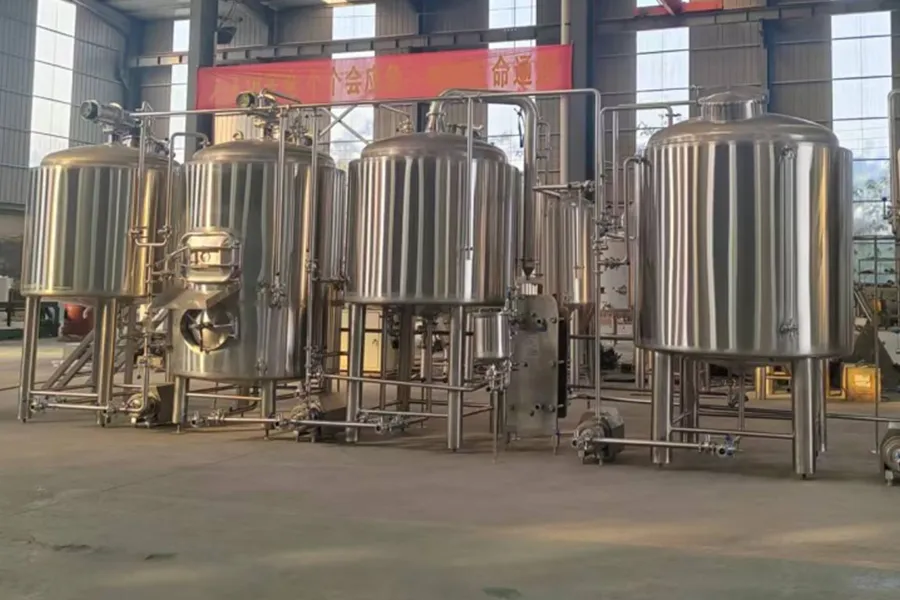
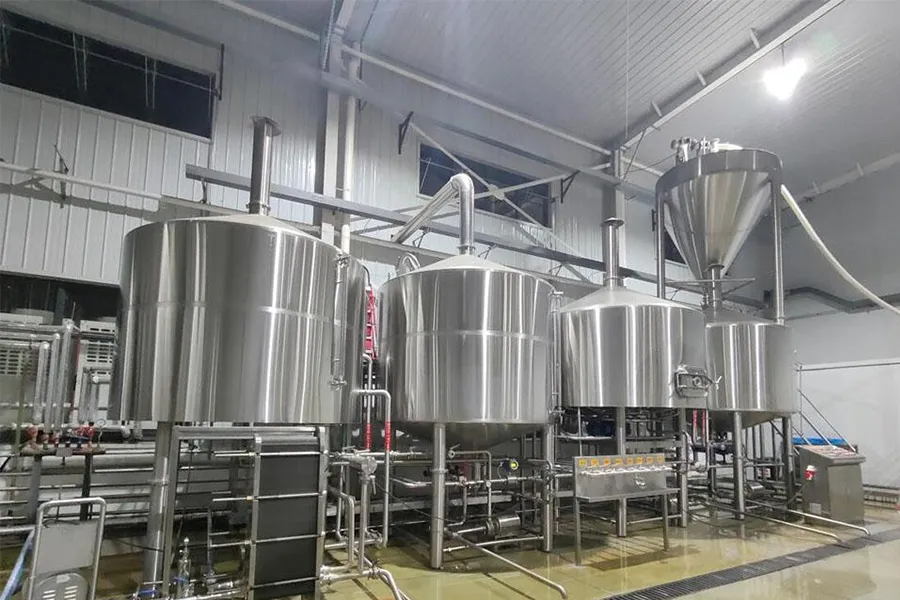
A polished stainless steel brewhouse can support a professional visual presentation, but equipment placement must still prioritize safety and operating efficiency.
ZPET provides customized brewery layout planning to coordinate vessel dimensions, piping, operating access, and installation requirements.
Our existing Craft Brewery Layout Guide explains why building measurements and service clearances should be confirmed before fabrication.
9. What Brewing Equipment Helps Maintain Consistent Beer Quality?
Selecting a brewhouse is only part of building a reliable small brewery.
Quality and consistency depend on the complete production system.
A good equipment plan should include appropriate control over:
- Mash temperature
- Wort heating
- Filtración del mosto
- Wort cooling
- Temperatura de fermentación
- Sanitary transfers
- Limpieza
- Almacenamiento de cerveza terminada
- Envasado
For a small brewing team, reliable equipment should also be straightforward to operate and maintain.
A stainless steel system with properly designed valves, pumps, fittings, and accessible cleaning points can help staff follow repeatable operating procedures.
Automation may also be useful where consistent control is needed, but it should match the brewery’s actual requirements.
A highly automated system is not automatically the best choice for a business making only a few batches per week.
The same principle applies after production.
Beer must remain in good condition through storage and serving.
For a brewery with onsite draft sales, these downstream factors deserve attention alongside the brewing equipment itself.
Consistent beer quality comes from a complete, well-managed process—not from one expensive tank.
10. How Can a Small Brewery Avoid Buying Too Much Equipment?
An oversized brewhouse can tie up money that the business may need elsewhere.
A brewery startup also needs to invest in fermentation, cooling, cold storage, packaging, building preparation, installation, staff training, and daily operations.
That makes equipment balance important.
Instead of comparing only vessel purchase prices, buyers should evaluate the total installed system.
Equipment purchasing checklist
| Cost Category | What Buyers Should Confirm |
|---|---|
| Cervecería | Working volume, vessel functions, heating |
| Fermentación | Tank quantity, working capacity, pressure requirements |
| Refrigeración | Glycol chiller and piping |
| Limpieza | CIP equipment, valves, drains |
| Controles | Manual, semi-automatic, or PLC options |
| Building | Electrical work, ventilation, flooring |
| Instalación | Delivery, positioning, connections |
| Documentación | Drawings, equipment specifications, testing |
| Training | Operator instructions and support |
| Expansión | Space and utility provisions for future tanks |
A lower equipment price does not always mean a lower installed project cost.
Two quotations may contain very different inclusions.
For example, one supplier might quote only the main brewing vessels, while another includes control panels, piping, pumps, and installation assistance.
Buyers should compare equipment using the same project scope.
At ZPET, we provide customized stainless steel brewing equipment and turnkey brewery solutions for international customers.
For small brewery projects, our equipment design process can consider the building layout, expected production, preferred heating method, tank configuration, and available utilities.
The aim is to develop a practical system rather than add equipment without a clear purpose.
11. Which Brewhouse Would We Recommend for Different Small Brewery Plans?
The examples below are illustrative equipment-planning scenarios. They are not descriptions of specific completed customer projects.
Scenario A: Small Neighborhood Craft Beer Taproom
Business model: Mostly direct beer sales
Production: Limited weekly brewing
Beer menu: Several rotating products
Main concern: Space and initial investment
A compact 3–5 BBL system may be a suitable starting point if projected sales support it.
A 2-vessel configuration can help reduce equipment complexity while keeping the brewing process professional.
Smaller batches can also support more frequent recipe changes.
The brewery should reserve enough fermentation and cold storage capacity for its planned beer selection.
Scenario B: Restaurant Brewery With Seasonal Events
Business model: Onsite restaurant and taproom
Production: Regular brewing with weekend peaks
Beer menu: Core products plus seasonal releases
Main concern: Keeping popular products available
A 5–7 BBL system may be worth evaluating.
The brewery should calculate the normal and peak weekly demand before deciding between sizes.
If event demand is occasional, extra cold storage and more careful brewing schedules may be more practical than increasing brewhouse capacity.
If sales continue to grow, additional fermentation tanks can support higher production.
Scenario C: Growing Brewery With Local Distribution
Business model: Taproom plus external keg accounts
Production: Several scheduled batches each week
Beer menu: High-volume core beers and limited seasonal styles
Main concern: Production reliability and expansion
A 7–10 BBL or larger system may be appropriate, depending on the actual demand forecast.
The brewery may benefit from a configuration that supports repeat brewing and predictable production.
A dedicated bright beer tank, additional fermenters, and more capable packaging arrangements may also become important.
For these operations, equipment should be planned as a connected production line.
De ZPET Brewpub & Taproom Solutions support different small commercial brewing applications, while our Equipamiento para microcervecerías covers larger production-scale configurations.
The correct investment depends on the business plan—not simply the size of other successful breweries.
12. What Should You Ask a Brewery Equipment Manufacturer Before Buying?
Before approving a quotation, prepare a clear project brief.
A useful supplier discussion should include your beer sales forecast, brewing schedule, building conditions, and future production goals.
Ask the manufacturer:
- What working batch volume does the proposed brewhouse deliver?
- How many batches can the system realistically complete during a planned brew day?
- Which vessel configuration fits the production schedule?
- How many fermentation tanks are required?
- What heating method is suitable for the building?
- What electrical, water, ventilation, and drainage requirements apply?
- What equipment is included in the quotation?
- How will cleaning and maintenance be handled?
- Can more fermentation tanks or equipment be added later?
- What installation, commissioning, documentation, training, and after-sales support is available?
An experienced equipment supplier should be able to explain how the recommended configuration meets those requirements.
The response should include practical equipment information, not only general marketing claims.
For international brewery projects, buyers should also confirm applicable local requirements and necessary technical documentation before fabrication.
This helps reduce the risk of equipment arriving at a building that is not ready for installation.
At ZPET, we manufacture customized brewing systems, stainless steel fermentation tanks, bright beer tanks, and turnkey brewery equipment for global B2B customers.
We can help evaluate your proposed brewery configuration based on target beer output, available space, utilities, and future development plans.
Request a customized brewhouse proposal: Ponte en contacto con ZPET
Preguntas frecuentes
What size brewhouse is best for a small brewery?
The best size depends on weekly beer sales, number of products, brew frequency, fermentation capacity, and available building space. Small taprooms may consider 3–5 BBL systems, while growing brewpubs and distribution-focused operations may evaluate 7–10 BBL or larger configurations.
Is a 2-vessel brewhouse enough for a small craft brewery?
Yes. A properly designed 2-vessel system can support professional commercial brewing. It is particularly practical for small operations with limited space and relatively low daily batch frequency.
Should a brewery choose a larger brewhouse for future growth?
Not automatically. A larger system may reduce future replacement costs, but it also increases initial investment and may require more utilities and supporting equipment. Compare current demand with a realistic expansion forecast before deciding.
Can a small brewery produce several beer styles using one brewhouse?
Yes. A single brewhouse can produce different recipes in separate brewing cycles. The brewery needs suitable cleaning procedures, recipe management, and enough fermentation capacity to keep products separate during production.
Does a larger brewhouse always produce better beer?
No. Beer quality depends on recipe design, raw materials, process control, fermentation, sanitation, and handling. Larger equipment primarily changes production volume and potential throughput.
What information does ZPET need to recommend a brewhouse?
Provide your target batch size, expected weekly production, number of beer styles, business model, building dimensions, available utilities, preferred heating method, and future expansion goals. These details help us prepare a more suitable equipment configuration.
Puntos clave
- The best brewhouse for a small brewery is the one that matches real beer sales and production needs.
- Start with normal weekly sales and peak demand before selecting equipment capacity.
- Consider the difference between taproom sales, restaurant service, events, and external distribution.
- Smaller batches can provide greater flexibility for rotating craft beer menus.
- Larger batches may be more efficient for strong-selling core products.
- A 2-vessel system can work well for small breweries with limited space and lower brewing frequency.
- A 3-vessel system may offer more production flexibility for frequent back-to-back brewing.
- Plan fermentation capacity, cooling, CIP, storage, and packaging together with the brewhouse.
- Seasonal events do not always justify purchasing larger brewing equipment.
- Check the building’s ceiling height, utilities, drainage, and equipment access before ordering.
- Compare complete installed project costs rather than only equipment purchase prices.
- Reserve practical expansion options without overinvesting in capacity that may remain unused.
- Work with a brewery equipment manufacturer that can provide customized technical planning, equipment documentation, and installation support.
ZPET helps craft breweries, brewpubs, taprooms, and commercial beverage producers develop customized brewing systems based on their production plans. A well-matched brewhouse should support consistent beer quality, practical daily operation, and sustainable business growth.