A 10 BBL brewery can support commercial craft beer production, but its actual daily output depends on more than brewhouse capacity. Poor equipment coordination, limited fermentation space, and inefficient production schedules can reduce output and increase operating costs. Choosing the right system starts with understanding the entire brewing workflow.
A 10 BBL brewery can typically produce 2–3 batches per day with a properly configured microbrewery system. Some 10–15 BBL brewhouse configurations can support 2–4 batches per day. Actual production depends on vessel configuration, heating capacity, wort cooling, automation, labor, cleaning procedures, and available fermentation capacity.
1. ماذا يعني مصنع تخمير بسعة 10 براميل (BBL) في إنتاج الجعة التجاري؟
A 10 BBL brewery refers to a brewing system designed around a nominal batch capacity of 10 beer barrels. One US beer barrel equals approximately 31 US gallons, so a 10 BBL batch represents approximately 310 gallons or 1,173 liters of nominal brewing volume.
For commercial breweries, this capacity provides a practical balance between production volume, equipment investment, and operational flexibility. It can support independent craft breweries, brewpubs, regional beer brands, and contract brewing businesses.
ومع ذلك، يجب على المشترين إدراك الفرق بين السعة الاسمية للوعاء، وحجم التشغيل، وحجم نقيع الشعير، وحجم الجعة النهائي. فهذه القياسات ليست متطابقة دائمًا؛ إذ يمكن أن يؤثر تحميل الحبوب، والحيز العلوي، وكثافة الوصفة، والتبخر، وفصل الرواسب، وفواقد النقل على الناتج النهائي.
قبل شراء نظام تخمير بسعة 10 براميل (BBL)، تحقق من المواصفات التالية مع الشركة المصنعة للمعدات:
- السعة الاسمية للدفعة وحجم التشغيل الفعلي.
- Recommended vessel filling level.
- Brewhouse configuration and heating method.
- Expected wort output per batch.
- Wort cooling and transfer capacity.
- متطلبات التخمير والتعميق.
- Cleaning and automation arrangements.
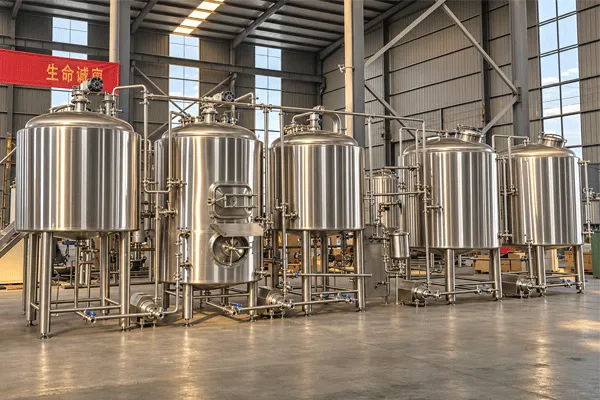
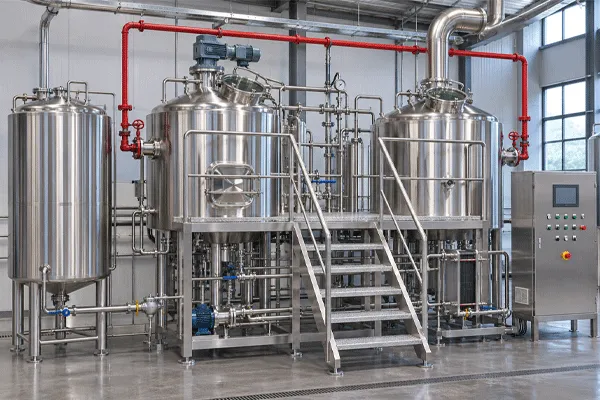
For example, ZPET offers a 1,200L microbrewery equipment configuration positioned in the 10 BBL class, with a 3–4 vessel brewhouse, steam or electric heating, and semi-automatic or PLC control options.
Explore the معدات مصانع الجعة الصغيرة من ZPET range to review available configurations.
2. How Many Batches Can a 10 BBL Brewery Produce Per Day?
The number of batches a brewery can complete in one day depends mainly on the design of its brewhouse and the efficiency of its production workflow.
For preliminary project planning, consider three production scenarios:
| سيناريو الإنتاج | Batches Per Day | Nominal Daily Output |
|---|---|---|
| Basic operating schedule | 1 | 10 BBL |
| Regular commercial production | 2 | 20 BBL |
| High-throughput operation | 3 | 30 BBL |
These figures represent nominal brewing volume before process losses. They are planning scenarios rather than guaranteed production results.
ZPET’s published equipment specifications provide additional reference points:
| تكوين معدات ZPET | Published Daily Brewing Capacity |
|---|---|
| 1,200L / 10 BBL-class microbrewery | 2–3 batches |
| 10–15 BBL brewhouse configuration | 2–4 دفعات |
The difference reflects the equipment configuration and intended production workflow. It should not be interpreted as a universal output guarantee for every 10 BBL brewery.
A brewery producing one batch per day may be suitable for a business with moderate demand and a smaller operating team. A brewery targeting two or three batches needs better coordination between mashing, lautering, boiling, cooling, and cleaning.
بالنسبة لأصحاب المشاريع ومديري المشتريات، فإن السؤال المهم ليس مجرد عدد البراميل التي يمكن للنظام إنتاجها، بل هو عدد الدفعات الكاملة التي يمكن للمعدات معالجتها بموثوقية خلال ساعات العمل المخطط لها.
3. ما العوامل التي تحدد الطاقة الإنتاجية اليومية لصالة طهي بسعة 10 BBL؟
The brewhouse determines the nominal batch size, but several connected systems influence the number of batches that can be completed.
يُعد تكوين الأوعية أحد أهم العوامل؛ حيث يتيح النظام المزود بأوعية منفصلة للهرس والتصفية والغلي وفصل الرواسب بالدوامة فرصًا أكبر لتنفيذ عمليات مختلفة في الوقت نفسه.
Heating capacity also affects the production schedule. Steam and electric heating systems must provide sufficient power to reach the required temperatures without creating unnecessary delays.
تشمل العوامل المهمة الأخرى ما يلي:
- Malt milling and grain handling capacity.
- Mash and lautering duration.
- أداء غلي نقيع الشعير والتدويم.
- سعة المبادل الحراري.
- معدل تدفق المضخة وترتيب خطوط الأنابيب.
- توفر الماء الساخن والبارد.
- CIP cleaning time.
- Operator experience and automation level.
For example, a brewery may have a suitable kettle and mash tun but still experience production delays because its hot liquor tank cannot provide enough water for the next brewing cycle.
Similarly, insufficient cooling capacity can delay wort transfer into fermentation tanks and affect the timing of the next batch.
A well-designed brewery must balance the capacity of every major process stage rather than focus on the brewhouse alone.
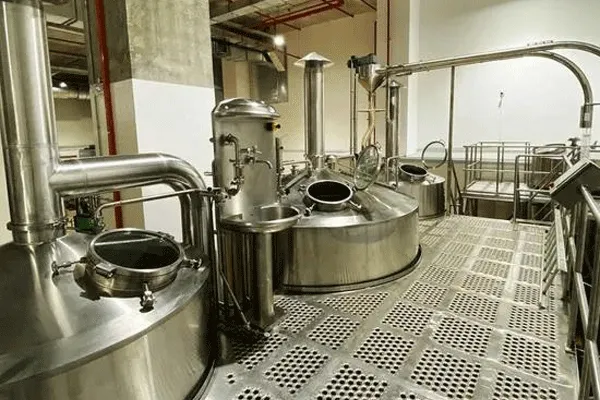
4. كيف يؤثر تكوين وحدة الطهي على عدد الدفعات؟
Different brewhouse configurations support different production schedules. The main options include 2-vessel, 3-vessel, and 4-vessel systems.
| تكوين مصنع الجعة | الخصائص الرئيسية | Commercial Application |
|---|---|---|
| وعائين (2-vessel) | Combines certain brewing operations | Smaller production requirements |
| ثلاثة أوعية (3-vessel) | Separates major brewing stages | مصانع الجعة الصغيرة النامية |
| 4 أوعية | Dedicated mash, lauter, kettle, and whirlpool vessels | Higher-throughput production |
A 2-vessel system generally requires more sequential operations because some brewing stages share the same vessel. It can be a cost-effective choice when production demand is moderate.
A 3-vessel system provides greater process flexibility and can help breweries organize consecutive brewing cycles. A 4-vessel system provides more opportunities for parallel operations and can support higher daily throughput when the utilities, pumps, and staffing are properly matched.
However, more vessels do not automatically mean more finished beer. The complete production workflow determines the actual result.
When evaluating a commercial brewing system, consider the relationship between vessel count, heating capacity, automation, available floor space, and future production requirements.
Read our detailed guide: الإنتاجية في أنظمة التخمير المكونة من وعاءين مقابل ثلاثة أوعية: أيُّ نظامٍ يناسب جدول التخمير الخاص بك؟.
5. How Long Does It Take to Complete One 10 BBL Brewing Batch?
تتضمن دورة التخمير التجاري عدة مراحل، بدءًا من تحضير المواد الخام وحتى نقل نقيع الشعير إلى خزانات التخمير.
يختلف الوقت الفعلي وفقًا للوصفة، ومزيج الحبوب، وطريقة التسخين، وترتيب الأوعية، وإجراءات التشغيل. ويمكن أن تتداخل بعض المراحل، لذا لا ينبغي حساب إجمالي وقت الدورة بمجرد جمع مدة كل عملية.
The main production stages include:
| Brewing Stage | Main Operation | Production Consideration |
|---|---|---|
| تحضير الشعير | Milling and grain handling | Consistent grain preparation |
| الهرس | Mixing malt with hot water | التحكم في درجة الحرارة |
| ترشيح الهريس | Separating wort from spent grain | تجميع مستقر لنقيع الشعير |
| الغليان | Heating wort and adding hops | Heating performance |
| الدوامة | Separating trub and hop material | Effective separation |
| التبريد | خفض درجة حرارة نقيع الشعير | Heat exchanger capacity |
| النقل | Moving wort into fermenters | أداء المضخات وخطوط الأنابيب |
| التنظيف | تجهيز المعدات لإعادة الاستخدام | كفاءة التنظيف المكاني (CIP) |
For a brewery targeting multiple batches, the key is to organize these operations so that the next batch can be prepared while the previous batch moves through later stages.
This requires suitable vessel arrangements, reliable pumps, sufficient water preparation capacity, and well-planned operator responsibilities.
When evaluating equipment, ask the manufacturer for a proposed production cycle based on your actual recipe, batch size, heating method, and daily operating hours.
A realistic production schedule is much more useful than an unsupported claim about maximum batches per day.
6. ما سبب أهمية أنظمة التسخين والتبريد والتنظيف المكاني (CIP) لإنتاج دفعات متعددة يوميًا؟
لا يمكن لوحدة طهي عالية السعة الحفاظ على جدول إنتاج موثوق دون مرافق دعم ذات أحجام مناسبة.
يؤثر التسخين في سرعة عمليتي الهرس والغلي واستقرارهما. واعتمادًا على المشروع، يمكن لـ ZPET تجهيز أنظمة تسخين كهربائية أو بخارية، مع تحديد الاختيار بناءً على مصادر الطاقة المتاحة، ومتطلبات الإنتاج، وظروف المرافق المحلية.
لا يقل التبريد أهمية؛ فبعد عمليتي الغلي والتدويم، يجب أن يصل نقيع الشعير إلى درجة حرارة التخمير المناسبة قبل نقله. ويساعد المبادل الحراري اللوحي ونظام التبريد بالجليكول ذوا الحجم المناسب في الحفاظ على ظروف إنتاج مستقرة.
Cleaning is another important consideration. When a brewery operates several batches per day, vessels, pipelines, and transfer equipment must be cleaned according to a consistent procedure.
A suitable CIP arrangement can help reduce manual cleaning work and improve sanitation between production cycles.
| Supporting System | الوظيفة | Impact on Production |
|---|---|---|
| Steam boiler or electric heating | Provides process heat | Supports brewing cycle timing |
| خزان المياه الساخنة | Supplies hot brewing water | Reduces waiting between operations |
| مبادل حراري لوحي | Cools wort | Supports timely fermentation transfer |
| مبرّد الغليكول | Controls fermentation temperatures | Maintains cellar conditions |
| نظام CIP | Cleans vessels and pipelines | Supports production turnaround |
| Pumps and pipelines | Transfer liquids | Improves process flow |
For B2B buyers, these components should be included in the initial engineering discussion rather than treated as optional additions after the brewhouse has been installed.
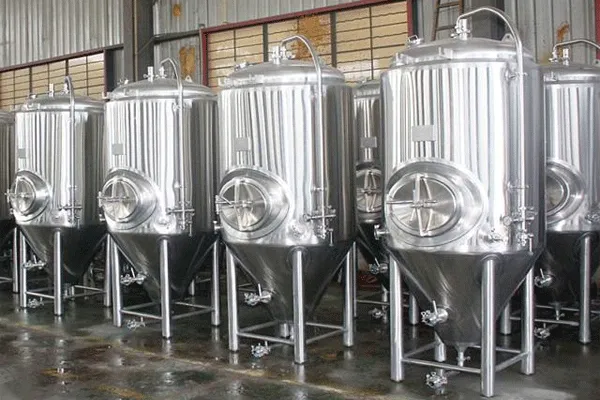
7. How Many Fermentation Tanks Does a 10 BBL Brewery Need?
Daily brewhouse output and total fermentation capacity are two different production measurements.
A brewery may complete three 10 BBL batches in one day, but it cannot continue brewing at that rate unless sufficient fermentation capacity is available.
The number of required fermentation tanks depends on weekly brewing frequency and the total time each batch occupies a tank.
A useful preliminary formula is:
Required Fermentation Tank Positions = Weekly Batches × Tank Occupancy Time (Weeks)
For example, a brewery producing three batches per week with an average tank occupancy of two weeks would need approximately six 10 BBL fermentation tank positions.
This is a starting calculation, not a complete equipment specification. Additional capacity may be required for longer fermentation cycles, lager production, dry hopping, conditioning, cleaning, maintenance, and scheduling flexibility.
Tank working volume and headspace must also be considered when matching fermenters to brewhouse output.
For a brewery producing several beer styles, different fermentation requirements may make a mixed tank configuration more practical than purchasing identical vessels.
ZPET supplies customized stainless steel fermentation tanks in different capacities to support microbrewery and commercial production projects.
استكشف ZPET Fermentation Tanks and read our related guide:
How Many Fermentation Tanks Does a 10 BBL Brewery Need?.
8. How Do Automation and Labor Affect Commercial Brewing Capacity?
Labor planning is an important part of brewery production engineering.
A brewery operating one batch per day may be manageable with a relatively small production team. However, increasing the daily batch target creates more work across grain preparation, vessel operation, wort transfer, cleaning, and cellar management.
Automation can help coordinate these activities and improve process consistency.
Depending on the selected configuration, a PLC-controlled brewing system can manage:
- Mash temperature and timing.
- Heating and boiling sequences.
- Pump and valve operation.
- Water addition and transfer.
- Process monitoring and alarms.
- Selected automatic cleaning operations.
For a growing craft brewery, semi-automatic control may provide a practical balance between investment and operating flexibility. Full PLC automation may be more appropriate for businesses with higher production targets and more complex operating schedules.
However, automation should be designed around the actual production process. It cannot compensate for insufficient vessel capacity, undersized pumps, or inadequate utilities.
When requesting a quotation, buyers should confirm the automation scope, control functions, sensor arrangement, operator interface, and possibilities for future expansion.
9. How Much Beer Can a 10 BBL Brewery Produce Per Year?
Annual production depends on the number of batches completed per day and the number of actual brewing days per year.
The basic calculation is:
Annual Nominal Production = Batch Size × Batches per Day × Brewing Days per Year
Consider a 10 BBL brewery operating three brewing days per week for 48 weeks per year.
| Batches per Day | Brewing Days per Week | Annual Brewing Weeks | Annual Nominal Output |
|---|---|---|---|
| 1 | 3 | 48 | 1,440 BBL |
| 2 | 3 | 48 | 2,880 BBL |
| 3 | 3 | 48 | 4,320 BBL |
These figures represent theoretical brewhouse volume before process losses. They do not represent guaranteed finished or packaged beer.
Actual annual production depends on fermentation capacity, beer styles, equipment maintenance, cleaning schedules, seasonal demand, and packaging availability.
For example, a brewery selling mainly through its own taproom may not need to operate at maximum production capacity throughout the year.
A regional craft beer producer supplying distributors may require more regular production and a larger fermentation cellar.
Therefore, equipment selection should begin with the expected sales volume and production schedule, not simply the maximum number of batches that can be brewed in one day.
10. How Should You Choose a 10 BBL Brewing System for Future Expansion?
Selecting a 10 BBL brewing system is a long-term investment. The equipment must support current production requirements while providing a practical route for future growth.
For brewery investors, procurement managers, and engineering contractors, the evaluation should cover the complete production facility.
Before confirming an equipment order, consider the following checklist:
Brewhouse configuration
- Is the selected 2-vessel, 3-vessel, or 4-vessel configuration suitable for the required daily output?
- Can the equipment support the planned batch schedule?
- Is the heating method suitable for the available utilities?
Fermentation and cooling
- Are the fermenter working volumes matched to the brewhouse?
- Is the glycol system sized for simultaneous fermentation?
- Is sufficient bright beer storage available?
Production engineering
- Are pumps and pipelines correctly sized?
- Is the CIP arrangement suitable for the vessel configuration?
- Is there enough floor space for installation and maintenance?
التوسع المستقبلي
- Can additional fermentation tanks be installed?
- Is there room for increased cooling capacity?
- Can automation and control systems be upgraded?
- Are utility connections prepared for future production increases?
At ZPET, we provide customized brewery and beverage equipment solutions for global B2B customers. Our equipment range includes brewhouse systems, fermentation tanks, bright beer tanks, cooling systems, and supporting equipment.
For a 10 BBL brewery project, our engineering approach focuses on matching the hot side, fermentation cellar, utilities, and production workflow rather than selecting individual tanks without considering the complete system.
استكشف Commercial and Microbrewery Equipment Solutions to evaluate suitable configurations for your production requirements.
الأسئلة الشائعة
How many batches can a 10 BBL brewery brew in one day?
A properly configured 10 BBL-class microbrewery system can typically target 2–3 batches per day. Some 10–15 BBL brewhouse configurations list capacities of 2–4 batches per day. Actual performance depends on equipment design, utilities, staffing, and production procedures.
How much beer does a 10 BBL brewery produce per batch?
A 10 BBL brewhouse is designed around a nominal 10-barrel batch. The actual wort volume entering fermentation and the final packaged beer volume depend on working volume, recipe, evaporation, trub separation, and transfer losses.
Is a 3-vessel brewhouse better for a 10 BBL brewery?
A 3-vessel brewhouse can provide greater production flexibility by separating major brewing operations. It may be suitable for a growing commercial brewery that needs more efficient scheduling. The best configuration depends on the required batch frequency, investment budget, and available utilities.
How many fermenters are needed for a 10 BBL brewery?
The number depends on weekly brewing frequency and tank occupancy time. For example, three batches per week with a two-week tank cycle require approximately six fermentation tank positions before additional operating reserve capacity.
Can a 10 BBL brewery support commercial beer distribution?
Yes. A 10 BBL system can support commercial craft beer production, local distribution, contract brewing, and multi-channel sales. The complete equipment configuration must match the required production volume, fermentation capacity, and packaging demand.
What should I consider when purchasing a 10 BBL brewery system?
Buyers should evaluate batch capacity, vessel configuration, heating method, automation, fermentation tanks, glycol cooling, CIP, floor space, installation requirements, and after-sales support. A complete engineering proposal should cover the entire production workflow.
Conclusion: Plan Daily Brewing Capacity Around the Complete Production System
A 10 BBL brewery can provide a practical production platform for growing craft beer businesses. However, daily output depends on the relationship between brewhouse configuration, heating, cooling, fermentation, labor, and cleaning.
The most important points for brewery project planning are:
- A 10 BBL system is designed around a nominal 10-barrel batch.
- Daily production depends on the complete equipment configuration.
- ZPET’s published 10 BBL-class microbrewery reference is 2–3 batches per day.
- Higher-throughput 10–15 BBL configurations may support 2–4 batches per day.
- Heating, cooling, CIP, and automation affect production scheduling.
- Fermentation tank capacity must match the planned brewing frequency.
- Annual production should be calculated using realistic operating days and process losses.
- Future expansion should be considered before confirming the initial equipment configuration.
Looking for a customized 10 BBL brewery system for your commercial brewing project?
ZPET provides professional brewery equipment manufacturing, customized stainless steel brewing systems, fermentation tanks, and turnkey brewery solutions for international B2B customers.
Whether you are establishing a new craft brewery, expanding an existing production facility, or developing a commercial beer manufacturing project, our team can help you evaluate equipment configurations, daily batch targets, production capacity, and future expansion requirements.
Contact ZPET to discuss your brewery project and request a customized equipment proposal.