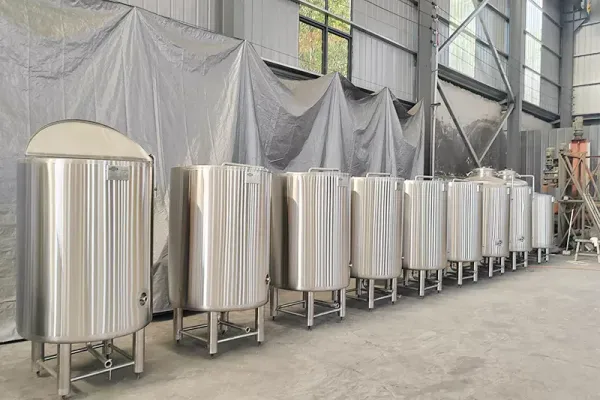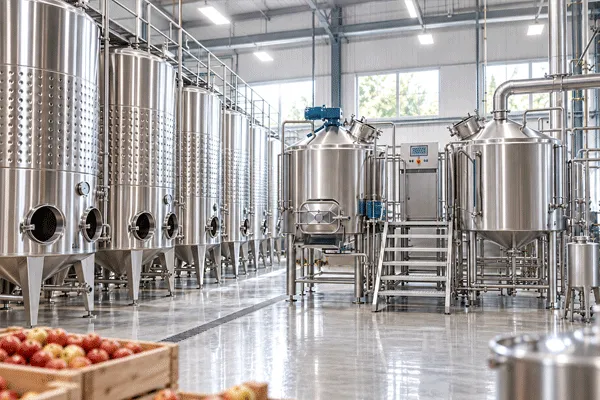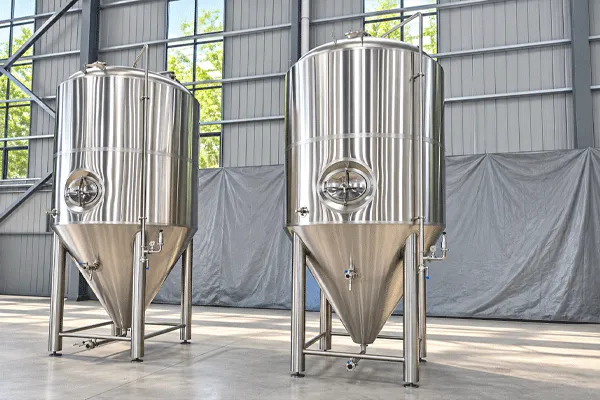
Many breweries invest in fermentation equipment but overlook what happens after fermentation. Without the right finishing tank, beer may take longer to prepare for service, carbonation can become inconsistent, and packaging schedules may suffer. Choosing the right brite tank helps breweries improve quality, workflow, and production efficiency.
A brite tank, also called a bright beer tank, is used to hold beer after fermentation for clarification, carbonation, conditioning, and preparation for packaging or serving. It provides a controlled environment where brewers can stabilize beer, achieve the desired carbonation level, and protect product quality before transferring it to kegs, bottles, or cans.

In This Guide
- What Is a Brite Tank and What Role Does It Play in Brewing?
- What Is a Brite Tank Used For?
- How Does Beer Move From a Fermenter to a Brite Tank?
- What Is the Difference Between a Brite Tank, Fermentation Tank, and Unitank?
- How Does Carbonation Work in a Brite Beer Tank?
- What Beer Tank Specifications Should You Check?
- How Do Capacity and Temperature Control Affect Tank Selection?
- How Do You Clean and Maintain a Brite Tank?
- Does Every Brewery Need a Bright Beer Tank?
- How Do You Choose the Right Brite Tank Manufacturer?
1. What Is a Brite Tank and What Role Does It Play in Brewing?
A brite tank is a specialized beer tank used after primary fermentation. It gives the brewer a dedicated vessel to prepare beer for final storage, packaging, or service. In many commercial breweries, this stage helps ensure that the beer reaches the correct clarity, carbonation, and flavor profile before it leaves the production area.
The term brite refers to bright, clear beer. A brite tank does not automatically filter the beer, but it can support clarification through settling and provide a controlled environment for other finishing steps. Depending on the brewery’s process, filtration may take place before the beer enters the tank.
Most commercial designs use a cylindrical stainless steel vessel with suitable sanitary connections. Many models include pressure-rated construction, a sampling valve, a pressure gauge, a pressure relief valve, and fittings for cleaning and gas supply. Some also include a cooling jacket to maintain the required beer temperature.
For a brewery, the brite tank serves as a link between fermentation and the final product. It allows the production team to prepare finished beer without keeping every fermenter occupied until packaging or service begins.
2. What Is a Brite Tank Used For?
A brite tank has several important functions. Its main purpose is to prepare beer for consumption while maintaining stable quality and making the brewing process easier to manage.
The four main uses of a brite tank are:
- Clarification: Allows suspended yeast and other particles to settle when the process and beer style permit.
- Carbonation: Helps brewers add and maintain carbon dioxide at the target level.
- Conditioning: Provides time and controlled conditions for the beer to reach its intended serving quality.
- Storage and packaging: Holds finished beer before it moves to a keg, bottle, can, or draft system.
The tank allows a brewery to separate finishing work from primary fermentation. For example, a brewery can transfer a completed batch from a fermenter into a brite tank, then prepare that beer for packaging while the fermenter becomes available for another batch.
A brite tank can also help organize production schedules. When a brewery has several beers ready at different times, dedicated finishing vessels provide greater flexibility. However, the correct setup depends on batch volume, packaging demand, and whether the brewery uses separate tanks for conditioning and carbonation.
3. How Does Beer Move From a Fermenter to a Brite Tank?
The transfer usually begins when the brewer determines that primary fermentation has reached the required stage. Yeast activity, gravity readings, flavor, and other quality checks help determine whether the beer is ready to move. The exact process varies by beer style and recipe.
Before transfer, the receiving tank should be properly cleaned, sanitized, and prepared. Brewers often purge the vessel and transfer lines with carbon dioxide to reduce oxygen exposure. This matters because dissolved oxygen can cause unwanted flavor changes, especially in hop-forward beers.
During transfer, the brewer uses suitable pumps or a controlled pressure difference to move the beer through sanitary piping. Careful handling helps limit oxygen pickup and unnecessary disturbance of settled yeast. After the transfer, the brewer can assess clarity, adjust carbonation where appropriate, and allow additional conditioning if needed.
A typical workflow looks like this:
| Stage | Equipment | Objetivo principal |
|---|---|---|
| Primary fermentation | Fermenter | Yeast converts fermentable sugars into alcohol and carbon dioxide |
| Beer transfer | Sanitary pipes and valves | Moves beer while limiting contamination and oxygen exposure |
| Finishing | Brite tank | Supports clarification, conditioning, and carbonation |
| Final preparation | Brite tank or packaging line | Brings beer to the required condition for filling |
| Packaging or service | Keg, bottle, can, or draft system | Delivers finished beer to customers |
This workflow is common in commercial brewing, although some breweries use alternative process arrangements depending on their equipment and product requirements.
4. What Is the Difference Between a Brite Tank, Fermentation Tank, and Unitank?
These vessels may look similar, but they perform different roles. Understanding the differences helps breweries avoid buying equipment that does not match their production process.
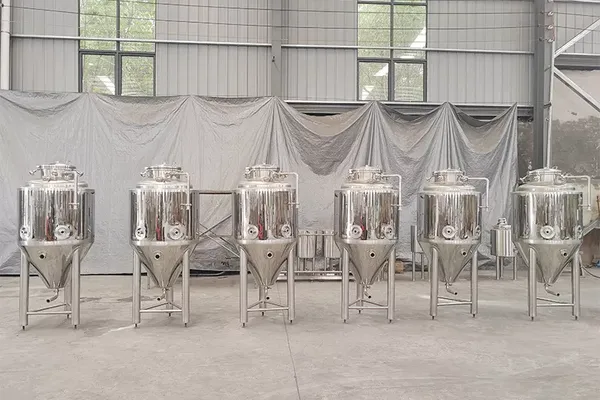
A fermentation tank provides the environment for yeast to ferment wort into beer. It may include a conical bottom for collecting yeast, cooling jackets, and pressure-rated fittings. A brite tank is generally used after fermentation to finish, carbonate, and hold beer. A unitank is designed to combine fermentation and selected finishing functions in one vessel.
The main advantage of a separate brite tank is workflow flexibility. Beer can move out of a fermenter when primary fermentation and the required conditioning steps are complete, allowing the brewery to prepare the next batch sooner. However, unitanks can reduce transfers and equipment needs for breweries with suitable process requirements.
| Feature | Fermentation Tank | Brite Tank | Unitank |
|---|---|---|---|
| Primary purpose | Fermentation | Finishing and holding beer | Fermentation and finishing |
| Yeast activity | Main fermentation occurs here | Usually minimal residual activity | Fermentation occurs here |
| Carbonatación | Depends on design | Common use | Possible when designed for it |
| Yeast collection | Often supported by conical design | Not usually the main purpose | Often supported by conical design |
| Separate transfer required | Usually before finishing in a separate tank | Receives beer from another vessel | May combine stages in one vessel |
For smaller breweries, unitanks can save floor space. For larger breweries, separate fermentation and bright tanks may support better scheduling and higher throughput. Neither arrangement is automatically best for every brewery.
5. How Does Carbonation Work in a Brite Beer Tank?
Carbonation gives beer its bubbles and contributes to mouthfeel, aroma release, and the overall drinking experience. A brite beer tank can help the brewer reach and maintain the desired carbonation level before the beer is packaged or served.
In a typical process, the brewer cools the beer to a suitable temperature and introduces carbon dioxide through a system designed for carbonation. The gas dissolves into the liquid, with the result influenced by temperature, pressure, contact time, and the tank’s carbonation equipment.
Lower temperatures generally allow more carbon dioxide to dissolve at a given pressure. Brewers therefore need to coordinate temperature and pressure rather than adjusting one without considering the other. The required carbonation level also varies by beer style: a lager, an ale, and certain specialty beers may have different targets.
The brewer should monitor the process and confirm the result before packaging. Carbonation time depends on the starting condition of the beer, tank configuration, gas delivery method, and desired outcome. A correctly designed tank makes this work more predictable, but the operator still needs suitable controls and a consistent procedure.
6. What Beer Tank Specifications Should You Check?
Not every brite tank suits every brewery. Before purchasing, review the technical specifications carefully. A tank that looks suitable in a product photograph may not have the capacity, pressure rating, cooling performance, or fittings your process requires.
Start with the vessel’s working volume and total volume. Working volume refers to the amount of beer the tank is intended to hold during normal operation, while total volume refers to the vessel’s overall internal capacity. Confirm how the supplier defines both measurements.
Next, check the tank material, internal finish, pressure rating, temperature range, and safety features. A pressure-rated tank must have appropriate pressure-relief protection, and the brewery must operate it within the manufacturer’s limits. The pressure relief valve (PRV) is a key safety component, not an optional convenience.
Use this checklist when reviewing beer tank specifications:
- Working and total capacity
- Stainless steel grade and internal surface finish
- Maximum allowable working pressure and vacuum rating, if applicable
- Pressure gauge and pressure relief valve
- Carbonation fittings and gas connections
- Sampling valve and beer outlet
- Cooling jacket and insulation, where required
- Cleaning-in-place (CIP) connections and spray device
- Tank dimensions, access points, and installation clearance
The right specification depends on your process. A tank used for simple holding may need a different configuration from one used for pressurized carbonation and temperature-controlled conditioning.
7. How Do Capacity and Temperature Control Affect Tank Selection?
Tank capacity should match the volume of beer produced and the brewery’s production schedule. If the brite tank is too small, the brewer may need to split batches or wait for another vessel. If it is much larger than needed, the brewery may spend more than necessary and use valuable floor space inefficiently.
Begin with the normal batch volume, then consider how many batches may need finishing or storage at the same time. Include expected cleaning time and packaging schedules. A brewery serving several beers may benefit from multiple smaller tanks, while a producer with steady, high-volume output may prefer larger vessels.
Temperature control is another important factor. Some brite tanks use a cooling jacket connected to a glycol system to maintain the required beer temperature. Other designs may rely on an external cooling arrangement. The correct solution depends on the vessel, the room conditions, and the brewery’s process.
When selecting a tank, consider the following questions:
- How much beer must the vessel hold in normal operation?
- How long will beer remain in the tank?
- Will the tank be used for carbonation?
- Is active cooling required?
- How many batches must be prepared for packaging each week?
- Can the tank fit through the building’s access points and connect to existing utilities?
A well-planned tank configuration helps the brewery balance investment, cellar space, and production flexibility.
8. How Do You Clean and Maintain a Brite Tank?
Cleaning and sanitation protect beer quality and help prevent unwanted microorganisms from affecting the product. Beer residue, yeast, and mineral deposits can build up inside the tank if the brewery does not follow a suitable cleaning routine.
Many commercial vessels use CIP systems to circulate cleaning solutions through the tank and connected lines. The process may include a caustic cleaning stage, rinsing, and a suitable sanitizing step, depending on the brewery’s validated cleaning procedure and the equipment manufacturer’s instructions.
CIP components may include a cleaning pump, spray device, solution tank, valves, and return piping. The operator must confirm that the cleaning solution reaches the required surfaces and that concentration, temperature, and contact time follow the cleaning procedure. A spray device alone does not guarantee that every area is clean.
Regular maintenance should include checking valves, seals, pressure gauges, relief devices, and cooling connections. The brewer should also inspect the tank for signs of damage and follow the manufacturer’s procedures for pressure testing and servicing. Never exceed the tank’s rated pressure or block a safety relief device.
Good maintenance protects the beer, supports reliable operation, and can reduce unplanned downtime.
9. Does Every Brewery Need a Bright Beer Tank?
Not every brewery needs a separate bright beer tank. The right choice depends on production volume, product range, available space, and whether the fermentation vessels can also perform the required finishing steps.
A small brewery may use unitanks to ferment, condition, and carbonate beer in one vessel. This can reduce transfers and the number of tanks required. However, keeping beer in a unitank for finishing also means that vessel remains occupied for longer, which may limit brewing capacity.
A brewery with a separate brite tank can move finished beer out of the fermenter and prepare it for packaging or service. This may improve tank turnover, particularly when fermentation cycles overlap or when several beers must be ready for the same packaging window.
Consider a brewery producing both lager and ale. If the lager needs a longer conditioning period, a separate brite tank may help the brewer manage the ale’s finishing schedule without disrupting the lager’s process. The benefit depends on the actual production plan rather than the tank type alone.
Before deciding, compare the cost of a separate vessel with the value of added flexibility. Include cooling, cleaning, piping, and floor-space requirements in the decision.
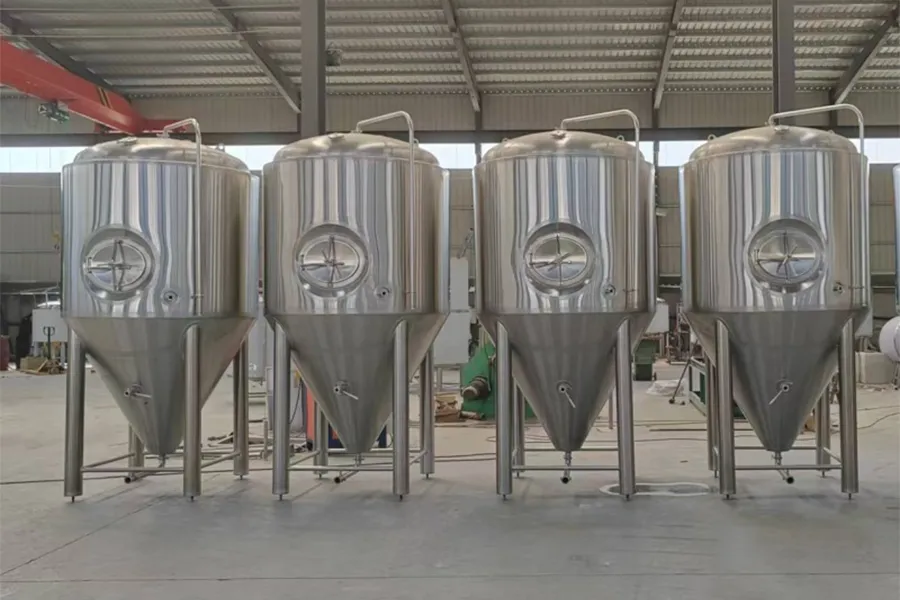
10. How Do You Choose the Right Brite Tank Manufacturer?
A reliable manufacturer should understand how the tank will fit into the brewery’s full production system. Choosing equipment based only on price can lead to problems if the capacity, fittings, pressure rating, or cooling system do not match the intended use.
As a professional brewery and beverage equipment manufacturing plant, we provide customized stainless steel brewing systems, fermentation tanks, brewhouse systems, and turnkey brewery solutions for global B2B customers. Our approach is to consider the production process, working volume, site layout, and future capacity before recommending a tank configuration.
When comparing suppliers, ask for clear technical drawings and written specifications. Confirm the material grade, working capacity, pressure rating, cooling arrangement, cleaning provisions, safety fittings, and included accessories. Also discuss installation requirements, delivery, commissioning support, and after-sales service.
If you are comparing a BrewTech listing with other equipment suppliers, evaluate the actual specifications rather than relying on the product name alone. The most suitable tank is the one that matches your brewing process, meets applicable safety requirements, and supports reliable long-term operation.
Nuestra bright beer tank solutions can be considered as part of a customized brewery project. Share your batch size, target carbonation, available space, and expected production schedule to help the engineering team identify a suitable configuration.
Frequently Asked Questions
Is a brite tank the same as a bright beer tank?
Yes. “Brite tank” and “bright beer tank” are commonly used names for the same type of vessel. Both generally refer to a tank used for beer finishing, carbonation, and holding before packaging or service.
Does a brite tank ferment beer?
A standard brite tank is mainly used after fermentation. Some specialized vessels can support additional biological activity under defined conditions, but primary fermentation normally takes place in a dedicated fermenter or a unitank designed for that purpose.
Can beer be carbonated directly in a brite tank?
Yes, provided the tank is designed and rated for pressurized operation and has suitable carbonation connections. The brewer must control temperature and pressure according to the equipment specifications and the target carbonation.
What is the difference between a brite tank and a storage tank?
A brite tank is designed for beer finishing and may include pressure-rated features for carbonation. A general storage tank may only be suitable for holding liquid and may not have the required pressure rating, fittings, or controls. Always confirm the intended use before purchasing.
How long does beer stay in a brite tank?
There is no single fixed duration. Beer may remain in the vessel long enough for carbonation, clarification, and preparation for packaging, depending on the process. The brewery should plan tank occupancy around its recipe, quality targets, and packaging schedule.
Does a brite tank need a cooling jacket?
Not always. A cooling jacket is useful when the process requires the tank to maintain a controlled temperature. The decision depends on the brewery’s room conditions, beer style, carbonation method, and operating requirements.
Puntos clave
- A brite tank is used for beer clarification, carbonation, conditioning, and holding before packaging or service.
- It usually receives beer after primary fermentation.
- A brite tank and a fermentation tank have different primary functions, while a unitank can combine several stages.
- Carbonation depends on temperature, pressure, contact time, and the target level.
- Check working capacity, pressure rating, material, cooling, fittings, and cleaning provisions before buying.
- CIP and regular inspection help maintain sanitation and reliable performance.
- A separate bright beer tank can improve workflow, but not every brewery needs one.
- The best tank configuration depends on batch size, production schedule, beer styles, and available space.
- Working with an experienced brewery equipment manufacturer helps align the tank with the complete brewing system.
Planning a new brewery or upgrading your existing equipment? Our team can help you select a brite tank, fermentation tank, or customized stainless steel brewing system based on your production requirements. Contact us to discuss your project and request an equipment proposal.