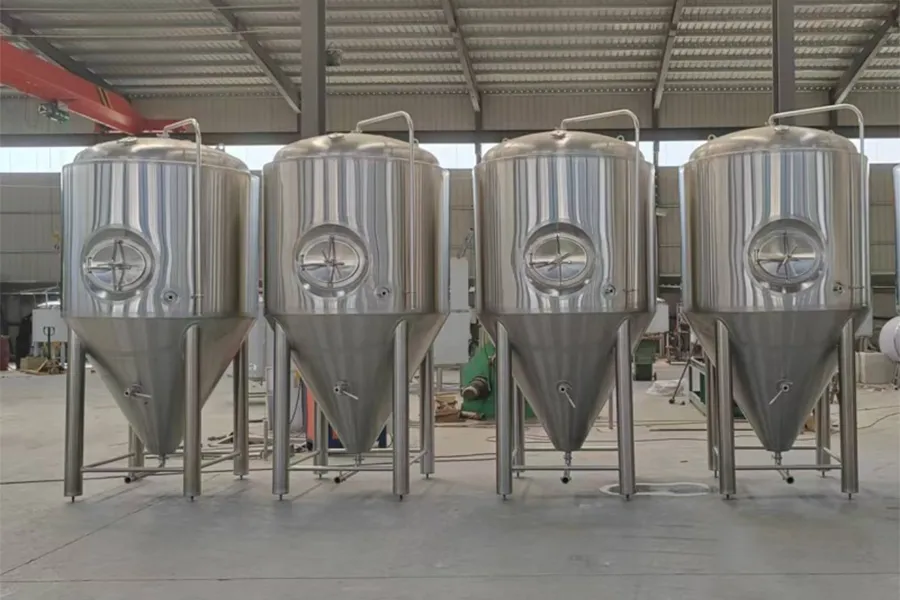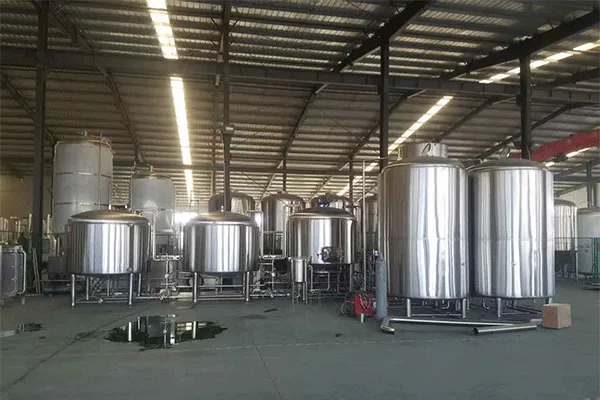
Opening a brewery looks exciting, but many owners soon face tight cash flow, rising production costs, and slow sales growth. If the wrong equipment, layout, or business model is chosen, even great beer can struggle to make money.
How much do breweries make? A brewery can make money through taproom sales, draft beer, keg sales, packaged beer, food, events, tours, and contract production. The real answer depends on brewery size, sales channel, local market, cost control, and equipment efficiency. Taproom-focused breweries often have stronger margins than distribution-heavy breweries because they sell beer directly to customers.
Struttura dell'articolo
Why is brewery profitability harder than many new owners expect?
How much do breweries make from different revenue streams?
What is a realistic brewery profit margin?
Are craft breweries still profitable in today’s beer market?
How does taproom sales improve brewery profit?
What costs reduce brewery profitability?
How can brewing equipment affect profit margin?
What business models help a brewery become profitable?
How can small craft breweries boost brewery revenue?
What should you plan before you start a brewery?
FAQs about brewery profit and craft beer business
Key takeaways
Why Is Brewery Profitability Harder Than Many New Owners Expect?
A brewery is not just a place to brew beer. It is a production plant, a brand, a hospitality business, and often a local community space. That is why brewery profitability needs careful planning from day one. A brewer may know how to make the beer, but running a brewery also means managing rent, labor, utilities, raw materials, debt, equipment, packaging, tax, and sales.
The craft beer industry is still important, but it is no longer an easy-growth market. In 2025, U.S. craft production declined by 5%, and the number of operating U.S. craft breweries fell to 9,578, according to the Brewers Association. At the same time, craft beer kept a strong share of retail value, with $27.8 billion in craft beer retail dollar value in 2025. This shows one clear point: demand still exists, but breweries must operate smarter.
From our experience as a brewery and beverage equipment manufacturing plant, many breweries do not fail because their beer is bad. They fail because the brewery system, space layout, batch size, cellar capacity, and revenue model do not match the business plan. A profitable brewery starts before the first beer is sold.
How Much Do Breweries Make From Different Revenue Streams?
When people ask, “how much do breweries make?” they often think only about beer sales. In real life, a brewery can have many revenue streams. A small craft brewery may sell beer in a taproom. A microbirrificio may also sell keg products to local restaurants. A production brewery may sell canned or bottled beer through distributors. Some breweries add food, brewery tours and tastings, events, merchandise, private labels, or contract brewing.
Here is a simple view:
| Revenue Stream | Typical Use | Profit Potential | Note |
|---|---|---|---|
| Taproom pint sales | Brewpubs, taprooms, local breweries | High | Beer directly sold to customers usually keeps more value in-house |
| Keg sales | Bars, restaurants, events | Medium | Good for local growth, but delivery and keg management matter |
| Bottled beer / canned beer | Retail and distribution | Medium to low | Packaging, distributor margin, and returns reduce profit |
| Food sales | Brewpubs | Medium | Helps foot traffic but adds labor and kitchen costs |
| Brewery tours and tastings | Destination breweries | Medium | Builds brand and customer loyalty |
| Contract brew services | Extra capacity use | Variable | Can help fill tanks, but pricing must be controlled |
| Merchandise | Taproom and online | Medium | Works best with a strong brand |
Craft Brewery Financial Training notes that taproom sales can bring much higher revenue per barrel than distribution. One example compares a half-barrel sold through a taproom at $600 versus $150 through a distributor, showing why direct sales can be so powerful.
For a new brewery, this means one thing: do not only ask, “How much beer can I brew?” Also ask, “Where will I sell each pint, keg, or package?”
What Is a Realistic Brewery Profit Margin?
A profit margin shows how much money is left after costs. A brewery profit margin can be calculated in a simple way:
Profit Margin = Profit ÷ Revenue × 100%
For example, if a brewery revenue is $1,000,000 and total profit is $120,000, the net margin is 12%. That looks simple. The hard part is knowing which costs to include.
Small Batch Standard, a financial firm focused on the craft brewing industry, explains that packaged beer gross margin may often sit around 60%–70%, while kegged beer may be closer to 40%–50%. It also gives a net margin benchmark of 1%–5% for wholesale and 12%–18% for taproom operations.
That is why the brewery profit margin can look very different between two breweries with the same production volume. One brewery sells most beer through its own taproom. Another brewery sells through wholesale. The first brewery may earn less total volume but keep better margin. The second may produce more beer but earn less money per barrel.
Are Craft Breweries Still Profitable in Today’s Beer Market?
Yes, craft breweries can still be profitable, but not every brewery will be. The market is more mature. Beer enthusiasts have more choices. Many breweries compete for the same local customer. This means a brewery needs better planning, better branding, better cost control, and better beer quality.
The Brewers Association reported that craft breweries contributed $71.8 billion to the U.S. economy in 2025 and supported over 415,000 jobs. That shows the potential of breweries remains strong even in a challenging market.
But “strong industry” does not mean “easy business.” Many breweries must work harder to become profitable. A profitable brewery needs a clear position, such as a neighborhood taproom, a destination brewpub, a regional production brewery, a premium lager specialist, a sour ale brand, a kombucha and functional beverage producer, or a mixed beverage facility.
In short, breweries profitable today are usually not the ones that only brew more. They are the ones that sell smarter, control costs, and design operations around their real market.
How Does Taproom Sales Improve Brewery Profit?
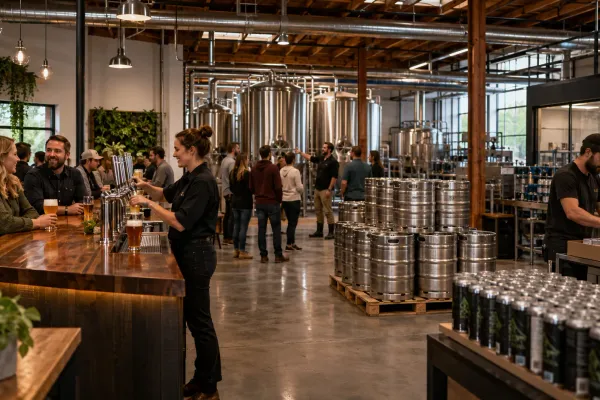
A taproom can be one of the most profitable parts of a brewery because the brewery sells beer directly to the customer. There is no distributor margin. There is no retailer markup. A pint sold in the taproom can create more value than the same beer sold as a wholesale keg.
That does not mean every brewery should be only taproom-based. Taprooms have limits. Seating, location, parking, staff, local laws, and customer traffic all matter. A taproom must feel welcoming. It should also have enough serving capacity, cold storage, draft beer control, and clear workflow.
A simple sales chart may look like this:
Revenue Value Per Barrel
Taproom Pint Sales ████████████████████ High
Growlers / Crowlers ███████████████ Medium-High
Local Keg Sales █████████ Medium
Wholesale Package █████ Low-Medium
This is why many small craft breweries start with a taproom-first model. The brewery offers great beer, friendly service, local events, and direct customer experience. If the beer scene responds well, the brewery can expand into keg, can, or bottled beer sales later.
What Costs Reduce Brewery Profitability?
A brewery can lose margin in many small ways. The problem is that these small losses add up fast. A missed production schedule, bad tank sizing, slow fermentation turnover, poor CIP habits, high utility use, beer loss, packaging waste, and labor inefficiency can all hurt profit.
Common cost areas include:
- Raw materials: malt, hop, yeast, fruit, sugar, flavoring, and water treatment
- Labor: brewer, cellar staff, taproom team, sales staff, maintenance
- Utilities: steam, electricity, glycol cooling, compressed air, water, wastewater
- Packaging: cans, bottles, labels, cartons, shrink wrap, pallets
- Rent and building: production floor, taproom, warehouse, cold room
- Maintenance: pumps, valves, gaskets, heat exchangers, glycol systems
- Sales costs: distributor fees, events, samples, delivery, marketing
- Finance costs: loans, leasing, depreciation, insurance
The biggest mistake is treating all beer as equal. A pale ale sold as draft beer in the taproom may have a very different margin from the same beer sold through a distributor. A small batch seasonal ale may build brand value but may not be one of the most profitable products. A brewery owner must know the numbers behind each beer.
Good brewery management means tracking cost of goods sold, gross profit, labor, yield, tank use, and money per barrel. Numbers do not kill creativity. They protect it.
How Can Brewing Equipment Affect Profit Margin?
Equipment is not just a startup cost. It shapes daily profit. The right brewing equipment helps a brewery reduce waste, improve beer quality, save labor, and increase production stability. The wrong equipment can create years of hidden costs.
As a professional brewery and beverage equipment manufacturing plant, we design customized stainless steel brewery equipment, fermentation tanks, impianti di produzione della birra, and turnkey brewery solutions for global B2B customers. ZPET’s website positions the company as a professional customized brewery equipment manufacturer with 15+ years of engineering expertise and a 10-year warranty, serving breweries and beverage brands worldwide.
A well-planned brewery system should match:
| Planning Point | Perché è importante |
|---|---|
| Batch size | Controls production volume and labor needs |
| Fermenter count | Prevents brewhouse waiting time |
| Bright beer tank size | Supports packaging and taproom flow |
| Heating method | Affects energy cost and local utility needs |
| Automation level | Reduces manual errors and improves repeatability |
| CIP design | Saves cleaning time and protects beer quality |
| Layout | Improves safety, workflow, and future expansion |
ZPET’s factory page highlights a 5,000㎡ digital manufacturing center, 20+ senior mechanical engineers and brewmasters, CNC laser cutting, precision bending, 0.4μm sanitary polishing, SS304/316L verification, weld inspection, pressure testing, and passivation. These details matter because sanitary design and stable fabrication directly affect long-term brewing operations.
A brewery does not become more profitable only by buying bigger tanks. It becomes more profitable when the brewhouse, cellar, cooling, control panel, CIP, packaging, and building footprint work together.
What Business Models Help a Brewery Become Profitable?
There is no single perfect model. The right model depends on location, capital, beer style, local demand, and sales skills. But most breweries fit into a few common business models.
| Business Model | Ideale per | Strength | Risk |
|---|---|---|---|
| Birreria artigianale | Restaurant + beer experience | Strong customer time on site | Food labor and kitchen cost |
| Taproom brewery | Local beer community | Strong margin on pints | Limited by foot traffic |
| Microbirrificio | Local or regional sales | Scalable growth | Needs sales and distribution |
| Production brewery | Larger breweries and packaging | Higher volume | Higher capital and competition |
| Contract brewing | Brands without full plant | Lower asset need for brand owner | Less control over production |
| Hybrid beverage plant | Beer, cider, kombucha, cold brew | More product flexibility | More process planning needed |
If you want a brewery to become profitable, choose the model before choosing the tanks. A 500L new brewery for a small taproom has a different design from a 30BBL microbrewery built for wholesale. A produzione di birra su scala commerciale project needs stronger automation, larger cellar capacity, and a clear packaging plan.
In our project discussions, we often ask customers simple questions: How many seats will the taproom have? How many batches do you plan per week? Will you sell beer directly or through distribution? Do you need cans, kegs, or both? Will you brew only beer, or also cider, kombucha, wine, or cold brew coffee?
The answers decide the system.
How Can Small Craft Breweries Boost Brewery Revenue?
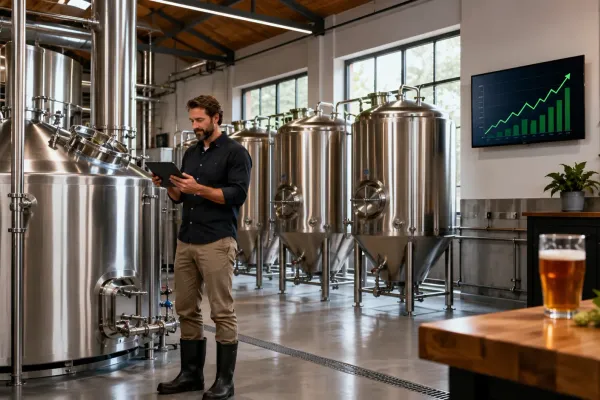
Small craft breweries should not only chase volume. They should improve revenue per visitor, revenue per barrel, and repeat customer rate. In the competitive craft beer market, a clear brand and good customer experience can be as important as a new beer release.
Ways to boost brewery revenue include:
- Sell more beer directly through the taproom
- Add limited seasonal beers and ales
- Create beer clubs or membership programs
- Host brewery tours and tastings
- Offer private events and local food partnerships
- Improve draft beer quality and serving speed
- Add merchandise with strong brand identity
- Use smaller pilot batches to test demand before scaling
- Track which beers bring the best margin
- Reduce beer loss during transfer, fermentation, and packaging
Small breweries often win by being focused. You do not need to copy larger breweries. You need a product mix that your local customers love and a production plan that your team can manage.
A brewery offers more than liquid in a glass. It offers a place, a story, a flavor, and a reason to return. That is where small craft operators can still win.
What Should You Plan Before You Start a Brewery?
Before opening a brewery, the most important work happens on paper. A brewery plan should connect beer style, equipment size, building layout, utility supply, sales channels, and cash flow. Do not start with “I want a 10BBL system” unless you know why 10BBL fits your market.
Before you start a brewery, check these items:
Market position: local taproom, brewpub, microbrewery, production brewery, or beverage plant
Sales channel: taproom, keg, can, bottle, distributor, restaurant, online, events
Capacity plan: batch size, weekly brew schedule, cellar turnover
Beer plan: core beers, seasonal beers, first beer launch, hop-heavy beers, lager needs
Building plan: ceiling height, drainage, steam, gas, electric, ventilation, access doors
Equipment plan: brewhouse, fermenters, bright tanks, glycol, CIP, controls, packaging
Team plan: brewer, cellar staff, taproom staff, sales, maintenance
Financial plan: startup cost, operating costs, debt, cash reserve, sales forecast
Compliance plan: pressure vessel rules, local license, safety, food-grade requirements
Expansion plan: where future tanks and packaging lines will go
ZPET’s service page emphasizes custom 3D layout design, utility consultation, integrated R&D and manufacturing, pressure testing, global on-site installation, commissioning, first brew guidance, operator training, CIP training, and compliance documentation support. These are not “extra” services. They reduce project risk.
A brewery to make stable profit needs more than tanks. It needs a system.

Case Study Style Example: Why Two Breweries With the Same Size Can Earn Differently
Imagine two breweries. Both use a 1000L brewhouse. Both brew quality craft beer. Both have skilled brewers.
Brewery A sells 70% of its beer through its taproom. It has a simple menu, strong local events, low beer loss, and a clean cellar schedule. It uses its fermenters well and keeps each core beer fresh.
Brewery B sells most beer through wholesale. It has more delivery work, more packaging cost, slower cash collection, and lower margin per barrel. It also has too few fermenters, so the brewhouse sometimes waits for tank space.
Both breweries make beer. But their profit potential is different.
This is why equipment planning, revenue streams, and brewery management must work together. The best brewery is not always the biggest. It is the one where the business model, beer quality, and equipment design fit.
FAQs About Brewery Profit and Craft Beer Business
Are breweries profitable?
Yes, breweries can be profitable, but profit depends on sales channel, cost control, location, debt level, equipment efficiency, and brand strength. Taproom-focused breweries often have stronger margins than wholesale-heavy breweries because they sell beer directly to customers.
How much do breweries make in revenue?
Brewery revenue varies widely. A small taproom brewery may focus on local pint sales, while a production brewery may earn more total revenue through kegs, cans, and distribution. Revenue alone does not show profit. Margin matters more.
What is the average brewery profit margin?
There is no single average profit margin for every brewery. Industry finance sources often separate wholesale and taproom performance. Taproom net margin benchmarks can be much higher than wholesale benchmarks, but every brewery must track its own numbers.
How long does it take for a brewery to become profitable?
A brewery may need several years to become profitable, depending on startup cost, loan pressure, local market, sales growth, and operating control. A lower-risk plan starts with the right capacity, enough cellar space, and clear revenue streams.
Is a microbrewery a good investment?
A microbrewery can be a good investment when it has a strong market, clear beer identity, efficient brewing operations, and a realistic sales plan. It can be risky if the owner underestimates labor, utilities, packaging, rent, and working capital.
How can equipment help your brewery become more profitable?
Good equipment can reduce beer loss, improve batch consistency, save labor, support cleaning, and make future expansion easier. Customized brewery equipment also helps match the system to the building, utility supply, and business plan.
Punti chiave da ricordare
A brewery can still be profitable, but the craft beer market is more competitive than before.
Taproom sales usually offer stronger margin than wholesale distribution.
Brewery profit margin depends on cost control, sales channel, equipment design, and management.
Great beer is important, but great beer alone does not guarantee profit.
The brewhouse, fermenters, bright tanks, cooling system, CIP, and layout must match the business model.
Before buying brewery equipment, define your capacity, sales channels, building limits, and expansion plan.
A professional brewery equipment manufacturer can help reduce project risk with 3D layout, technical drawings, testing, installation, and training.
The most profitable brewery is usually not the one that brews the most beer. It is