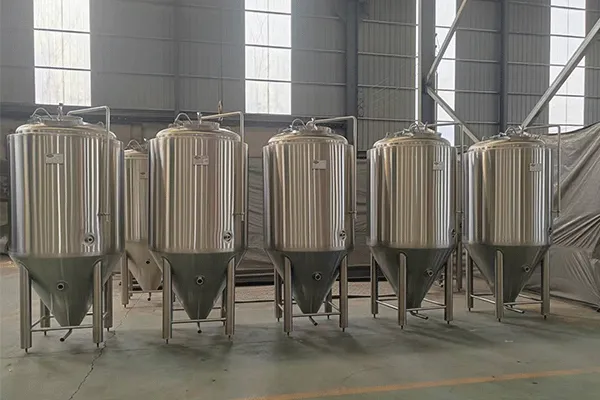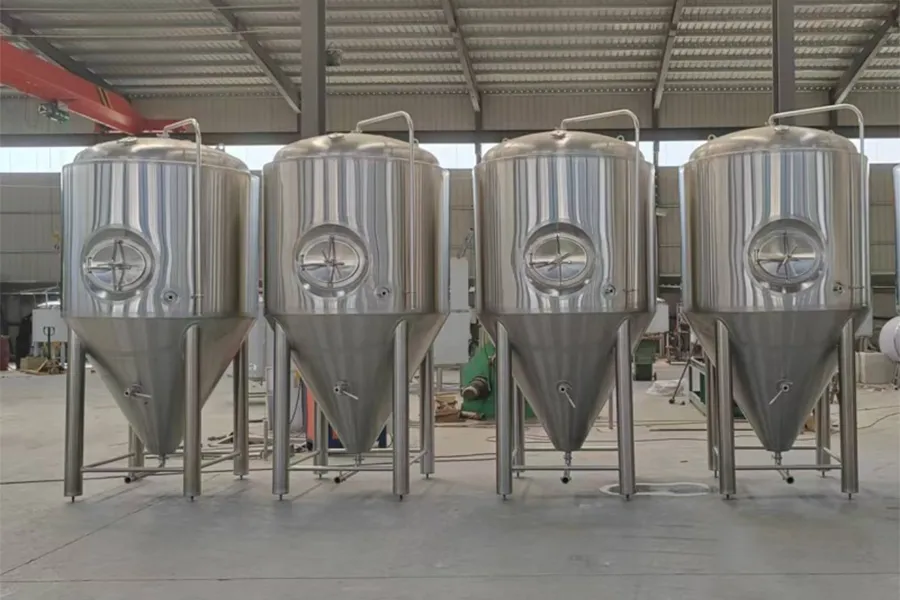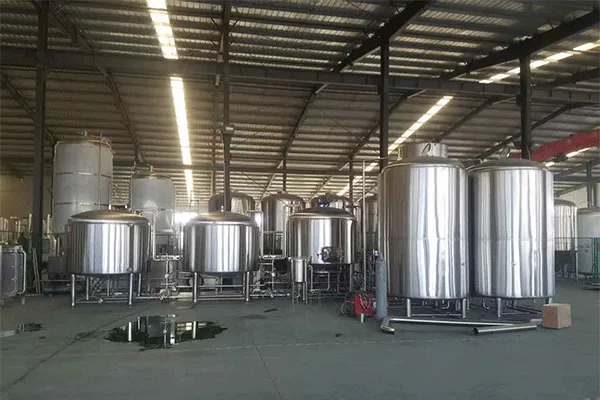
Choosing the wrong wine tank size can create headspace, spoilage, poor fermentation control, and wasted cellar space. A tank that is too small limits production. A tank that is too large risks oxygen exposure. The right tank size helps protect wine quality and future growth.
Wine tanks range from small 50–200 liter tanks for test batches and boutique wineries to 500 gallon, 1,000 gallon, 2,150L, 5,000L, 10,000L, and larger stainless steel wine tanks for commercial production. The best tank size depends on grape volume, batch size, wine style, fermentation method, headspace control, storage needs, and whether the winery uses fixed-volume or variable capacity tanks.
Article Outlin
What size are wine tanks?
How do gallon and liter tank sizes compare?
What wine tank size is right for a small winery?
How do fermentation tanks and storage tanks differ?
Why are stainless steel wine tanks so common?
What are variable capacity tanks, and when should you use them?
How do red wine and white wine fermentation affect tank size?
How do tank shape, bottom design, valve, and fittings matter?
What size tank should you choose for 250 gallons, 500 gallons, or 2,150L?
How should B2B buyers select custom wine tanks?
What Size Are Wine Tanks?
Wine tanks come in many sizes because wineries work with different grape volumes, wine styles, and production plans. A home winemaker may use carboys or a small stainless steel tank. A boutique winery may use 250 gallon or 500 gallon tanks. A commercial winery may use 1,000 gallon, 2,000 gallon, 5,000L, 10,000L, or larger tanks.
A practical wine tank range often looks like this:
| Tank Size | Approx. Use | Typical Buyer |
|---|---|---|
| 50–100 liter | Trial batches, small lots | Home winemakers, labs |
| 200–500 liter | Small winery batches | Boutique wineries |
| 250 gallons | Small commercial batches | Small winery or pilot production |
| 500 gallons | Common mid-size winery tank | Boutique and growing wineries |
| 1,000 gallons | Larger batch production | Commercial wineries |
| 2,150L | Medium stainless wine tank size | Winery fermentation and storage |
| 5,000L–10,000L | Commercial fermentation and storage | Large wineries and beverage plants |
| 20,000L+ | Bulk wine production | Industrial wine producers |
There is no single “standard” wine tank size for every winery. A tank should match the winemaking process, grape supply, fermentation plan, cellar layout, and packaging schedule. UC Davis lists fermentation management factors such as temperature, pH, oxygen, nutrients, sanitation, and monitoring as important parts of wine fermentation, so tank size must support control, not only volume.
How Do Gallon and Liter Tank Sizes Compare?
Wine tanks are sold in both gallon and liter sizes. This can confuse buyers because some suppliers list a tank in gallons, while others list the same size in liters. For quick planning, 1 gallon is about 3.785 liters. So a 500 gallon tank is about 1,893 liters, and a 1,000 gallon tank is about 3,785 liters.
Here is a simple conversion table:
| Gallon Capacity | Approx. Liter Capacity |
|---|---|
| 50 gallons | 189 liters |
| 100 gallons | 379 liters |
| 250 gallons | 946 liters |
| 500 gallons | 1,893 liters |
| 750 gallons | 2,839 liters |
| 1,000 gallons | 3,785 liters |
| 1,500 gallons | 5,678 liters |
| 2,000 gallons | 7,571 liters |
| 2,640 gallons | 10,000 liters |
When buying a tank, always confirm whether the supplier means total volume, working volume, or effective fermentation volume. A fermentation tank often needs extra headspace during primary fermentation. A storage tank should be filled more fully to reduce oxygen exposure.
For B2B winery projects, I usually suggest discussing both nominal tank volume and usable wine volume. This avoids misunderstandings during production planning, quotation, shipping, and cellar layout design.
What Wine Tank Size Is Right for a Small Winery?
A small winery usually needs several tank sizes instead of one large tank. Smaller tanks give flexibility for different grape varieties, red wine, white wine, rosé, test batches, blending, and secondary fermentation. Larger tanks improve efficiency when the winery has stable volume and repeat production.
For boutique wineries, common choices include 200L, 500L, 1,000L, 2,000L, 250 gallon, and 500 gallon tanks. Smaller tanks are useful when grape lots are limited or when the winemaker wants to keep different vineyard blocks separate. Larger tanks are better when the winery needs batch consistency and lower handling cost.
A simple small winery tank plan may include:
| Winery Need | Suggested Tank Type |
|---|---|
| Small trial batch | 50–100L stainless wine tank or carboy |
| Boutique red wine lot | 500L–1,000L open-top or variable capacity wine tank |
| White wine fermentation | Jacketed stainless steel tank |
| Wine storage | Fixed-volume or variable capacity tanks |
| Blending | Multipurpose tank with sanitary valve |
| Final holding before bottling | Closed storage tank |
Penn State Extension notes that wineries should check cooling systems and inventory storage before harvest, and gives a planning figure of about 165 gallons per ton for storage gallons. This type of planning helps wineries avoid tank shortages during harvest.
How Do Fermentation Tanks and Storage Tanks Differ?
A fermentation tank is designed to support yeast activity, temperature control, mixing, cap management, drainage, and cleaning. A storage tank is designed to hold finished or nearly finished wine with less oxygen exposure. Both tanks can be made from stainless steel, but their fittings and shapes may differ.
A fermentation tank may include:
- Camicia di raffreddamento
- Thermowell or temperature probe
- Sample valve
- Racking arm
- Bottom valve
- Manway
- CIP spray ball
- Open-top or closed-top design
- Sloped bottom or conical bottom
- Optional mixer or pump-over port
A storage tank may focus more on oxygen management, full-volume holding, sealed lid, sanitary fittings, and stable cellar temperature. Purdue Extension states that wine is traditionally stored at cellar temperatures between 10°C and 16°C, or 50°F to 60°F, and warns that elevated temperatures and temperature fluctuations are major wine storage hazards.
In practice, many modern wineries use multipurpose tanks. A tank can handle fermentation, wine storage, blending, and bottling preparation if the tank design includes the right ports, valves, cooling jacket, and cleaning access.
Why Are Stainless Steel Wine Tanks So Common?
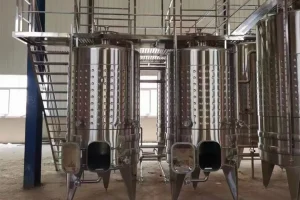
Stainless steel wine tanks are common because they are durable, food-grade, easy to clean, and suitable for controlled fermentation. Stainless steel does not add oak flavor, so it is often selected for fresh, clean, fruit-forward wine styles. It is especially useful for white wine, rosé, sparkling base wine, fruit wine, cider, and many modern winery applications.
The Smithsonian’s history of winery innovation notes that stainless steel fermentation tanks were easy to clean, helped prevent bacteria from spoiling wine, and allowed better control of fermentation temperature when fitted with jackets.
For commercial wineries, stainless steel wine tanks also support sanitary welding, smooth internal polishing, tri-clamp fittings, manways, cooling jackets, CIP cleaning, and custom tank designs. These details matter because wine quality depends on more than grape quality. It also depends on clean equipment, controlled fermentation, and reliable cellar workflow.
As a professional brewery and beverage equipment manufacturing plant, we often design stainless steel tanks not only for wineries but also for breweries, cideries, kombucha producers, cold brew coffee producers, and beverage startups. The same engineering principles apply: sanitary structure, stable temperature control, good layout, and long-term service support.
What Are Variable Capacity Tanks, and When Should You Use Them?
A variable capacity tank uses a floating lid. The floating lid can be adjusted to match the wine volume inside the tank. This helps reduce extra headspace when the tank is not completely full. For wineries that handle changing batch sizes, variable capacity tanks are very practical.
WineMaker Magazine describes variable stainless steel tanks as useful because they take up less room, are easy to clean, and give flexibility when wine volumes change from year to year. Another WineMaker article notes that floating-lid stainless-steel tanks are worth considering when a home winery grows to around 100 gallons or more per year.
Variable capacity tanks are useful for:
- Small wineries
- Boutique wineries
- Seasonal wine production
- Trial batches
- Blending
- Wine storage after racking
- Batch sizes that change often
- Reducing oxygen exposure in partly filled tanks
However, a variable capacity wine tank is not always the best choice. For pressure work, forced carbonation, closed transfer, or highly controlled commercial fermentation, a fixed-volume stainless steel tank with designed pressure rating and dedicated fittings may be better. Buyers should confirm lid seal quality, gasket condition, floating lid design, valve placement, and cleaning method before purchase.
How Do Red Wine and White Wine Fermentation Affect Tank Size?
Red wine fermentation and white wine fermentation often need different tank designs. Red wine is usually fermented with skins, seeds, and pulp. This creates a cap that rises during fermentation. The tank may need extra headspace for cap management, punch-downs, pump-overs, and foam.
White wine is often fermented after pressing, so the tank usually holds juice rather than skins. White wine tanks often focus more on cooling jacket performance, temperature control, clean fermentation, and oxygen management. A tall closed stainless steel tank can work well for white wine, while red wine may benefit from wider tanks, open-top designs, or easy-access manways.
A basic comparison:
| Wine Style | Tank Design Focus |
|---|---|
| Red wine | Open-top option, wider tank, cap space, pump-over port |
| White wine | Closed tank, cooling jacket, temperature control |
| Rosé | Gentle handling, clean fermentation, cooling |
| Fruit wine | Easy cleaning, flexible batch sizes |
| Sparkling base wine | Clean stainless steel fermentation and storage |
| Bulk wine | Larger storage tanks and stable cellar control |
If the tank is too full during primary fermentation, foam and cap expansion can cause overflow. If the tank is too empty during storage, extra headspace can increase oxygen risk. This is why tank size and tank use should be planned separately.
How Do Tank Shape, Bottom Design, Valve, and Fittings Matter?
Tank shape affects winemaking workflow. Tall tanks save floor space. Wide tanks are easier for red wine cap management. Stackable tanks are useful when cellar space is limited. Open-top tanks help with manual punch-downs. Closed tanks are better for controlled fermentation and storage.
Common tank shapes and bottoms include:
| Tank Design | Main Benefit |
|---|---|
| Flat bottom | Simple, stable, cost-effective |
| Sloped bottom | Easier drainage and racking |
| Conical bottom | Better sediment collection and discharge |
| Open-top tank | Good for red wine fermentation |
| Closed-top tank | Good for white wine and storage |
| Variable capacity tank | Flexible volume and floating lid |
| Stackable tank | Saves cellar floor space |
| Jacketed tank | Supports temperature control with glycol |
Fittings also matter. A good wine tank may include a sample valve, racking arm, bottom outlet, cooling jacket, thermometer port, manway, vent, CIP spray ball, and tri-clamp connections. These parts affect cleaning, transfer, sampling, yeast management, and daily cellar work.
A tank should be easy to clean. Poorly placed fittings or dead corners can increase spoilage risk. For B2B buyers, this is where equipment quality becomes visible over time. The tank may look similar from the outside, but the internal finish, weld quality, valve design, and fitting layout affect real use.
What Size Tank Should You Choose for 250 Gallons, 500 Gallons, or 2,150L?
A 250 gallon tank is useful for small commercial wine lots, boutique batches, and blending. It is large enough for serious production but still flexible enough for smaller wineries. A 500 gallon tank is common for wineries that need more efficient batch handling. It can support fermentation or storage depending on tank design.
A 2,150L tank is about 568 gallons. This size can fit small-to-medium commercial winery needs. It may be suitable for white wine fermentation, red wine storage, fruit wine, cider, or winery expansion projects. The right design depends on whether the tank needs a cooling jacket, floating lid, conical bottom, manway, or racking arm.
A practical decision guide:
| Tank Size | Best Use | Buyer Note |
|---|---|---|
| 250 gallons | Boutique batches, blending, small lots | Good flexibility |
| 500 gallons | Medium winery fermentation and storage | Common commercial size |
| 2,150L | Medium commercial tank | Good for winery expansion |
| 1,000 gallons | Larger batch production | Needs good cellar planning |
| 5,000L+ | Commercial winery production | Requires utilities and layout planning |
| 10,000L+ | Large cellar operation | Best for stable high-volume batches |
When buying a tank, do not choose only by advertised gallon capacities. Confirm total volume, working volume, tank diameter, height, valve size, jacket coverage, manway size, material thickness, internal finish, and shipping dimensions.
How Should B2B Buyers Select Custom Wine Tanks?
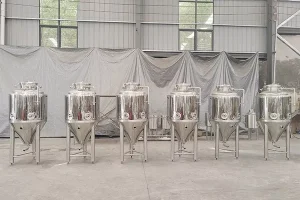
B2B buyers should select custom wine tanks based on process, not only capacity. A winery may need tanks for crushing, settling, primary fermentation, secondary fermentation, racking, storage, blending, cold stabilization, or bottling preparation. Each stage may require a different tank design.
Before buying a tank, confirm:
| Domanda dell'acquirente | Perché è importante |
|---|---|
| What wine styles will you produce? | Red wine, white wine, rosé, fruit wine, cider |
| What are your batch sizes? | Defines tank capacity and quantity |
| Do you need temperature control? | Requires cooling jacket and glycol system |
| Will the tank be used for fermentation or storage? | Affects headspace and fitting design |
| Is variable capacity needed? | Useful for changing volumes |
| What bottom design is best? | Flat, sloped, or conical |
| What fittings are required? | Valve, racking arm, sample port, manway |
| What is the cellar layout? | Affects tank height, diameter, and access |
| Will the winery expand later? | Helps plan tank quantity and utilities |
| What cleaning method will be used? | Determines CIP and manway design |
In qualità di azienda specializzata nella produzione di impianti per birrifici e bevande, forniamo sistemi di produzione della birra in acciaio inossidabile su misura, serbatoi di fermentazione, brewhouse systems, wine tanks, and turnkey beverage equipment solutions for global B2B customers. For winery projects, we often support capacity planning, efficient production layout, reliable installation support, and long-term after-sales service.
What Recommendations Do Not Apply to Every Winery?
Not every winery should buy the same tank size. A small winery making many wine styles may need several smaller tanks. A commercial winery producing one large-volume wine may need fewer, larger tanks. A winery focused on premium red wine may need open-top fermenters. A winery focused on fresh white wine may need jacketed stainless steel tanks with strong temperature control.
Tra i compromessi più importanti figurano:
- Smaller tanks: More flexibility, but more cleaning and higher cost per gallon.
- Larger tanks: Better efficiency, but less flexibility for small lots.
- Variable capacity tanks: Useful for changing volumes, but not ideal for every pressure or closed-system process.
- Open-top tanks: Good for red wine cap work, but need careful sanitation.
- Jacketed tanks: Better control, but require glycol and utilities.
- Stackable tanks: Save space, but may limit access depending on cellar layout.
The best tank plan should match grape supply, batch size, winemaking style, labor, cellar space, utilities, and future growth.
Practical Winery Case: Choosing Tanks for a Growing Boutique Winery
A boutique winery wanted to expand from small batch production to more stable commercial output. The winemaker first asked for one large new tank. After reviewing their production plan, we found that one large tank would reduce flexibility because they worked with several grape varieties and different harvest dates.
A better plan was:
| Winery Need | Tank Recommendation |
|---|---|
| Small red wine lots | Open-top or variable capacity tanks |
| White wine fermentation | Jacketed stainless steel tanks |
| Seasonal batch changes | Variable capacity tanks |
| Wine storage | Fixed or floating-lid storage tanks |
| Blending before bottling | Multipurpose stainless tank |
| Future expansion | Reserve space for larger tanks |
This plan helped the winery avoid over-investing in one large tank. It also improved cellar workflow, oxygen management, and wine style separation.
FAQs About Wine Tank Sizes
What size are wine tanks?
Wine tanks range from small 50–200 liter tanks to 250 gallon, 500 gallon, 1,000 gallon, 2,150L, 5,000L, 10,000L, and larger commercial tanks. The right size depends on batch volume, wine style, fermentation needs, and storage plan.
What is the best tank size for a small winery?
A small winery often benefits from several tanks between 200L and 2,000L, plus one or more 250 gallon or 500 gallon tanks if production volume supports them. Multiple smaller tanks give more flexibility for different wine styles.
What is a variable capacity wine tank?
A variable capacity wine tank has a floating lid that can move up or down to match the wine volume. It helps reduce headspace when the tank is not full.
Are stainless steel wine tanks better than concrete tanks?
Stainless steel tanks are easier to clean, support temperature control, and are widely used for fresh and clean wine styles. Concrete tanks may offer different thermal behavior and texture, but they are heavier and less flexible. The best choice depends on winemaking style.
Do wine fermentation tanks need cooling jackets?
Many commercial wine fermentation tanks use cooling jackets, especially for white wine and controlled fermentation. A jacket allows glycol or cooling fluid to help manage fermentation temperature.
How much headspace does a wine tank need?
During active fermentation, extra headspace is needed for foam, cap rise, and gas release. During storage, headspace should be minimized to reduce oxygen exposure. The exact amount depends on wine style and process.
What fittings should a wine tank include?
Common fittings include bottom valve, sample valve, racking arm, manway, cooling jacket ports, temperature port, CIP spray ball, vent, and tri-clamp connections.
Punti chiave
Wine tanks can range from small 50L tanks to large 10,000L+ commercial tanks.
Common winery sizes include 250 gallon, 500 gallon, 1,000 gallon, 2,150L, 5,000L, and 10,000L tanks.
Tank size should match batch size, grape supply, wine style, fermentation method, and storage plan.
Stainless steel wine tanks are popular because they are durable, easy to clean, and support temperature control.
Variable capacity tanks use a floating lid and are useful for changing wine volumes.
Red wine fermentation often needs headspace and cap-management access.
White wine fermentation often needs stronger temperature control.
Tank shape, bottom design, valve position, cooling jacket, manway, and fittings all affect daily winery operation.
Smaller tanks offer flexibility; larger tanks offer efficiency.
For commercial wineries, the safest choice is to design a tank plan around the full winemaking process, not just one gallon number.