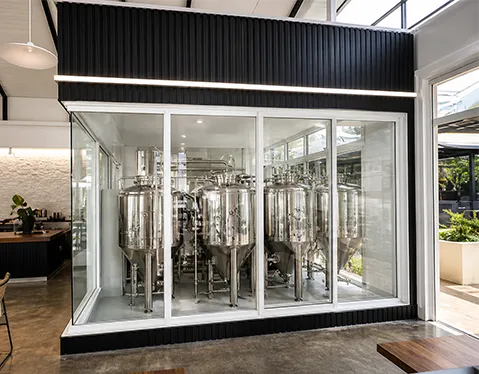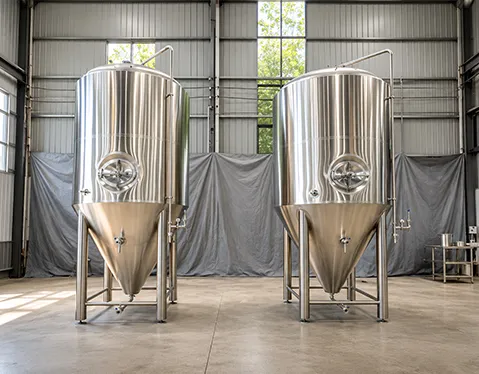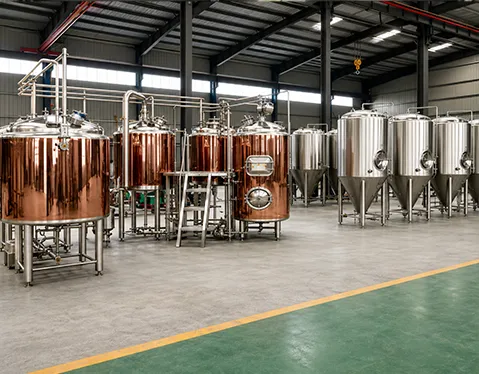
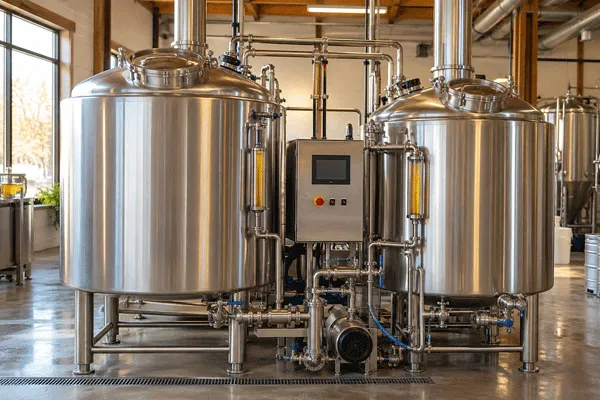
A 2-vessel brewhouse combines some brewing steps in shared vessels, saving space and reducing equipment costs. A 3-vessel brewhouse separates mashing, lautering, and boiling into dedicated vessels, allowing more process flexibility and potentially higher output. The best choice depends on your batch size, brewing schedule, available space, and production goals.
Esquema del artículo
-
What Is a 2-Vessel vs. 3-Vessel Brewhouse?
-
How Does a 2-Vessel Brewing System Work?
-
How Does a 3-Vessel Brewhouse Work?
-
What Is the Difference Between 2-Vessel, 3-Vessel, and BIAB Brewing?
-
How Do Mash, Sparge, and Boil Affect Brewing Efficiency?
-
Which Brewhouse Is Better for a Commercial Brewery?
-
How Do Cost, Footprint, and Brewery Equipment Affect Your Choice?
-
What Features Should You Look for in a Professional Brewhouse?
-
How Can You Choose the Right Brewhouse for Future Growth?
-
Frequently Asked Questions About 2-Vessel and 3-Vessel Systems
1. What Is a 2-Vessel vs. 3-Vessel Brewhouse?
A brewhouse is the central part of a brewery where malt and water become wort, the liquid that will later ferment into beer. The number of vessels describes how the main brewing tasks are arranged, not necessarily the total number of tanks in the entire brewery.
A 2-vessel system combines two or more process functions in shared equipment. A common arrangement uses a mash/lauter tun and a combined kettle/whirlpool vessel. A 3-vessel system often uses a mash tun, a lauter tun, and a separate kettle/whirlpool vessel. Other configurations are possible, so it is important to check the actual equipment layout before comparing quotations.
The key difference is workflow. A 2-vessel setup can reduce the equipment footprint and initial investment, while a 3-vessel system gives the brewer more freedom to run certain operations in parallel.
| Feature | 2-Vessel Brewhouse | 3-Vessel Brewhouse |
|---|---|---|
| Main vessels | Two combined-function vessels | Three dedicated-function vessels |
| Initial equipment cost | Often lower | Often higher |
| Floor space | Usually more compact | Usually requires more space |
| Process flexibility | Moderate | Greater |
| Simultaneous operations | More limited | More opportunities |
| Typical application | Small to medium breweries | Growing and larger breweries |
Neither design automatically produces better beer. Recipe control, temperature accuracy, water quality, cleaning, and operator skill remain essential.
2. How Does a 2-Vessel Brewing System Work?
A typical 2-vessel brewhouse combines the mash and lauter functions in one vessel and uses the second vessel for boiling and whirlpooling. This arrangement reduces the number of large vessels while keeping the main brewing steps organized.
During the mash, crushed malt mixes with strike water at a controlled temperature. Enzymes convert grain starches into fermentable sugars. The brewer then separates the liquid wort from the wet grain through lautering and, when used, sparging. After collection, the wort moves to the brew kettle for boiling and hop addition.
Because some operations share equipment, the brewer must manage the sequence carefully. The mash/lauter vessel cannot begin another mash while it remains occupied with the current batch. This can limit throughput when the brewery wants to brew several batches in a short period.
Main advantages of a 2-vessel system
-
Lower initial investment: Fewer main vessels can reduce equipment and installation costs.
-
Smaller footprint: Useful for brewpubs and breweries with limited space.
-
Simpler layout: Fewer large vessels and connections can make the system easier to manage.
-
Good for controlled growth: A compact system can support a new brewery before demand justifies a larger brewhouse.
A 2-vessel setup is often suitable for a brewery that prioritizes space and cost over maximum brewing frequency. However, the brewer should assess the time needed for mashing, lautering, boiling, cleaning, and preparing the next batch.
3. How Does a 3-Vessel Brewhouse Work?
A 3-vessel brewhouse normally uses separate vessels for mashing, lautering, and boiling. This arrangement allows the brewer to move wort through the process while preparing the next operation in another vessel, depending on the system design and available utilities.
The mash tun holds malt and water during mashing. The lauter tun separates the wort from the grain bed and supports sparging. The brew kettle then boils the collected wort and allows hop additions. Some systems use the kettle for whirlpooling, while others include a separate whirlpool vessel.
The main benefit is process flexibility. While wort is boiling in the kettle, the brewer may be able to prepare the next mash or perform another operation. This can improve daily output when the production schedule is carefully planned.
Main advantages of a 3-vessel system
-
Greater process flexibility: Each vessel has a defined role.
-
More opportunities for parallel work: Some brewing stages can overlap.
-
Better support for frequent brewing: Useful when the brewery needs multiple batches per day.
-
Room for process optimization: Dedicated vessels can be configured for specific recipes and production methods.
A 3-vessel system does not guarantee higher efficiency or output by itself. The result depends on heating power, transfer rates, operator workflow, water supply, and fermentation capacity. A well-designed 2-vessel brewhouse may outperform a poorly planned 3-vessel system.
4. What Is the Difference Between 2-Vessel, 3-Vessel, and BIAB Brewing?
BIAB, or Brew in a Bag, is a brewing method in which the brewer holds the grain in a mesh bag during mashing. After the mash, the bag and wet grain are lifted out, leaving wort in the kettle for boiling. It is common in homebrewing and can also inform compact brewing designs.
A BIAB setup may use one pot, a heater or burner, and a bag, so it has fewer separate vessels than a typical commercial brewhouse. Brands such as Grainfather, Braumeister, Blichmann, and SS Brewtech offer different brewing products and configurations, but their systems should be compared by actual specifications rather than brand name alone.
For commercial beer production, the decision is not simply about how many vessels are present. It is about whether the equipment can meet sanitation requirements, deliver repeatable results, support the desired batch size, and fit the brewery’s production schedule.
|
System |
Main Idea |
Best Fit |
|---|---|---|
| BIAB | Mash and separate grain in one vessel or kettle | Homebrewing and some compact setups |
| 2 recipientes | Combine certain brewing functions | Small and medium cervecerías comerciales |
| 3 vasos | Separate mash, lauter, and kettle functions | Breweries needing greater workflow flexibility |
If you are moving from homebrew to commercial production, focus on working volume, cleaning access, heating performance, and process control—not just the number of vessels.
5. How Do Mash, Sparge, and Boil Affect Brewing Efficiency?
The brewing process starts with the mash. The brewer combines malt with strike water and maintains the required mash temp so enzymes can convert starch into sugar. Water chemistry also matters: for example, hard water may suit some recipes but not others, so the water profile should match the beer style.
After mashing, lautering separates wort from the grain bed. Sparging adds hot water to rinse remaining extract from the wet grain. The brewer then collects the wort and transfers it to the kettle for boiling. Boiling helps sanitize the wort, concentrate it, and extract bitterness and aroma from hops.
Both brewhouse designs can produce excellent wort. Efficiency depends on grain crush, mash conditions, lauter design, water volume, flow rates, and operator technique. A 3-vessel system may offer more opportunities to manage stages separately, but it does not automatically achieve higher brewhouse efficiency.
Factors that influence brewing performance
-
Mash temperature: Controls enzyme activity and affects wort fermentability.
-
Water volume: Determines the ratio of water to grain and affects extract collection.
-
Sparging: Helps recover extract when the recipe and equipment use this step.
-
Heating capacity: Influences how quickly the wort reaches a boil.
-
Wort transfer: A properly sized pump and piping help maintain a steady workflow.
-
Cleaning: Good cleaning practices reduce contamination risks between batches.
The best brewhouse is the one that gives you reliable process control under your actual production conditions.
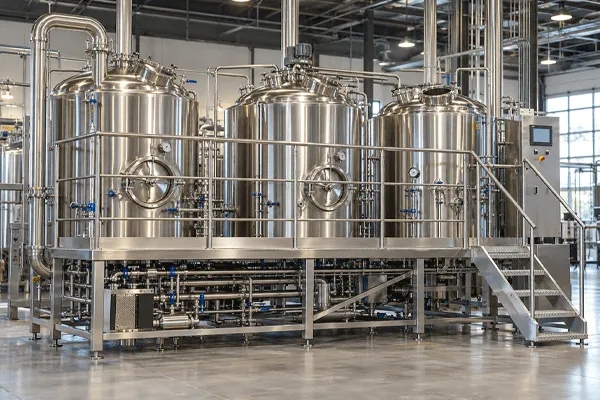
6. Which Brewhouse Is Better for a Commercial Brewery?
The right brewhouse depends on the brewery’s size, batch frequency, product range, and expected demand. A brewpub that serves beer on-site may value a compact system and lower investment, while a growing production brewery may need more opportunities to overlap brewing operations.
For example, a small brewery producing one batch per brew day may find a 2-vessel setup practical. A brewery aiming to run multiple batches in a day may benefit from a 3-vessel layout because separate mash, lauter, and kettle vessels can reduce scheduling conflicts.
The brewery must also consider fermentation. A larger brewhouse cannot increase finished beer output if there are not enough fermenters, or if the cooling system and packaging line cannot handle the additional volume.
Choose based on production goals
|
Brewery Requirement |
Possible Choice |
Why |
|---|---|---|
| Limited space and budget | 2 recipientes | Compact layout and fewer main vessels |
| Moderate batch frequency | 2-vessel or 3-vessel | Depends on the brew schedule |
| Frequent brewing | 3 vasos | More opportunities for parallel operations |
| Multiple recipes and tight schedules | 3 vasos | Greater process flexibility |
| Future expansion | Either, with planning | Capacity and layout matter more than vessel count alone |
As a professional brewery and beverage equipment manufacturer, we provide customized stainless steel brewing systems, fermentation tanks, brewhouse systems, and turnkey brewery solutions. We help customers assess their recipes, working volume, site layout, and production plans before recommending a configuration.
7. How Do Cost, Footprint, and Brewery Equipment Affect Your Choice?
Initial purchase price is important, but it is only one part of the investment. A 3-vessel system may require more tanks, fittings, valves, controls, and installation work. A 2-vessel system may cost less initially, but if it limits production, the brewery could face higher costs when demand grows.
The brewhouse footprint also matters. The design must leave room for safe access, grain handling, cleaning, piping, and maintenance. A compact system can be attractive for a brewpub, but a crowded layout may make routine work slower and less safe.
Look at the full equipment package when comparing suppliers. Check whether the quotation includes pumps, heating systems, a hot liquor tank (HLT), a chiller, control panel, hoses, valves, and required connections. The exact scope varies by manufacturer.
Questions to ask before purchasing
-
What is the actual working volume per batch?
-
How long does a typical brew day take?
-
Can the system support the target number of batches?
-
What heating method is included?
-
How are temperature and flow controlled?
-
How easy is it to clean and maintain the equipment?
-
Can additional vessels be added later?
A lower-priced brewhouse is not necessarily the lower-cost choice over its working life. Consider labor, energy, maintenance, downtime, and the cost of future upgrades.
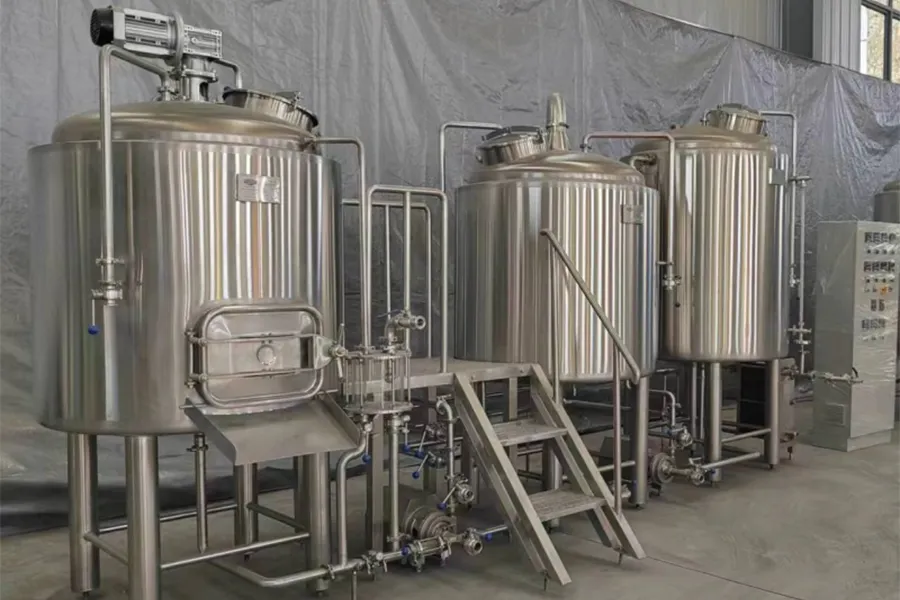
8. What Features Should You Look for in a Professional Brewhouse?
Professional brewing equipment should be designed around hygiene, process control, reliability, and ease of operation. Stainless steel is widely used in brewery vessels because it offers corrosion resistance and can be cleaned effectively when the equipment is properly designed and maintained.
Temperature control is another key feature. A reliable heating system and suitable sensors help the brewer maintain mash conditions and manage boiling. Depending on the system, heating may use steam, electric elements, or another suitable heat source. A PID controller can help regulate temperature, while a well-designed control panel makes the brewing process easier to monitor.
Also review vessel insulation, access ports, drainability, pump selection, and connection standards. A vessel that is difficult to drain or clean can create operational problems even if its capacity and appearance look good on paper.
Essential features to evaluate
|
Feature |
Por qué es importante |
|---|---|
| Food-contact material | Supports hygiene and durability |
| Temperature control | Helps maintain consistent mash conditions |
| Heating capacity | Influences brew-day timing |
| Pump and piping design | Supports reliable liquid transfer |
| Cleaning access | Reduces cleaning effort and contamination risk |
| Automation options | Improves repeatability and monitoring |
| Modular design | Makes future upgrades easier |
When selecting a brewhouse, compare the actual technical specifications and process layout. This is more useful than choosing based only on a general label such as “2-vessel” or “3-vessel.”
9. How Can You Choose the Right Brewhouse for Future Growth?
The best choice starts with a realistic production plan. Estimate the number of batches you want to brew per week, the beer styles you intend to make, and the volume of finished beer you expect to sell. Then check whether the brewhouse, fermentation vessels, cooling equipment, and packaging line can support that plan.
Consider your future expansion path as well. You may start with a 2-vessel system and add capacity later, or invest in a 3-vessel system from the beginning if frequent brewing is central to your business model. Either way, leave enough room for safe operation and potential equipment additions.
A professional supplier should help you evaluate the complete brewing setup—not simply quote a vessel count. Our customized brewery solutions can be planned around batch size, building dimensions, heating source, automation level, fermentation capacity, and long-term production needs.
Before making a final decision, prepare these details:
-
Target batch volume and annual output.
-
Expected number of brew days per week.
-
Main beer styles and recipe requirements.
-
Available floor space and utility supply.
-
Budget for the initial system and future expansion.
-
Required fermentation and packaging capacity.
With this information, you can compare 2-vessel and 3-vessel systems based on real operating needs.
10. Frequently Asked Questions About 2-Vessel and 3-Vessel Systems
Is a 3-vessel brewhouse always more efficient?
No. A 3-vessel brewhouse offers more flexibility and opportunities to run operations in parallel, but actual efficiency depends on the equipment design, heating capacity, process control, and operator workflow.
Is a 2-vessel system suitable for a commercial brewery?
Yes. A 2-vessel system can work well for a small or medium commercial brewery when its batch capacity and brewing schedule match the business’s production goals.
Can I brew the same beer on both systems?
Yes. Both systems can produce a wide range of beer styles. Recipe control, ingredient quality, water chemistry, and consistent operating conditions matter more than the number of vessels alone.
Does a 3-vessel brewhouse need more space?
Usually, yes, because it has an additional dedicated vessel. However, the actual footprint depends on vessel dimensions, platform design, pipework, and the overall layout.
Which system is better for a new brewery?
A 2-vessel system may be attractive when budget and space are limited. A 3-vessel system may suit a new brewery that expects frequent brewing or needs greater process flexibility from the start.
Can a brewhouse be customized?
Yes. Commercial brewhouses can be customized by working volume, vessel arrangement, heating method, automation level, and integration with fermentation tanks and cooling systems.
Puntos clave
-
A 2-vessel brewhouse is often a good fit for compact breweries seeking lower initial investment.
-
A 3-vessel brewhouse provides greater workflow flexibility and can support frequent brewing.
-
Neither design guarantees better beer or higher efficiency; process control and equipment design remain essential.
-
Consider batch size, brew-day timing, floor space, heating capacity, and fermentation capacity before choosing.
-
Compare the complete equipment scope, including pumps, controls, HLT, chiller, and installation needs.
-
Plan for future growth so your brewhouse can support the brewery as demand increases.
Need help choosing a brewhouse? Share your target batch volume, expected batches per week, beer styles, and available space. Our team can help you evaluate a customized 2-vessel or 3-vessel brewing system that fits your brewery’s production goals.