Choosing the wrong tank can slow your brewery growth, increase operating costs, and make consistent beer quality harder to achieve. Many new brewers confuse serbatoi di fermentazione e brite tanks because both store beer, but they serve very different purposes. Understanding the difference helps you build a more efficient brewing system.
A brite tank is mainly used after fermentation for clarification, carbonation, maturation, and packaging preparation, while a fermentation tank is designed to convert wort into beer through yeast activity. Many breweries use both tanks together, but some smaller operations choose unitanks that combine both functions.
What Is the Difference Between a Brite Tank and Fermentation Tank?
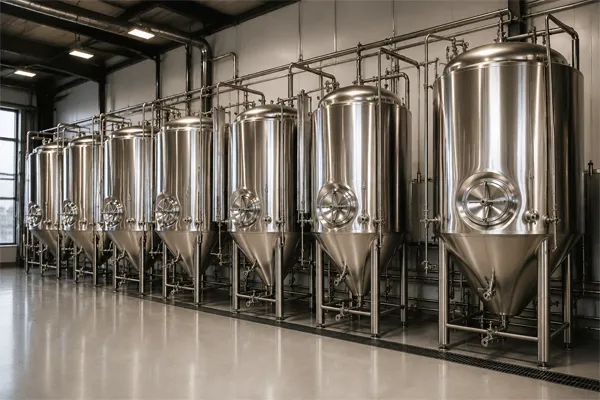
The primary difference between a brite tank vs fermentation tank is the stage of the brewing process where each vessel is used. A fermentation tank is where yeast transforms sugars in wort into alcohol and carbon dioxide. A brite tank is where the fermented beer is polished, carbonated, stored, and prepared for serving or packaging.
For a professional brewery, these two vessels work together as part of a complete production flow:
| Tipo di serbatoio | Main Function | Typical Stage |
|---|---|---|
| Fermentation Tank | Yeast converts sugars into alcohol and carbon dioxide | Primary fermentation |
| Brite Tank | Clarification, carbonation, storage, packaging preparation | After fermentation |
| Unitank | Fermentation and conditioning in one vessel | Combined process |
In our experience as a brewery equipment manufacturer, many customers focus first on the brewhouse capacity but underestimate the importance of selecting the correct tank combination. A balanced system requires matching fermentation capacity, storage needs, beer styles, and packaging plans.
The right tank selection improves production efficiency, protects beer quality, and supports long-term brewery expansion. Whether you operate a small craft brewery, taproom, or commercial production facility, understanding these differences helps you invest wisely.
How Does a Fermentation Tank Work During the Brewing Process?
A fermentation tank is one of the most important pieces of brewing equipment because it is where wort becomes beer. After the brewhouse completes mashing, boiling, and cooling, the wort enters the fermenter. Yeast is added, and the fermentation process begins.
During fermentation, yeast consumes sugars and produces alcohol and carbon dioxide. Temperature control systems maintain the ideal environment so the brewer can achieve the desired flavor profile. Different beer styles require different fermentation temperatures, yeast strains, and fermentation times.
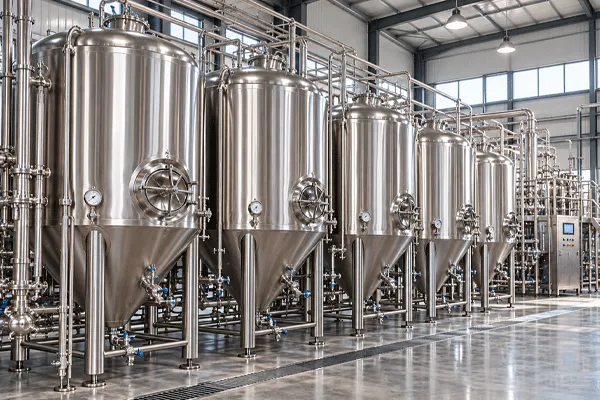
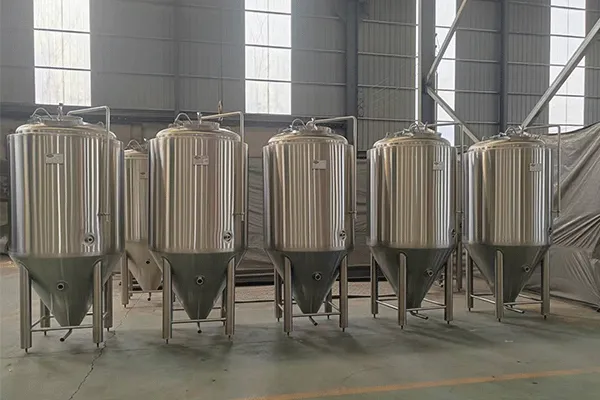
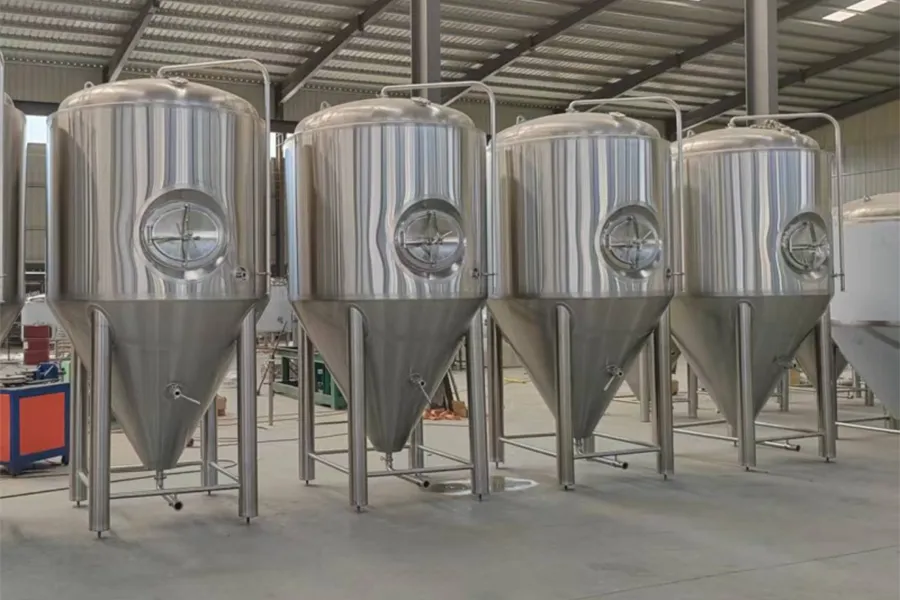
Most modern fermentation tanks feature a conical bottom design. This allows yeast to accumulate at the bottom of the tank, making harvesting, cleaning, and transferring beer easier.
Common fermentation tank features include:
- Stainless steel sanitary construction
- Cooling jackets for temperature control
- Design a prova di pressione
- Conical bottom for yeast collection
- CIP cleaning capability
- Sampling valves
- Pressure control systems
A fermentation tank is typically used for the primary fermentation stage, but some breweries also use it for additional conditioning. The exact process depends on the brewer’s recipes and production goals.
What Is a Brite Tank Used For in a Brewery?
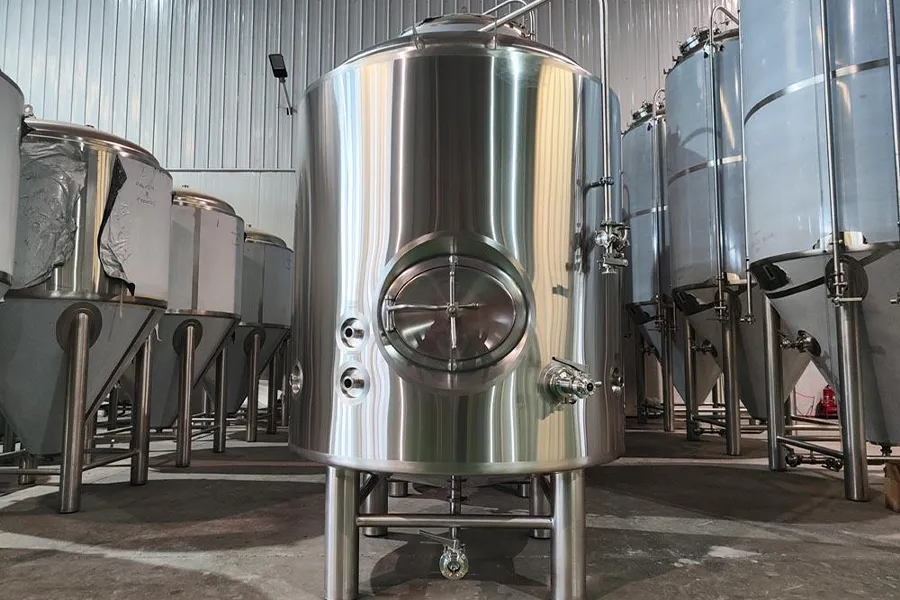
A brite tank is a finishing vessel used after fermentation. The beer leaves the fermenter and enters the brite tank for clarification, carbonation, and final preparation before packaging or serving.
Unlike fermentation tanks, brite tanks are not designed for active yeast fermentation. Their purpose is refinement. Brewers use them to create clearer beer, stabilize quality, and prepare finished beer for customers.
A typical brite tank process includes:
- Transfer fermented beer from the fermenter
- Adjust temperature
- Add carbonation
- Allow particles to settle
- Test quality
- Package into kegs, cans, or bottles
Brite tanks are especially valuable for breweries producing larger quantities of beer because they create additional storage capacity between fermentation and packaging.
For taprooms and craft breweries, a brite tank can also improve serving consistency. Beer can be carbonated and stored under controlled conditions instead of moving directly from fermentation tanks to customers.
Why Do Breweries Need Both Brite Tanks and Fermentation Tanks?
A professional brewery usually benefits from having separate tanks because each vessel performs a specialized role. Fermentation tanks focus on creating beer. Brite tanks focus on finishing and preparing that beer.
Using dedicated vessels provides several advantages:
| Vantaggio | Benefit |
|---|---|
| Better process control | Each stage receives the correct environment |
| Higher production efficiency | Fermenters can start new batches sooner |
| Improved clarity | Brite tanks support settling and filtration |
| Easier scheduling | Packaging can happen independently from fermentation |
| Better quality consistency | Brewers control each step separately |
For example, once beer leaves a fermenter, that vessel becomes available for another batch. Meanwhile, the brite tank can hold finished beer until packaging or customer demand requires it.
This separation becomes increasingly important as a brewery grows. Many craft breweries start with a simple setup, then add brite tanks when production volume increases.
Can Unitanks Replace Fermentation Tanks and Brite Tanks?
Yes, unitanks can combine fermentation and conditioning functions in one vessel. A unitank allows the brewer to ferment and carbonate beer in the same tank, reducing the number of vessels required.
For a small craft brewery or startup operation, using a unitank can reduce initial investment and save floor space. It also simplifies the beer brewing process because beer does not need to be transferred between multiple tanks.
However, unitanks have limitations. When one tank contains beer throughout the entire fermentation and conditioning period, it cannot immediately receive a new batch. This can affect production scheduling.
The choice between unitanks and brite tanks depends on:
- Production volume
- Available space
- Beer styles
- Packaging schedule
- Expansion plans
A small craft brewery may prefer unitanks because they require fewer pieces of equipment. A growing commercial brewery may choose separate fermentation tanks and brite tanks for greater flexibility.
What Tank Features Should Brewers Compare Before Buying?
When choosing brewery tanks, buyers should look beyond capacity. The construction quality, control system, and serviceability directly influence daily operation.
Important tank features include:
Stainless Steel Construction
High-quality stainless steel helps maintain sanitary conditions and supports long service life. Product-contact surfaces should be designed for easy cleaning and inspection.
Controllo della temperatura
Precise temperature control affects yeast performance and final flavor. Cooling jackets and reliable control systems help maintain consistent fermentation conditions.
Pressure Capability
Both fermenters and brite tanks may operate under pressure. Proper pressure ratings are essential for safe operation and carbonation control.
Cleaning Design
A good tank should support efficient CIP cleaning. Reducing manual cleaning time improves production efficiency and lowers contamination risk.
Internal Finish Quality
Smooth internal surfaces reduce residue buildup and make cleaning easier. This supports stable beer quality throughout production.
As a customized brewing equipment supplier, we design stainless steel tanks according to customer capacity requirements, layout conditions, and production goals.
How Does Tank Selection Affect Beer Quality?
Tank selection influences many parts of the brewing process, from yeast management to carbonation. A poorly matched system can create scheduling problems, inconsistent flavors, or unnecessary transfers.
During fermentation, the brewer controls yeast activity and allows sugars to become alcohol and carbon dioxide. After fermentation, the brite tank helps improve clarity, carbonation level, and serving readiness.
The separation between tanks also reduces unnecessary movement of beer. Every transfer creates another opportunity for oxygen exposure or contamination. A well-designed system protects the beer throughout the fermentation process.
For breweries producing different beer styles, tank flexibility becomes even more important. A lager may require longer maturation, while some ales may move faster from fermentation to packaging.
How Many Fermentation Tanks and Brite Tanks Does a Brewery Need?
There is no universal number because every brewery has different production goals. The number of tanks depends on batch size, fermentation time, beer styles, sales demand, and packaging frequency.
A simple planning method is:
| Question | Perché è importante |
|---|---|
| How much beer do you plan to produce monthly? | Determines total capacity |
| How long does each beer style ferment? | Determines tank occupation time |
| How many products do you sell? | Determines flexibility |
| How often do you package? | Determines storage requirements |
A brewery producing several seasonal beers may need more tanks than a brewery producing only one or two core products.
For example, a small brewery may begin with several unitanks, while a larger production brewery may use multiple fermenters connected with dedicated brite beer tanks.
The goal is not simply buying more tanks. The goal is creating a system where each tank supports the entire production schedule.
Should a Startup Brewery Buy Brite Tanks or Unitanks First?
For startup breweries, budget and production plans usually determine the answer. A new brewery often wants to control startup costs while keeping room for future growth.
Unitanks can be attractive because they reduce the initial equipment list. They allow a new brewer to ferment, condition, and carbonate beer using fewer vessels.
However, breweries planning rapid growth, distribution, or multiple beer styles may benefit from separate fermenters and brite tanks from the beginning.
Before investing, consider:
- Expected annual production
- Number of beer styles
- Taproom demand
- Packaging plans
- Available production space
- Future expansion goals
A brewery equipment manufacturer like us normally reviews these factors before recommending a tank configuration. The best solution is not always the largest system. It is the system that fits the business model.
How Can a Brewery Equipment Manufacturer Help Choose the Right Tank?
Selecting tanks is part of a larger brewery design process. A professional supplier should review the complete production flow, including the brewhouse, fermentation area, cellar layout, cooling system, cleaning system, and packaging requirements.
Our team provides customized stainless steel brewing systems, fermentation tanks, brewhouse solutions, and turnkey brewery projects for global customers. We work with craft breweries, brewpubs, beverage startups, and commercial breweries to develop practical equipment configurations.
A complete project review usually includes:
- Production capacity planning
- Tank quantity calculation
- Layout optimization
- Utility requirements
- Installation guidance
- Operator training
- After-sales support
A well-designed brewery setup allows brewers to focus on creating high-quality beer instead of solving avoidable equipment problems.
Frequently Asked Questions
Can I use a fermentation tank as a brite tank?
Some tanks may have overlapping capabilities, but fermentation tanks and brite tanks are designed for different jobs. A fermentation tank supports yeast activity, while a brite tank focuses on clarification, carbonation, and final beer preparation.
Are unitanks better than separate fermentation tanks and brite tanks?
It depends on the brewery size and production goals. Unitanks save space and reduce equipment requirements, while separate tanks provide more scheduling flexibility for larger breweries.
How long does beer stay in a brite tank?
The time depends on the beer style, carbonation requirements, and packaging schedule. Some beer may stay briefly before packaging, while other products may require additional conditioning.
Do all breweries need brite tanks?
Not all breweries need them immediately. Smaller operations may start with unitanks, but breweries with higher output often add brite tanks to improve workflow and packaging efficiency.
What is the main difference between a fermenter and a bright tank?
A fermenter creates beer through yeast activity. A bright tank, also called a brite tank, stores finished beer after fermentation and prepares it for serving or packaging.
Key Points to Remember
- A fermentation tank creates beer through yeast activity, while a brite tank finishes and prepares beer.
- Brite tanks support carbonation, clarification, storage, and packaging.
- Unitanks combine fermentation and conditioning in one vessel.
- The best tank choice depends on production volume, beer styles, space, and growth plans.
- A complete brewery system should balance brewhouse capacity, fermenters, brite tanks, cooling, cleaning, and packaging.
- Working with an experienced brewery equipment manufacturer helps reduce project risks and create a reliable long-term brewing solution.