David Zhang — Founder & CEO, ZPET Published July 31, 2026
Brewery equipment cost is driven less by tank volume than by what’s specified underneath it: shell material grade, cooling jacket type, weld and polish class, control-panel scope, and what’s actually included in freight and commissioning. Two quotes for the same BBL size can differ sharply because those specifications differ, not because one vendor is simply cheaper.
Why “BBL Size” Isn’t a Price Variable on Its Own
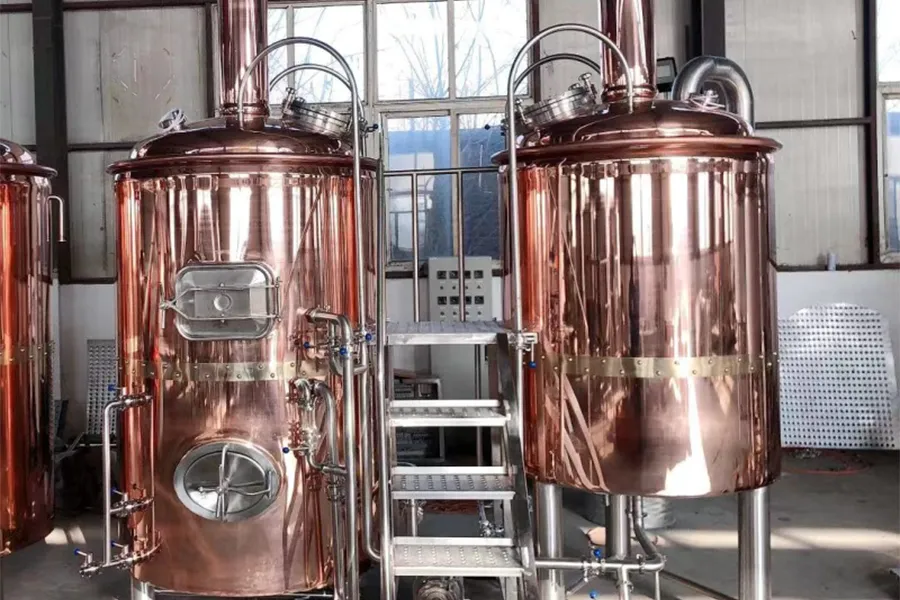
Batch size describes volume. It says nothing about wall thickness, welding method, inspection process, or whether the price includes a control panel, a freight quote, or someone on-site to commission the equipment. Two 10 BBL brewhouses can carry the same capacity label and represent genuinely different builds — one might use single-sided manual welds and no inspection documentation, the other double-sided TIG argon arc welding with X-ray weld inspection on record. Comparing quotes by BBL size alone is comparing labels, not the equipment behind them.
This is also why published dollar ranges for “10 BBL brewing system cost” or similar searches tend to contradict each other: they’re usually built from a mix of build specs, some of which the source doesn’t disclose. A range is only meaningful next to the specification it was quoted against.
The Build-Spec Variables That Actually Move a Quote
Material grade. SS304 and SS316L both show up on brewery equipment spec sheets, but they aren’t interchangeable line items. SS316L carries added nickel and molybdenum content for better resistance to chloride and acid exposure, which is why it shows up more often on vessels handling higher-acid or higher-salinity products — distilling equipment, some wine and cider applications — than on a standard fermentation tank. A quote specifying 316L where 304 would normally suffice, or vice versa, is worth asking about directly.
Plate thickness. Wall gauge is one of the least-disclosed numbers on a brewery equipment spec sheet, and it’s also one of the easiest places to trim cost without changing the headline capacity or even the visible finish. A buyer comparing two quotes at the same BBL size should ask for the plate thickness in writing, not assume it’s equivalent because the tank looks the same in a product photo.
Welding process. TIG and double-sided argon arc welding, done with CNC laser cutting and automatic welding robots, produces a more consistent weld than manual single-pass welding — and it takes longer and costs more to execute. X-ray weld inspection adds a documented verification step on top of that. None of this is visible from a spec sheet’s headline numbers; it shows up only if a vendor discloses fabrication method and inspection process as part of the quote.
Surface finish. A 0.4 μm mirror-polish interior isn’t just a cosmetic spec — it affects cleanability and how easily residue releases during CIP cycles, which is why hygienic process design references like ASME BPE define surface finish in terms of measurable Ra values rather than a qualitative “polished” description. A lower-cost quote that doesn’t specify a finish grade at all isn’t necessarily worse, but it means the buyer is accepting an unknown rather than a documented spec.
Testing and QC. Spectrometer material verification, a 24-hour pressure hold test, and a multi-step QC process add labor and time before a tank ships. A quote that skips documented testing can legitimately come in lower — the question for the buyer is whether that gap in documentation is an acceptable tradeoff for the application, not whether the lower number is automatically the better deal.
Control panel scope. A manual-control brewhouse and a PLC/HMI-automated one aren’t the same purchase even at identical batch size, and a control panel intended for the North American market carries an additional layer if it’s built to UL 508A. That standard governs industrial control panel construction — component selection restricted to UL-listed or UL-recognized parts, wire sizing, short-circuit current rating compliance, and panel documentation (UL Solutions, UL 508A) — and meeting it is a construction and sourcing constraint, not a label added after the fact. A panel quoted without that scope is a materially different product than one built to it, regardless of what the base equipment costs.
Freight, duties, and commissioning. This is where two “equal” quotes usually diverge the most and get compared the least carefully. Whether freight is included or quoted separately, who handles import duties, and whether on-site installation and commissioning support is part of the package can represent a larger swing between two quotes than any single fabrication spec above it.
Compliance Line Items: What “Engineered to Meet” Actually Adds
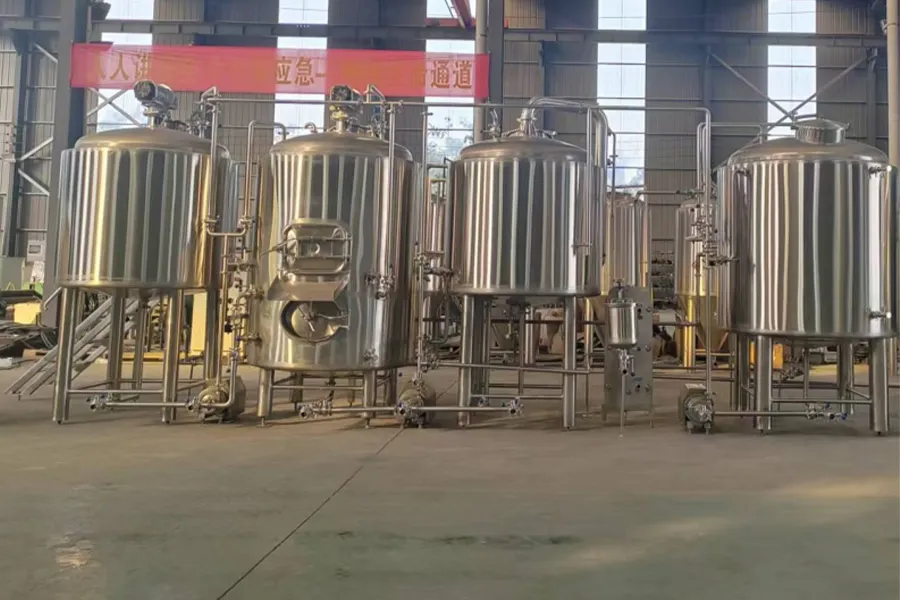
Export-market compliance shows up on a quote as a design and testing requirement, not a certificate line item. Equipment engineered to meet PED (CE) for the European market, UL/cUL for North American control panels, and AS1210 for Australian pressure vessel requirements has to be designed and documented against those standards from the start — retrofitting a tank or panel to meet a compliance target after fabrication is far more disruptive than designing to it from the outset. A quote that doesn’t specify which markets’ requirements the equipment is engineered to meet is one worth asking about before assuming it covers a target export destination.
A Framework for Comparing Two Quotes at the Same BBL Size
- Confirm material gradefor every vessel, not just the fermenters — brewhouse, cellar, and any distilling or specialty equipment may reasonably use different grades.
- Ask for plate thicknessin writing rather than accepting “standard gauge” as an answer.
- Confirm welding process and inspection.Manual vs. automated welding, and whether inspection records (X-ray, pressure hold) are included, are legitimate points of comparison.
- Confirm surface finish grade, especially for vessels that will run frequent CIP cycles.
- Confirm control panel scope and any required listingfor the market the equipment will operate in.
- Confirm what’s included in freight, duties, and commissioning— this line moves the total more than most buyers expect going in.
- Confirm warranty terms cover the same scope.A 10-year structural warranty on welded vessel work is a specific claim; make sure both quotes are promising the same thing.
Turnkey Quote vs. Sourcing Components Separately
Some buyers try to lower total spend by sourcing the brewhouse from one supplier and tanks, glycol, and controls from others, comparing each line item against the cheapest available option. Compared to a single-vendor turnkey quote, that approach can look cheaper on a spreadsheet before installation starts.
The tradeoff shows up at commissioning. A turnkey quote from one vendor means material grade, weld standard, and control-panel scope were specified against each other from the same drawing set, so the pieces are meant to interface correctly by design. A multi-vendor build can hit a lower number on paper and still cost more overall once mismatched pipe fittings, incompatible control signals, or a glycol loop sized for the wrong vessel count get resolved on-site — costs that don’t show up on any of the original quotes.
Neither approach is universally right. A buyer with in-house engineering support and time to manage multiple vendors can genuinely save by sourcing separately. A buyer without that support is usually better served by a single quote that already accounts for how the pieces fit together, even if the line-item total looks higher before installation begins.
FAQ
Q: How much does a 3 BBL brewing system cost?
This depends on material grade, welding and testing scope, control-panel automation level, and what’s included in freight and commissioning — not on batch size alone. A specific figure requires a quote against an actual spec; a listed range without that context isn’t a reliable budgeting number.
Q: How much does a 5 BBL or 7 BBL brewhouse cost?
Same answer as the 3 BBL question: the batch-size label doesn’t determine cost on its own. A 5 BBL and 7 BBL system with identical build specs will price closer together than two 7 BBL systems with different material grade, welding process, and control scope.
Q: What’s typically not included in a published “brewing system cost” figure?
Freight, import duties, on-site installation and commissioning support, and control-panel listing costs are the items most often left out of a headline number, and they’re frequently the largest source of variance between two otherwise similar quotes.
Q: Does a lower quote always mean lower quality?
Not automatically — it can reflect a legitimately different scope (thinner plate, no documented testing, manual controls) that’s an acceptable tradeoff for some applications and not others. The point isn’t that lower is worse; it’s that “lower” and “same” aren’t the same claim unless the specs actually match.
Q: Why do brewery equipment cost estimates online contradict each other so often?
Because most published ranges don’t disclose the build specification behind them. A number without a matching spec sheet is describing a different product depending on the source, even when the BBL size is the same.