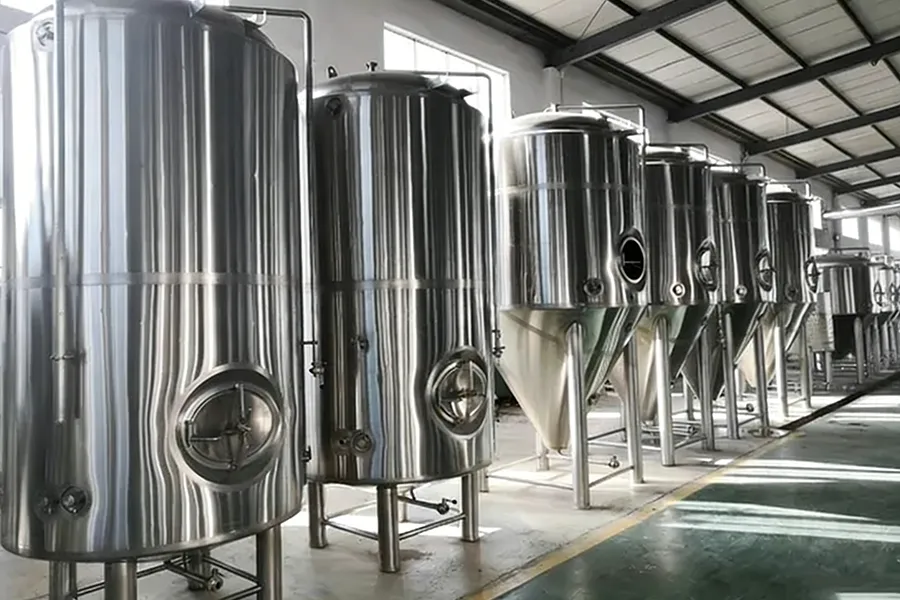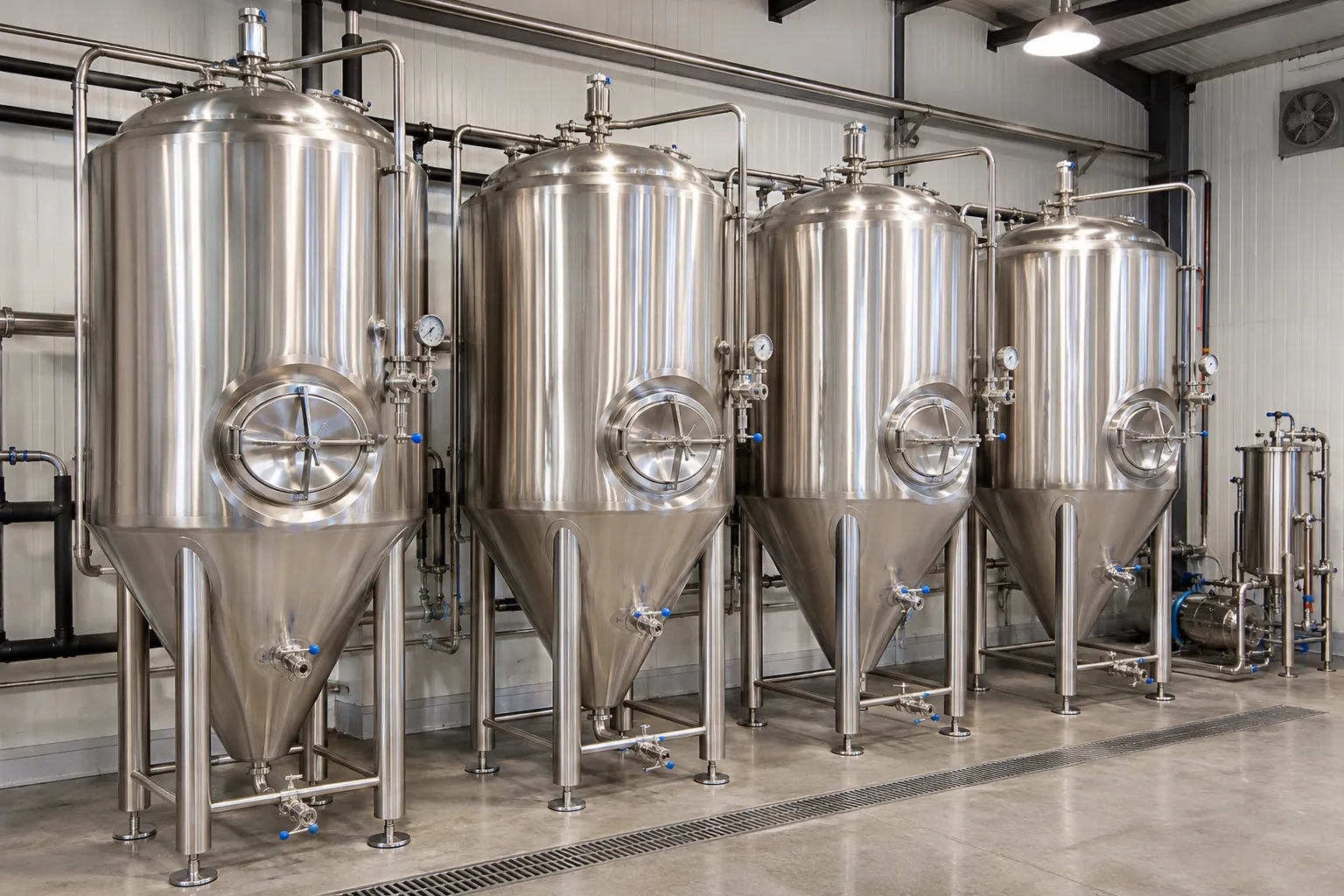
Choosing a brewhouse based only on tank size can leave a small brewery with too much beer, too little production capacity, or an expensive brewing system that sits idle. The best approach starts with how customers buy your beer, then matches equipment to real sales and brewing needs.
The best brewhouse for a small brewery is one that matches its weekly beer sales, batch variety, available brewing days, building utilities, and growth plans. A compact 2-vessel system often suits brewpubs and small taprooms, while larger or more flexible configurations may benefit breweries with frequent production, distribution, and seasonal demand.
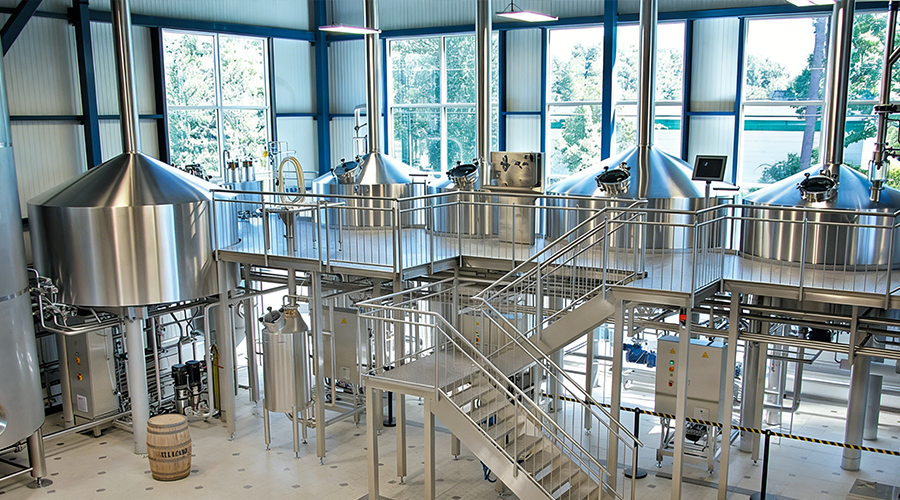
1. What Makes a Brewhouse the Best Choice for a Small Brewery?
A small brewery does not need the largest brewing system it can afford. It needs equipment that can produce the right amount of beer at the right time, with enough flexibility to support its business.
Think about two different businesses. One is a neighborhood taproom selling fresh craft beer directly to customers. The other is a small brewing company supplying local bars, restaurants, and retail partners.
Both may be called small breweries, but their production needs are different.
The taproom might prefer smaller batches and frequent recipe changes. The distribution-focused business may need larger batches of its best-selling products and a predictable weekly schedule.
That distinction should guide equipment selection.
Matching brewery models to production priorities
| Brewery Business Model | Main Requirement | Brewhouse Priority |
|---|---|---|
| Small neighborhood taproom | Fresh beer and rotating styles | Flexible batch size |
| Brewpub or restaurant brewery | Reliable onsite supply | Compact, practical operation |
| Seasonal beer garden | Variable weekend demand | Flexible scheduling and storage |
| Small craft beer brand | Repeatable core products | Consistent batch output |
| Taproom with local keg accounts | Onsite sales plus distribution | More production flexibility |
| Growing regional brewery | Regular larger-volume production | Higher throughput and future expansion |
The most suitable system depends on the business behind the beer.
At ZPET, we manufacture customized stainless steel brewhouses for different brewery projects. Our equipment planning focuses on matching batch volume, vessel configuration, site conditions, and supporting equipment to the customer’s operating requirements.
That is the starting point for an efficient brewery investment.
2. How Can Beer Sales Help You Choose the Right Brewhouse?
Before selecting a brewhouse, estimate how much beer the business expects to sell during a normal week and a busy week.
A small brewery should consider several sales channels:
- Taproom draft beer
- Restaurant and brewpub sales
- Takeaway beer
- Keg sales to other venues
- Bottled or canned products
- Special events
- Seasonal promotions
These channels can create different production schedules.
For example, a taproom may sell most of its beer from Friday through Sunday, while a brewery supplying restaurants may need steady weekly deliveries.
A single monthly sales estimate may hide this difference.
A practical production forecast
Consider a hypothetical small brewery with the following weekly sales plan:
| Sales Channel | Normal Week | Busy Event Week |
|---|---|---|
| Taproom sales | 6 BBL | 6 BBL |
| Local keg accounts | 2 BBL | 2 BBL |
| Special events | 0 BBL | 3 BBL |
| Total finished beer demand | 8 BBL | 11 BBL |
This business needs more than an average production number. It needs a brewing schedule that supports both normal sales and occasional peaks.
If we assume an illustrative 8% loss between the planned brewhouse output and saleable beer, the required gross output becomes:
Required brewing volume = Finished beer demand ÷ 0.92
Normal week:
8 ÷ 0.92 = approximately 8.7 BBL
Busy event week:
11 ÷ 0.92 = approximately 12.0 BBL
The 8% assumption is for planning only. Actual losses depend on the recipe, fermentation, transfer, filtration, and packaging process.
This allows breweries to convert their planned beer sales into a consistent production volume.
The calculation does not automatically select the equipment. It provides the basis for comparing different brewhouse options.
3. Which Brewhouse Size Fits a Small Craft Beer Business?
Small breweries commonly consider systems such as 3 BBL, 5 BBL, 7 BBL, and 10 BBL, although actual equipment configurations can vary.
The most useful question is how many brewing cycles each option requires to support the same demand.
Using the previous example, consider the minimum whole batches needed to cover normal and busy weeks.
| Tamaño de la sala de cocción | Approx. Liters per Batch | Brews for Normal Week | Brews for Busy Week |
|---|---|---|---|
| 3 BBL | 352 L | 3 | 4 |
| 5 BBL | 587 L | 2 | 3 |
| 7 BBL | 821 L | 2 | 2 |
| 10 BBL | 1,173 L | 1 | 2 |
This illustrative table assumes full nominal batches of one compatible product. It does not account for the need to produce different beer styles separately.
A smaller system requires more brewing cycles to produce the same total volume. A larger system can reduce the number of brew days, but may also produce more beer than the business can sell quickly.
That creates an important trade-off.
Smaller brewing systems
Smaller batches can work well for breweries with rotating tap lists or limited space. They allow a business to produce different beers without committing too much capacity to one product.
Larger brewing systems
Larger batches may suit breweries with strong-selling core beers, regular wholesale orders, or plans for regional growth.
However, a larger brewhouse also requires suitable fermentation capacity, cooling, cleaning, and storage.
De ZPET Equipo de nanofábrica de cerveza range supports smaller-scale brewing projects, while our Sistemas de cocción provide customizable configurations for different production requirements.
The right size is the one that balances sales volume, recipe variety, equipment utilization, and future demand.
4. Does Your Beer Menu Change the Best Brewhouse Configuration?
Yes. The number of beer styles a brewery produces can be as important as total production volume.
Imagine two craft breweries that each sell 12 BBL per week.
The first sells three core beers that customers order regularly.
The second offers ten rotating products, including seasonal ales, experimental beers, and limited releases.
Both sell the same amount of beer, but the second business needs more flexibility.
A large batch of one recipe can take longer to sell through when customers choose from many different taps.
This is why we recommend preparing a beer menu forecast before ordering equipment.
Example: Core products versus rotating beers
| Product Category | Share of Expected Sales | Equipment Implication |
|---|---|---|
| Core IPA | 35% | Regular repeat batches |
| Core lager | 30% | Longer cellar occupancy may matter |
| Cerveza rubia | 20% | Predictable smaller batches |
| Seasonal releases | 15% | Flexible production scheduling |
For a brewery with this sales pattern, the key issue is not simply producing 12 BBL each week. The equipment must also let the brewer produce the right products in the right quantities.
A small brewhouse may work well when recipes change often. A larger system can still be practical if the brewery has sufficient demand for core products and suitable smaller fermentation vessels for limited releases.
The brewhouse and fermentation cellar should therefore be designed together.
A well-balanced system gives the brewer enough freedom to develop new products without leaving large amounts of finished beer in storage.
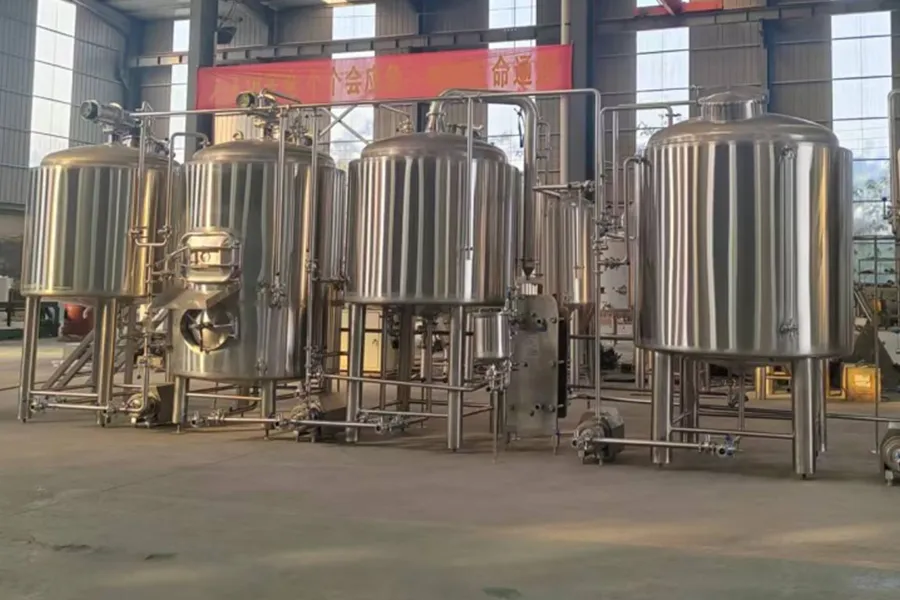
5. How Should a Brewery Plan for Beer Garden and Food Truck Events?
Special events can create short periods of high beer demand.
A brewery may have steady sales during most of the week, then experience a much busier Saturday because of a local festival, live entertainment, or a visiting food truck.
A beer garden can also experience strong seasonal changes, particularly when outdoor weather affects customer traffic.
These business factors matter when choosing brewing equipment.
However, one busy weekend does not necessarily justify buying a much larger brewhouse.
Instead, determine whether the additional demand is:
- Regular and predictable
- Seasonal
- Limited to a few annual events
- Growing steadily
- Concentrated on a few core beers
If the event is predictable, the brewer may be able to schedule production earlier and build finished-beer inventory.
For example, a brewery expecting a summer event may prepare extra kegs several weeks in advance, depending on beer style, shelf life, and cold storage availability.
In that situation, more finished-beer storage may be useful without increasing the hot-side brewing capacity.
But if high demand continues every weekend and production regularly falls behind, a larger brewhouse may become a stronger investment.
The lesson is straightforward:
Size equipment for repeatable demand. Use production scheduling and suitable storage to manage occasional peaks.
This helps small breweries protect their budgets while maintaining reliable beer availability.
6. Is a 2-Vessel or 3-Vessel Brewhouse Better for a Small Brewery?
The answer depends mainly on brewing frequency and operational workflow.
A compact 2-vessel brewhouse commonly combines mash and lauter functions in one vessel, with the kettle and whirlpool functions in another.
This configuration can be practical for a small brewery producing one batch per brew day.
Its advantages may include:
- Smaller equipment footprint
- Fewer major vessels
- Simpler process connections
- Lower initial investment
- Easier management for a small brewing team
A 3-vessel brewhouse separates more processing steps. Depending on its actual vessel arrangement, it can provide greater opportunities for overlapping work during repeated batches.
This becomes useful when the brewery must produce several batches in a day.
Basic selection framework
| Operating Requirement | Configuration to Evaluate |
|---|---|
| One batch on most brew days | Compact 2-vessel |
| Limited commercial space | 2 recipientes |
| Small team with simple operations | 2 recipientes |
| Frequent back-to-back brewing | 3 vasos |
| More complex daily production | 3 vasos |
| Higher continuous throughput | 3- or 4-vessel |
These are planning guidelines, not guaranteed production rates.
A system’s actual output depends on mash duration, lautering speed, heating capacity, transfer rates, wort cooling, and cleaning.
ZPET offers customized 2-vessel, 3-vessel, and larger brewhouse configurations for different production goals.
For a detailed comparison of how vessel count affects the workday, read our 2-Vessel vs 3-Vessel Brewhouse Throughput Guide.
The best choice is not necessarily the system with the most vessels. It is the one that meets the required production schedule without unnecessary cost and complexity.
7. How Do Fermentation Tanks Affect Small Brewery Production?
A brewhouse produces wort, but the brewery cannot turn that wort into finished beer without available fermentation capacity.
This is why a large hot-side system does not guarantee high weekly output.
If every fermentation tank is full, the brewer may need to stop brewing until another vessel becomes available.
The important planning factors include:
- Number of batches per week
- Fermentation time
- Estilo de cerveza
- Tank working volume
- Conditioning requirements
- Cleaning time
- Finished-beer transfer and packaging
Consider a small brewery using a 5 BBL system to produce two full batches per week.
Assume each batch occupies its fermenter for 14 days, including the relevant cleaning turnaround.
A simple calculation is:
2 batches per week × 14 ÷ 7 = 4 occupied fermentation positions
That means four matching fermenters are the mathematical starting point.
Additional capacity may be needed for longer-cycle beer, maintenance, or more flexible production scheduling.
This calculation also explains why a brewery specializing in lager may need a different cellar configuration from one producing mostly faster-turnover ales.
When planning new equipment, we recommend matching the brewhouse with suitable Tanques de fermentación, cooling capacity, and finished-beer storage.
The goal is to keep both brewing and fermentation operations balanced.
8. What Building Conditions Matter When Choosing a Brewhouse?
The best brewhouse on paper may be unsuitable for the actual building.
Small breweries often operate in converted restaurants, retail properties, warehouses, or mixed commercial spaces.
These buildings were not always designed for commercial beer production.
Before purchasing equipment, the project team should check:
Ceiling height: Can the tallest vessel be installed and maintained safely?
Floor strength: Can the floor support filled tanks, equipment, and operating loads?
Water supply: Is enough suitable water available for brewing and cleaning?
Drainage: Can the building handle process wastewater and cleaning discharge?
Electricity: Does the site have suitable electrical capacity for the selected heating system and supporting equipment?
Ventilation: Can the building manage steam, moisture, heat, and any combustion exhaust?
Equipment access: Can large vessels pass through doors and be moved into their final positions?
Production layout: Can staff move safely between brewing, fermentation, cleaning, and packaging areas?
A taproom with an attractive customer-facing brewing area may also need to separate public access from industrial production activity.
This is especially important when the equipment is visible to customers.
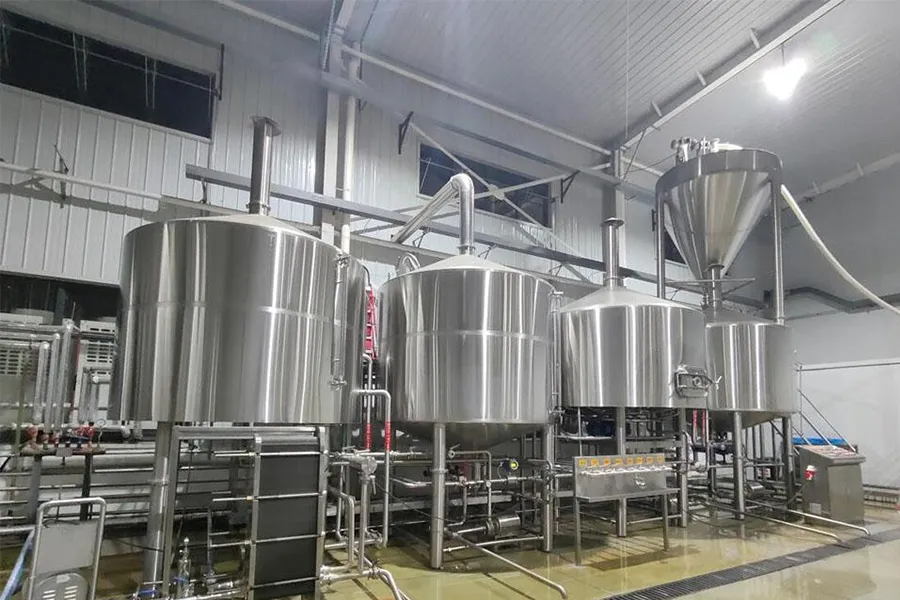
A polished stainless steel brewhouse can support a professional visual presentation, but equipment placement must still prioritize safety and operating efficiency.
ZPET provides customized brewery layout planning to coordinate vessel dimensions, piping, operating access, and installation requirements.
Our existing Craft Brewery Layout Guide explains why building measurements and service clearances should be confirmed before fabrication.
9. What Brewing Equipment Helps Maintain Consistent Beer Quality?
Selecting a brewhouse is only part of building a reliable small brewery.
Quality and consistency depend on the complete production system.
A good equipment plan should include appropriate control over:
- Mash temperature
- Wort heating
- Lautering
- Wort cooling
- Fermentation temperature
- Sanitary transfers
- Limpieza
- Finished-beer holding
- Envasado
For a small brewing team, reliable equipment should also be straightforward to operate and maintain.
A stainless steel system with properly designed valves, pumps, fittings, and accessible cleaning points can help staff follow repeatable operating procedures.
Automation may also be useful where consistent control is needed, but it should match the brewery’s actual requirements.
A highly automated system is not automatically the best choice for a business making only a few batches per week.
The same principle applies after production.
Beer must remain in good condition through storage and serving.
For a brewery with onsite draft sales, these downstream factors deserve attention alongside the brewing equipment itself.
Consistent beer quality comes from a complete, well-managed process—not from one expensive tank.
10. How Can a Small Brewery Avoid Buying Too Much Equipment?
An oversized brewhouse can tie up money that the business may need elsewhere.
A brewery startup also needs to invest in fermentation, cooling, cold storage, packaging, building preparation, installation, staff training, and daily operations.
That makes equipment balance important.
Instead of comparing only vessel purchase prices, buyers should evaluate the total installed system.
Equipment purchasing checklist
| Cost Category | What Buyers Should Confirm |
|---|---|
| Cervecería | Working volume, vessel functions, heating |
| Fermentación | Tank quantity, working capacity, pressure requirements |
| Refrigeración | Glycol chiller and piping |
| Limpieza | CIP equipment, valves, drains |
| Controles | Manual, semi-automatic, or PLC options |
| Building | Electrical work, ventilation, flooring |
| Instalación | Delivery, positioning, connections |
| Documentation | Drawings, equipment specifications, testing |
| Training | Operator instructions and support |
| Expansión | Space and utility provisions for future tanks |
A lower equipment price does not always mean a lower installed project cost.
Two quotations may contain very different inclusions.
For example, one supplier might quote only the main brewing vessels, while another includes control panels, piping, pumps, and installation assistance.
Buyers should compare equipment using the same project scope.
At ZPET, we provide customized stainless steel brewing equipment and turnkey brewery solutions for international customers.
For small brewery projects, our equipment design process can consider the building layout, expected production, preferred heating method, tank configuration, and available utilities.
The aim is to develop a practical system rather than add equipment without a clear purpose.
11. Which Brewhouse Would We Recommend for Different Small Brewery Plans?
The examples below are illustrative equipment-planning scenarios. They are not descriptions of specific completed customer projects.
Scenario A: Small Neighborhood Craft Beer Taproom
Business model: Mostly direct beer sales
Production: Limited weekly brewing
Beer menu: Several rotating products
Main concern: Space and initial investment
A compact 3–5 BBL system may be a suitable starting point if projected sales support it.
A 2-vessel configuration can help reduce equipment complexity while keeping the brewing process professional.
Smaller batches can also support more frequent recipe changes.
The brewery should reserve enough fermentation and cold storage capacity for its planned beer selection.
Scenario B: Restaurant Brewery With Seasonal Events
Business model: Onsite restaurant and taproom
Production: Regular brewing with weekend peaks
Beer menu: Core products plus seasonal releases
Main concern: Keeping popular products available
A 5–7 BBL system may be worth evaluating.
The brewery should calculate the normal and peak weekly demand before deciding between sizes.
If event demand is occasional, extra cold storage and more careful brewing schedules may be more practical than increasing brewhouse capacity.
If sales continue to grow, additional fermentation tanks can support higher production.
Scenario C: Growing Brewery With Local Distribution
Business model: Taproom plus external keg accounts
Production: Several scheduled batches each week
Beer menu: High-volume core beers and limited seasonal styles
Main concern: Production reliability and expansion
A 7–10 BBL or larger system may be appropriate, depending on the actual demand forecast.
The brewery may benefit from a configuration that supports repeat brewing and predictable production.
A dedicated bright beer tank, additional fermenters, and more capable packaging arrangements may also become important.
For these operations, equipment should be planned as a connected production line.
De ZPET Brewpub & Taproom Solutions support different small commercial brewing applications, while our Equipamiento para microcervecerías covers larger production-scale configurations.
The correct investment depends on the business plan—not simply the size of other successful breweries.
12. What Should You Ask a Brewery Equipment Manufacturer Before Buying?
Before approving a quotation, prepare a clear project brief.
A useful supplier discussion should include your beer sales forecast, brewing schedule, building conditions, and future production goals.
Ask the manufacturer:
- What working batch volume does the proposed brewhouse deliver?
- How many batches can the system realistically complete during a planned brew day?
- Which vessel configuration fits the production schedule?
- How many fermentation tanks are required?
- What heating method is suitable for the building?
- What electrical, water, ventilation, and drainage requirements apply?
- What equipment is included in the quotation?
- How will cleaning and maintenance be handled?
- Can more fermentation tanks or equipment be added later?
- What installation, commissioning, documentation, training, and after-sales support is available?
An experienced equipment supplier should be able to explain how the recommended configuration meets those requirements.
The response should include practical equipment information, not only general marketing claims.
For international brewery projects, buyers should also confirm applicable local requirements and necessary technical documentation before fabrication.
This helps reduce the risk of equipment arriving at a building that is not ready for installation.
At ZPET, we manufacture customized brewing systems, stainless steel fermentation tanks, bright beer tanks, and turnkey brewery equipment for global B2B customers.
We can help evaluate your proposed brewery configuration based on target beer output, available space, utilities, and future development plans.
Request a customized brewhouse proposal: Ponte en contacto con ZPET
Preguntas frecuentes
What size brewhouse is best for a small brewery?
The best size depends on weekly beer sales, number of products, brew frequency, fermentation capacity, and available building space. Small taprooms may consider 3–5 BBL systems, while growing brewpubs and distribution-focused operations may evaluate 7–10 BBL or larger configurations.
Is a 2-vessel brewhouse enough for a small craft brewery?
Yes. A properly designed 2-vessel system can support professional commercial brewing. It is particularly practical for small operations with limited space and relatively low daily batch frequency.
Should a brewery choose a larger brewhouse for future growth?
Not automatically. A larger system may reduce future replacement costs, but it also increases initial investment and may require more utilities and supporting equipment. Compare current demand with a realistic expansion forecast before deciding.
Can a small brewery produce several beer styles using one brewhouse?
Yes. A single brewhouse can produce different recipes in separate brewing cycles. The brewery needs suitable cleaning procedures, recipe management, and enough fermentation capacity to keep products separate during production.
Does a larger brewhouse always produce better beer?
No. Beer quality depends on recipe design, raw materials, process control, fermentation, sanitation, and handling. Larger equipment primarily changes production volume and potential throughput.
What information does ZPET need to recommend a brewhouse?
Provide your target batch size, expected weekly production, number of beer styles, business model, building dimensions, available utilities, preferred heating method, and future expansion goals. These details help us prepare a more suitable equipment configuration.
Puntos clave
- The best brewhouse for a small brewery is the one that matches real beer sales and production needs.
- Start with normal weekly sales and peak demand before selecting equipment capacity.
- Consider the difference between taproom sales, restaurant service, events, and external distribution.
- Smaller batches can provide greater flexibility for rotating craft beer menus.
- Larger batches may be more efficient for strong-selling core products.
- A 2-vessel system can work well for small breweries with limited space and lower brewing frequency.
- A 3-vessel system may offer more production flexibility for frequent back-to-back brewing.
- Plan fermentation capacity, cooling, CIP, storage, and packaging together with the brewhouse.
- Seasonal events do not always justify purchasing larger brewing equipment.
- Check the building’s ceiling height, utilities, drainage, and equipment access before ordering.
- Compare complete installed project costs rather than only equipment purchase prices.
- Reserve practical expansion options without overinvesting in capacity that may remain unused.
- Work with a brewery equipment manufacturer that can provide customized technical planning, equipment documentation, and installation support.
ZPET helps craft breweries, brewpubs, taprooms, and commercial beverage producers develop customized brewing systems based on their production plans. A well-matched brewhouse should support consistent beer quality, practical daily operation, and sustainable business growth.