David Zhang | Founder & CEO, ZPET | Published August 17, 2026
A 1 BBL fermenter has a nominal US beer-barrel capacity of 117.3 L, but the useful specification is defined by working volume, headspace, cooling duty, pressure rating, cleaning access and the space around the tank. This guide gives nano brewery and pilot-brewery buyers a practical checklist before they approve a drawing or request a quotation.
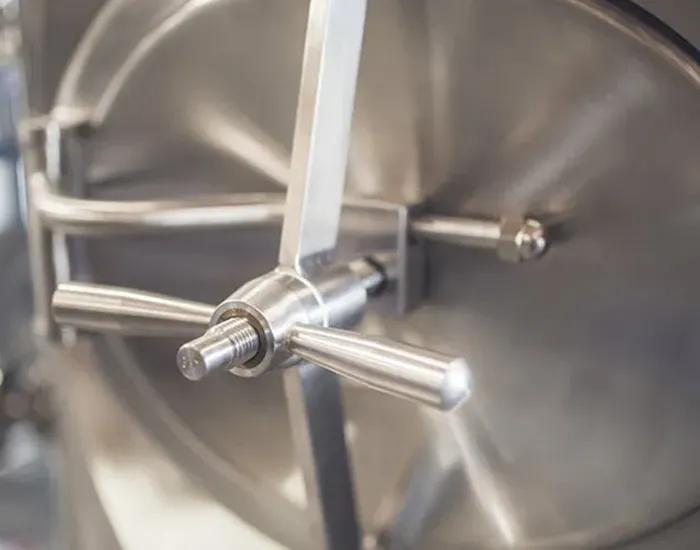
1 BBL fermenter specification table
| Spécifications | Confirm before ordering | Pourquoi est-ce important ? |
|---|---|---|
| Volume de travail | Normal liquid volume, total volume and intended fill level | Prevents a nominal 1 BBL label from being confused with packaged output |
| Headspace | Foam allowance, blow-off route and maximum operating level | Reduces overflow and gives fermentation room |
| Material and finish | SS304 or SS316L, weld treatment and internal surface finish | Supports sanitary cleaning and long-term service |
| Refroidissement | Jacket location, glycol connections, design temperature and heat load | Allows the chiller to be sized for simultaneous tanks |
| Pressure | Operating limit, relief device, gauge and test procedure | Defines safe use and acceptance documentation |
| Access | Top or side manway, spray device, fittings and lifting clearance | Determines inspection, cleaning and maintenance effort |
| Drainage | Outlet height, valve type, slope and hose connection | Supports complete product recovery and rinse drainage |
What does 1 BBL mean on a fermenter quotation?
One US beer barrel equals 117.3 L. That conversion describes a capacity unit; it does not state how much wort can be safely filled or how much beer will be packaged. Ask the supplier to list total volume, working volume, minimum useful volume and recommended fill level on the drawing.
Fermentation creates foam and gas. A tank filled to its shell volume leaves no practical allowance for krausen, yeast collection or process variation. The correct fill level depends on the recipe, yeast behavior, fermentation temperature and whether the tank uses a blow-off hose or a pressure-capable vent path.
Choose working volume and headspace together
A 1 BBL fermenter may be paired with a brewhouse that produces less or more than 117.3 L at different points in the process. Confirm the volume entering the tank after kettle and transfer losses. Then decide whether the tank will be filled as a single batch, a split batch or a test batch.
Record the following on the process drawing:
- Normal working level and maximum operating level.
- Total internal volume and usable cone volume.
- Headspace allowance for foam and gas.
- Outlet elevation and the volume that cannot be drained.
- Yeast collection and sampling points.
This volume balance also helps size the cellar. The nanobrewery equipment range is intended for small-batch production, but the number of fermenters must still match the planned brew schedule and residence time.
SS304 or SS316L: specify the product-contact material
ZPET discloses SS304 and SS316L sanitary-grade options for tanks. The purchase specification should state which material applies to the shell, cone, fittings, cooling jacket and product-contact welds. SS316L may be selected where the project chemistry or cleaning conditions require its corrosion-resistance characteristics; it should not be treated as an automatic substitute for a complete materials review.
Ask for a material schedule and weld specification. ZPET reports TIG and double-sided argon-arc welding, CNC laser cutting, spectrometer material analysis and X-ray weld inspection as company-level fabrication practices. The inspection plan should identify which checks apply to this particular 1 BBL fermenter.
Surface finish is equally important. ZPET’s disclosed tank specification includes a 0.4 micrometer mirror polish. Require the quotation to state the internal finish, weld blending method and any areas that are excluded from the finish requirement.
Cooling jacket and glycol connections
Fermentation temperature is controlled through the tank jacket and the glycol system. Specify the jacketed area, inlet and outlet locations, connection size, valve arrangement, insulation and the intended control method. A jacket that cools one section of the shell may not deliver the same response as a jacket designed around the actual working volume.
Size the glycol system for the number of tanks that may cool at the same time. Include initial cooling after transfer, fermentation heat, crash cooling if required, ambient conditions and pipe losses. A chiller selected only from the 1 BBL label can be undersized when several small tanks operate together.
Provide a service clearance around the glycol valves and temperature sensor. The operator should be able to isolate a tank, inspect a connection and replace a sensor without moving another vessel.
Pressure rating, relief and test records
If the tank is intended for pressure-capable fermentation or closed transfer, the quotation must state the design pressure, operating pressure, relief-device setting and gauge range. Do not infer a pressure rating from the shape of the cone or from a generic product photograph.
Define the relief path, vent filter, blow-off assembly and connection to the receiving line. The pressure device must be accessible for inspection and cleaning. The operating procedure should state when the tank may be pressurized and which valves must remain open or closed.
ZPET reports a 24-hour pressure hold test as a company-level testing practice. Ask for the project inspection and test plan, test medium, pressure, duration and record format. A test record supports acceptance; it is not a substitute for selecting the correct relief equipment.
For export projects, identify applicable requirements such as PED (CE), UL/cUL for control panels or AS1210. ZPET’s approved wording is that equipment is engineered to meet applicable requirements, not that an unspecified certificate has been issued.
Manway, spray device and sanitary access
Choose access points around the actual cleaning and inspection routine. A top manway may suit a compact installation but require overhead clearance. A side manway can improve access at floor level while changing the tank footprint and insulation detail. State the opening size, gasket material, clamp or bolt arrangement and safe access method.
The spray device must reach the full internal surface at the defined cleaning flow or pressure. Specify its connection, removal method and coverage requirement. A spray ball name alone does not prove that the cone, underside of the lid, sample valve and outlet are cleaned.
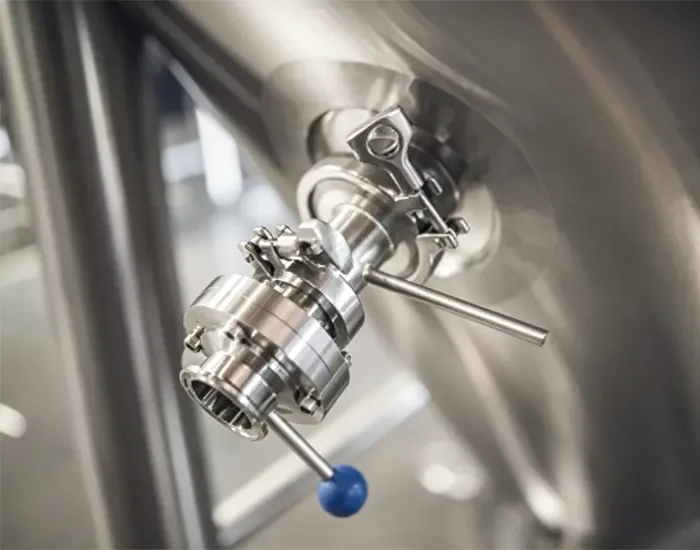
Review every product-contact fitting for drainability. Avoid low pockets that retain rinse water or chemical. Confirm that sample valves, thermowells, racking arms and yeast outlets can be disassembled without contaminating the product path.
Footprint, floor loading and installation route
A 1 BBL fermenter occupies more than its shell diameter. Reserve space for insulation, glycol valves, hoses, cleaning equipment, door swings and operator movement. Mark the vessel centerline and all service connections on the floor plan.
Check floor loading, drain position, ceiling height and the route from the delivery door to the final location. A small tank can still be difficult to install if the manway, lifting point or chiller connection cannot pass through the building.
Leave a future position for another tank only when the glycol, drainage and electrical plan can reach it. An empty space without utilities is not a useful expansion plan.
Cleaning and acceptance checklist
- Approve working, total and minimum useful volumes.
- Confirm SS304 or SS316L and the internal finish requirement.
- Review cooling-jacket duty, glycol connections and sensor location.
- Approve pressure, relief, vent and test requirements.
- Trace CIP supply and return paths through the spray device, cone and outlet.
- Check manway, valve, sampling and yeast-collection access.
- Verify floor loading, drains, clearances and delivery route.
- Witness leak, pressure, sensor, valve and cleaning-coverage tests applicable to the order.
Cuves de fermentation should be compared by these measurable requirements rather than by a photograph or a capacity label alone. The same checklist can be applied when a pilot cellar grows into a larger microbrewery installation.
Foire aux questions
How much wort fits in a 1 BBL fermenter?
The nominal US beer-barrel conversion is 117.3 L, but the safe working fill is lower than total volume because the tank needs headspace. Use the supplier’s drawing and your recipe’s foam behavior to set the operating level.
Is a 1 BBL fermenter suitable for commercial brewing?
It can support pilot batches, taproom releases and small commercial runs when local licensing, sanitation and production requirements are met. Cellar turnover and labor often matter more than the nominal tank label.
Should a small fermenter be pressure-rated?
Choose pressure capability only when closed transfer or pressure fermentation is part of the process. The rating, relief device, operating procedure and test records must be specified together.
How many 1 BBL fermenters do I need?
Map each batch through fermentation, conditioning, cleaning and packaging. The required count depends on brew frequency, residence time and whether batches can be split or combined.
Request a 1 BBL fermenter specification
Send ZPET your batch volume, recipe range, fermentation temperature, pressure requirement, cleaning method, building drawing, utility information and destination market. The engineering team can coordinate a 1 BBL fermenter with the brewhouse, glycol system, drains and future cellar positions.
Last reviewed: August 17, 2026 | Reviewed by David Zhang, Founder & CEO