David Zhang — Founder & CEO, ZPET (Shandong ZhongPi Machinery Equipment Co., Ltd.) Published July 25, 2026
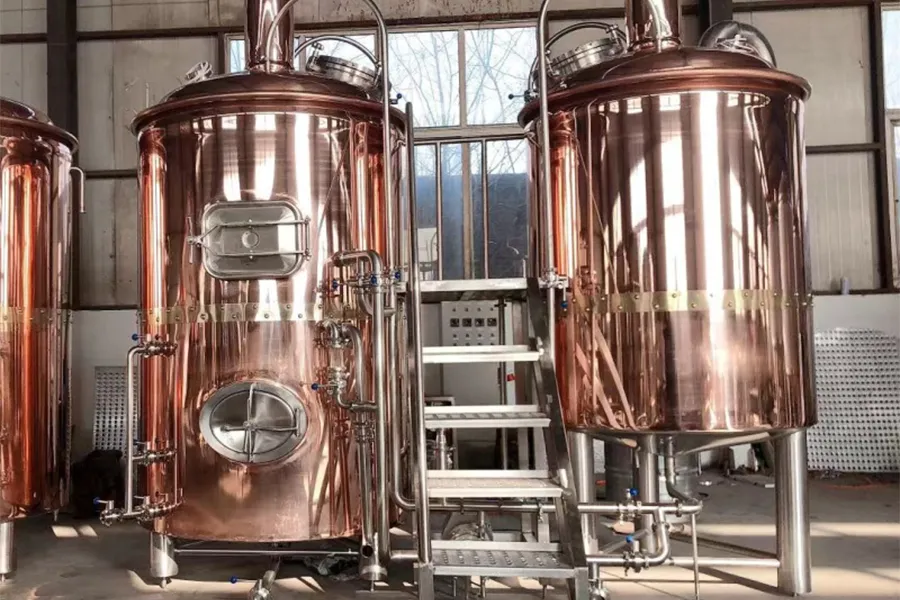
A 15 BBL brewhouse (approx. 1,760 L per batch) tells you almost nothing about the building it needs. Footprint, ceiling clearance and utility draw depend on vessel count, platform design and heating method — all of which vary manufacturer to manufacturer, even at the same batch size.
What “15 BBL” Tells You, and What It Doesn’t
The number in a brewhouse listing refers to kettle or mash tun batch volume, not annual output and not physical size. The Brewers Association classifies a microbrewery as a facility producing between 15,000 and 6,000,000 barrels a year — a completely different measure from the 15 barrels a single brew day fills into one vessel. A 15 BBL system brewed once a week produces a fraction of what the same system brewed four times a week does, so “15 BBL brewhouse” describes one input to a capacity plan, not the plan itself.
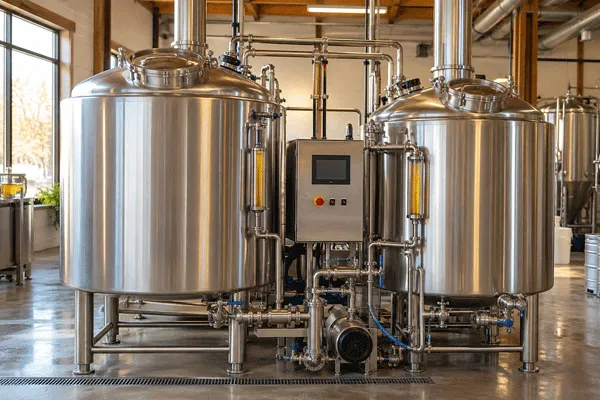
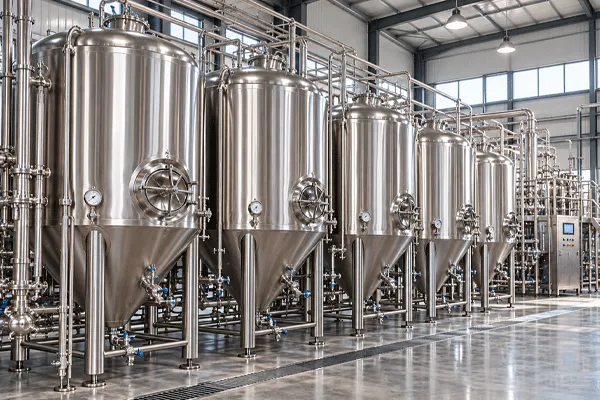
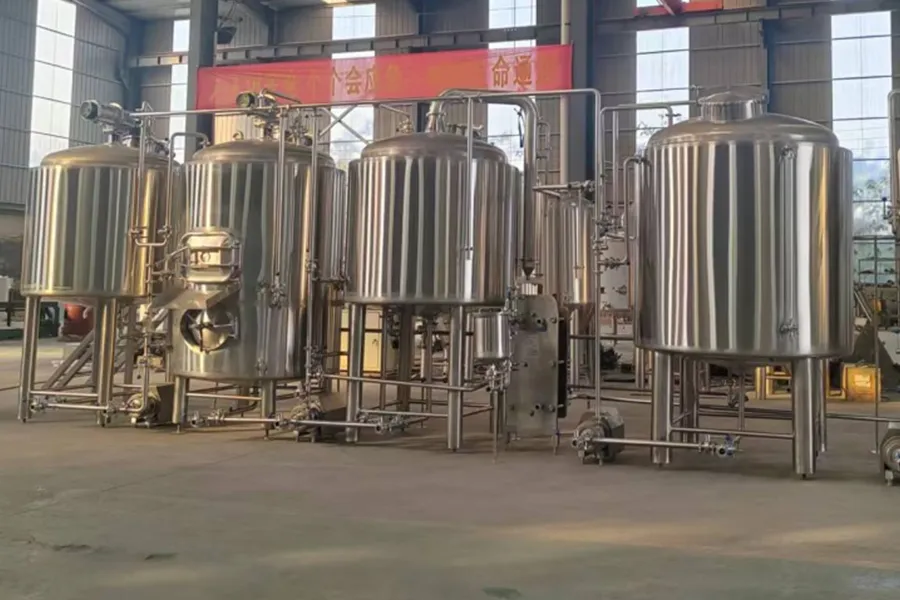
This distinction matters for the spec question specifically. Two 15 BBL brewhouses from different manufacturers can differ by a meter or more in overall height, because one uses a 2-vessel configuration with a taller combined mash/kettle vessel and the other spreads the same volume across 3 or 4 shorter vessels. Batch size sets the liquid volume. It doesn’t set the building envelope.
The Dimensions That Actually Vary by Manufacturer
Because vessel count, platform height and CIP arm design differ between suppliers even at identical batch volumes, treat the table below as a checklist of what to confirm rather than a fixed spec sheet — no single number is correct across every 15 BBL system on the market.
| Dimension category | What varies by manufacturer | What to confirm before ordering |
| Vessel count and configuration | 2-vessel (combined mash/kettle) vs 3- or 4-vessel (separate mash tun, lauter tun, kettle, whirlpool) | How many vessels, and whether any share a shell |
| Overall height / ceiling clearance | Driven by platform height plus vessel height plus any CIP arm or agitator clearance above the tallest vessel | Ceiling height to the lowest obstruction (sprinkler heads, ductwork), not just to the roof deck |
| Platform and stair footprint | Operator platform depth and stair run add to the brewhouse’s floor footprint beyond the vessel diameters themselves | Total footprint including platform and stairs, not just vessel diameter |
| Doorway and rigging path | Vessel diameter and shipping crate dimensions determine the minimum door width and turning radius needed for installation | Widest single vessel dimension against your building’s largest access opening |
| Heating utility draw | Electric needs three-phase service sized to element load; steam needs a boiler and mechanical room; gas needs a sized line and venting | Which heating method your building can support without a utility upgrade |
| Water and drain | CIP and cooling both add to peak water demand; floor drains need to sit under valve manifolds, not just near the tanks | Peak GPM draw during CIP cycles and drain placement relative to vessel outlets |
| Floor loading | A filled 15 BBL kettle plus liquor tank adds meaningful point-load weight, more relevant on upper floors or mezzanines | Loaded (not empty) weight per support point, checked against your floor’s rated capacity |
10, 15 and 20 BBL: What Changes Between Them
Moving up or down a size tier changes more than the number on the vessel nameplate.
At 10 BBL, most systems still fit within a single-vessel-per-shell 2- or 3-vessel layout, and utility draw is usually the limiting factor rather than floor space — a building with adequate three-phase power or gas service can often accommodate a 10 BBL system without structural changes.
At 15 BBL, vessel weight when filled starts to matter for floor loading in a way it usually doesn’t at 10 BBL, and boiler-based steam heating starts to make more financial sense if the building will also run fermentation glycol or CIP heating off the same boiler.
At 20 BBL and above, vessel height typically becomes the constraint that drives ceiling requirements rather than footprint, since taller single vessels hold more volume per square foot of floor than adding more vessels at a shorter height would.
Reading Used and New Equipment Listings Without Getting Burned
Search results for brewhouse specs at this size are dominated by individual product listings and used-equipment marketplaces, and dimensions get reported inconsistently between them — some in metric, some in imperial, some listing vessel height alone and others listing installed height with platform and hoist clearance included. A handful even note directly that actual dimensions “will vary” between units of the same nameplate capacity. None of that is a data problem you can solve by reading more listings; it’s a structural feature of a market where every manufacturer configures vessels differently.
The practical fix is to stop comparing published numbers across listings and instead request a dimensioned drawing for the specific configuration you’re considering, checked against a measured survey of your space — door width, ceiling height to the lowest obstruction, and floor loading at the actual mounting points. Compared to cross-referencing spec sheets from five different listings that were never measured the same way, one supplier-confirmed drawing against your own building survey removes the unit-conversion guesswork entirely.
What ZPET Specifies Before Drawing Your Layout
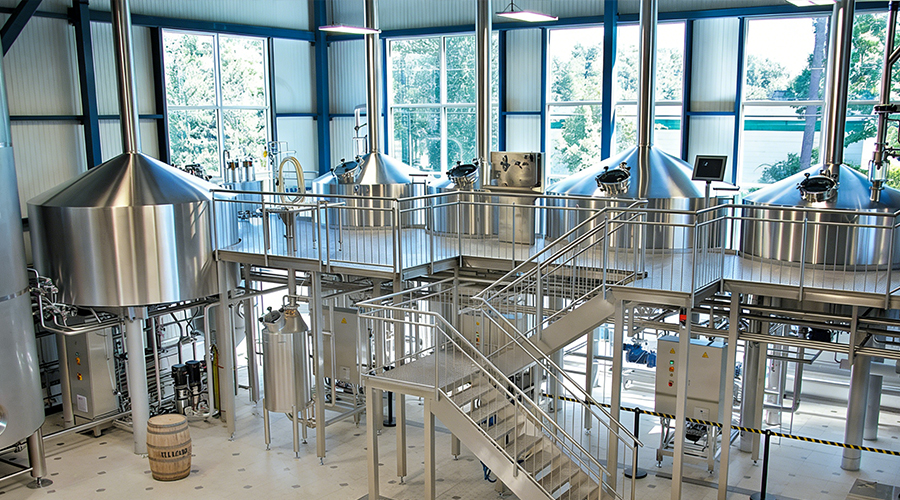
ZPET’s Microbrewery Equipment line covers 7–30 BBL, with Systèmes de brassage configurable from 2-vessel to 5-vessel layouts and a choice of steam, electric or direct-fire heating per order. Because vessel count and heating method both change the physical envelope, as the table above shows, ZPET doesn’t publish one fixed dimension sheet for “15 BBL” — the 3D layout drawing is built against the buyer’s actual floor plan, ceiling height and utility locations before fabrication starts, which is the practical answer to the checklist above rather than a generic number that may not match your building.
Every vessel in the line carries SS304/316L construction with a 0.4 μm mirror-polished interior, dimple cooling jacket where applicable, and the same 10-year structural warranty regardless of configuration, backed by double-sided TIG argon arc welding and a 24-hour pressure hold test. Control panels on electric-heated configurations are engineered to meet UL/cUL requirements for the North American market, and full systems are engineered to meet PED (CE) and AS1210 pressure vessel requirements for European and Australian buyers. ZPET has delivered 200+ installations across 40+ countries at this and other capacity tiers, though a dedicated published case study at 15 BBL specifically isn’t available yet.
Pricing isn’t posted publicly for any configuration; ZPET quotes factory-direct, without a trading-company markup layered on top, but a firm number requires sending your floor plan and utility specs so the drawing — and the quote — match your actual building rather than a generic listing.
Before You Request a Quote
Measure three things before contacting any supplier: ceiling height to the lowest fixed obstruction in the brewhouse area, door or opening width along the full path from delivery truck to final position, and floor loading rating at the points where a filled kettle and liquor tank will sit. Suppliers can adjust vessel configuration around most other constraints, but these three are usually fixed by the building and decide which configurations are even possible before heating method or automation level enter the conversation.
Foire aux questions
Q: Does a 15 BBL brewhouse always need three-phase power?
A: Only if electric heating is specified. Steam and direct-fire configurations shift the utility requirement to gas and boiler service instead, which is why heating method should be confirmed before assuming a specific electrical upgrade is needed.
Q: How much taller is a 4-vessel brewhouse than a 2-vessel one at the same batch size?
A: It depends on platform design more than vessel count alone — a 4-vessel layout spreads volume across shorter vessels but adds a platform and gangway that a 2-vessel combined mash/kettle design doesn’t need. Confirm total installed height including platform and any hoist clearance, not vessel height alone.
Q: Can an existing 10 BBL brewhouse space be upgraded to 15 BBL later?
A: Sometimes, if ceiling height and floor loading already accommodate the larger vessels, but utility service (especially three-phase amperage or boiler capacity) often needs to be resized separately. This is a building-survey question, not a standard yes/no answer.
Q: Is a used 15 BBL brewhouse a safe way to avoid the dimension-matching problem?
A: Not automatically — used listings have the same inconsistent-dimension issue as new ones, plus the added step of confirming the vessels still pass a current pressure test and weld inspection before installation.