David Zhang | Founder & CEO, ZPET (Shandong ZhongPi Machinery Equipment Co., Ltd.) | Published July 23, 2026
Valutare un fornitore di impianti per microbirrifici comes down to what they will put in writing. Ask for welding method, material certification, pressure-test records, standards compliance, warranty scope and parts logistics. A supplier who answers in specifics is manufacturing. One who answers in adjectives is probably reselling.

Perché una checklist è più utile di una rosa di candidati
Search this term and most of what comes back is a ranked list of manufacturers, frequently published by one of the manufacturers. Those lists tell you who exists. They do not tell you how to tell two of them apart, and the advice attached to them rarely goes past checking quality and after-sales support, which is not a test anyone can fail.
Gestisco una fabbrica. Scrivere un elenco di marchi concorrenti sarebbe palesemente di parte, quindi questo è l'altro documento: le domande che vorrei mi facesse un acquirente, con le risposte che dovrebbero preoccuparlo.
Una cosa da capire prima della checklist. Una quota significativa delle aziende che vendono impianti di birrificazione non li costruisce. Sono società commerciali o agenti che acquistano da officine, applicano la propria targhetta sul serbatoio e rivendono. Questo modello è legittimo quando viene dichiarato. Diventa un problema quando l'acquirente crede di avere a che fare con la fabbrica, perché i reclami in garanzia, le modifiche ai disegni e la diagnosi dei guasti devono tutti passare attraverso un intermediario che non può aprire la porta dell'officina. Quasi ogni punto riportato di seguito è, indirettamente, un modo per scoprire con quale dei due stai parlando.
The 14-point vetting checklist
1. Chiedi chi è il proprietario della fabbrica e richiedi l'indirizzo
Request the legal entity name, the registered address and the production address. Then ask whether those are the same company. A trading company can answer this honestly and many will; the concerning answer is a vague one. Cross-check the entity name against the one that will appear on the proforma invoice and the warranty document. If three names appear across three documents, you have found an intermediary.
2. Require a live video walk of the workshop, unedited
Non un filmato promozionale. La fotocamera di un telefono, durante una chiamata, camminando dal magazzino lamiere attraverso taglio, calandratura, saldatura e collaudo, mentre chiedi dove si trovano le cose. Chiedi di vedere un serbatoio attualmente in produzione e la sua saldatura. Richiede venti minuti ed elimina più fornitori di qualsiasi altro punto di questa lista.
3. Get the welding method in writing, not the word “quality”
Ask which process is used on the shell longitudinal and circumferential seams, and whether the seams are welded from both sides with argon backing. TIG double-sided argon arc welding on sanitary vessels exists to prevent oxidation on the interior side of the weld, which is where beer touches. A supplier who cannot name the process on their own tanks is not the one performing it.
Chiedete anche quali lavorazioni sono automatizzate e quali manuali. I robot di saldatura automatica garantiscono una penetrazione più uniforme sui cordoni lunghi; la saldatura manuale non è di per sé inferiore, ma la sua uniformità dipende interamente dal saldatore, quindi chiedete quali qualifiche possiede e come vengono verificate.
4. Ask for material certification, and ask how it is verified
Ogni fornitore dirà SS304 o SS316L. La domanda utile è quale prova esista che la lamiera consegnata corrisponda al certificato che la accompagna. L'analisi spettrometrica del materiale sulla lamiera in ingresso risponde a questa domanda. Senza di essa, la dichiarazione sulla lega si basa sulla documentazione di un fornitore a monte del tuo.
Specify which grade goes where. SS316L for wetted surfaces in higher-chloride environments, SS304 where conditions allow, and get the split written into the specification rather than left as “sanitary grade stainless.”
5. Chiedete il valore effettivo della finitura superficiale e come viene misurato
A number, in micrometres, for the interior finish. A 0.4 μm mirror polish is a measurable claim. “Mirror polished” without a figure is not. Surface finish and Ra definitions for hygienic equipment are set out in ASME BPE (ASME Bioprocessing Equipment Standard), which is the reference to cite if you want a supplier to answer in the same units you asked in.
6. Ask what pressure test is performed, at what pressure, for how long
The parameters matter more than the word “tested.” A 24-hour pressure hold test is a different assurance from a five-minute pressurisation at the end of a shift. Ask for the hold duration, the test pressure relative to design pressure, and whether you receive the record for your specific serial numbers rather than a generic sample document.
7. Chiedi se le saldature vengono ispezionate e con quale metodo
Visual inspection catches surface defects. X-ray weld inspection catches what is inside the weld. Ask which seams are radiographed and whether the film or report is available for your vessels. Welding quality management systems are addressed by ISO 3834, which is worth naming in the enquiry because it moves the conversation from opinion to process.
8. Chiedi la sequenza del controllo qualità come elenco di passaggi
Non un paragrafo sull'impegno per la qualità. Una sequenza numerata, con ciò che viene verificato in ogni fase e ciò che accade quando qualcosa non supera il controllo. Un fornitore che applica un reale processo di controllo qualità in cinque fasi può fornire quell'elenco in pochi minuti. Un fornitore che non ci riesce lo ha solo nei testi di marketing.
9. Separate “engineered to meet” from “certified by” — and insist they do too
Questo è il punto su cui gli acquirenti vengono più spesso tratti in inganno, a volte senza che il venditore ne abbia l'intenzione.
Equipment designed to satisfy the requirements of a standard is not the same as equipment holding a third-party certificate against that standard. Both may be entirely appropriate for your project. They are different legal positions.
Per attrezzature per microbirrifici the standards that usually matter are the EU Pressure Equipment Directive 2014/68/EU for pressure vessels entering Europe, UL 508A for industrial control panels in North America (UL Solutions), and AS 1210 for pressure vessels in Australia (Standards Australia). Ask, per standard: is this equipment engineered to meet the requirement, or is there a certificate? If there is a certificate, ask for the certificate number, the issuing body and the issue date. A supplier holding certification can supply all three immediately. If those three items do not arrive, treat the equipment as designed-to-standard and plan your local compliance work accordingly.
La posizione di ZPET, in parole chiare: i nostri sistemi sono progettati per soddisfare i requisiti PED (CE), UL/cUL e AS1210. Quando un progetto richiede una certificazione di terza parte, questa viene predisposta e documentata per il singolo progetto, anziché essere dichiarata in termini generali.
10. Read the warranty for scope, not for duration
Una garanzia di dieci anni e una di due anni non sono confrontabili finché non si sa cosa copre ciascuna. Ponete quattro domande per iscritto:
- Che cosa è coperto: il mantello in pressione e le saldature oppure anche le camicie, le valvole, le guarnizioni, le pompe e i componenti elettrici?
- What voids it — which is where site conditions, chemical exposure and unauthorised modification usually appear.
- Who pays for what in a claim — parts, freight, labour, and the cost of an engineer travelling to site are four separate lines and are often allocated differently.
- What is the process and the response time — and is that a commitment or an aspiration?
A structural warranty on the vessel is a claim about welding and material. It should be backed by the evidence in items 3 through 7. If a supplier offers a long warranty but cannot produce weld and pressure-test records, the warranty is the only thing supporting the warranty.
11. Ask where spare parts come from and how long they take
Tanks rarely fail. Pumps, sensors, valves, seals, gaskets and control components do. Ask which components are proprietary to the supplier and which are standard parts you could source locally, and get a parts list with brands and model numbers for the bought-in items. That list is worth more over ten years than most of the tank specification, because it determines whether a Tuesday failure is a two-hour fix or a six-week wait.
Ask specifically whether a spares kit ships with the system and what is in it.
12. Conferma cosa avviene in loco e chi paga
L'ambito dell'installazione e della messa in servizio varia enormemente da un preventivo all'altro. Chiarite se il fornitore offre assistenza in loco per l'installazione e la messa in servizio, chi copre le spese di viaggio e alloggio, quanto tempo rimane la squadra e quale formazione per gli operatori è inclusa. Discutete i requisiti per i visti e le tempistiche effettive prima dell'ordine, non dopo l'arrivo del container.
13. Conferma i tempi di risposta tecnica nel contratto
Ask what the committed response time is for a technical question, and whether it is a working-day commitment or a best-effort statement. Then test it during the quotation stage. How a supplier responds when they want your order is the most optimistic version of how they will respond when they already have your money.
14. Establish the drawing process before you compare prices
Ask whether you receive a 3D layout and dimensioned technical drawings before the order is confirmed, whether revisions are included, and which drawing revision becomes the fabrication reference. Two quotations cannot be compared if one is priced against your building and the other against a catalogue tank.
This is also the fastest way to find out whether a supplier has an engineering team. Ask them what they need from you to produce a layout. The answer should be a list of building measurements, utility capacities and production targets. If the answer is your budget, you have learned something.
Confrontare preventivi che non sono comparabili
| What to compare | Weak answer | Risposta di cui fidarsi |
| Materiale | “Food grade stainless” | SS304 / SS316L specificato per componente, con analisi spettrometrica in ingresso |
| Saldatura | “High quality welding” | TIG double-sided argon arc on shell seams, automated on long seams, procedure named |
| Finiture interne | “Mirror polish” | 0.4 μm, measured, method stated |
| Pressure test | “Completamente testato” | 24-hour hold test, pressure stated, record issued per serial number |
| Ispezione delle saldature | “Inspected before shipment” | X-ray inspection, seams specified, report available |
| Conformità | «Certificato CE» senza alcun documento allegato | Certificate number, body and date — or an explicit “engineered to meet” |
| Garanzia | “Garanzia di 10 anni” | 10-year structural warranty with covered components, exclusions and claim process in writing |
| Ricambi | “Forniamo pezzi di ricambio” | Parts list with brands and models, spares kit contents, stated lead times |
| Drawings | “We will send a layout” | 3D layout and dimensioned drawings before order, revision-controlled |
Compared with the vendor round-ups that dominate this search term, this table is the part worth taking into a call. A supplier’s answers to nine rows tell you more than a ranked list of thirty companies.
What a 7–30 BBL microbrewery system should specify
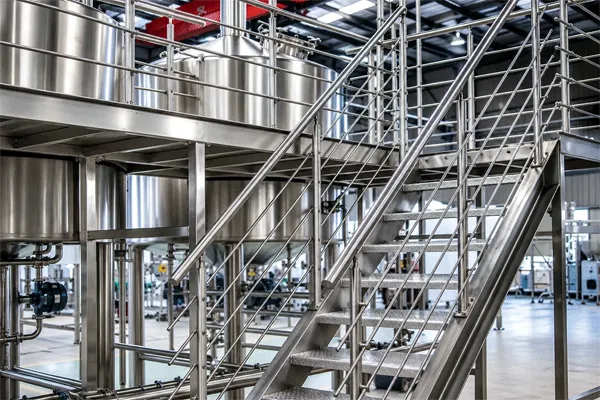
The checklist stays abstract until you attach it to equipment, so here is the specification set behind a ZPET microbrewery package, written in the terms items 3 through 10 ask for.
Line and scale. Microbrewery equipment copre da 7 a 30 BBL, progettato attorno all'efficienza nella produzione del mosto, a un'espansione per fasi della cantina e alla costanza da lotto a lotto. Un BBL corrisponde a 117,3 L, quindi una sala cottura da 15 BBL ha un volume di cotta di 1.760 L al lordo delle perdite.
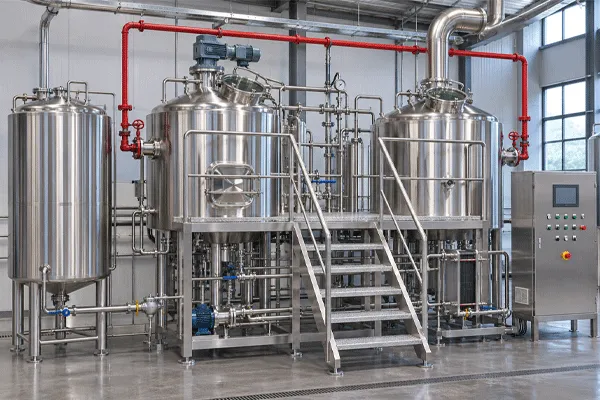
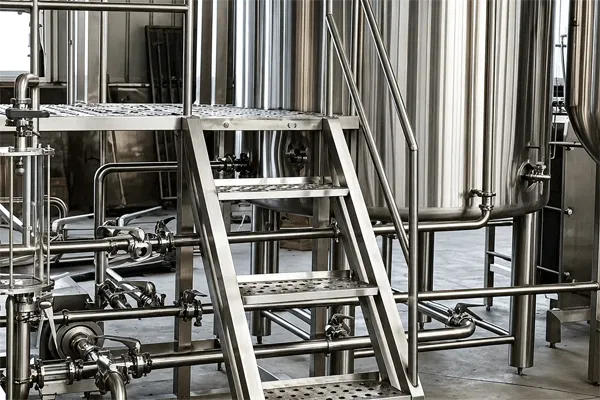
Brewhouse systems. Configurations from 2-vessel to 5-vessel, heated by steam, electric or direct fire, with a tailored technical design per project, an ergonomic operating platform and precision temperature control.
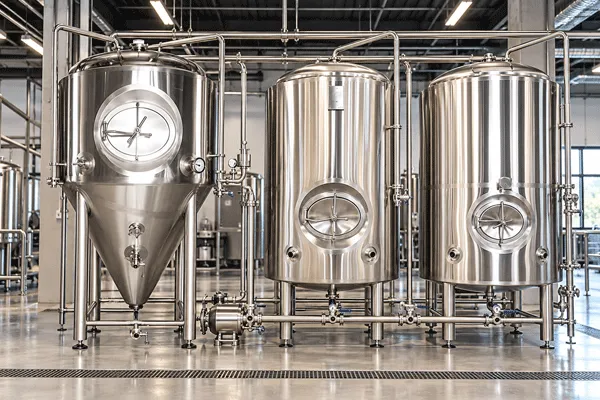
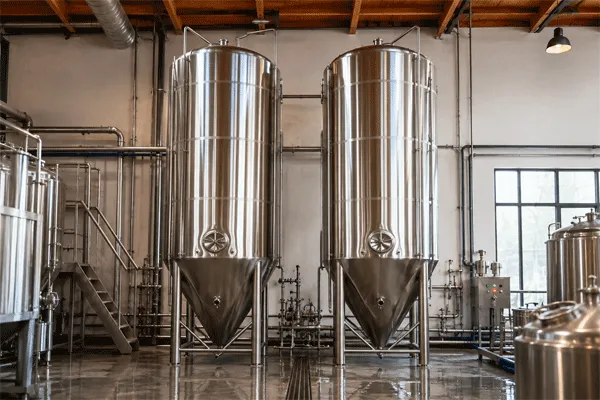
Vasche di fermentazione e serbatoi di birra luminosi. SS304 or SS316L sanitary grade, 0.4 μm mirror-polished interior, dimple cooling jacket, optional side manway, pressure tested before shipment.
Fabbricazione. Taglio laser CNC, saldatura ad arco TIG con protezione di argon su entrambi i lati, robot di saldatura automatica.
Testing and QC. Spectrometer material analysis, 24-hour pressure hold test, X-ray weld inspection, within a five-step QC sequence.
Warranty. 10-year structural warranty on the vessels.
Progettazione. Layout 3D del birrificio, disegni tecnici e diagrammi di flusso completati prima dell'ordine e progettati in base agli spazi e alle utenze effettivamente disponibili nell'edificio dell'acquirente. Risposta tecnica entro un giorno lavorativo. Squadre disponibili in tutto il mondo per l'installazione e la messa in servizio in loco.
Conformità. Progettato per soddisfare i requisiti PED (CE), UL/cUL e AS1210.
Price. ZPET does not publish prices or price ranges. Systems are quoted per project, factory-direct without distributor markup. Any figure you have seen attributed to a brewing system online is a different configuration in a different market, and comparing against it will cost you more time than it saves. For a figure, request a quotation with your scope defined.
Questions buyers ask before ordering
D: È più sicuro acquistare da un fornitore nazionale anziché importare?
R: L'acquisto nazionale accorcia la catena di ricambi e assistenza ed elimina il rischio doganale, ma di solito costa di più a parità di specifiche costruttive. L'importazione funziona quando la checklist sopra indicata viene completata correttamente e fallisce quando viene saltata. La variabile rilevante è la diligenza, non la geografia.
D: Come faccio a distinguere un produttore da una società commerciale?
A: Items 1 and 2. Ask for the production address and the legal entity, then ask for a live unedited walk through the workshop with questions you choose. An intermediary can show you a factory; they generally cannot answer detailed process questions inside it while the camera is running.
D: Cosa copre effettivamente una garanzia strutturale di 10 anni?
R: Per strutturale si intende il mantello in pressione e le relative saldature — le parti che dipendono dal grado del materiale e dal metodo di saldatura. Non si estende a valvole, guarnizioni, pompe o componenti elettrici, che hanno una propria vita utile. Prima di ordinare, richiedi per iscritto l'elenco dei componenti coperti, le esclusioni e la procedura di reclamo.
Q: Should I insist on CE certification?
A: If you are importing into the EU, pressure equipment obligations under Directive 2014/68/EU apply and you need to establish who holds responsibility for conformity. Ask whether there is a certificate with a number, body and date, or whether the equipment is engineered to meet the requirements. Both can work; only one of them is a certificate, and you should know which you are buying.
Q: How much should I budget for a 15 BBL system?
R: Configurazione, numero di serbatoi, metodo di riscaldamento, livello di automazione, requisiti del mercato di destinazione e trasporto fanno variare l'importo abbastanza da rendere fuorviante una fascia di prezzo pubblicata. ZPET elabora preventivi per singolo progetto. Definisci prima l'ambito utilizzando la checklist, poi richiedi preventivi comparabili.
D: Quali sono i rischi maggiori quando si importano attrezzature per la produzione di birra?
R: Un ambito di fornitura non definito, uno stato di conformità non documentato e una catena di fornitura dei ricambi e di assistenza che passa attraverso un intermediario. Tutti e tre sono individuabili prima dell'ordine se ponete per iscritto le domande ai punti 1, 9, 11 e 12.
D: Posso visitare la fabbrica prima di ordinare? R: Sì, e vale la pena farlo per un investimento in un impianto da 7–30 BBL. Se viaggiare non è fattibile, il punto 2 è l'alternativa: dovrebbe trattarsi di una videochiamata guidata da voi, non di un video che vi inviano.
D: Quanto sono lunghi i tempi di consegna? R: I tempi di consegna dipendono dalla configurazione e dal carico di lavoro e vengono confermati per singolo ordine anziché indicati in modo generico. Tratta qualsiasi fornitore che offra tempi di consegna fissi prima di conoscere la tua configurazione con lo stesso scetticismo riservato a un prezzo fisso.
Dove questa checklist ha dei limiti
Due cose che non farà.
Non sostituisce il coinvolgimento di professionisti locali. La classificazione dei dazi d'importazione, la registrazione dei recipienti a pressione, l'ispezione elettrica e l'approvazione per la sicurezza alimentare dipendono dalla giurisdizione e nessuna documentazione del fornitore sostituisce un ingegnere abilitato localmente o uno spedizioniere doganale. Prevedi un budget per questo lavoro.
Ha anche un costo. Esaminare quattordici punti con tre o quattro fornitori richiede settimane, e alcuni fornitori preferiranno ritirarsi piuttosto che rispondere per iscritto — il che è già un'informazione, ma restringe presto il campo e può lasciarti a negoziare con meno opzioni di quante avresti voluto. Gli acquirenti con tempi stretti dovrebbero completare almeno i punti 1, 9, 10 e 11, che riguardano con chi hai a che fare, quale livello di conformità stai acquistando, cosa implica la garanzia e se potrai mantenere l'impianto in funzione.
Passaggio successivo
Invia i quattordici punti a ciascun fornitore in un unico documento e richiedi risposte scritte. Confrontare quattro risposte fianco a fianco fa emergere differenze che nessuna conversazione riuscirebbe a evidenziare, e la disponibilità di un fornitore a rispondere per iscritto è già di per sé il primo risultato dell'esercizio.
Due aree deliberatamente escluse in questa sede: struttura contrattuale e pagamenti, dove le condizioni di acconto, le fasi di ispezione e le lettere di credito meritano una trattazione separata, e trasporto e dogana, dove la scelta degli Incoterms cambia chi si assume il rischio e in quale punto del percorso.