Choosing the wrong tank can slow your brewery growth, increase operating costs, and make consistent beer quality harder to achieve. Many new brewers confuse serbatoi di fermentazione e brite tanks because both store beer, but they serve very different purposes. Understanding the difference helps you build a more efficient brewing system.
A brite tank is mainly used after fermentation for clarification, carbonation, maturation, and packaging preparation, while a fermentation tank is designed to convert wort into beer through yeast activity. Many breweries use both tanks together, but some smaller operations choose unitanks that combine both functions.
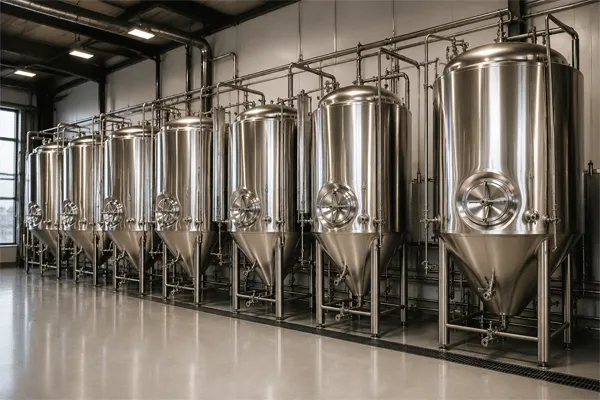
What Is the Difference Between a Brite Tank and Fermentation Tank?
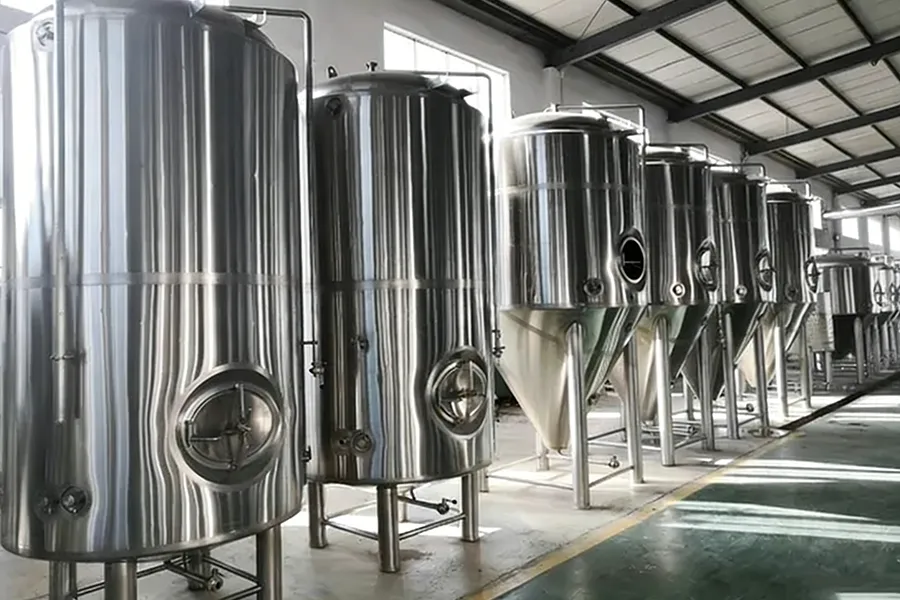
The primary difference between a brite tank vs fermentation tank is the stage of the brewing process where each vessel is used. A fermentation tank is where yeast transforms sugars in wort into alcohol and carbon dioxide. A brite tank is where the fermented beer is polished, carbonated, stored, and prepared for serving or packaging.
For a professional brewery, these two vessels work together as part of a complete production flow:
| Tipo di serbatoio | Main Function | Typical Stage |
|---|---|---|
| Fermentation Tank | Yeast converts sugars into alcohol and carbon dioxide | Primary fermentation |
| Brite Tank | Clarification, carbonation, storage, packaging preparation | After fermentation |
| Unitank | Fermentation and conditioning in one vessel | Combined process |
In our experience as a brewery equipment manufacturer, many customers focus first on the brewhouse capacity but underestimate the importance of selecting the correct tank combination. A balanced system requires matching fermentation capacity, storage needs, beer styles, and packaging plans.
The right tank selection improves production efficiency, protects beer quality, and supports long-term brewery expansion. Whether you operate a small craft brewery, taproom, or commercial production facility, understanding these differences helps you invest wisely.
How Does a Fermentation Tank Work During the Brewing Process?
A fermentation tank is one of the most important pieces of brewing equipment because it is where wort becomes beer. After the brewhouse completes mashing, boiling, and cooling, the wort enters the fermenter. Yeast is added, and the fermentation process begins.
During fermentation, yeast consumes sugars and produces alcohol and carbon dioxide. Temperature control systems maintain the ideal environment so the brewer can achieve the desired flavor profile. Different beer styles require different fermentation temperatures, yeast strains, and fermentation times.
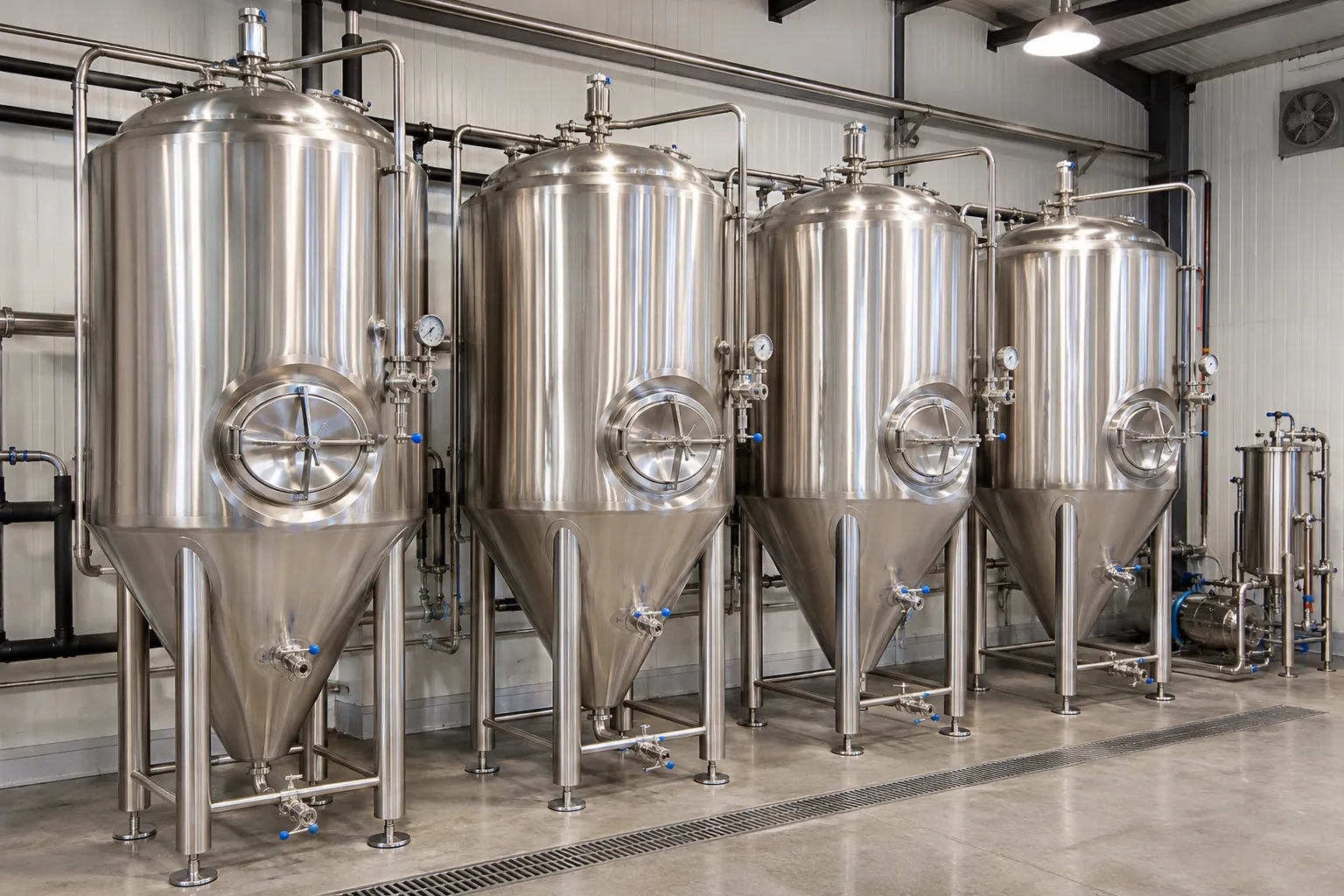
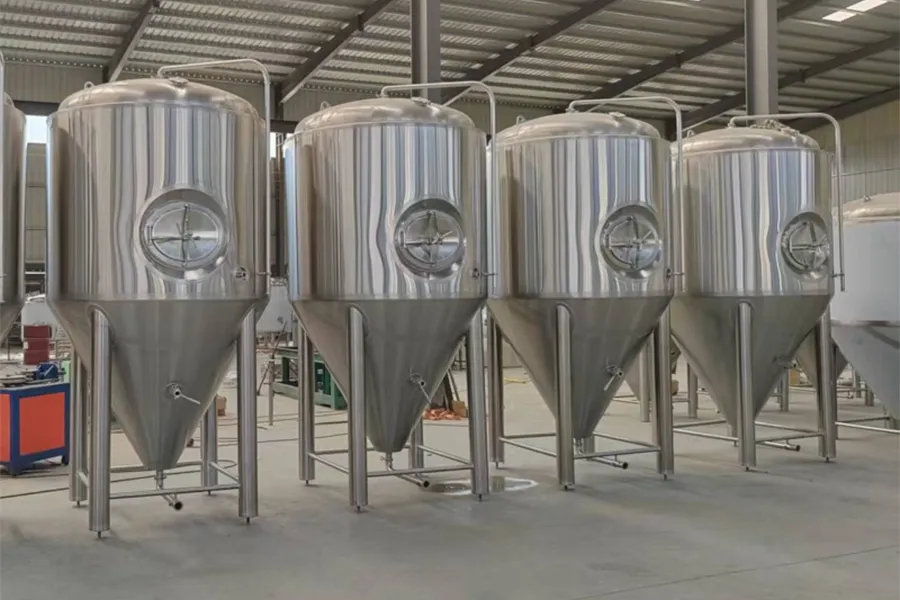
Most modern fermentation tanks feature a conical bottom design. This allows yeast to accumulate at the bottom of the tank, making harvesting, cleaning, and transferring beer easier.
Common fermentation tank features include:
- Stainless steel sanitary construction
- Cooling jackets for temperature control
- Design a prova di pressione
- Conical bottom for yeast collection
- CIP cleaning capability
- Sampling valves
- Pressure control systems
A fermentation tank is typically used for the primary fermentation stage, but some breweries also use it for additional conditioning. The exact process depends on the brewer’s recipes and production goals.
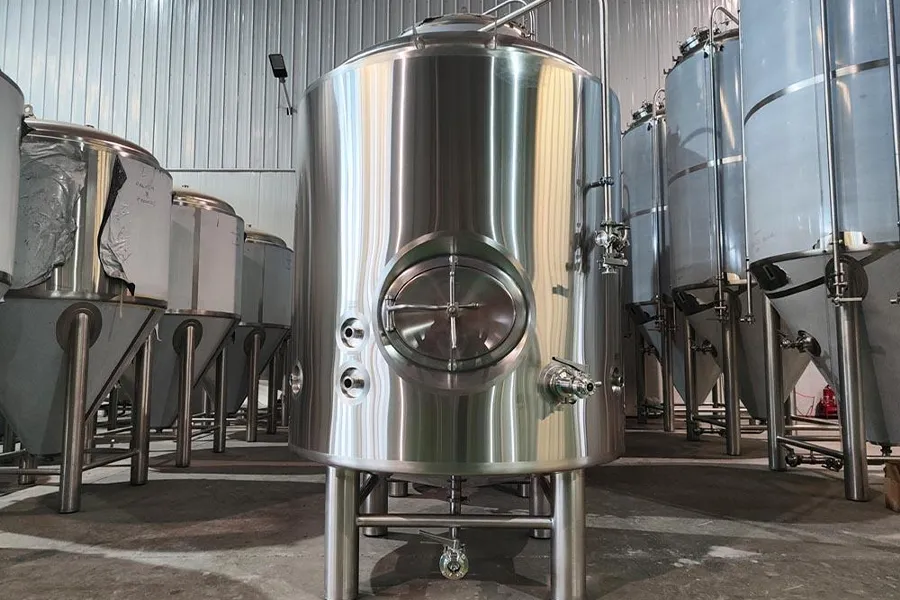
What Is a Brite Tank Used For in a Brewery?
A brite tank is a finishing vessel used after fermentation. The beer leaves the fermenter and enters the brite tank for clarification, carbonation, and final preparation before packaging or serving.
Unlike fermentation tanks, brite tanks are not designed for active yeast fermentation. Their purpose is refinement. Brewers use them to create clearer beer, stabilize quality, and prepare finished beer for customers.
A typical brite tank process includes:
- Transfer fermented beer from the fermenter
- Adjust temperature
- Add carbonation
- Allow particles to settle
- Test quality
- Package into kegs, cans, or bottles
Brite tanks are especially valuable for breweries producing larger quantities of beer because they create additional storage capacity between fermentation and packaging.
For taprooms and craft breweries, a brite tank can also improve serving consistency. Beer can be carbonated and stored under controlled conditions instead of moving directly from fermentation tanks to customers.
Why Do Breweries Need Both Brite Tanks and Fermentation Tanks?
A professional brewery usually benefits from having separate tanks because each vessel performs a specialized role. Fermentation tanks focus on creating beer. Brite tanks focus on finishing and preparing that beer.
Using dedicated vessels provides several advantages:
| Vantaggio | Vantaggio |
|---|---|
| Migliore controllo del processo | Ogni fase riceve l'ambiente corretto |
| Maggiore efficienza produttiva | I fermentatori possono avviare prima nuovi lotti |
| Maggiore limpidezza | I serbatoi di brillantatura favoriscono la sedimentazione e la filtrazione |
| Programmazione più semplice | Il confezionamento può avvenire indipendentemente dalla fermentazione |
| Maggiore costanza qualitativa | I birrai controllano ogni fase separatamente |
Ad esempio, una volta che la birra lascia un fermentatore, quel serbatoio diventa disponibile per un altro lotto. Nel frattempo, il serbatoio brite può contenere la birra finita fino a quando non è richiesta per il confezionamento o dalla domanda dei clienti.
Questa separazione diventa sempre più importante con la crescita di un birrificio. Molti birrifici artigianali iniziano con una configurazione semplice, quindi aggiungono serbatoi di chiarificazione quando il volume di produzione aumenta.
I unitank possono sostituire i serbatoi di fermentazione e di brillantatura?
Sì, gli unitank possono combinare le funzioni di fermentazione e condizionamento in un unico serbatoio. Un unitank consente al birraio di fermentare e carbonare la birra nello stesso serbatoio, riducendo il numero di serbatoi necessari.
Per un piccolo birrificio artigianale o un'attività startup, l'uso di un unitank può ridurre l'investimento iniziale e risparmiare spazio a pavimento. Semplifica inoltre il processo di produzione della birra perché non è necessario trasferire la birra tra più serbatoi.
Tuttavia, gli unitank presentano dei limiti. Quando un serbatoio contiene la birra per l'intero periodo di fermentazione e condizionamento, non può ricevere immediatamente un nuovo lotto. Ciò può influire sulla programmazione della produzione.
La scelta tra unitank e serbatoi di chiarificazione dipende da:
- Volume di produzione
- Spazio disponibile
- Stili di birra
- Programma di confezionamento
- Piani di espansione
Un piccolo birrificio artigianale può preferire gli unitank perché richiedono meno attrezzature. Un birrificio commerciale in crescita può scegliere serbatoi di fermentazione e serbatoi brite separati per una maggiore flessibilità.
Quali caratteristiche dei serbatoi dovrebbero confrontare i birrai prima dell'acquisto?
Nella scelta dei serbatoi per birrifici, gli acquirenti dovrebbero considerare aspetti che vanno oltre la capacità. La qualità costruttiva, il sistema di controllo e la facilità di manutenzione influenzano direttamente le operazioni quotidiane.
Le caratteristiche importanti dei serbatoi includono:
Costruzione in acciaio inossidabile
L'acciaio inossidabile di alta qualità aiuta a mantenere condizioni igieniche e favorisce una lunga durata operativa. Le superfici a contatto con il prodotto dovrebbero essere progettate per agevolare la pulizia e l'ispezione.
Controllo della temperatura
Un controllo preciso della temperatura influisce sull'attività del lievito e sul sapore finale. Le camicie di raffreddamento e sistemi di controllo affidabili aiutano a mantenere condizioni di fermentazione costanti.
Capacità di pressione
Sia i fermentatori sia i serbatoi di brillantatura possono operare in pressione. Adeguati valori nominali di pressione sono essenziali per un funzionamento sicuro e il controllo della carbonazione.
Progettazione per la pulizia
Un buon serbatoio dovrebbe consentire una pulizia CIP efficiente. Ridurre il tempo dedicato alla pulizia manuale migliora l'efficienza produttiva e riduce il rischio di contaminazione.
Qualità della finitura interna
Le superfici interne lisce riducono l'accumulo di residui e facilitano la pulizia. Ciò favorisce una qualità della birra costante durante l'intera produzione.
In qualità di fornitore di attrezzature per la produzione di birra personalizzate, progettiamo serbatoi in acciaio inox in base ai requisiti di capacità del cliente, alle condizioni di layout e agli obiettivi produttivi.
In che modo la scelta dei serbatoi influisce sulla qualità della birra?
La scelta dei serbatoi influenza molte fasi del processo di produzione della birra, dalla gestione del lievito alla carbonazione. Un sistema non adeguatamente dimensionato può creare problemi di programmazione, sapori incoerenti o travasi non necessari.
Durante la fermentazione, il birraio controlla l'attività del lievito e permette agli zuccheri di trasformarsi in alcol e anidride carbonica. Dopo la fermentazione, il serbatoio di chiarificazione contribuisce a migliorare la limpidezza, il livello di carbonazione e la prontezza per il servizio.
La separazione tra i serbatoi riduce inoltre gli spostamenti non necessari della birra. Ogni travaso crea un'ulteriore opportunità di esposizione all'ossigeno o di contaminazione. Un sistema ben progettato protegge la birra durante l'intero processo di fermentazione.
Per i birrifici che producono diversi stili di birra, la flessibilità dei serbatoi diventa ancora più importante. Una lager può richiedere una maturazione più lunga, mentre alcune ale possono passare più rapidamente dalla fermentazione al confezionamento.
Di quanti serbatoi di fermentazione e serbatoi di chiarificazione ha bisogno un birrificio?
Non esiste un numero universale perché ogni birrificio ha obiettivi di produzione diversi. Il numero di serbatoi dipende dalla dimensione dei lotti, dal tempo di fermentazione, dagli stili di birra, dalla domanda di vendita e dalla frequenza di confezionamento.
Un semplice metodo di pianificazione è:
| Domanda | Perché è importante |
|---|---|
| Quanta birra prevedi di produrre ogni mese? | Determina la capacità totale |
| Quanto dura la fermentazione di ciascuno stile di birra? | Determina il tempo di occupazione del serbatoio |
| How many products do you sell? | Determines flexibility |
| How often do you package? | Determines storage requirements |
A brewery producing several seasonal beers may need more tanks than a brewery producing only one or two core products.
For example, a small brewery may begin with several unitanks, while a larger production brewery may use multiple fermenters connected with dedicated brite beer tanks.
The goal is not simply buying more tanks. The goal is creating a system where each tank supports the entire production schedule.
Should a Startup Brewery Buy Brite Tanks or Unitanks First?
For startup breweries, budget and production plans usually determine the answer. A new brewery often wants to control startup costs while keeping room for future growth.
Unitanks can be attractive because they reduce the initial equipment list. They allow a new brewer to ferment, condition, and carbonate beer using fewer vessels.
However, breweries planning rapid growth, distribution, or multiple beer styles may benefit from separate fermenters and brite tanks from the beginning.
Before investing, consider:
- Expected annual production
- Number of beer styles
- Taproom demand
- Packaging plans
- Available production space
- Future expansion goals
A brewery equipment manufacturer like us normally reviews these factors before recommending a tank configuration. The best solution is not always the largest system. It is the system that fits the business model.
How Can a Brewery Equipment Manufacturer Help Choose the Right Tank?
Selecting tanks is part of a larger brewery design process. A professional supplier should review the complete production flow, including the brewhouse, fermentation area, cellar layout, cooling system, cleaning system, and packaging requirements.
Our team provides customized sistemi di produzione della birra in acciaio inox, fermentation tanks, brewhouse solutions, and turnkey brewery projects for global customers. We work with craft breweries, brewpubs, beverage startups, and commercial breweries to develop practical equipment configurations.
A complete project review usually includes:
- Production capacity planning
- Tank quantity calculation
- Layout optimization
- Utility requirements
- Installation guidance
- Operator training
- After-sales support
A well-designed brewery setup allows brewers to focus on creating high-quality beer instead of solving avoidable equipment problems.
Frequently Asked Questions
Can I use a fermentation tank as a brite tank?
Some tanks may have overlapping capabilities, but fermentation tanks and brite tanks are designed for different jobs. A fermentation tank supports yeast activity, while a brite tank focuses on clarification, carbonation, and final beer preparation.
Are unitanks better than separate fermentation tanks and brite tanks?
It depends on the brewery size and production goals. Unitanks save space and reduce equipment requirements, while separate tanks provide more scheduling flexibility for larger breweries.
How long does beer stay in a brite tank?
The time depends on the beer style, carbonation requirements, and packaging schedule. Some beer may stay briefly before packaging, while other products may require additional conditioning.
Do all breweries need brite tanks?
Not all breweries need them immediately. Smaller operations may start with unitanks, but breweries with higher output often add brite tanks to improve workflow and packaging efficiency.
What is the main difference between a fermenter and a bright tank?
A fermenter creates beer through yeast activity. A bright tank, also called a brite tank, stores finished beer after fermentation and prepares it for serving or packaging.
Key Points to Remember
- A fermentation tank creates beer through yeast activity, while a brite tank finishes and prepares beer.
- Brite tanks support carbonation, clarification, storage, and packaging.
- Unitanks combine fermentation and conditioning in one vessel.
- The best tank choice depends on production volume, beer styles, space, and growth plans.
- A complete brewery system should balance brewhouse capacity, fermenters, brite tanks, cooling, cleaning, and packaging.
- Working with an experienced brewery equipment manufacturer helps reduce project risks and create a reliable long-term brewing solution.