David Zhang | Founder and Pressure-Vessel Engineer | Published August 8, 2026
Nano brewery equipment usually refers to a commercial 1-5 BBL brewing system built for small batches, taproom production, recipe development or limited local distribution. A workable build includes more than a brewhouse: it needs a matched cellar, cooling, cleaning, controls and building utilities that can support the planned brew schedule.
The practical question is not whether a 1-5 BBL vessel can make beer. It is whether the complete system can sustain the required weekly output without creating a bottleneck in fermentation, cooling, cleaning or operator time.
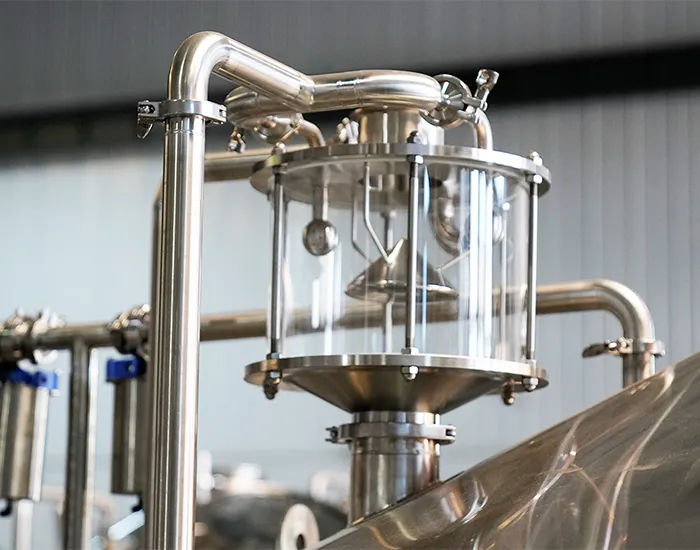
What counts as a nano brewery?
There is no single regulatory definition that fixes the nano category at one capacity. In equipment planning, ZPET positions its nanobrewery equipment range at 1-5 BBL. With 1 US beer barrel equal to about 117.3 L, this covers small commercial batches intended for brewpubs, taprooms and pilot-scale production.
The size label does not define the operating model. A 3 BBL brewhouse serving a taproom has different cellar and labor requirements from a 3 BBL pilot system used to test recipes for a larger production brewery. Start with the sales channel, brew frequency and fermentation schedule, then select the equipment.
The seven parts of a complete 1-5 BBL build
1. Brewhouse
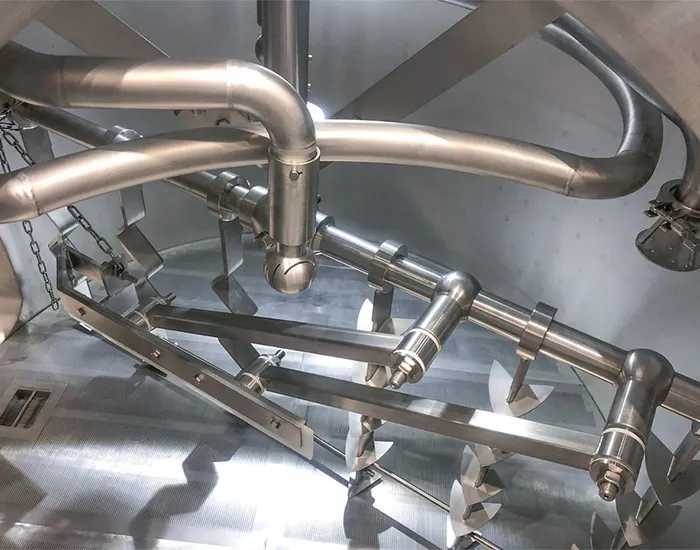
The brewhouse creates wort and normally combines the mash, lautering, boiling and whirlpool functions in a two-vessel or other compact configuration. The specification should identify:
- Nominal and usable batch volume
- Vessel configuration and process sequence
- Steam, electric or direct-fire heating
- Pump, piping and valve arrangement
- Operating platform and service access
- Control level and temperature-measurement points
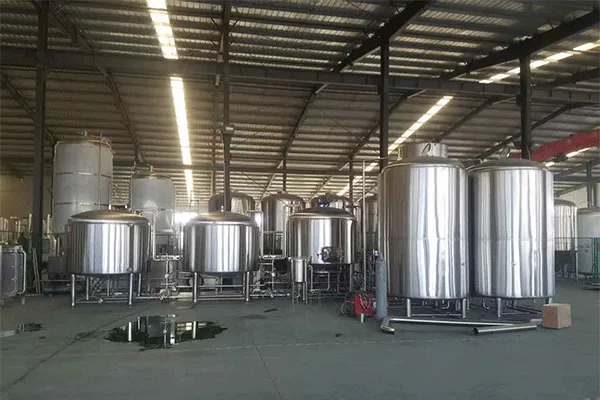
ZPET's brewhouse systems cover two-vessel through five-vessel configurations. At nano scale, adding vessels is not automatically an upgrade. The extra process separation must justify the added floor area, cleaning work and utility demand.
2. Hot-liquor and cold-water capacity
Brewing requires enough prepared water for mashing, sparging and cleaning. The water side should be sized around the complete brew day rather than only the batch volume. Confirm how water is heated, stored, transferred and recovered, and whether simultaneous operations will compete for the same supply.
3. Fermentation tanks
Cellar capacity often limits output before the brewhouse does. Each fermenter remains occupied through fermentation, conditioning and transfer, while the brewhouse can complete another batch much sooner. The production plan should therefore calculate tank occupancy by beer style and planned turns.
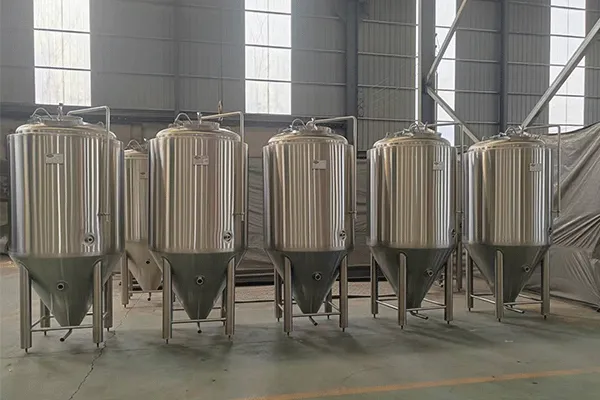
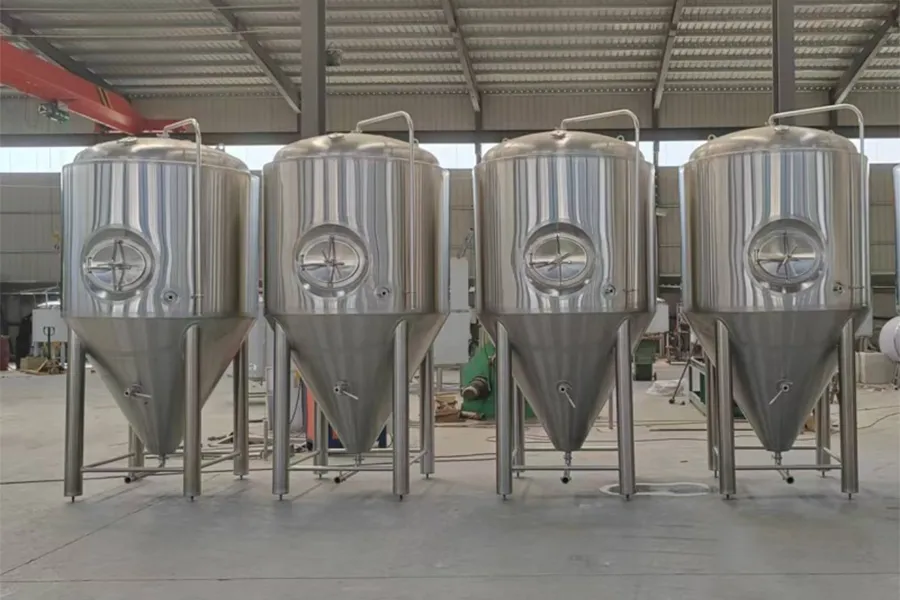
ZPET's fermentation tanks use SS304 or SS316L sanitary-grade material, a 0.4 μm mirror polish and dimple cooling jackets, with optional side manways. The company specifies pressure testing and a 10-year structural warranty. The final tank schedule must still identify working volume, headspace, pressure rating and cooling-zone arrangement for the order.
4. Bright beer or serving tanks
A taproom may serve from brite tanks, unitanks or kegs. That choice affects carbonation, cellar occupancy, cleaning and cold-room space. A separate bright beer tank can release a fermenter for another batch, but it adds another vessel, transfer step and cleaning cycle.
Do not add a bright tank simply because it appears on a standard equipment list. Define how beer reaches the tap or package first.
5. Glycol cooling
The glycol system connects the cellar tanks, piping, pump and temperature controls. Its load depends on the number of tanks, their jacket areas, ambient conditions, crash-cooling expectations and whether several tanks may require cooling at the same time.
A small chiller selected only from brewhouse size can become a hidden constraint. Ask for a cooling-load calculation tied to the actual tank schedule and site conditions.
6. Cleaning and sanitation equipment
A nano system still needs controlled cleaning. The package should define CIP connections, pumps, hoses, spray devices, chemical handling and the route to floor drains. Compact rooms make hose routing and wet-floor separation especially important because customer and staff traffic may be close to the brewing area.
7. Controls and building utilities
The control panel, electrical supply, water, drainage, ventilation and heating utilities are part of the installation even when they are not fabricated as tanks. Before ordering, record:
- Available electrical phase, voltage and amperage.
- Gas, steam and boiler restrictions where applicable.
- Water supply, treatment and pressure.
- Drain locations and wastewater limits.
- Ceiling height, door openings and delivery route.
- Ventilation and heat-removal requirements.
- Space for maintenance and future tanks.
The heating choice can change the building scope substantially. The 2 BBL electric, steam and direct-fire comparison explains the permitting and utility questions that should be settled before the brewhouse is specified.
How much can a 1-5 BBL system produce?
Nominal batch size alone cannot answer this. Annual and weekly output depend on brew turns, brewhouse efficiency, fermentation time, tank count, losses and the sales mix. A practical capacity model should be built from the cellar backward.
| Planning input | Why it changes output |
|---|---|
| Brews per week | Sets wort volume entering the cellar |
| Fermenter count and working volume | Limits simultaneous batches |
| Average tank occupancy | Determines when a vessel becomes available |
| Product mix | Different beer styles occupy tanks for different periods |
| Packaging or serving method | Adds transfer, conditioning and cleaning time |
| Operator hours | Limits how many brew and cleaning cycles can be completed |
For research and recipe development, see the pilot brewhouse sizing guide. A pilot system should match the larger brewhouse's relevant process geometry if recipe scaling is a core objective.
Nano system specification checklist
Use this checklist before comparing quotations:
| System area | Required quotation detail |
|---|---|
| Brewhouse | Working volume, vessel configuration, heating method, controls and platform |
| Cellar | Fermenter quantity, working volume, headspace, pressure and jacket arrangement |
| Cooling | Chiller duty, pump, reservoir, piping scope and design conditions |
| Cleaning | CIP connections, pump, spray device, hose and drain requirements |
| Utilities | Electrical, water, gas or steam, ventilation and wastewater interfaces |
| Documentation | Layout, process flow, utility schedule, pressure-test records and manuals |
| Delivery | Shipping dimensions, site access, installation and commissioning scope |
ZPET's engineering process prepares 3D layouts, technical drawings and flow charts around the buyer's actual footprint and utilities before fabrication. Equipment is described as engineered to meet PED (CE), UL/cUL and AS1210 requirements where applicable. The exact compliance documentation must be confirmed for the destination and order scope; "engineered to meet" should not be read as a universal certificate claim.
Common mistake: planning the brewhouse but not the cellar
Buyers often spend most of their specification time on kettle configuration and heating while treating fermenter quantity as a later decision. That reverses the production logic. If all fermentation tanks are occupied, the next brew cannot enter the cellar regardless of how quickly the brewhouse can turn.
Build a weekly tank-occupancy schedule before approving the vessel list. Include cleaning time and an allowance for batches that remain in the tank longer than planned. This exposes whether the initial cellar is workable and whether the room can accept expansion.
Can a nano system become a pilot system later?
Yes, if its process geometry, heating response, mixing and wort-handling steps remain useful for development after a larger system is installed. A compact unit that cannot reproduce the relevant production process may continue to make beer, but it will provide weaker scale-up evidence.
Plan the future role before purchase. Reserve the connections and operating space required to keep the nano line functional rather than treating it as equipment that will automatically be absorbed into expansion.
FAQ
What is included in a nano brewery equipment package?
A complete package normally includes a brewhouse, water preparation or storage, fermentation tanks, optional bright beer tanks, glycol cooling, cleaning connections, controls, pumps, piping and installation interfaces. The exact serving or packaging equipment depends on the business model.
Is 1 BBL equipment suitable for a commercial brewery?
It can support a very small taproom, specialty production or pilot work, but the business must be modeled around its limited batch volume and available cellar. Licensing, labor and building costs do not shrink in direct proportion to vessel size.
How many fermenters does a nano brewery need?
There is no reliable fixed number without a production schedule. Calculate planned brews per week, working volume and average tank occupancy for the intended beer styles, then add the operational buffer the business requires.
Should a nano brewery use electric heating?
Electric heating is often considered for compact installations, but suitability depends on available voltage, phase, amperage and the intended heat-up time. Compare it with steam and direct fire against the actual building and local permitting rules.
Prepare the build around the room and production plan
Send the equipment supplier a dimensioned floor plan, utility information, target batch size, weekly brew schedule and expected serving method. The quotation should return with a coordinated equipment list, layout, flow chart and utility schedule rather than a collection of tanks selected only by BBL size.