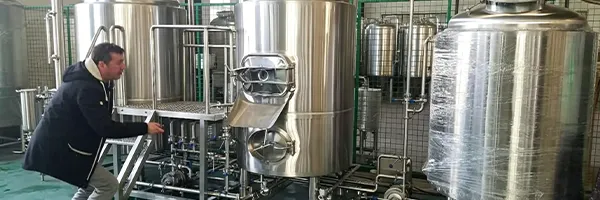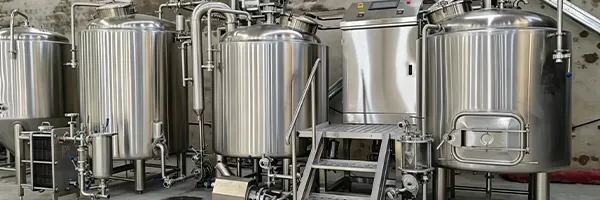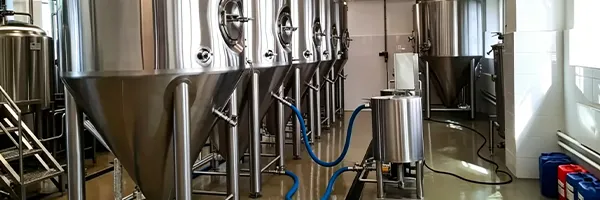
A professional brewing system should be selected as one connected process rather than as a collection of large vessels. Start with target batch volume, brew frequency, recipes, utilities, cellar turnover and packaging needs. Then compare vessel configuration, heating, controls, cleaning, maintenance access and future expansion against the building and operating team.
Define the production brief
Document batch size, brews per week, beer styles, fermentation time, conditioning time, packaging format and expected expansion. Keep nominal vessel volume separate from working volume and usable wort volume. This prevents a brewhouse that appears adequate from becoming a cellar or packaging bottleneck.
Choose the process configuration
Compare two-vessel, three-vessel and four-vessel layouts against recipe complexity and brew-day sequence. A simpler arrangement can reduce footprint and operator steps, while additional vessels may support more parallel work. The correct choice depends on throughput, staffing, building clearance and the process schedule.
Review the brewhouse systems range and compare it with microbrewery equipment before fixing the vessel count.
Specify heating and utilities
Ask suppliers for a complete utility schedule covering electrical service, steam or gas requirements, water, drainage, ventilation, compressed air and cooling duty. Confirm voltage and phase, floor loading, ceiling height, access routes and service clearances. Heating choice should fit the site’s available infrastructure and local code review.
Plan the cold side with the brewhouse
Fermenters, bright beer tanks, glycol cooling and cleaning capacity should be sized against the brew calendar. A professional system is balanced only when the cellar can receive, ferment, condition and release beer at the planned rhythm. Use the fermentation tanks page as a starting point for the cold-side scope.
Review controls and cleaning
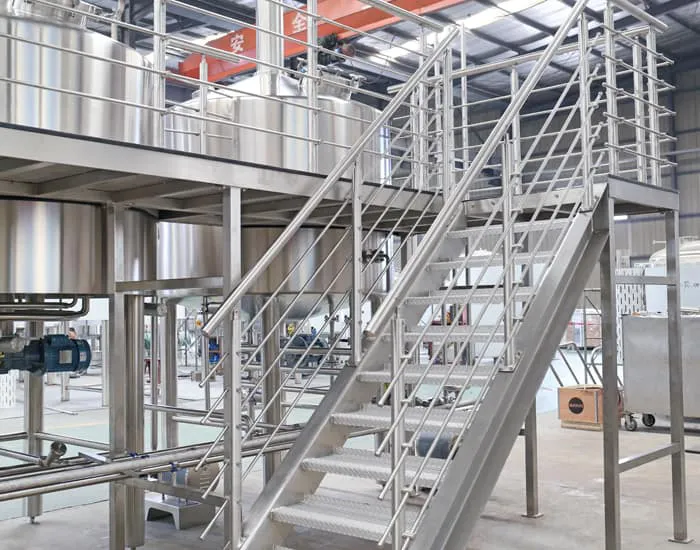
Specify temperature measurement, pump interlocks, alarms, emergency stops, manual fallback and the sequence of operations. Confirm spray-device coverage, drainability, sample points, manway access and cleaning connections. Request acceptance tests that reflect the actual process rather than relying on a control-panel screenshot.
Compare supplier scope
Normalize quotations across vessels, pumps, valves, heat source, cooling, controls, platforms, piping, insulation, installation, commissioning, training, spare parts, freight and warranty terms. Ask for process diagrams, general-arrangement drawings, nozzle schedules, utility lists and maintenance instructions. Mark every exclusion clearly.
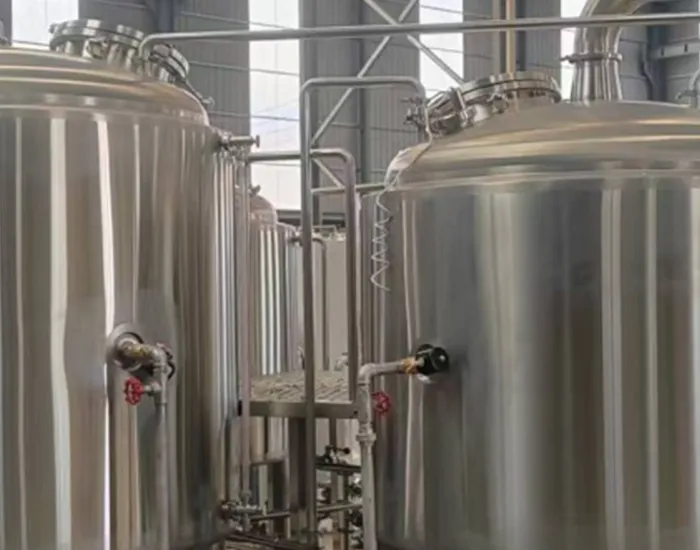
Common specification mistakes
- Comparing nominal vessel volume without working-volume definitions.
- Choosing the brewhouse before confirming utilities and access.
- Ignoring fermentation and bright-tank turnover.
- Leaving installation boundaries and documentation undefined.
- Assuming automation removes the need for operator procedures and manual recovery.
Frequently asked questions
What makes a brewing system professional?
It is specified around repeatable commercial production, sanitary process flow, maintainable utilities, documented controls and a coordinated cellar and packaging plan.
How many vessels should a brewery choose?
Choose the configuration that matches brew frequency, recipe complexity, staffing, footprint and expansion plans. More vessels are not automatically better.
What should be confirmed before ordering?
Confirm the process diagram, working volumes, utility schedule, layout, service clearances, scope exclusions, acceptance tests and documentation package.
Plan the system before requesting a quote
Share your target output, recipes, building dimensions and available utilities with the project team to develop a project-specific configuration. For a coordinated review, contact the ZPET project team.