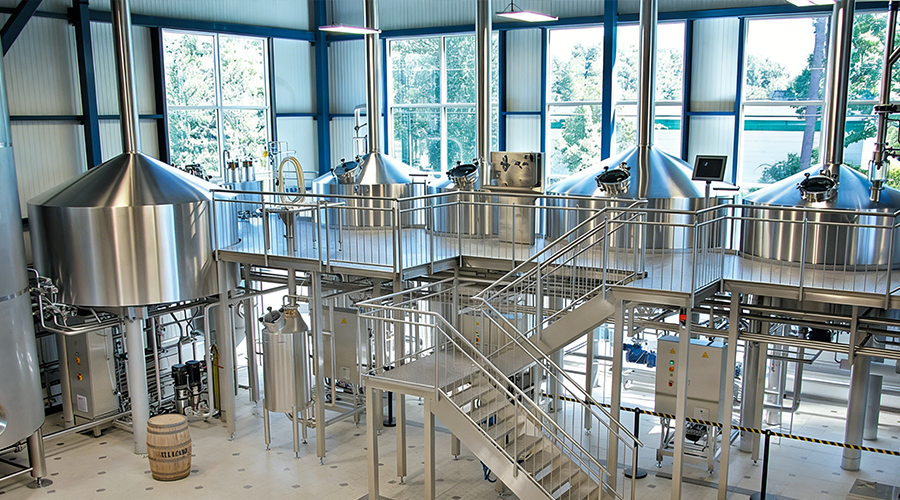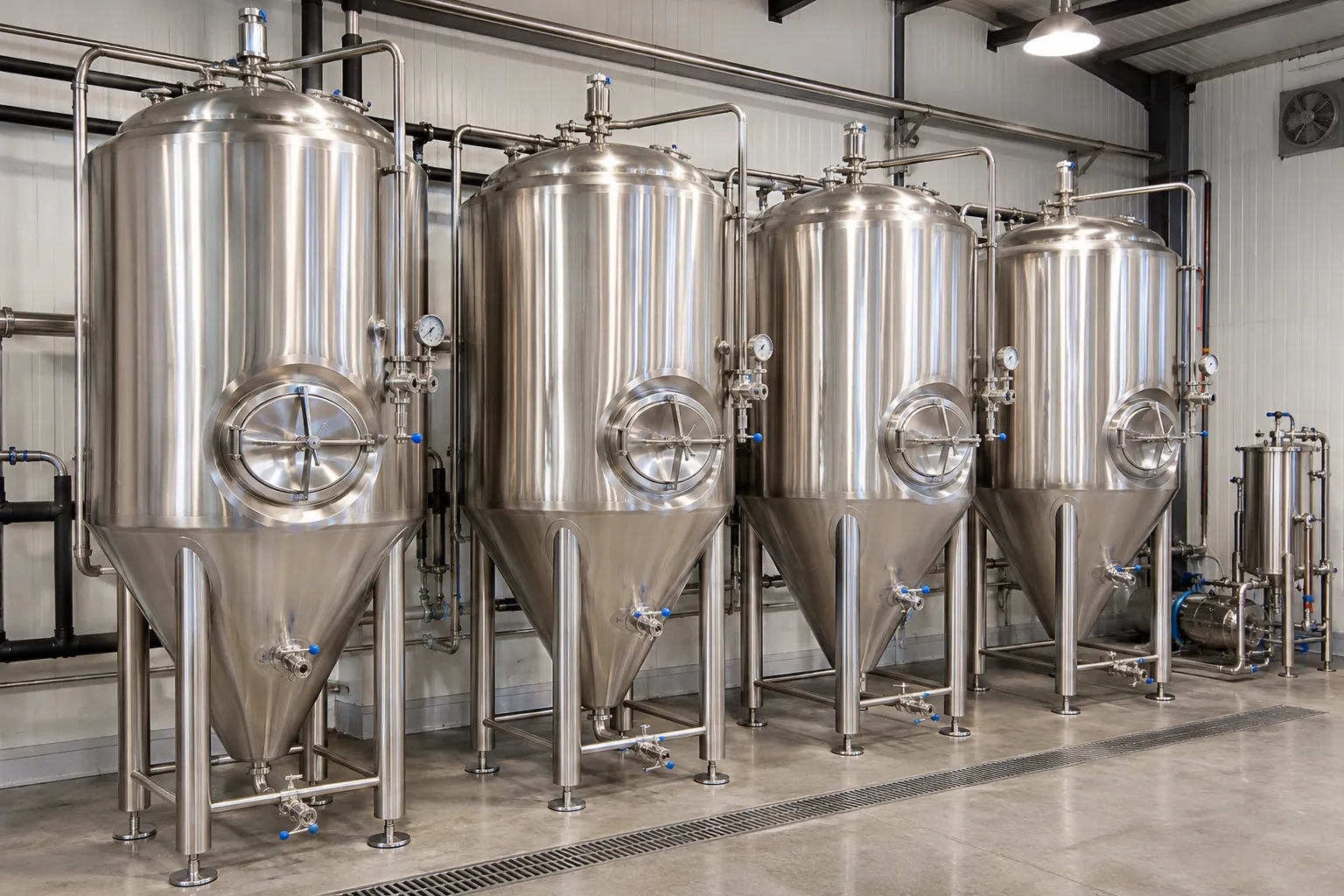
Your fermenter has finished its job, but the beer is not ready for customers. Carbonation, clarification, and packaging still need careful control. Without a reliable finishing process, beer quality and production schedules can suffer. A properly designed brite tank helps bridge that gap.
A brite tank, also called a bright beer tank, is used after fermentation to clarify, carbonate, condition, and hold beer before kegging, bottling, canning, or serving. It lets brewers prepare finished beer under controlled temperature and pressure while freeing fermenters for new batches. Commercial breweries use brite tanks to support consistent beer quality and efficient packaging schedules.
1. What Is a Brite Tank and Why Is It Used in Brewing?
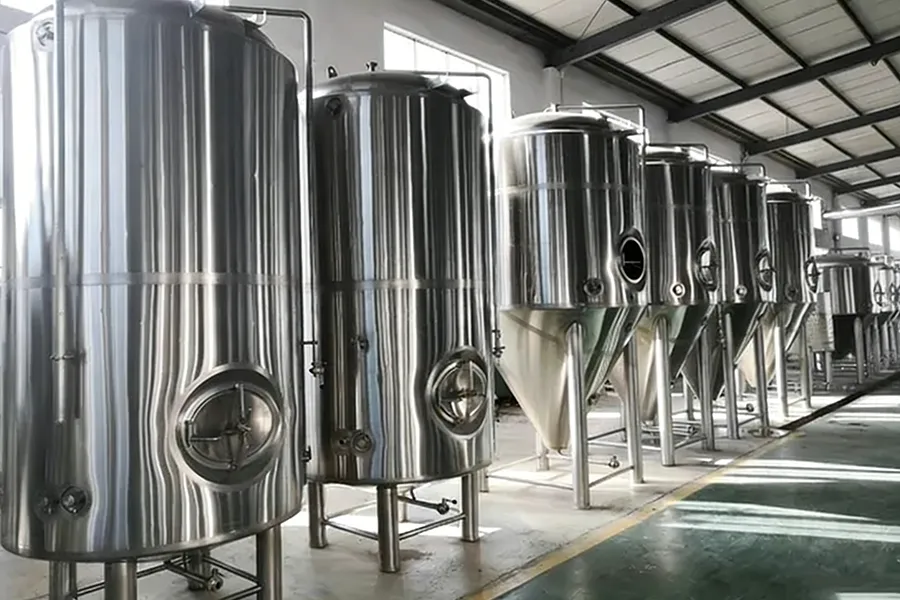
A brite tank is a stainless steel beer-finishing vessel used after the main fermentation stage. Its purpose is to prepare beer for packaging or service while maintaining the correct temperature, carbonation, and quality.
During primary fermentation, yeast converts fermentable sugars into alcohol and carbon dioxide. After this stage, the beer may still contain suspended yeast, proteins, and other fine particles. The brewer may also need to adjust carbonation and allow the beer to settle before packaging.
The bright beer tank provides a separate environment for those operations.
In a typical commercial brewing process, the beer moves from the fermenter into the finishing tank after the required fermentation and conditioning steps are complete.
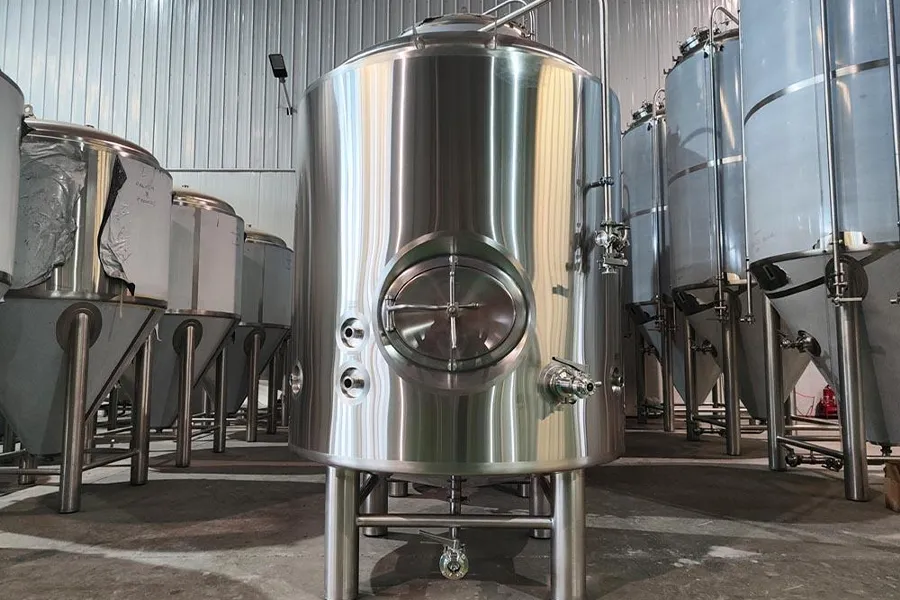
A professional brite tank may include:
- Sanitary stainless steel construction
- Pressure-rated vessel design
- CO₂ inlet and carbonation stone
- Cooling jacket and glycol connections
- Pressure gauge and relief valve
- Sampling port
- Sanitary beer outlet
- CIP spray device
- Temperature monitoring equipment
The exact configuration depends on the brewery’s process.
At ZPET, we manufacture customized Bright Beer Tanks for craft breweries, brewpubs, and commercial beer production facilities.
Our tank configurations can be matched to the customer’s batch volume, carbonation method, packaging schedule, and available cellar space.
The goal is not simply to store beer. It is to create a reliable connection between fermentation and the final product.
2. How Does Beer Move From a Fermenter to a Brite Tank?
The difference between a fermenter and a finishing tank becomes clearer when you look at the complete brewing workflow.
The fermenter provides an environment where yeast carries out the main biological process.
The brite tank receives beer that has completed the appropriate fermentation steps and prepares it for final use.
A typical production sequence may include:
- Wort production in the brewhouse
- Wort cooling and transfer into the fermenter
- Yeast pitching and fermentation
- Cooling, conditioning, and sediment management as required
- Sanitary beer transfer
- Clarification and carbonation in the brite tank
- Quality checks
- Transfer into kegs, bottles, cans, or a serving system
Some breweries use filtration or centrifugation before beer reaches the finishing tank. Others rely on settling and cold conditioning.
The exact sequence depends on the beer style and production process.
Fermenter-to-keg workflow
| Production Stage | Main Equipment | Primary Purpose |
|---|---|---|
| Wort production | Brewhouse | Prepare wort |
| Primary fermentation | Fermenter | Convert sugars into alcohol and CO₂ |
| Sediment management | Fermenter or filtration system | Reduce unwanted yeast and particles |
| Beer transfer | Sanitary piping and pump | Move beer while limiting oxygen exposure |
| Final conditioning | Brite tank | Stabilize and hold beer |
| Carbonation | Brite tank | Reach target dissolved CO₂ |
| Quality inspection | Sampling equipment | Confirm beer meets release requirements |
| Kegging | Keg filling equipment | Package finished beer |
This workflow is especially useful for breweries that produce multiple batches each week.
Once a suitable batch has been transferred to the finishing vessel, the empty fermenter can be cleaned and prepared for the next brew.
That separation can increase production flexibility without changing the brewhouse itself.
3. How Does a Brite Beer Tank Control Carbonation?
Carbonation is one of the most important functions of a brite beer tank.
Carbon dioxide gives beer its bubbles, contributes to mouthfeel, and affects how the finished beer is served.
Different beer styles require different carbonation levels.
For example, a traditional lager may have a different carbonation target from an English-style ale or a highly carbonated specialty beer.
A commercial finishing tank can support controlled carbonation using an appropriate CO₂ supply and carbonation equipment.
Many tanks include a carbonation stone that introduces gas through fine openings, helping CO₂ dissolve into the beer.
The brewer must control several factors:
- Beer temperature
- Applied CO₂ pressure
- Desired carbonation level
- Contact time
- Gas quality
- Tank pressure capability
Temperature and pressure work together.
Colder beer generally holds dissolved CO₂ more readily than warmer beer under comparable conditions.
That is why a properly controlled cooling system is important for repeatable carbonation.
A dedicated finishing tank allows the brewer to manage carbonation separately from active fermentation.
However, the tank must be designed for the intended operating conditions.
Never assume that every stainless steel storage vessel can safely handle carbonation pressure.
The actual operating limits must come from the equipment manufacturer’s documentation.
4. Does a Brite Tank Remove Yeast and Make Beer Clearer?
A brite tank can support beer clarification, but it is not automatically a filter.
After fermentation, some yeast and fine particles may remain suspended in the beer.
When the beer is held under suitable cold conditions, some of these particles gradually settle.
This can result in clearer beer.
However, clarification depends on several factors:
- Yeast strain
- Beer composition
- Temperature
- Holding time
- Protein content
- Hop particles
- Previous sediment removal
- Fining or filtration methods
For some beer styles, the goal is a bright and clear appearance.
For others, such as certain hazy beers, the brewer may intentionally retain a cloudy appearance.
Therefore, clarity should be matched to the product specification rather than treated as a universal requirement.
Is filtration always required?
No.
Some breweries use cold conditioning and settling to reach their desired appearance.
Others use filtration or centrifugation to reduce suspended material before the beer enters the tank.
If the brewery needs very low yeast content or a defined clarity level, a dedicated filtration process may be necessary.
The brite tank then provides a controlled place to hold the treated beer before packaging.
A finishing tank supports clarification, but it does not replace every filtration process.
This distinction matters when comparing commercial brewing equipment.
A tank designed for carbonation and storage should not be advertised as a complete filtration solution unless the required filtration equipment is actually included.
5. What Is the Difference Between a Brite Tank, Fermenter, and Unitank?
These vessels may look similar, but their normal functions are different.
A fermenter is used to ferment wort into beer. It often has a conical bottom that helps collect yeast and sediment.
A bright tank is generally used after fermentation.
A unitank combines fermentation with selected conditioning and carbonation functions in one pressure-rated vessel.
Equipment comparison
| Feature | Fermenter | Brite Tank | Unitank |
|---|---|---|---|
| Main function | Fermentation | Finishing and holding | Fermentation and finishing |
| Active yeast fermentation | Yes | Not primary purpose | Yes |
| Yeast harvesting | Often supported | Usually not primary purpose | Often supported |
| Carbonation | Depends on design | Common function | Possible when rated |
| Cooling | Common | Often available | Common |
| Pressure rating | Configuration-specific | Designed for intended finishing pressure | Configuration-specific |
| Packaging preparation | Possible | Main application | Possible |
| Separate transfer | Often required | Receives beer | May reduce transfers |
A small brewpub may use unitanks to reduce equipment count.
This can save floor space and simplify some production operations.
However, keeping finished beer in a unitank also keeps that vessel unavailable for the next fermentation batch.
Larger commercial breweries may prefer separate fermentation and finishing vessels because the production stages can run independently.
Neither arrangement is automatically better.
For more technical differences, see our Brite Tank vs Fermentation Tank Guide.
The correct configuration depends on batch volume, available space, production frequency, and the beer packaging method.
6. Why Is a Brite Tank Important for Kegging and Packaging?
A dedicated brite tank creates a buffer between beer production and packaging.
This becomes valuable when the brewery’s packaging schedule does not perfectly match fermentation completion.
Imagine that a batch finishes fermentation on Tuesday, but the brewery operates its kegging line on Thursday.
Without a separate finishing vessel, the beer may need to remain in the fermenter until the packaging equipment becomes available.
With a brite tank, suitable beer can move into the finishing stage while the brewer prepares the fermentation vessel for another batch.
This can improve the use of available production equipment.
Benefits for commercial packaging
More predictable packaging schedules
Finished beer can be held under controlled conditions before the packaging line starts.
Better carbonation consistency
The brewer can verify the target carbonation level before filling.
Reduced fermenter occupancy
Moving completed beer out of the fermentation vessel can create capacity for another brew.
Improved production organization
The brewery can separate fermentation work from packaging preparation.
More flexible product handling
Different batches can be planned around available finishing and packaging capacity.
A brite tank can supply beer to kegging, canning, or bottling systems when the equipment is properly integrated.
The transfer arrangement should limit unwanted oxygen pickup and maintain suitable pressure and temperature conditions.
This is especially important for craft beer quality and flavor stability.
A professionally designed packaging workflow should consider the entire path from the fermentation vessel to the final keg, bottle, or can.
7. How Many BBL Should a Brewery Brite Tank Hold?
The right tank capacity depends on the amount of beer that needs to be held and packaged at one time.
A common starting point is the brewery’s normal finished-beer batch volume.
For reference:
1 U.S. beer barrel = approximately 117.3 liters.
A 10 BBL batch therefore represents approximately 1,173 liters before considering actual process losses and working-volume requirements.
But matching nominal brewhouse and tank labels is not enough.
The brewer must confirm the usable working volume of each vessel.
Illustrative tank selection
| Brewery Production | Tank Capacity to Evaluate | Main Consideration |
|---|---|---|
| 3 BBL batches | 3 BBL working-volume class | Small batch flexibility |
| 5 BBL batches | 5 BBL working-volume class | Taproom and brewpub production |
| 10 BBL batches | 10 BBL working-volume class | Standard batch finishing |
| Two compatible 10 BBL batches | 20 BBL working-volume class | Combined production |
| Multiple beer styles | Multiple smaller tanks | Separate product handling |
These are planning examples, not fixed equipment recommendations.
A brewery producing several different beer styles may prefer two smaller tanks instead of one large vessel.
For example, two 10 BBL tanks can hold two separate beer products.
One 20 BBL tank cannot hold two different beers separately at the same time.
That difference matters when the brewery has a rotating tap list.
Working volume versus total volume
Ask the manufacturer to state:
- Normal working volume
- Total internal volume
- Recommended operating fill level
- Tank dimensions
- Pressure rating
- Cooling requirements
A vessel advertised as 10 BBL may not always have exactly the same usable capacity as another supplier’s 10 BBL model.
ZPET provides customizable commercial bright beer tanks across different brewery production scales.
Final capacity should be confirmed against the actual packaging and storage requirements of the project.
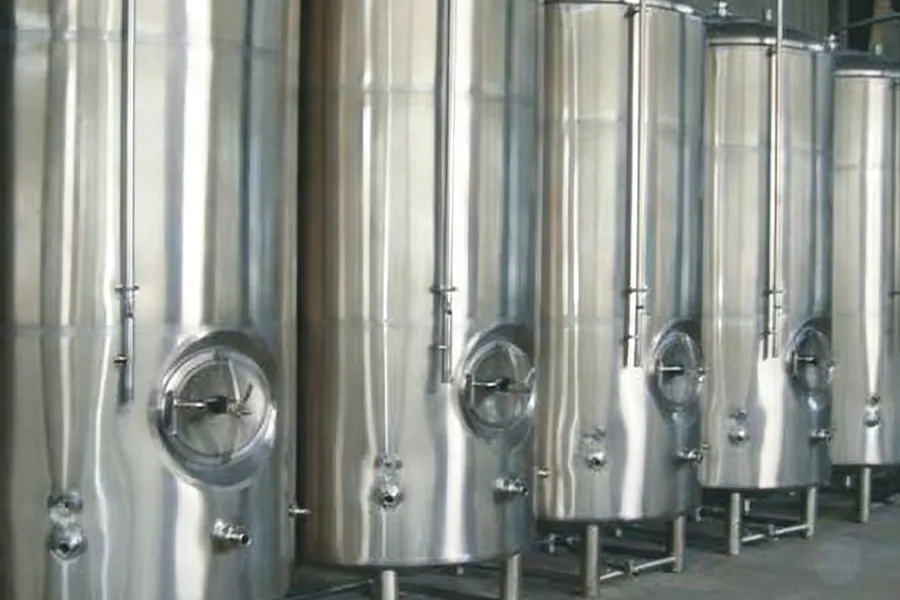
8. How Do Cooling Jackets, CO₂ Systems, and CIP Affect Brite Tank Performance?
A brite tank is more than an empty stainless steel container.
Its supporting systems determine how well it performs during normal brewery operation.
Cooling system
Many commercial tanks use glycol cooling jackets to maintain the required beer temperature.
Temperature control is important for carbonation, cold storage, and product stability.
The brewery should confirm that the existing chiller has enough capacity to support the additional tank.
CO₂ supply
Carbonation requires a suitable carbon dioxide supply and pressure-control system.
The gas connections, regulator, carbonation stone, and pressure-monitoring equipment must match the process.
The system should also support the expected beer volume and carbonation schedule.
CIP cleaning
CIP means Clean-in-Place.
A CIP system circulates suitable cleaning solutions through the tank and connected equipment without requiring full manual disassembly.
A professional tank may include a spray device and sanitary cleaning connections.
However, the cleaning system must provide sufficient coverage, flow, concentration, temperature, and contact time.
Important tank components
| Component | Function |
|---|---|
| Cooling jacket | Maintains beer temperature |
| Carbonation stone | Introduces CO₂ for carbonation |
| Pressure gauge | Indicates tank pressure |
| Pressure relief valve | Protects against overpressure |
| Sampling valve | Allows quality checks |
| Sanitary outlet | Transfers beer |
| CIP spray device | Supports internal cleaning |
| Temperature sensor | Monitors process conditions |
| Insulation | Reduces unwanted heat gain |
Not every tank requires the same features.
Some smaller vessels may have simpler configurations.
A commercial brewery packaging large quantities of beer may need more extensive controls and utility connections.
The important point is to specify the functions required by the actual production process.
9. What Pressure and Safety Specifications Should a Brite Tank Have?
Commercial bright tanks may operate under pressure during carbonation, holding, or transfer.
Their pressure capability must therefore match the intended process.
A buyer should not select a tank based on appearance alone.
Important specifications include:
- Design pressure
- Maximum allowable working pressure, where applicable
- Normal operating pressure
- Pressure relief equipment
- Vacuum protection
- Material thickness
- Welding quality
- Inspection records
- Tank testing documentation
Do not confuse pressure testing with operating pressure.
A test pressure higher than the normal operating limit does not mean the tank may be used continuously at that test pressure.
The actual permitted conditions must be documented for the specific vessel.
Pressure requirements may also vary by country.
Buyers should confirm applicable regulations and inspection requirements for the destination market before production begins.
For international brewery projects, this is particularly important because local pressure-equipment rules may affect documentation, installation, and approval.
Why material and sanitation matter
Most professional brewery tanks use suitable food-grade stainless steel.
Common options include SS304 and SS316L, depending on the process and project requirements.
The internal surface should support effective cleaning and help reduce the risk of contamination.
Properly finished welds, accessible fittings, and hygienic piping connections are important.
At ZPET, our bright beer tank range includes stainless steel construction, sanitary fittings, cooling options, and pressure-related configurations for different brewery applications.
The final engineering specification should identify the features and ratings included in the actual supplied equipment.
10. Does Every Brewery Need a Brite Tank?
No.
The decision depends on production needs.
A homebrewer or very small operation may ferment and carbonate beer using appropriately rated equipment without installing a dedicated finishing tank.
Some home brewers use Corny keg systems or pressure-capable unitanks for small batches.
That arrangement can be practical at limited production volumes.
However, the equipment must still be suitable for the intended pressure, cleaning, and beer-transfer procedures.
Small brewpubs
A small brewpub producing only a few batches per week may operate efficiently with unitanks.
Adding a separate finishing vessel may not provide enough benefit to justify the additional investment.
Growing craft breweries
As production increases, the brewery may need more flexibility between fermentation and packaging.
A dedicated brite tank can help release fermentation vessels earlier and maintain a ready supply of beer for kegging.
Larger commercial breweries
Facilities producing multiple batches and using regular packaging schedules may benefit from several finishing tanks.
Multiple tanks can support different beer styles and packaging operations.
Quick decision table
| Production Situation | Brite Tank Priority |
|---|---|
| Home brewing | Usually optional |
| Low-volume nano brewery | Depends on workflow |
| Small brewpub | Optional or beneficial |
| Growing taproom | Often worth evaluating |
| Brewery with weekly kegging | Useful |
| Brewery with regular canning | Often valuable |
| High-volume commercial operation | Common production equipment |
The decision should be based on actual production requirements rather than the practices of other breweries.
If your main question is whether a small operation needs one, see our Small Brewery Unitank vs Brite Tank Guide.
11. How Can a Brite Tank Improve Brewery Production Efficiency?
A dedicated finishing vessel can help a brewery organize different stages of beer production.
But its value should be measured through actual tank use and packaging performance.
Consider a hypothetical brewery with:
- Four fermenters
- One brewhouse
- Weekly production
- A fixed kegging schedule
If completed beer remains inside the fermenters while waiting for packaging, the brewery may have fewer empty fermentation vessels available for new wort.
Adding a finishing tank may reduce that delay.
However, the improvement depends on the time beer spends in each vessel.
Illustrative scheduling example
| Production Activity | Unitank-Only Arrangement | Separate Finishing Tank |
|---|---|---|
| Fermentation | In unitank | In fermenter |
| Final conditioning | In unitank | May be moved to finishing tank |
| Carbonation | In unitank | In finishing tank |
| Packaging wait | May occupy unitank | May occupy finishing tank |
| New fermentation batch | Waits for unitank availability | Can start when fermenter is ready |
The separate arrangement does introduce another transfer and cleaning cycle.
Therefore, it is not automatically more efficient for every brewery.
The real advantage appears when fermentation capacity is limited by finished-beer holding or packaging delays.
When should a brewery add another finishing tank?
Possible signs include:
- Finished beer regularly waits for packaging.
- The brewery produces several different products simultaneously.
- Carbonation schedules overlap.
- Existing finishing capacity cannot support packaging frequency.
- Fermenters remain occupied after completing their required process.
- Production expansion requires more finished-beer storage.
Before ordering additional equipment, determine which operation is limiting output.
The answer might be another fermenter, another brite tank, more cooling capacity, or a faster packaging line.
A properly planned brewery should balance every production stage.
12. How Should B2B Buyers Choose a Brite Tank Manufacturer?
Selecting the right supplier is about more than price.
A commercial brewery needs equipment that fits its production process, building conditions, and maintenance requirements.
When comparing manufacturers, ask for a detailed technical quotation.
Commercial brite tank purchasing checklist
| Purchasing Requirement | What to Confirm |
|---|---|
| Capacity | Working volume and total volume |
| Material | Stainless steel grade and product-contact finish |
| Pressure | Design and approved operating limits |
| Carbonation | Stone, gas fittings, and process requirements |
| Cooling | Jacket design and glycol connections |
| Cleaning | CIP compatibility and drainage |
| Tank arrangement | Vertical or horizontal |
| Connections | Sampling, transfer, and sanitary fittings |
| Documentation | Technical drawings and inspection records |
| Installation | Access dimensions and utility requirements |
| Service | Spare parts, operating guidance, and support |
| Expansion | Compatibility with future production plans |
A supplier should also explain how the tank will connect to the existing brewery equipment.
A standalone vessel may appear suitable in a catalog but require additional work once installed.
Why choose ZPET?
ZPET manufactures customized stainless steel brewing equipment for international B2B customers.
Our product offering includes brewhouse systems, fermentation tanks, bright beer tanks, and turnkey brewery solutions.
For commercial bright beer tank projects, we can help evaluate:
- Required working capacity
- Beer-finishing workflow
- Carbonation requirements
- Tank configuration
- Cooling connections
- Sanitary fittings
- Building space
- Equipment integration
- Future expansion needs
We focus on matching equipment to the customer’s production plan.
Whether you are planning a small craft brewery or expanding a commercial beer production facility, the finishing stage should support reliable beer quality and practical daily operation.
Explore our Bright Beer Tanks or contact ZPET to discuss a customized commercial brewery tank solution.
Frequently Asked Questions About Brite Tanks
What is the main purpose of a brite tank?
The main purpose is to prepare beer after fermentation for carbonation, clarification, conditioning, storage, packaging, or serving. It gives the brewer a dedicated finishing stage separate from active fermentation.
Can a brite tank be used instead of a fermenter?
Not as a direct replacement unless the vessel has been specifically designed and approved for the intended fermentation process. Brite tanks are primarily intended for post-fermentation handling, while fermenters are designed to support yeast activity and related process conditions.
Can a brite tank carbonate beer?
Yes. A properly designed and pressure-rated brite tank can be used for carbonation. Many commercial systems use a carbonation stone and controlled CO₂ supply to reach the desired carbonation level.
Does a brite tank filter yeast out of beer?
Not by itself. The tank can allow suspended material to settle under suitable conditions, but filtration requires a separate filtration process or appropriate specialized equipment.
Can beer go directly from a brite tank into a keg?
Yes. A properly integrated system can transfer finished beer from the brite tank into sanitized kegs using suitable pressure and sanitary filling equipment.
What size brite tank does a 10 BBL brewery need?
A tank with suitable working capacity for a normal 10 BBL finished-beer batch is a practical starting point. However, the final choice depends on actual transfer volume, number of beer styles, packaging schedule, and the need to hold multiple batches.
Is a brite tank the same as a unitank?
No. A unitank is designed to combine fermentation with selected finishing functions. A brite tank is primarily used after fermentation. Some functions overlap, but the two vessel types are not automatically interchangeable.
Key Takeaways
- A brite tank is used after fermentation to prepare beer for packaging or serving.
- Its main functions include carbonation, clarification, conditioning, and finished-beer holding.
- It provides a separate production stage between fermentation and kegging, canning, or bottling.
- A brite tank is not automatically a filtration system.
- A dedicated finishing vessel may help free fermenters for new batches.
- Carbonation performance depends on temperature, pressure, gas supply, and process control.
- Working volume should match the actual beer batch and packaging requirements.
- Multiple smaller tanks may be more flexible than one large vessel when handling different beer styles.
- Commercial tanks should have suitable pressure ratings, sanitary fittings, and cleaning provisions.
- Glycol cooling and CIP compatibility can improve process control and operational efficiency.
- Small breweries may use unitanks instead of separate finishing vessels when their production requirements allow.
- Commercial breweries should evaluate brite tank capacity together with fermentation, packaging, and storage needs.
- Choosing the right equipment manufacturer helps ensure the tank fits the complete brewery production system.
ZPET provides customized stainless steel brewing systems, fermentation tanks, bright beer tanks, and turnkey brewery equipment for global craft breweries, brewpubs, taprooms, and commercial beverage producers.
If you are planning a new brewery or upgrading an existing beer production line, contact ZPET with your batch size, weekly production, beer styles, carbonation requirements, packaging method, and available space. Our team can help develop a suitable finishing tank configuration for your project.