Specialized Expertise in Food-Grade Tank Manufacturing
Dual-Purpose Design: Storage & Blending
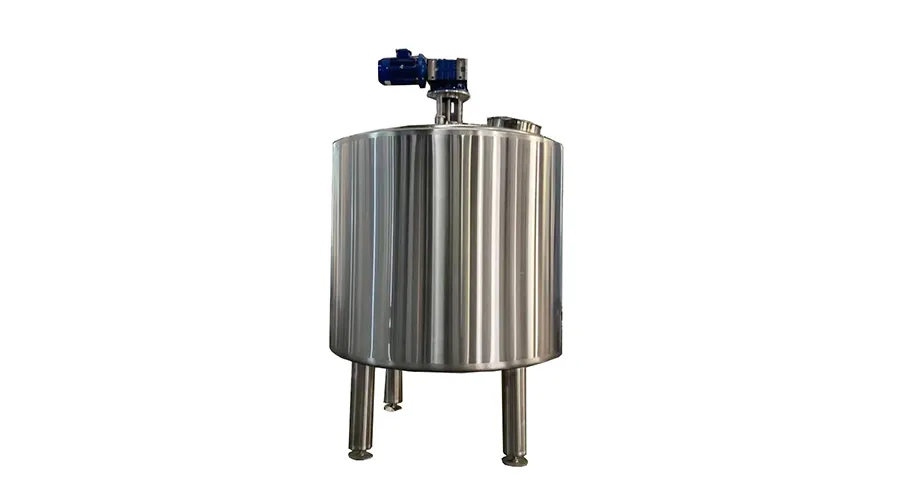
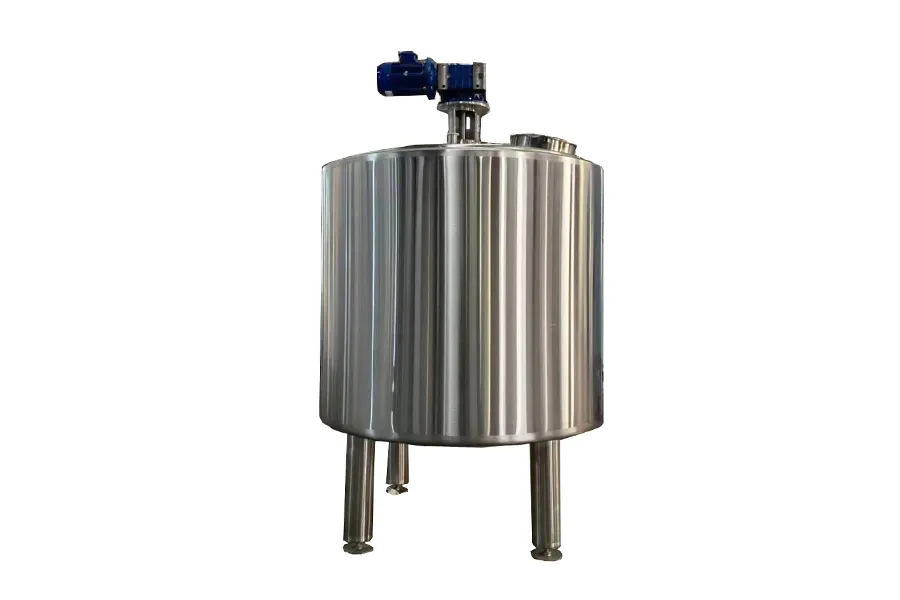
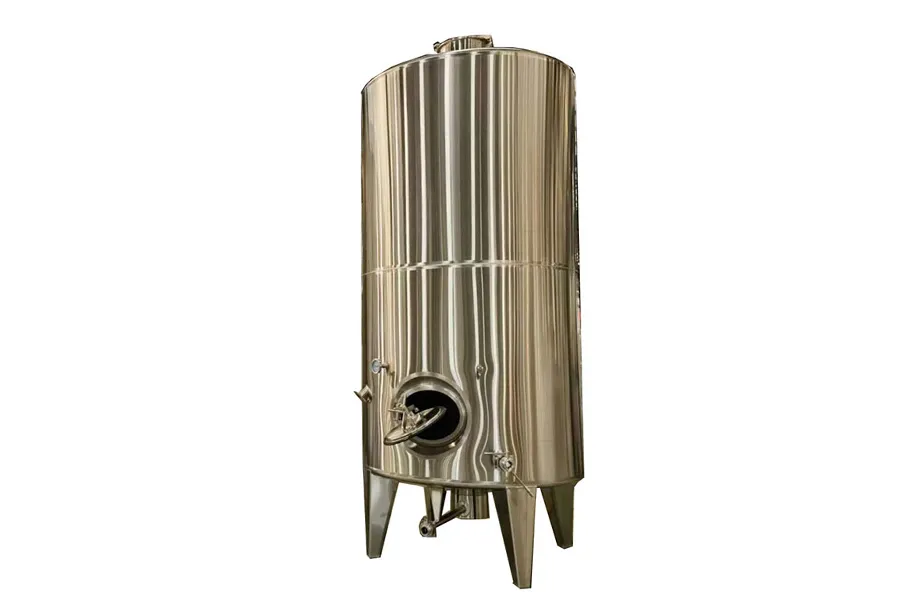
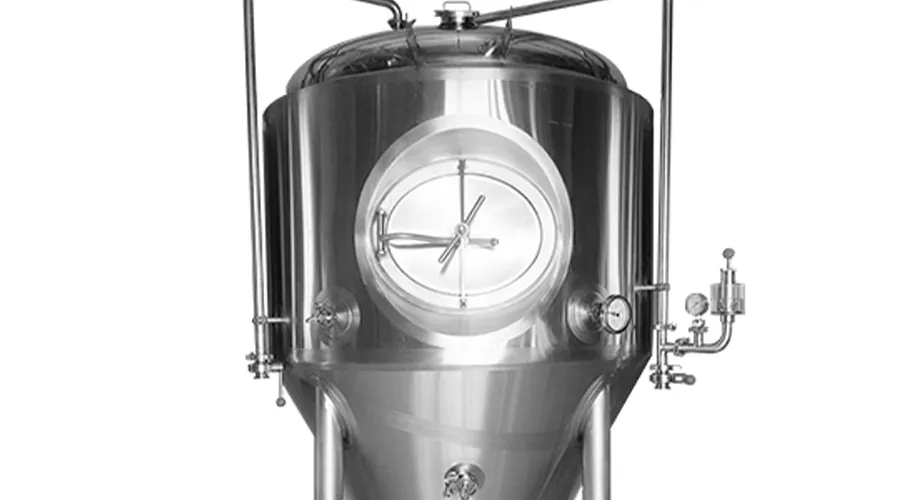
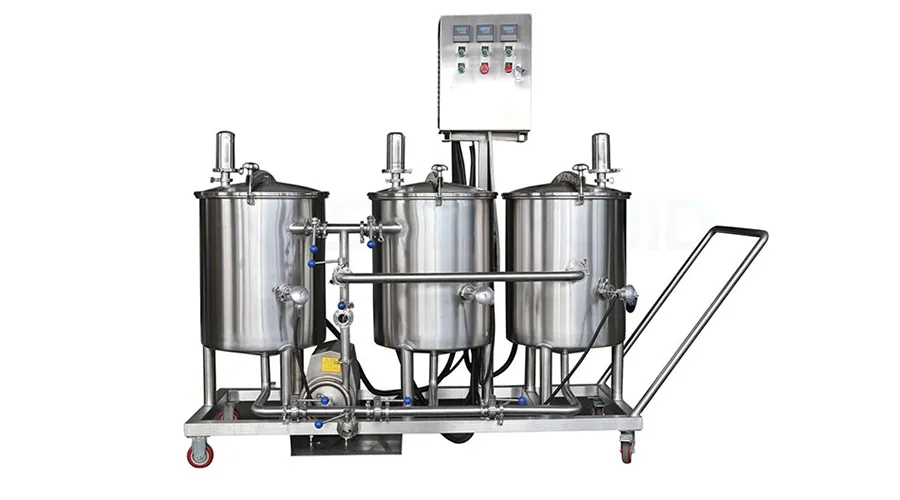
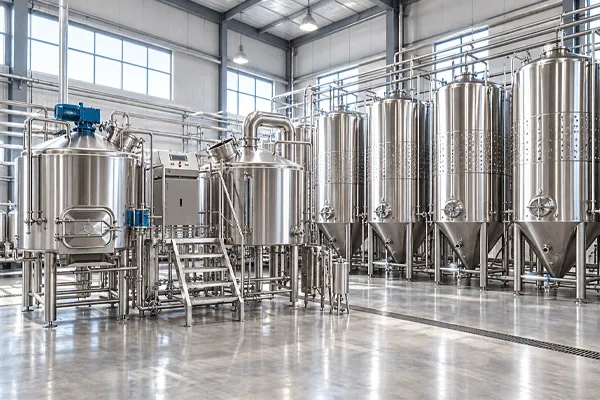
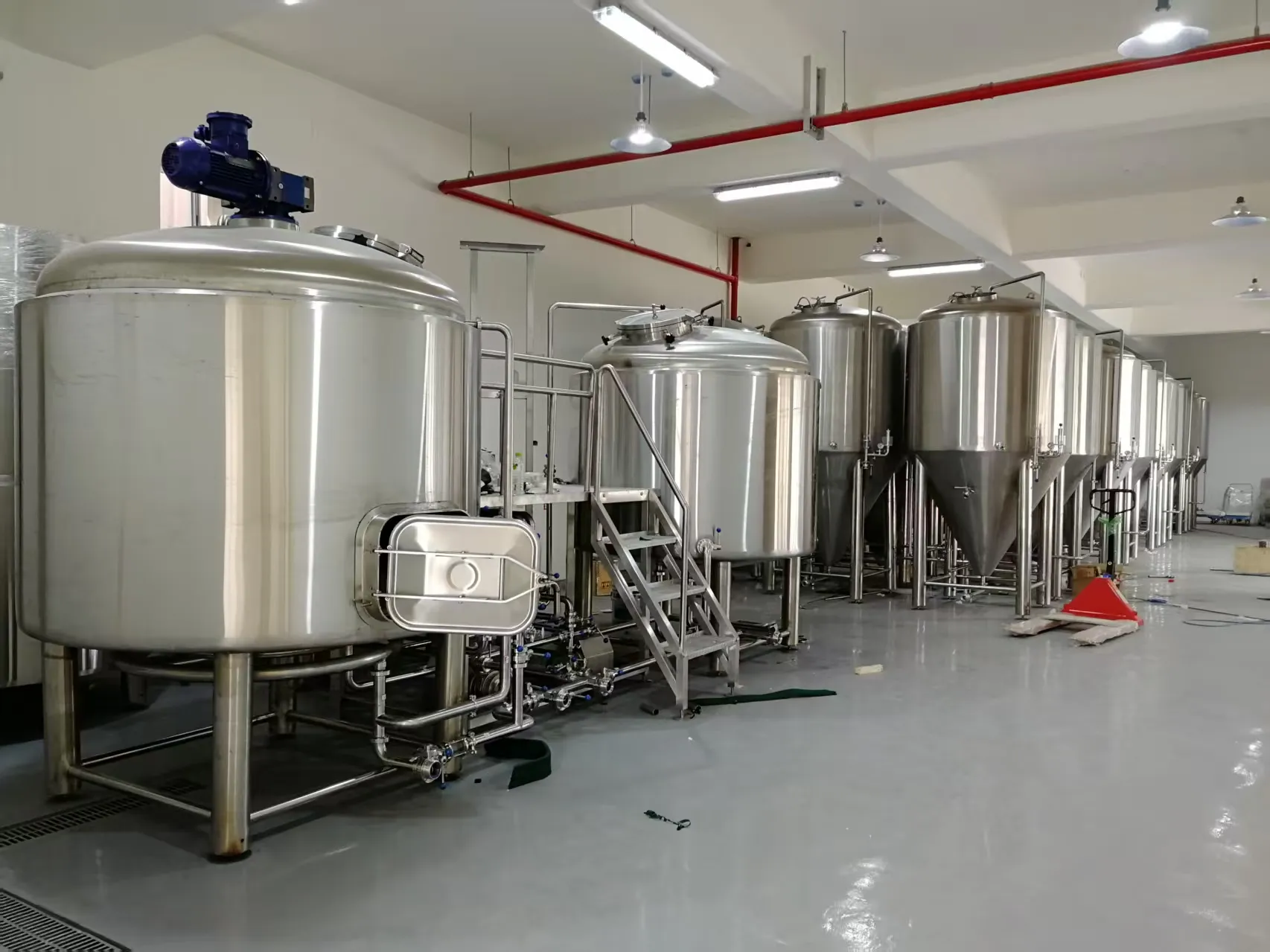
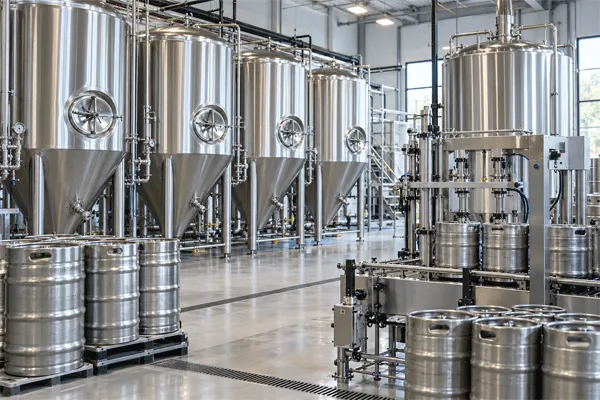
Storage Tanks: Passive vessels designed for long-term liquid holding without active mixing. Ideal for finished products, raw materials, or intermediate storage between production stages. Features include temperature control jackets, level indicators, and bottom discharge valves. Blending Tanks: Active mixing vessels equipped with agitators or impellers for uniform blending, dissolving, and homogenizing. Ideal for formulation, flavor blending, ingredient dissolving, and batch preparation. Features include variable-speed agitators, temperature control, and CIP-compatible design.
Food-Grade Hygienic Construction
SUS304/316L Stainless Steel: Food-grade material resistant to corrosion, acidic liquids (pH 2.5-7.0), and high-moisture environments. SUS316L recommended for highly acidic products (wine, cider, kombucha) or saltwater applications
≤0.4μm Surface Finish: Pharmaceutical-grade polishing prevents bacterial growth, residue buildup, and flavor contamination. Smooth surfaces simplify cleaning and reduce sanitation time by 40-50%
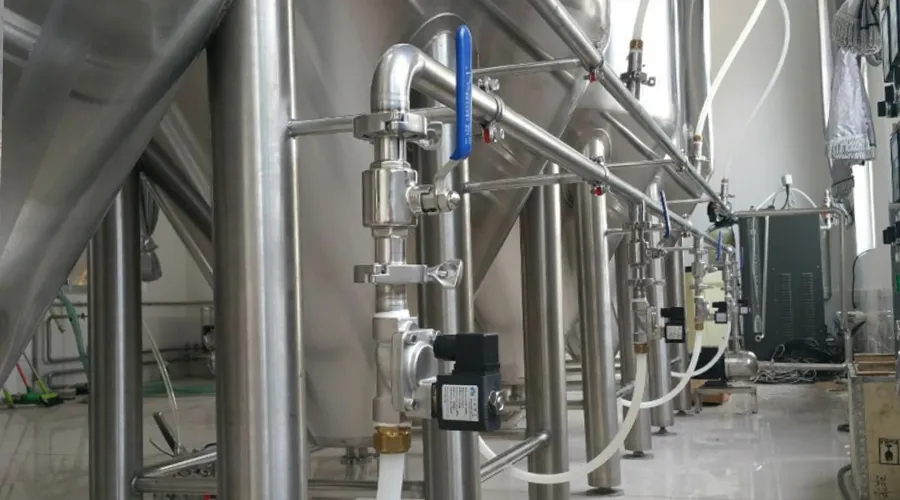
CIP-Compatible Design: Fully welded seams, rounded corners, and spray ball integration enable automated Clean-In-Place cleaning. Reduces cleaning time from 2-3 hours(manual) to 45-60 minutes (automated).
Scalability for Growing Operations
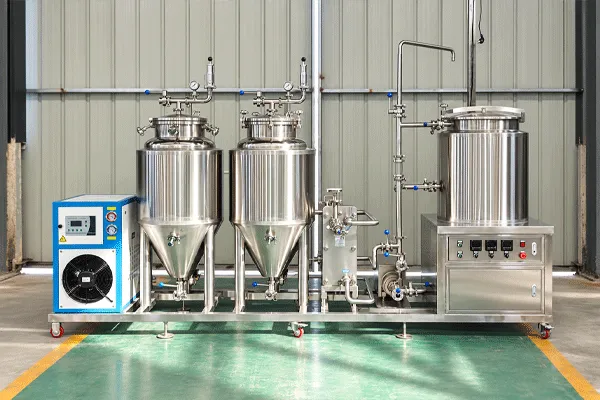
ZPET’s modular tank design allows facilities to start with core storage/blending capacity (2-4 tanks) and expand by adding tanks, mixing systems, or temperature control as production grows. Our tanks support scaling from 500L/week (small operations) to 100,000L/week (industrial facilities) without replacing core equipment.
Choose Your Stainless Steel Tank Type & Capacity
ZPET offers stainless steel tanks in two main categories (Storage Tanks and Blending Tanks) with capacities ranging from 100L to 50,000L, designed for different applications and production scales
Storage Tanks (200L-50,000L)
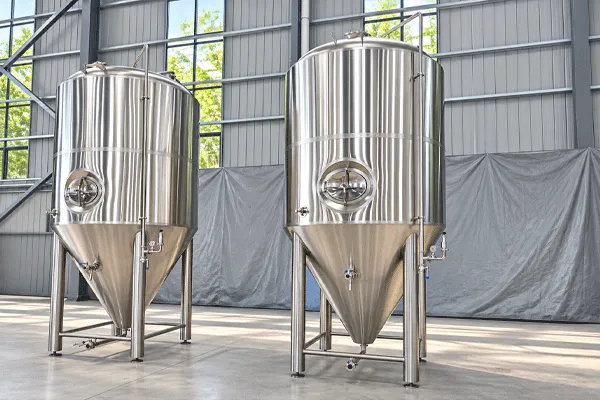
Passive Liquid Holding for Finished Products & Raw Materials
Capacity Range: 200L to 50,000L (customizable)
Best For: Finished product storage (beer, wine, juice), raw material holding (water, syrups, oils), intermediate storage between production stages
Key Advantage: Long-term liquid preservation with optional temperature control—ideal for maintaining product quality during storage or distribution
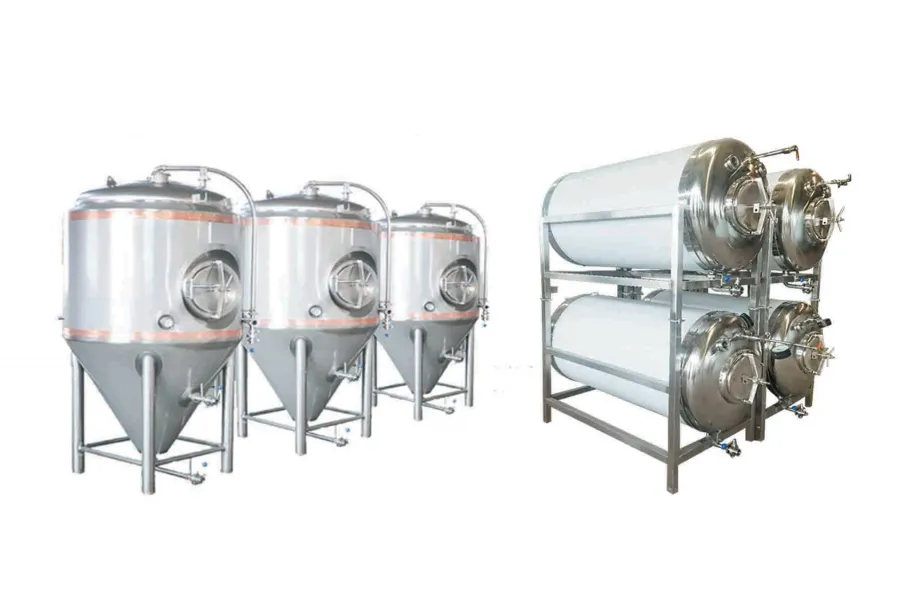
Configuration: Vertical or horizontal orientation | Jacketed or non-jacketed | Atmospheric or pressurized (up to 3 bar)
Applications: Beer bright tanks, wine aging tanks, juice storage, dairy holding tanks, water reservoirs, oil storage
Key Advantage: Integrated agitator systems ensure uniform mixing and consistent product quality—ideal for complex formulations requiring precise ingredient distribution
Configuration: Top-mounted or bottom-mounted agitators | Variable-speed control | Jacketed heating/cooling | PLC automation (optional)
CIP Cycle: Alkaline wash (caustic) → water rinse → acid wash (optional) → final rinse → sanitizer
Water Recovery: Recirculation system reduces water consumption by 40-50%
Cleaning Cycle Time: 45-60 minutes per tank (vs. 2-3 hours manual cleaning)
Complete Cider Production Process
Step 1
Apple Selection & Crushing (2-4 hours)
•Wash and sort apples (remove damaged or rotten fruit)
•Crush apples using maceration tanks to create apple pomace
•Optional: Blend different apple varieties for desired flavor profile
Step 2
Apple Selection & Crushing (2-4 hours)
•Press pomace using pneumatic or mechanical presses
•Achieve 70-80% juice yield (500 kg apples = 350-400L juice)
•Optional: Pasteurize juice (75-80°C for 15 minutes) to eliminate wild yeast
Step 3
Apple Selection & Crushing (2-4 hours)
•Transfer juice to fermentation tanks
•Inoculate with cider yeast (Saccharomyces cerevisiae or specialized cider strains)
•Monitor temperature (12-20°C) and specific gravity daily
•Fermentation complete when specific gravity stabilizes (typically 1.000-1.005)
Step 4
Secondary Fermentation (7-14 days, optional)
•Transfer cider to secondary vessels
•Add flavor infusions (berries, hops, spices) or age for complexity
•Natural carbonation (bottle conditioning) or forced carbonation (1.8-2.5 volumes CO2)
•Monitor pressure and carbonation levels
Step 5
Apple Selection & Crushing (2-4 hours)
•Remove yeast sediment and particulates using filtration system
•Transfer to bright tanks for carbonation adjustment
•Bottle, can, or keg for distribution
Step 6
Apple Selection & Crushing (2-4 hours)
•Automated CIP cleaning with food-grade sanitizers
•Sanitize tanks between batches to prevent contamination
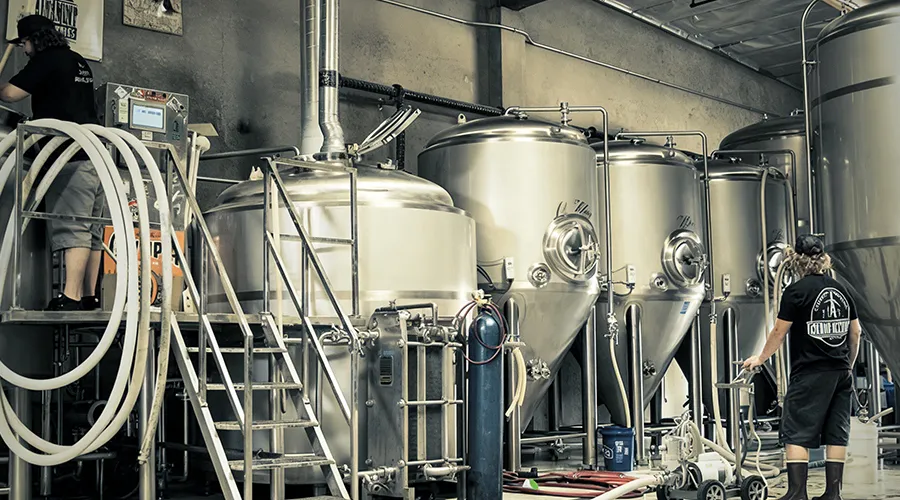
ZPET Stainless Steel Tanks in Commercial Production
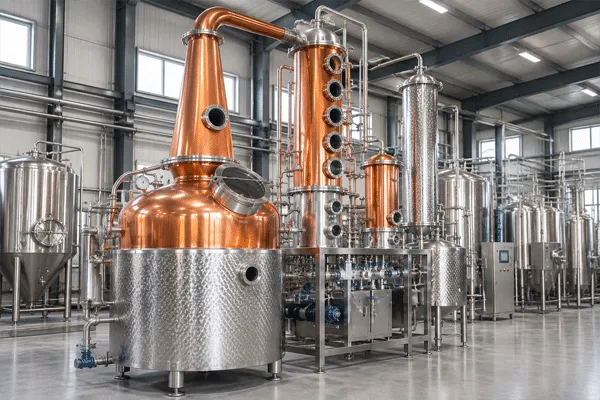
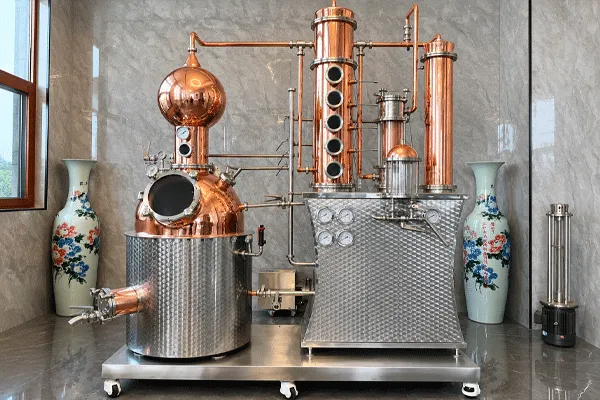
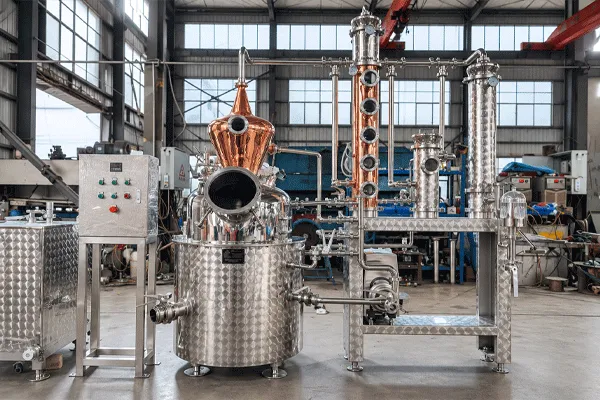
Customized Copper Pot Still Solution for Craft Distillery Projects
ZPET recently completed a customized...
FAQ
Can stainless steel tanks be used outdoors?
Yes, with proper insulation and weather protection. SUS304 suitable for most climates; SUS316L recommended for coastal/saltwater environments
What is the typical lifespan of a stainless steel tank?
20-30 years with proper maintenance and cleaning. Stainless steel does not rust or degrade like carbon steel or plastic tanks.
Can I retrofit existing tanks with jackets or agitators?
Jackets can be added to existing tanks (requires welding and pressure testing). Agitators can be retrofitted if tank has adequate structural support. Contact ZPET for feasibility assessment
What certifications are required for food-grade tanks?
Material certification (SUS304/316L), pressure vessel certification (if pressurized), and health department approval (varies by country).
Start Your Stainless Steel Tank Project with ZPET
Ready to upgrade your liquid handling infrastructure? ZPET’s stainless steel tanks provide the durability, hygiene, and versatility you need for reliable commercial operations.
Free Consultation: Discuss your application and receive tank recommendations
Custom Proposal: Detailed tank specifications, layout design, and pricing
Turnkey Installation: Manufacturing, shipping, installation, and operator training