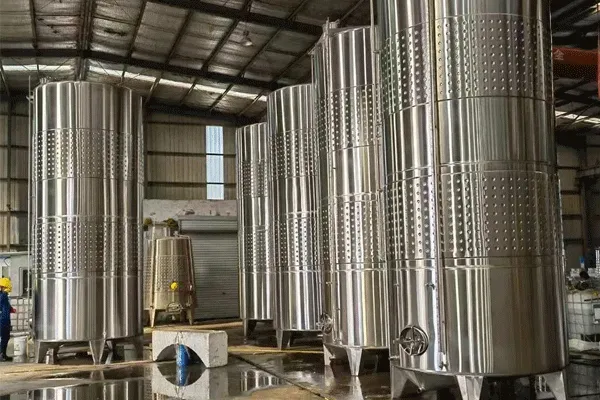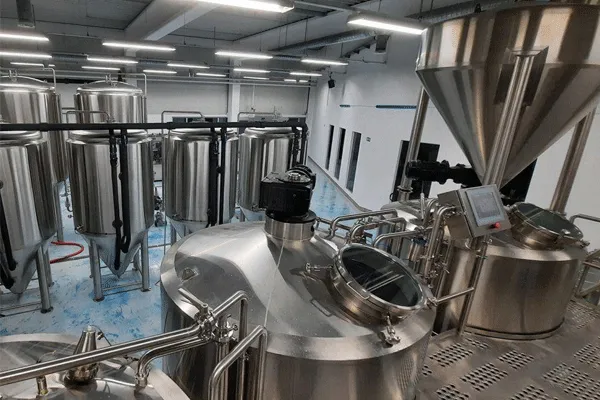
Importing brewery equipment is only the first step. Once the shipment reaches your facility, missing components, transportation damage, poor storage, or incomplete technical documents can delay installation and increase project costs. A structured receiving inspection helps you protect your investment and prepare your brewery for production.
To receive imported brewery equipment successfully, prepare an unloading plan, inspect the shipping containers and packages, check every item against the packing list, examine tanks and electrical components for damage, and collect the technical documents. Record any problems immediately and coordinate the final handover with your equipment manufacturer before installation begins.
1. What Should You Prepare Before Imported Brewery Equipment Arrives?
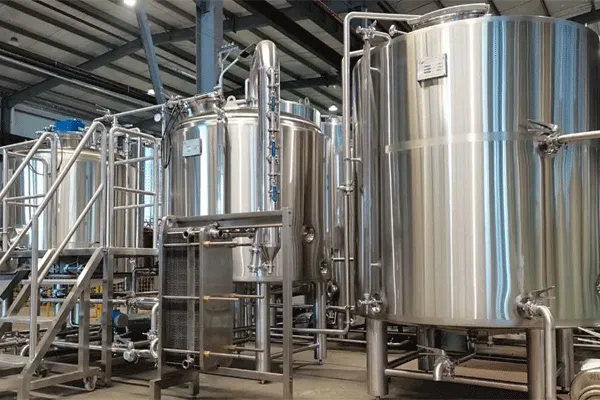
Receiving brewery equipment requires preparation before the shipment reaches your facility. A complete brewing system may include large fermentation tanks, brewhouse vessels, pumps, control panels, cooling equipment, and many small accessories. Each item needs a suitable unloading and storage arrangement.
Start by reviewing the shipping documents and the manufacturer’s equipment list. Confirm the number of containers, package quantities, equipment names, approximate dimensions, and gross weights. Share this information with your warehouse manager, installation contractor, and logistics team.
Before delivery, prepare the following:
- Receiving area: Make sure the unloading area is clean, level, and large enough for the incoming cargo.
- Unloading equipment: Arrange forklifts, cranes, lifting tools, or other suitable equipment according to the cargo weight and dimensions.
- Qualified operators: Use trained personnel for unloading and moving heavy stainless steel vessels.
- Temporary storage: Prepare a dry and protected area for electrical components, valves, fittings, and spare parts.
- Inspection team: Assign people responsible for checking quantities, appearance, and technical documentation.
A clear receiving plan reduces unnecessary handling and helps prevent damage during unloading.
For larger brewery projects, we recommend assigning one person to coordinate communication between the buyer, equipment manufacturer, freight forwarder, and local installation contractor.
2. How Should You Plan the Unloading of Brewery Equipment?
Large brewery tanks require careful handling. Their size, weight, center of gravity, and lifting points all affect the unloading method. A fermentation vessel may be relatively easy to transport inside a container but difficult to move through a narrow factory entrance.
Before unloading, compare the actual cargo dimensions with the access dimensions of your building. Check door heights, turning spaces, ceiling obstructions, and the route from the unloading area to the final installation position.
The unloading method should match the equipment:
| Equipo | Possible Unloading Method | Important Considerations |
|---|---|---|
| Small pumps and accessories | Forklift or pallet truck | Package stability |
| Paneles de control | Forklift or suitable lifting equipment | Moisture and impact protection |
| Tanques de fermentación | Crane or appropriately rated forklift | Approved lifting points and center of gravity |
| Large brewhouse vessels | Crane or specialist rigging equipment | Dimensions, weight and access |
| Glycol tanks | Forklift or crane | Support and connection protection |
| Wooden crates | Forklift | Fork position and package weight |
Never lift a tank by its nozzles, valves, manways, or other components unless the manufacturer specifically identifies them as approved lifting points.
Ask the manufacturer for lifting drawings or handling instructions when the equipment requires special treatment. The local rigging contractor should confirm that the lifting equipment and lifting arrangement are suitable for the actual load.
For an oversized shipment, it may be necessary to arrange a crane or special transport vehicle before delivery. Waiting until the equipment arrives can create avoidable delays.
3. How Do You Inspect the Shipping Container and Packages?
The first inspection should take place before the equipment is removed from the shipping container. The container itself can provide useful information about the condition of the cargo during transportation.
Check the container exterior for visible damage, deformation, water entry, or signs of improper handling. After opening the doors, examine the interior and look for evidence of moisture, broken securing materials, or shifted cargo.
Pay attention to these points:
- Are the container doors and locking mechanisms in good condition?
- Is there visible water or moisture inside the container?
- Have any wooden crates or pallets moved during transportation?
- Are the protective covers still in place?
- Are the cargo-securing straps and supports intact?
- Are there visible dents, broken packages, or damaged components?
Take photographs before unloading, especially if you find any signs of damage.
For wooden crates, check whether the packaging has cracked or lost structural support. For palletized equipment, confirm that the equipment remains securely positioned and has not shifted.
These records can be important if you later need to contact the freight carrier or cargo insurance provider.
A professional manufacturer should also provide suitable export packaging information. ZPET describes its packaging and container-loading procedures on its Factory page.
4. How Can You Check Whether All Brewery Equipment Has Arrived?
A shipment may contain dozens of individual items. The main tanks may arrive correctly while smaller accessories, valves, sensors, or connection parts are missing.
This is why buyers should perform a quantity inspection using the approved packing list rather than relying only on the visible equipment.
Create a receiving checklist with three basic categories:
- Received and complete: The item has arrived and matches the listed quantity.
- Received but damaged: The item is present but requires further inspection.
- Missing or unconfirmed: The item cannot be located or its quantity does not match the documents.
A practical receiving table can look like this:
| Equipo | Ordered Quantity | Received Quantity | Inspection Status |
|---|---|---|---|
| Recipientes de la sala de cocción | 3 | 3 | Pending inspection |
| Tanques de fermentación | 6 | 6 | Pending inspection |
| Depósitos de cerveza clara | 2 | 2 | Pending inspection |
| Wort pumps | 3 | 3 | Pending inspection |
| Paneles de control | 1 | 1 | Pending inspection |
| Equipo CIP | 1 set | 1 set | Pending inspection |
| Valves and fittings | As listed | To be checked | Pending inspection |
The table above is an illustrative receiving format, not a specification for every ZPET project.
For smaller accessories, open the relevant packages and compare their contents with the detailed equipment list. Pay special attention to items that may be packed separately inside larger crates.
If a component is missing, record its name, quantity, package number, and corresponding document reference. Send this information to the supplier promptly.
A complete receiving record makes the transition from transportation to installation much easier.
5. What Should You Inspect on Stainless Steel Brewery Tanks?
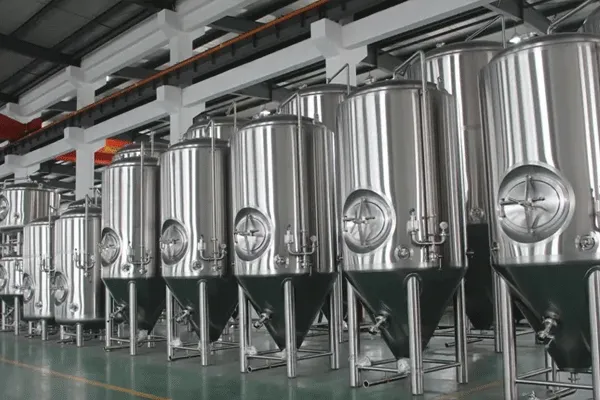
Stainless steel vessels are among the most valuable components of a brewery system. Their appearance and structural condition should be carefully checked after transportation.
Begin with the exterior. Look for dents, scratches, damaged insulation, bent legs, or loose external fittings. Examine the manways, valves, sampling ports, and pipe connections for signs of impact.
For each vessel, check:
- Tank body and bottom condition
- Tank legs and support structures
- Manway covers and hinges
- External pipes and fittings
- Conexiones de la camisa de refrigeración
- Insulation and outer cladding
- Temperature sensors and pressure gauges
- Drain and discharge connections
- Nameplates and identification markings
The internal surface also deserves attention. Once the tank can be safely opened according to the manufacturer’s instructions, check for visible contamination, scratches, foreign objects, or other unusual conditions.
Do not attempt to repair a damaged pressure vessel or modify a connection without consulting the manufacturer.
For pressure-rated fermentation tanks, compare the vessel identification and documentation with the approved technical specifications. If you find a damaged pressure gauge, relief valve, or pressure-related connection, have it assessed before operation.
ZPET manufactures customized stainless steel fermentation tanks and bright beer tanks. Its published tank specifications include SS304 and SS316L materials, mirror-polished internal surfaces, TIG welding, and factory inspection procedures.
You can review the relevant Fermentation Tank product range y Bright Beer Tank range when checking your equipment configuration.
6. How Should You Inspect Electrical Components and Accessories?
Electrical components need different handling and inspection procedures from stainless steel tanks. Moisture, impact, and improper storage can affect control panels, sensors, motors, and other sensitive parts.
Begin by checking the external packaging and enclosure condition. Look for cracked covers, bent mounting brackets, damaged cable glands, and loose connectors.
For control panels, verify:
- Panel model and identification
- Voltage, phase, and frequency information
- External enclosure condition
- Door locks and hinges
- Cable entry points
- Connector and terminal protection
- Supplied electrical documentation
Do not energize electrical equipment immediately after delivery if there are signs of moisture or transportation damage. Ask a qualified electrician or the manufacturer’s technical team to inspect it first.
Accessories also need a systematic check. Pumps, valves, temperature sensors, pressure gauges, spray balls, gaskets, and sanitary fittings should be matched against the approved equipment list.
For automated brewery systems, confirm that the PLC, HMI, sensors, and other control components match the agreed configuration. Any missing electrical item may affect the installation schedule.
A good practice is to keep small components grouped by equipment section. For example, store the accessories for each fermenter together instead of placing all valves and fittings in one mixed container.
This makes installation faster and reduces the risk of losing small but important parts.
7. What Should You Do If Brewery Equipment Is Damaged During Transportation?
Transportation damage should be documented as soon as it is discovered. Do not wait until installation begins to report a problem that was already visible during receiving.
Start by recording the affected equipment and its package number. Take clear photographs showing the overall package, the damaged area, and the equipment identification.
Your damage report should include:
| Información | Details to Record |
|---|---|
| Equipment name | Exact product or vessel name |
| Package number | Number shown on the crate or packing list |
| Damage location | Tank body, leg, valve, panel, etc. |
| Damage description | Dent, scratch, deformation, missing part, etc. |
| Discovery time | Date and time of inspection |
| Photographic evidence | Overall and close-up images |
| Related documents | Packing list and delivery records |
| Immediate action | Isolated, stored, or awaiting assessment |
If the damage is visible before unloading, record it on the relevant delivery paperwork and follow the carrier’s procedures. Avoid signing an unqualified clean receipt when visible damage or shortages exist.
Notify the freight forwarder, insurer, and equipment supplier according to the applicable contract and claim requirements.
Do not attempt to straighten a tank leg, repair a vessel surface, or replace a damaged pressure component without technical approval.
Some cosmetic issues may not affect equipment operation, while structural or pressure-related damage may require professional assessment. The correct response depends on the type and severity of the problem.
Good documentation helps all parties understand what happened and decide how to resolve the issue.
8. Which Technical Documents Should You Receive from the Manufacturer?
Physical equipment is only one part of a successful brewery delivery. Technical documents are equally important because they support installation, operation, maintenance, and future servicing.
Before accepting the equipment handover, check whether the manufacturer has provided the documents agreed in the purchase contract.
Common documents include:
| Document | Propósito |
|---|---|
| Equipment List | Confirms the supplied equipment configuration |
| General Arrangement Drawings | Shows equipment dimensions and connections |
| P&ID Drawings | Explains process piping and instrumentation |
| Electrical Schematics | Supports electrical installation |
| Operation Manuals | Explains equipment operation |
| Maintenance Manuals | Provides maintenance instructions |
| Material Certificates | Records material information where specified |
| Inspection Reports | Documents agreed quality checks |
| Pressure Test Records | Records relevant pressure testing |
| Warranty Documents | Defines warranty coverage and conditions |
| Spare Parts List | Supports future maintenance and replacement |
For automated equipment, request the agreed PLC and HMI documentation, electrical drawings, backup files, and control-system information.
For pressure vessels, confirm that the applicable design, inspection, and conformity documentation matches the destination market and the purchase agreement.
Documentation requirements vary by project and country. A CE-related document, for example, should not be treated as interchangeable with a generic factory inspection report.
Organize all files by equipment name and model. This creates a useful technical archive for your production and maintenance teams.
9. How Should You Store Brewery Equipment Before Installation?
Sometimes the equipment arrives before the building or utility connections are ready. In this situation, proper temporary storage is important.
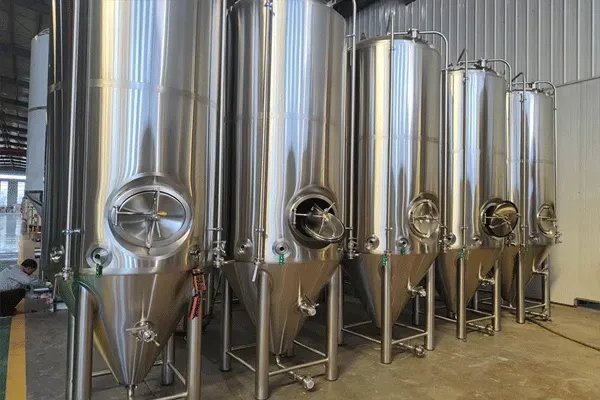
Stainless steel equipment should be kept in a clean, dry, and protected environment. Avoid placing tanks in locations where construction debris, standing water, chemicals, or heavy machinery could cause damage.
Follow the manufacturer’s storage instructions, especially for equipment with electrical components, motors, instruments, and protective packaging.
Recommended storage practices include:
- Keep control panels and sensitive electrical components in a dry indoor area.
- Protect valves, sanitary connections, and open pipe ends.
- Avoid placing heavy objects on tank surfaces or fittings.
- Keep equipment identification labels visible.
- Protect polished stainless steel from construction dust and impact.
- Store gaskets and small accessories in clean, labeled containers.
- Inspect protective packaging periodically.
- Maintain a record of equipment location and storage condition.
If the equipment will remain in storage for an extended period, ask the manufacturer whether additional preservation measures are needed.
Do not assume that removing the original packaging is always beneficial. Some protective materials should remain in place until the installation team is ready to work.
A well-organized storage area also makes it easier to identify missing components before installation begins.
10. How Do You Complete the Handover Before Brewery Installation?
Once the equipment has passed the receiving inspection, the next step is to coordinate the installation handover.
This stage connects the equipment manufacturer, the buyer, local contractors, electricians, plumbers, and installation engineers.
Before installation starts, confirm that:
- All major vessels have been received and inspected.
- Accessories and spare parts have been counted.
- Transportation damage has been recorded and addressed.
- Technical drawings and manuals are available.
- The building and equipment access routes are ready.
- Electrical and water connections are prepared.
- Drainage and wastewater arrangements are available.
- Glycol, steam, compressed air, and other required utilities are ready.
- The installation schedule has been agreed upon.
- The responsible technical contacts are identified.
The installation team should work from the approved equipment drawings rather than making assumptions based on the physical appearance of the vessels.
After installation, the system may require mechanical checks, piping verification, electrical testing, water runs, sensor calibration, and control-system testing. The exact commissioning scope should be agreed upon before the project begins.
ZPET’s published Installation and Technical Support Services include global on-site installation, system commissioning, dry-run and water-run testing, first-brew guidance, and operator training according to the agreed project scope.
This support is particularly valuable for overseas customers who need coordination between the factory, local contractors, and their own brewing team.
The goal is not simply to receive the equipment. It is to move from delivery to a properly installed and operational brewing system.
Frequently Asked Questions About Receiving Imported Brewery Equipment
How long should brewery equipment inspection take after delivery?
The inspection time depends on shipment size, package quantity, and equipment complexity. A small order may be checked within a day, while a complete brewery project with multiple tanks and accessories may require several days. Allow sufficient time for detailed inventory and technical inspection.
Should I open every wooden crate after delivery?
You should check all packages against the packing list and inspect their external condition. Important equipment and accessories should be unpacked and inspected according to the agreed receiving procedure. Follow the manufacturer’s packaging and storage instructions.
Can I install brewery equipment before receiving all technical documents?
It is better to collect the required drawings, specifications, and installation documents before starting work. Missing information can lead to incorrect connections, installation changes, and unnecessary delays.
What should I do if a fermentation tank has a dent?
Photograph the damage, record its location, and contact the manufacturer before using or modifying the vessel. The technical team should determine whether the damage affects the tank’s structure, pressure capability, or operation.
Who is responsible for installing imported brewery equipment?
Responsibilities depend on the purchase agreement. Some projects use local installation contractors, while others include manufacturer engineers for on-site assembly, commissioning, and training. Confirm the scope, schedule, and costs before shipment.
What is the most important step when receiving a complete brewery system?
The most important step is a coordinated inspection covering equipment quantities, physical condition, technical specifications, and documentation. A complete receiving record provides a clear starting point for installation and commissioning.
Key Takeaways: Receiving Brewery Equipment Successfully
- Prepare the unloading and storage areas before the shipment arrives.
- Confirm package quantities and dimensions using the approved packing list.
- Inspect shipping containers and packaging before unloading.
- Use suitable lifting equipment and qualified operators for heavy vessels.
- Check stainless steel tanks, valves, fittings, and electrical components carefully.
- Photograph and report transportation damage immediately.
- Collect technical drawings, inspection reports, manuals, and warranty documents.
- Store equipment properly if installation cannot begin immediately.
- Coordinate the receiving handover with the manufacturer and local contractors.
- Complete installation and commissioning checks before starting commercial production.
Successful overseas equipment procurement does not end when the cargo reaches your destination. Proper receiving inspection, technical documentation, and installation coordination are essential to protecting your investment and getting your brewery into production.
Planning to import a complete brewery system or upgrade your existing production facility? Contact ZPET for customized brewhouse systems, fermentation tanks, export preparation, and global installation support.