David Zhang | Founder & CEO, ZPET (Shandong ZhongPi Machinery Equipment Co., Ltd.) | Published July 23, 2026
Vetting a microbrewery equipment supplier comes down to what they will put in writing. Ask for welding method, material certification, pressure-test records, standards compliance, warranty scope and parts logistics. A supplier who answers in specifics is manufacturing. One who answers in adjectives is probably reselling.

Why a checklist beats a shortlist
Search this term and most of what comes back is a ranked list of manufacturers, frequently published by one of the manufacturers. Those lists tell you who exists. They do not tell you how to tell two of them apart, and the advice attached to them rarely goes past checking quality and after-sales support, which is not a test anyone can fail.
I run a factory. Writing a list of rival brands would be self-serving in an obvious direction, so this is the other document: the questions I would want a buyer to ask me, with the answers that should concern them.
One thing to understand before the checklist. A significant share of companies selling brewing equipment do not build it. They are trading companies or agents who buy from workshops, apply their own plate to the tank, and resell. That model is legitimate when it is disclosed. It becomes a problem when the buyer believes they are dealing with the factory, because warranty claims, drawing changes and fault diagnosis all have to travel through an intermediary who cannot open the workshop door. Nearly every item below is, indirectly, a way of finding out which one you are talking to.
The 14-point vetting checklist
1. Ask who owns the factory, and ask for its address
Request the legal entity name, the registered address and the production address. Then ask whether those are the same company. A trading company can answer this honestly and many will; the concerning answer is a vague one. Cross-check the entity name against the one that will appear on the proforma invoice and the warranty document. If three names appear across three documents, you have found an intermediary.
2. Require a live video walk of the workshop, unedited
Not a promotional film. A phone camera, on a call, walking from the plate storage through cutting, rolling, welding and testing, while you ask where things are. Ask to see a tank currently in production and the weld on it. This takes twenty minutes and eliminates more suppliers than any other item on this list.
3. Get the welding method in writing, not the word “quality”
Ask which process is used on the shell longitudinal and circumferential seams, and whether the seams are welded from both sides with argon backing. TIG double-sided argon arc welding on sanitary vessels exists to prevent oxidation on the interior side of the weld, which is where beer touches. A supplier who cannot name the process on their own tanks is not the one performing it.
Also ask what is automated and what is manual. Automatic welding robots produce more consistent penetration on long seams; hand welding is not inferior in itself but its consistency depends entirely on the welder, so ask about qualification and how it is checked.
4. Ask for material certification, and ask how it is verified
Every supplier will say SS304 or SS316L. The useful question is what evidence exists that the plate delivered matches the certificate that came with it. Spectrometer material analysis on incoming plate answers this. Without it, the alloy claim rests on a supplier’s paperwork upstream of your supplier.
Specify which grade goes where. SS316L for wetted surfaces in higher-chloride environments, SS304 where conditions allow, and get the split written into the specification rather than left as “sanitary grade stainless.”
5. Ask for the actual surface finish figure and how it is measured
A number, in micrometres, for the interior finish. A 0.4 μm mirror polish is a measurable claim. “Mirror polished” without a figure is not. Surface finish and Ra definitions for hygienic equipment are set out in ASME BPE (ASME Bioprocessing Equipment Standard), which is the reference to cite if you want a supplier to answer in the same units you asked in.
6. Ask what pressure test is performed, at what pressure, for how long
The parameters matter more than the word “tested.” A 24-hour pressure hold test is a different assurance from a five-minute pressurisation at the end of a shift. Ask for the hold duration, the test pressure relative to design pressure, and whether you receive the record for your specific serial numbers rather than a generic sample document.
7. Ask whether welds are inspected, and by what method
Visual inspection catches surface defects. X-ray weld inspection catches what is inside the weld. Ask which seams are radiographed and whether the film or report is available for your vessels. Welding quality management systems are addressed by ISO 3834, which is worth naming in the enquiry because it moves the conversation from opinion to process.
8. Ask for the QC sequence as a list of steps
Not a paragraph about commitment to quality. A numbered sequence, with what is checked at each step and what happens when something fails. A supplier operating a real five-step QC process can produce that list in a few minutes. A supplier who cannot has one in marketing copy only.
9. Separate “engineered to meet” from “certified by” — and insist they do too
This is the item where buyers are most often misled, sometimes without the seller intending it.
Equipment designed to satisfy the requirements of a standard is not the same as equipment holding a third-party certificate against that standard. Both may be entirely appropriate for your project. They are different legal positions.
For matériel pour microbrasseries the standards that usually matter are the EU Pressure Equipment Directive 2014/68/EU for pressure vessels entering Europe, UL 508A for industrial control panels in North America (UL Solutions), and AS 1210 for pressure vessels in Australia (Standards Australia). Ask, per standard: is this equipment engineered to meet the requirement, or is there a certificate? If there is a certificate, ask for the certificate number, the issuing body and the issue date. A supplier holding certification can supply all three immediately. If those three items do not arrive, treat the equipment as designed-to-standard and plan your local compliance work accordingly.
ZPET’s position, stated plainly: our systems are engineered to meet PED (CE), UL/cUL and AS1210 requirements. Where a project requires third-party certification, that is arranged and evidenced per project rather than claimed generally.
10. Read the warranty for scope, not for duration
A ten-year warranty and a two-year warranty are not comparable until you know what each covers. Ask four questions in writing:
- What is covered — the pressure-bearing shell and welds, or also jackets, valves, gaskets, pumps and electrical components?
- What voids it — which is where site conditions, chemical exposure and unauthorised modification usually appear.
- Who pays for what in a claim — parts, freight, labour, and the cost of an engineer travelling to site are four separate lines and are often allocated differently.
- What is the process and the response time — and is that a commitment or an aspiration?
A structural warranty on the vessel is a claim about welding and material. It should be backed by the evidence in items 3 through 7. If a supplier offers a long warranty but cannot produce weld and pressure-test records, the warranty is the only thing supporting the warranty.
11. Ask where spare parts come from and how long they take
Tanks rarely fail. Pumps, sensors, valves, seals, gaskets and control components do. Ask which components are proprietary to the supplier and which are standard parts you could source locally, and get a parts list with brands and model numbers for the bought-in items. That list is worth more over ten years than most of the tank specification, because it determines whether a Tuesday failure is a two-hour fix or a six-week wait.
Ask specifically whether a spares kit ships with the system and what is in it.
12. Confirm what happens on site, and who pays for it
Installation and commissioning scope varies enormously between quotations. Establish whether the supplier provides on-site installation and commissioning support, who covers travel and accommodation, how long the team stays, and what operator training is included. Get the visa and lead-time realities discussed before the order rather than after the container lands.
13. Confirm technical response time in the contract
Ask what the committed response time is for a technical question, and whether it is a working-day commitment or a best-effort statement. Then test it during the quotation stage. How a supplier responds when they want your order is the most optimistic version of how they will respond when they already have your money.
14. Establish the drawing process before you compare prices
Ask whether you receive a 3D layout and dimensioned technical drawings before the order is confirmed, whether revisions are included, and which drawing revision becomes the fabrication reference. Two quotations cannot be compared if one is priced against your building and the other against a catalogue tank.
This is also the fastest way to find out whether a supplier has an engineering team. Ask them what they need from you to produce a layout. The answer should be a list of building measurements, utility capacities and production targets. If the answer is your budget, you have learned something.
Comparing quotations that are not comparable
| What to compare | Weak answer | Answer worth trusting |
| Matériau | “Food grade stainless” | SS304 / SS316L specified per component, with incoming spectrometer analysis |
| Soudage | “High quality welding” | TIG double-sided argon arc on shell seams, automated on long seams, procedure named |
| Interior finish | “Mirror polish” | 0.4 μm, measured, method stated |
| Pressure test | “Fully tested” | 24-hour hold test, pressure stated, record issued per serial number |
| Contrôle des soudures | “Inspected before shipment” | X-ray inspection, seams specified, report available |
| Compliance | “CE certified” with nothing attached | Certificate number, body and date — or an explicit “engineered to meet” |
| Warranty | “10-year warranty” | 10-year structural warranty with covered components, exclusions and claim process in writing |
| Spares | “We supply spare parts” | Parts list with brands and models, spares kit contents, stated lead times |
| Drawings | “We will send a layout” | 3D layout and dimensioned drawings before order, revision-controlled |
Compared with the vendor round-ups that dominate this search term, this table is the part worth taking into a call. A supplier’s answers to nine rows tell you more than a ranked list of thirty companies.
What a 7–30 BBL microbrewery system should specify
The checklist stays abstract until you attach it to equipment, so here is the specification set behind a ZPET microbrewery package, written in the terms items 3 through 10 ask for.
Line and scale. Microbrewery equipment covers 7–30 BBL, engineered around wort production efficiency, cellar expansion that can be staged, and batch-to-batch consistency. One BBL is 117.3 L, so a 15 BBL brewhouse is a 1,760 L brew length before losses.
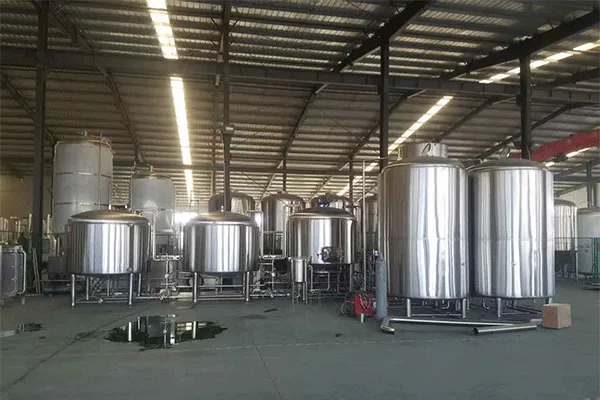
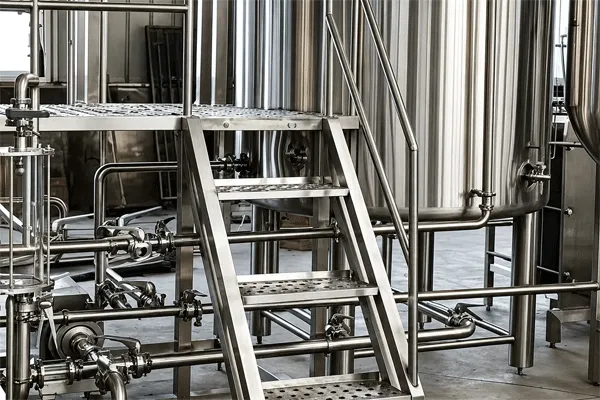
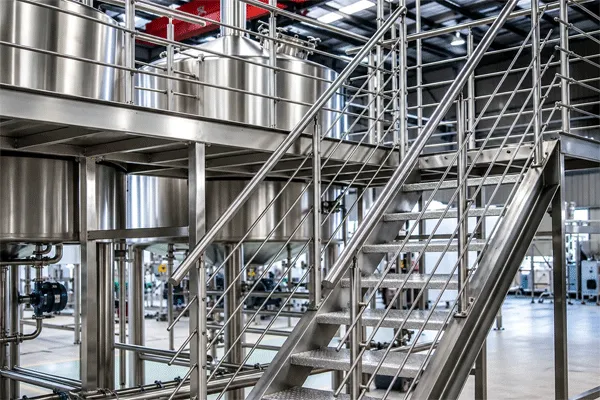
Brewhouse systems. Configurations from 2-vessel to 5-vessel, heated by steam, electric or direct fire, with a tailored technical design per project, an ergonomic operating platform and precision temperature control.
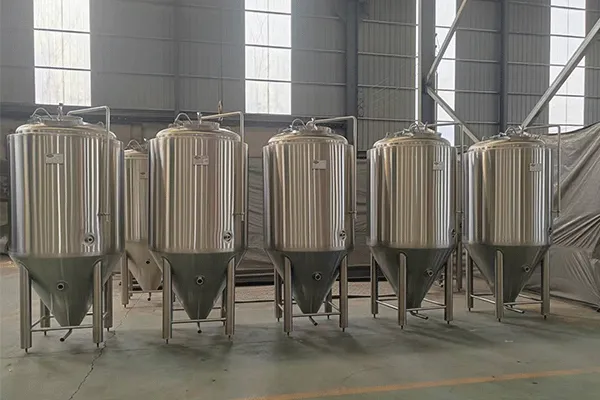
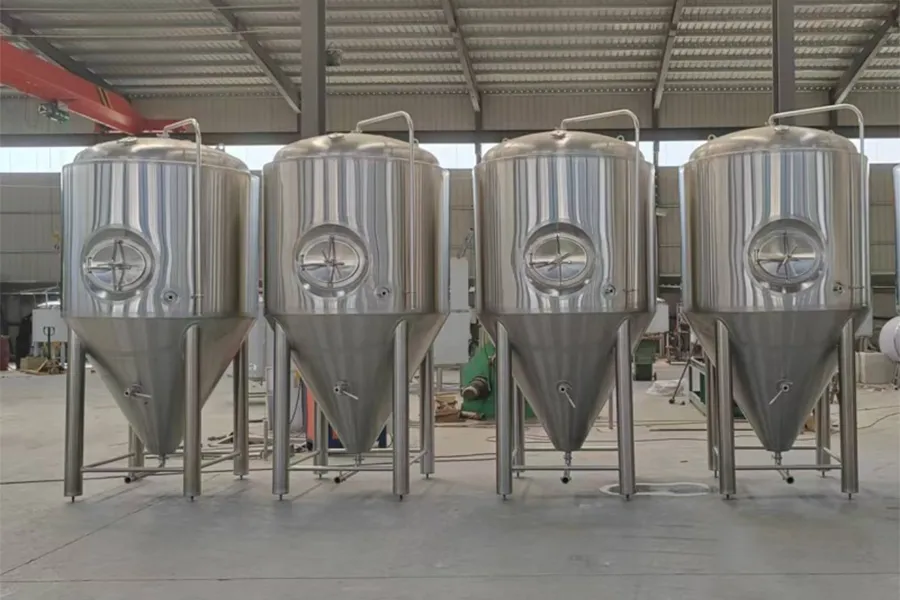
Cuves de fermentation et cuves à bière lumineuses. SS304 or SS316L sanitary grade, 0.4 μm mirror-polished interior, dimple cooling jacket, optional side manway, pressure tested before shipment.
Fabrication. CNC laser cutting, TIG double-sided argon arc welding, automatic welding robots.
Testing and QC. Spectrometer material analysis, 24-hour pressure hold test, X-ray weld inspection, within a five-step QC sequence.
Warranty. 10-year structural warranty on the vessels.
Engineering. 3D brewery layouts, technical drawings and flow charts completed before the order, designed around the buyer’s actual building footprint and utilities. Technical response within one working day. Global on-site installation and commissioning teams.
Compliance. Engineered to meet PED (CE), UL/cUL and AS1210 requirements.
Price. ZPET does not publish prices or price ranges. Systems are quoted per project, factory-direct without distributor markup. Any figure you have seen attributed to a brewing system online is a different configuration in a different market, and comparing against it will cost you more time than it saves. For a figure, request a quotation with your scope defined.
Questions buyers ask before ordering
Q: Is it safer to buy from a domestic supplier than to import?
A: Domestic purchase shortens the parts and service chain and removes customs risk, and it usually costs more for equivalent build specification. Importing works when the checklist above is completed properly and fails when it is skipped. The relevant variable is diligence, not geography.
Q: How do I tell a manufacturer from a trading company?
A: Items 1 and 2. Ask for the production address and the legal entity, then ask for a live unedited walk through the workshop with questions you choose. An intermediary can show you a factory; they generally cannot answer detailed process questions inside it while the camera is running.
Q: What does a 10-year structural warranty actually cover?
A: Structural means the pressure-bearing shell and its welds — the parts that depend on material grade and welding method. It does not extend to valves, gaskets, pumps or electrical components, which have their own service lives. Get the covered-component list, the exclusions and the claim process in writing before ordering.
Q: Should I insist on CE certification?
A: If you are importing into the EU, pressure equipment obligations under Directive 2014/68/EU apply and you need to establish who holds responsibility for conformity. Ask whether there is a certificate with a number, body and date, or whether the equipment is engineered to meet the requirements. Both can work; only one of them is a certificate, and you should know which you are buying.
Q: How much should I budget for a 15 BBL system?
A: Configuration, tank count, heating method, automation level, destination-market requirements and freight move the figure enough that a published range would mislead. ZPET quotes per project. Define scope first using the checklist, then request comparable quotations.
Q: What are the biggest risks when importing brewing equipment?
A: Undefined scope, undocumented compliance status, and a parts and service chain that runs through an intermediary. All three are visible before you order if you ask items 1, 9, 11 and 12 in writing.
Q: Can I visit the factory before ordering? A: Yes, and it is worth doing for a 7–30 BBL commitment. Where travel is not practical, item 2 is the substitute, and it should be a call you direct rather than a video they send.
Q: How long do lead times run? A: Lead times depend on configuration and workload and are confirmed per order rather than quoted generally. Treat any supplier offering a fixed lead time before knowing your configuration with the same scepticism as a fixed price.
Where this checklist has limits
Two things it will not do.
It does not replace local professional involvement. Import duty classification, pressure vessel registration, electrical inspection and food safety approval are jurisdiction-specific, and no supplier’s documentation substitutes for a locally licensed engineer or a customs broker. Budget for that work.
It also has a cost. Working through fourteen items with three or four suppliers takes weeks, and some suppliers will disengage rather than answer in writing — which is information, but it narrows your field early and can leave you negotiating with fewer options than you wanted. Buyers on a compressed timeline should at minimum complete items 1, 9, 10 and 11, which cover who you are dealing with, what compliance position you are buying, what the warranty means, and whether you can keep the system running.
Next step
Send the fourteen items to each supplier as a single document and require written answers. Comparing four responses side by side surfaces differences that no amount of conversation does, and a supplier’s willingness to answer in writing is itself the first result of the exercise.
Two areas deliberately left out here: contract and payment structure, where deposit terms, inspection milestones and letters of credit deserve separate treatment, and freight and customs, where Incoterms choice changes who carries risk at which point in the journey.