Les cuves à fond plat peuvent contenir de la bière, mais elles rendent la séparation nette des levures, du trub et des sédiments plus difficile. Cela peut augmenter le nombre de transferts, les pertes de bière et la charge de nettoyage. Un fermenteur conique résout ce problème en exploitant la gravité pour concentrer les solides en un point précis et contrôlé au fond de la cuve.
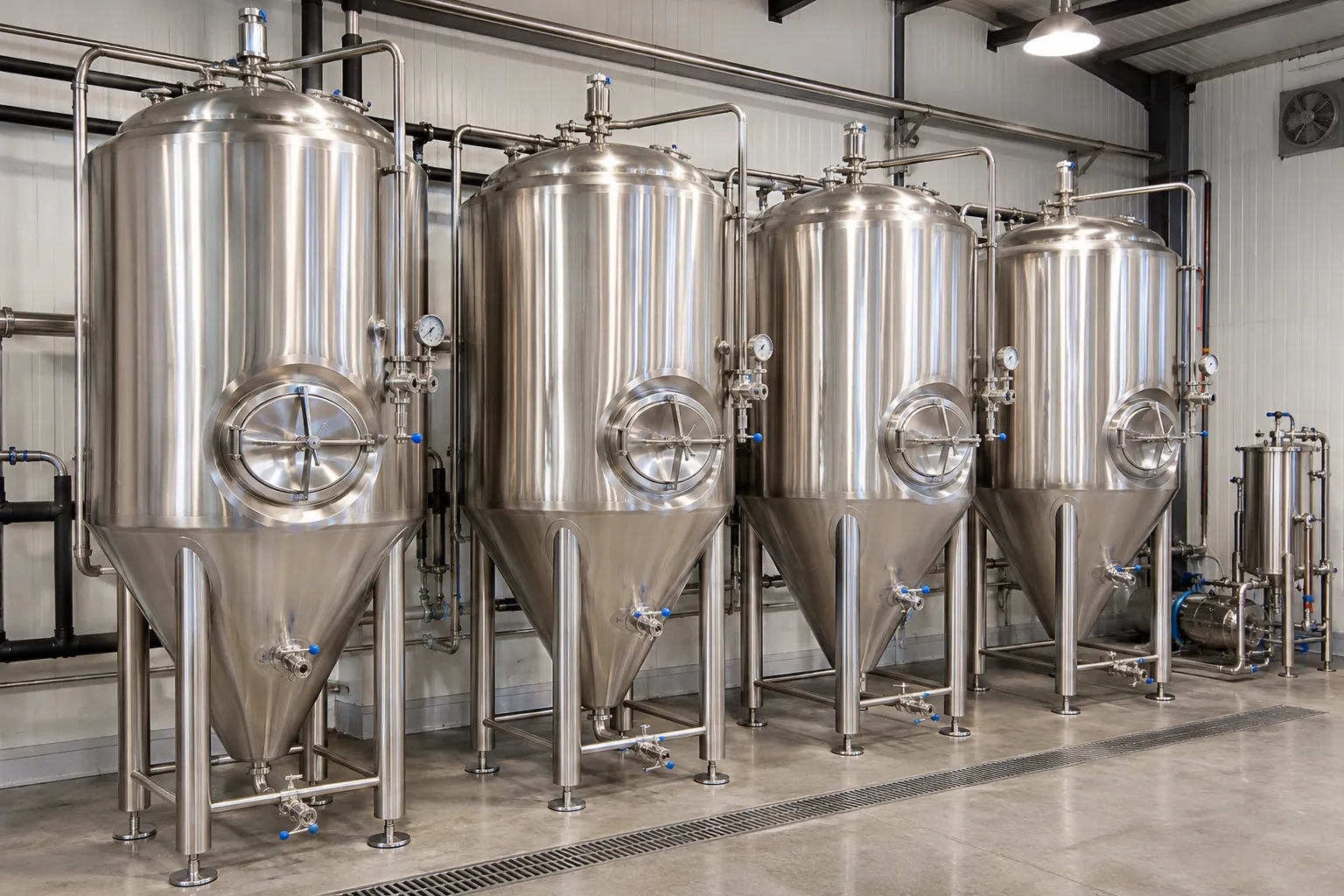
Les fermenteurs à bière ont un fond conique parce que le cône dirige les levures et le trub vers la vanne inférieure, ce qui facilite l’élimination des sédiments, la récolte des levures, le nettoyage et le transfert de la bière. Dans le brassage commercial, un cône correctement conçu peut également contribuer à réduire les transferts inutiles, à améliorer le flux de travail en cave et à permettre la fermentation et la maturation dans la même cuve.
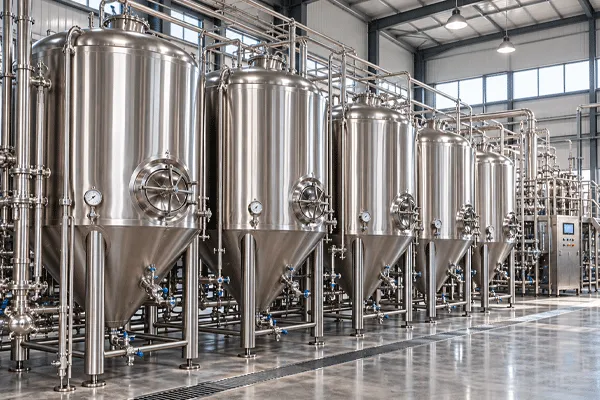
1. Pourquoi un fermenteur conique a-t-il un fond en forme de cône ?
Pendant la fermentation, la bière n'est pas parfaitement limpide. Les levures, particules de houblon, protéines et autres matières solides se déposent lentement au fond du liquide.
Si le fond de la cuve est plat, ces matières s'étalent sur une large surface. Il devient alors plus difficile de les éliminer proprement. Un fond conique modifie la manière dont les sédiments s'accumulent.
La gravité entraîne les solides vers le bas. Les parois inclinées les guident vers la partie étroite à la base du cône, où le brasseur peut les évacuer par une vanne dédiée.
C’est le principe d’ingénierie de base d’un fermenteur conique commercial.
Au lieu de laisser les sédiments se répartir sur le fond de la cuve, cette conception les concentre en un seul endroit.
Cela offre plusieurs avantages pratiques :
- Élimination plus facile du trub
- Une collecte des levures plus maîtrisée
- Moins de perturbations pour la bière située au-dessus
- Une meilleure vidange de la cuve
- Nettoyage plus facile
- Moins de transferts de bière superflus
- Un flux de travail plus efficace en cave
Une cuve de fermentation conique n'a donc pas cette forme simplement pour des raisons esthétiques ou professionnelles. Sa géométrie sert directement le processus de brassage.
Cela devient particulièrement important dans les brasseries commerciales où une même cuve peut être remplie, mise en fermentation, refroidie, vidée, nettoyée et reremplie de nombreuses fois par an.
2. Comment le cône sépare-t-il la levure et le trub ?
Lorsque le moût entre dans le fermenteur, il contient des matières qui finissent par se déposer.
Une partie de ces matières est constituée de trub, notamment de protéines, de matières de houblon et d’autres solides provenant de la salle de brassage. Pendant la fermentation, les levures se multiplient et restent en suspension tant qu’elles fermentent activement les sucres. Plus tard, une grande partie des levures commence à floculer et à descendre.
La forme conique aide à concentrer ces matières.
Voici à quoi ressemble une séquence de sédimentation simplifiée :
| Scène | Ce qui se passe dans la cuve |
|---|---|
| Transfert du moût | Le moût entre dans la cuve de fermentation |
| Début de la fermentation | La levure reste très active et en suspension |
| Fermentation active | Le CO₂ et la convection maintiennent la matière en mouvement |
| La fermentation ralentit | Davantage de levures commencent à sédimenter |
| Conditionnement à froid | Les levures et les sédiments fins se déposent plus rapidement |
| Collecte dans le cône | Le trub et les levures s'accumulent près de la vanne de fond |
| Purge contrôlée | Le brasseur évacue les sédiments ciblés par le bas |
Le cône ne sépare pas chaque particule comme par magie.
L'activité de fermentation, les souches de levure, le style de bière, la température, les conditions de cold crash et le temps de sédimentation influent tous sur la clarification.
Mais cette géométrie crée une zone de collecte pratique.
C'est l'une des raisons pour lesquelles l'utilisation d'une cuve conique est si précieuse dans la production professionnelle.
Au lieu de transférer tout le brassin simplement pour laisser les sédiments derrière soi, le brasseur peut souvent ouvrir brièvement la vanne de fond pour évacuer par le bas les matières solides accumulées.
Cela permet de préserver davantage de bière exploitable et de simplifier l'étape de production suivante.
3. Pourquoi les angles de cône de 60° et 70° sont-ils courants dans les fermenteurs commerciaux ?
L'angle du cône influe sur la façon dont les solides glissent vers la sortie.
Si le cône est trop peu incliné, les levures et les sédiments risquent de rester sur la paroi inclinée au lieu de descendre vers le fond. Une géométrie plus abrupte aide la gravité à entraîner les matières vers le bas.
Les fabricants d'équipements professionnels utilisent donc couramment des fonds coniques à forte pente.
For example, ZPET’s current commercial fermentation tank range uses 60° or 70° customizable cone designs for yeast harvesting and trub removal. ZPET’s fermentation tank range also combines the cone with polished stainless steel interiors and sanitary bottom fittings.
However, buyers should not select a fermenter simply because one quotation says “60°” and another says “70°.”
The full design matters.
A useful commercial tank review should consider:
- Cone geometry
- Internal surface finish
- Tank diameter
- Volume de travail
- Yeast characteristics
- Bottom outlet size
- Dump valve location
- Pression nominale
- Cooling zones
- CIP coverage
The smooth internal surface is particularly important.
Even a steep cone can perform poorly if welds, fittings, or rough surfaces create places where sediment collects.
For commercial beer production, we therefore evaluate the cone as one part of the entire sanitary vessel design.
4. How Does the Bottom Dump Valve Help a Brewer Remove Trub?
The bottom dump is one of the most useful features of a conical tank.
At the lowest point of the cone, a sanitary outlet connects to a butterfly valve or another suitable process valve. This allows the brewer to remove accumulated material without draining the whole vessel.
The process may look simple:
- Allow solids to settle.
- Confirm the tank is at the correct process stage.
- Prepare and sanitize the collection connection.
- Carefully open the valve.
- Remove the initial heavy sediment.
- Close the valve once the desired material has been discharged.
The exact procedure depends on brewery SOPs and tank pressure.
Do not simply open the bottom of a pressurized commercial fermenter without following the equipment manufacturer’s operating procedure.
Pressure changes, foaming, CO₂ release, and fast liquid movement can create safety and product-loss risks.
In a professional cellar, sanitary design matters as much as the valve itself.
A good setup may include:
- Tri-clamp sanitary connection
- Butterfly dump valve
- Vanne d'échantillonnage
- Pressure relief equipment
- Manomètre
- CIP spray device
- Temperature sensor
ZPET currently uses sanitary valve packages and Tri-Clamp connections across its commercial fermentation tank range. See the current fermenter specifications.
The goal is simple: make collection, cleaning, and maintenance repeatable.
5. Can You Harvest Yeast From a Conical Fermenter?
Yes. Yeast harvesting is one of the main reasons commercial breweries use cylindroconical fermenters.
But not everything collected from the cone should automatically become yeast for reuse.
The earliest material removed may contain a high proportion of trub and unwanted solids. Later material can contain a cleaner yeast fraction, depending on the beer, yeast strain, fermentation conditions, and brewery procedure.
A brewer who plans to harvest yeast should therefore use a controlled collection method.
Important factors include:
- Souche de levure
- Generation number
- Fermentation health
- Collection timing
- Sanitary collection equipment
- Storage conditions
- Microbiological control
- Pitching requirements
The cone makes physical collection easier. It does not replace yeast-management knowledge.
For a commercial brewery that regularly reuses yeast, the ability to collect the yeast through a sanitary bottom port can reduce handling compared with moving beer between several open vessels.
It can also improve batch planning.
The brewer may remove unwanted sediment first, then collect a more suitable yeast crop later according to the brewery’s yeast harvesting guide and quality program.
Homebrewers sometimes store harvested yeast in a refrigerator for future use. Commercial breweries require much tighter controls around sanitation, viability, contamination, storage temperature, and repitching.
The scale is different. So is the risk.
6. Does Using a Conical Fermenter Eliminate the Need to Rack Beer?
Often, it can reduce unnecessary transfers.
Traditional homebrewing instructions frequently tell the brewer to rack beer from one carboy into another vessel for secondary fermentation.
The idea is to separate the beer from sediment.
A conical fermenter changes that workflow because the sediment is already concentrated below the beer.
Instead of using a siphon to move the entire batch, the brewer may be able to remove the trub and yeast from underneath.
This can reduce the need to rack solely for sediment separation.
That matters because every unnecessary transfer adds another process step.
Transfers can introduce:
- Oxygen exposure
- Contamination risk
- Beer loss
- Labor
- Cleaning work
For many modern commercial brewing workflows, beer can complete fermentation and some conditioning stages in the same pressure-capable conical vessel.
This is often called a unitank approach.
However, that does not mean every beer should stay in one vessel forever.
A brewery may still transfer beer to a bright beer tank for clarification, carbonation, packaging, or serving.
The right choice depends on production goals.
The conical fermenter gives the brewer more options.
7. How Do Conical Fermenters Support Temperature Control?
The cone solves solids handling, but commercial fermentation also requires precise temperature control.
Yeast behavior changes with temperature.
If fermentation becomes too warm, yeast may produce unwanted flavor compounds. If it becomes too cold for the selected strain, fermentation can slow or stop.
Commercial stainless steel fermenters often use external cooling jackets.
Cold glycol flows through these jackets and removes heat from the tank.
A temperature controller uses data from a probe or sensor to control cooling.
A typical system includes:
Temperature sensor → controller → glycol valve → cooling jacket → fermenter
For a lager, cold-conditioning requirements can create much greater cooling demand than a warm ale fermentation.
That is why a commercial brewery should not select the chiller only from the capacity of one fermenter.
The engineering team should consider:
- Number of tanks
- Tank volume
- Fermentation temperature
- Ambient room temperature
- Cold-crash requirement
- Cooling time
- Simultaneous cooling loads
Some professional systems use multiple cooling zones so different parts of a larger vessel can receive more precise cooling.
ZPET’s current fermenter range integrates glycol jacket designs for controlled fermentation and crash cooling. Commercial fermentation tank specifications show how the cone, jacket, valves, and pressure system work together as one fermentation system.
The conical bottom is important.
But it is only one part of making high-quality beer consistently.
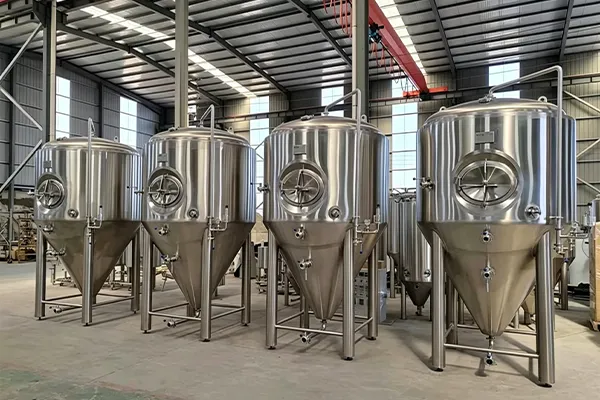
8. Can a Conical Fermenter Be Used for Pressure Fermentation?
Some can.
A conical shape does not automatically mean that the tank can safely hold pressure.
For pressure fermentation, the vessel must be engineered and rated for the intended operating pressure.
That involves much more than the cone.
A pressure-capable commercial tank may require:
- Pressure-rated shell
- Certified welds
- Appropriate manway
- Pressure relief valve
- Manomètre
- Sanitary fittings
- Suitable carbonation hardware
- Defined maximum working pressure
A home-use plastic conical fermenter and a commercial stainless steel unitank are therefore very different products.
Never pressurize a vessel beyond its documented pressure rating.
Commercial unitanks may allow fermentation, conditioning, natural carbonation, and closed transfer in one vessel when engineered for those functions.
ZPET’s current commercial fermenter specifications include pressure-rated options and configurations designed for professional brewery operation. See the fermentation tank range.
Pressure capability can make the brewing workflow more flexible.
For example, a brewery may perform closed transfers from the fermenter to kegs or bottles through the packaging system while reducing oxygen exposure.
But pressure is an engineering and safety issue first.
It should never be treated as a simple accessory.
9. Are Conical Fermenters Easier to Clean and Sanitize?
A well-designed conical fermenter can make drainage and cleaning easier.
Once beer leaves the tank, the cone directs remaining liquid and sediment toward the bottom outlet.
That means less material sits across a large flat floor.
However, a cone does not make sanitation automatic.
Commercial fermentation vessels still require a validated cleaning process.
The brewery must clean and sanitize:
- Interior surfaces
- Cone
- Vannes
- Sample ports
- Trappe d'accès
- Transfer connections
- Pressure fittings
- Dispositif de pulvérisation
- Product piping
Many commercial tanks use CIP, or Clean-in-Place, systems.
A spray ball or rotary cleaning device distributes cleaning solution across internal surfaces while pumps circulate the chemical solution.
Good CIP design depends on spray coverage, flow rate, chemical concentration, temperature, contact time, drainage, and tank geometry.
This is where sanitary construction becomes very important.
Poorly finished welds, dead legs, badly positioned ports, or difficult-to-drain piping can create contamination risk even when the main vessel looks impressive.
For B2B equipment buyers, we recommend inspecting:
- Internal polishing quality
- Weld finish
- Valve design
- Tri-clamp connections
- Drainability
- CIP coverage
- Cone outlet design
The goal is not simply a shiny tank.
The goal is a repeatable sanitation process between every brew.
10. Commercial Conicals vs Homebrewing Fermenters: What Is Different?
The basic principle is similar.
Both use gravity and a cone to collect solids.
But commercial conicals are engineered for very different operating demands.
A small homebrewing conical might hold 5 gallons or another small batch and may use plastic or thin stainless steel.
A commercial conical fermenter may handle hundreds or thousands of liters and operate batch after batch throughout the year.
| Fonctionnalité | Home Use Conical | Commercial Conical Fermenter |
|---|---|---|
| Typical scale | Small batch | Hundreds to thousands of liters |
| Matériau | Plastic / stainless steel | Acier inoxydable de qualité alimentaire |
| Refroidissement | Refrigerator or external solution | Glycol jacket |
| Pressure capability | Varies widely | Engineered pressure rating |
| Vanne inférieure | Simple outlet | Sanitary butterfly valve |
| Connections | Basic fittings | Tri-clamp sanitary fittings |
| Nettoyage | Manuel | Manual + CIP |
| Commandes | Simple | Temperature / PLC options |
| Yeast collection | Possible | Designed for repeatable harvesting |
| Installation | Standalone | Integrated brewery cellar |
An experienced homebrewer may already understand the benefits of conical fermenters.
Commercial production adds another layer: repeatability.
A craft brewery cannot rely on improvised cleaning, uncertain pressure limits, or inconsistent cooling.
Every batch must fit into a larger production system.
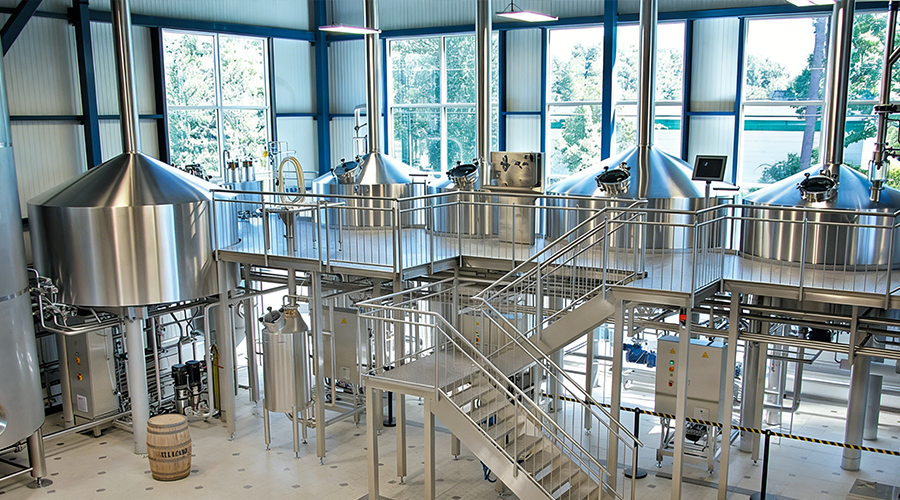
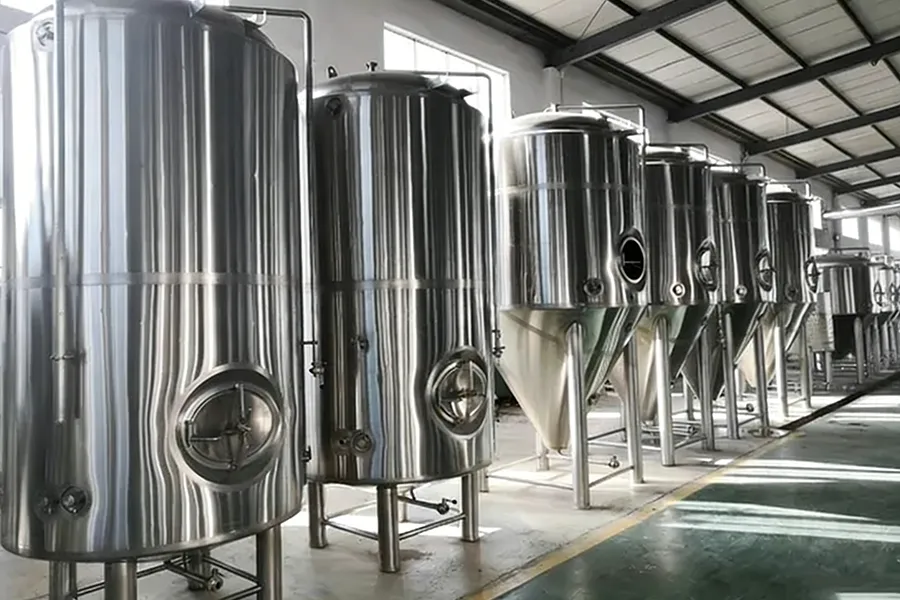
That includes the brewhouse, fermenters, glycol, CIP, cuves à bière lumineuses, and packaging line.
This is where professional brewing technology matters.
11. How Should You Choose the Right Conical Fermenter for a Commercial Brewery?
Do not choose a fermentation vessel based only on tank capacity.
Start with the beer and production plan.
Demandez-vous :
What is the brewhouse batch size?
A fermenter must have suitable working volume plus enough headspace for fermentation and krausen.
How many brews enter one tank?
Some breweries use one brewhouse batch per fermenter. Others double-batch into larger tanks.
What beer styles will you produce?
An ale program and a lager-focused brewery may have different cooling and fermentation requirements.
Will you harvest yeast?
If yes, cone design, bottom valve arrangement, sanitation, and collection workflow deserve more attention.
Will you use pressure fermentation?
If yes, check the complete vessel pressure capability rather than assuming every conical tank is pressure-rated.
How will you cool the tank?
Confirm glycol jacket coverage and chiller capacity.
How will you clean it?
Review CIP design and valve accessibility.
Will beer move to another vessel?
A brewery using separate bright beer tanks may have different fermenter turnover requirements from one using unitanks.
At ZPET, our commercial cuves de fermentation are designed around batch capacity, cellar layout, cooling requirements, sanitary operation, yeast management, pressure needs, and future expansion—not just tank diameter and height.
Current options include cylindroconical fermentation vessels for nano, micro, and larger commercial breweries. Explore ZPET Fermentation Tanks.
The best tank is the one that fits the complete production system.

12. Why Does Conical Design Matter More as a Brewery Grows?
Small inefficiencies become expensive when repeated hundreds of times.
Imagine a small brewer losing only a little extra beer during each transfer.
At homebrew scale, that loss may be insignificant.
At commercial scale, repeated across many tanks and many production cycles, unnecessary transfer loss becomes real product and revenue.
The same applies to labor.
If the brewer needs an extra manual transfer, extra vessel cleaning, and another sanitation step for every batch, the labor cost accumulates.
The conical design helps simplify the cellar by making several tasks possible from one vessel:
- Ferment beer
- Collect solids
- Remove trub
- Harvest yeast
- Cold condition
- Perform closed transfers
- In suitable unitanks, carbonate under pressure
This does not mean one conical fermenter replaces every other piece of brewery equipment.
It means the tank is designed to support more efficient fermentation handling.
For a growing microbrasserie or production brewery, that efficiency can make daily operations easier to scale.
FAQs About Conical Beer Fermenters
Why is the bottom of a beer fermenter pointed?
The pointed bottom forms a cone that guides yeast, trub, and other sediment toward a small collection area. This makes it easier to remove solids through the bottom valve without transferring all of the beer.
What is the best cone angle for a conical fermenter?
There is no single angle that is best for every application. Commercial beer fermenters commonly use steep cones, with 60° and 70° configurations available in professional systems. Tank diameter, surface finish, valve design, yeast behavior, and drainage should also be evaluated.
Can I remove trub without transferring the beer?
In a properly designed conical fermenter, yes. The brewer can often remove the trub through the lower dump valve while leaving most of the beer in the vessel.
Can yeast from a conical fermenter be reused?
Yes, commercial breweries often collect yeast for reuse. However, yeast health, contamination control, generation, collection timing, storage, and pitching procedures must be managed carefully. The ability to harvest yeast does not mean every collected fraction should be reused.
Do I need another vessel for secondary fermentation?
Not always. Many modern brewing processes use a conical unitank for fermentation and conditioning without transferring beer to a traditional secondary fermenter. Some breweries still transfer beer to bright tanks or other vessels for specific production needs.
Can every conical fermenter handle pressure?
No. Only use pressure when the fermenter has a documented pressure rating and the required safety equipment. The conical shape alone does not provide pressure capability.
Points clés à retenir
- Beer fermenters use a conical bottom to concentrate yeast, trub, and sediment in one controlled area.
- Gravity helps solids move toward the bottom valve.
- A sanitary bottom dump allows the brewer to remove sediment without draining the complete batch.
- Commercial conicals can make yeast harvesting easier and more repeatable.
- A conical design can reduce the need for unnecessary racking solely to separate beer from sediment.
- 60° and 70° cones are common commercial design options, but cone angle should be evaluated together with surface finish and outlet design.
- Glycol jackets provide precise fermentation temperature control in commercial systems.
- Pressure fermentation requires a properly rated vessel; never assume every conical fermenter can safely hold pressure.
- Cone geometry improves drainage, but correct CIP and sanitation remain essential.
- Commercial fermenters are very different from basic homebrewing conicals because they must support repeatable production, cooling, cleaning, pressure control, and sanitary operation.
- Choose a fermenter based on working volume, headspace, beer styles, cooling load, yeast management, pressure requirements, CIP, and cellar workflow.
- The best conical fermenter should support your complete brewery system—not just hold a batch of beer.
At ZPET, we manufacture customized stainless steel conical fermenters, unitanks, bright beer tanks, systèmes de brassage, and turnkey brewery equipment for global commercial projects.
If you are planning a new brewery or expanding an existing cellar, send us your batch size, weekly brew schedule, beer styles, building dimensions, fermentation temperature requirements, and target annual production. We can recommend a fermentation tank configuration, cone design, glycol system, and cellar layout matched to your actual production goals.