Bad equipment can turn a good beer recipe into a messy brew day. Poor cleaning, weak temperature control, or the wrong fermenter can waste time, malt, hop, and money. The good news: once you know the equipment you need, brewing becomes clearer, safer, and easier to scale.
To brew beer, you need a kettle or brew pot, fermenter, airlock, thermometer, hydrometer, sanitizer, siphon or transfer line, bottle or keg system, and basic cleaning tools. For all-grain brewing, you may also need a mash tun, chiller, valves, brew pump, and a larger stainless steel brew system. Commercial breweries need larger brewhouse systems, fermentation tanks, packaging equipment, and beer dispensing equipment.
Article Outline
What basic brewing equipment do you need to brew beer?
Why do you need a kettle or stainless steel kettle?
What is a fermenter, and why does fermentation matter?
Why are sanitizer, airlock, thermometer, and hydrometer so important?
Do you need a chiller for hot wort?
What equipment is needed for extract brewing, BIAB, and all-grain brewing?
How do bottles, kegs, beer line, and packaging equipment work?
What is the difference between homebrew equipment and brewery equipment?
How can a custom stainless steel brew system improve production?
What should you prepare before you need to open a brewery?
What Basic Brewing Equipment Do You Need to Brew Beer?
When getting started, the core tools are simple. You need a kettle to heat water and boil wort, a fermenter to let yeast ferment the beer, an airlock to release gas, a thermometer to check temperature, sanitizer to keep the process clean, and a bottle or keg system for finished beer. The American Homebrewers Association lists common homebrew equipment such as a fermenter, airlock, boil pot, thermometer, cleaner, sanitizer, hydrometer, chiller, and bottling or kegging equipment.
For making beer at home, a starter kit is often enough for the first batch. A typical brewing kit includes a brew pot, fermenter, airlock, siphon, bottle filler, beer bottles, and sanitizer. But as you brew more, you may want better control. That is when a stainless steel kettle, conical fermenter, chiller, valve, brew pump, and more advanced brew system become useful.
For B2B buyers, the same logic applies at a larger size. A brewpub, taproom, microbrewery, kombucha producer, cidery, or beverage startup needs a sanitary system that is easy to clean, stable in performance, and planned around real production volume. In our equipment projects, we usually start by asking: How much beer do you want to brew per batch, and how often will you brew?
Why Do You Need a Kettle or Stainless Steel Kettle?
A kettle is where much of the action begins. You heat brewing water, dissolve malt extract, boil wort, add hop, and control the early flavor of the beer. For small home brewing, a simple brew pot can work. For larger batches, a stainless steel kettle is better because it is stronger, easier to clean, and more suitable for long-term use.
During the boil, hop additions create bitterness, aroma, and flavor. The kettle also helps sterilize the wort before fermentation. If the kettle is too small, the hot wort can boil over. If heating is uneven, the brew day becomes harder to control. That is why even home brewers often upgrade from a basic pot to a larger kettle when they start brewing more often.
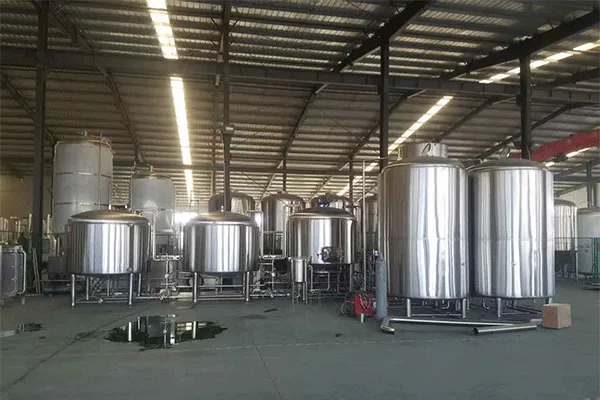
For commercial beer brewing, the kettle may be part of a brewhouse system with a mash tun, lauter tun, whirlpool, valves, piping, platform, and control cabinet. A well-designed stainless steel brew system can make the brewing process smoother, reduce manual labor, and improve repeatability from one batch of beer to the next.
| Brewing Level | Kettle / Brew Pot Need | Best For |
|---|---|---|
| Beginner homebrew | 2–5 gallon brew pot | Extract beer and small batch |
| Advanced home brewing | 8–15 gallon stainless steel kettle | BIAB and all-grain |
| Brewpub / taproom | 3–10 BBL brewhouse kettle | Fresh craft beer sales |
| Commercial brewery | 10–60+ BBL kettle system | Stable production and growth |
What Is a Fermenter, and Why Does Fermentation Matter?
A fermenter is the vessel where yeast changes wort into beer. During fermentation, yeast consumes sugars from malt and produces alcohol, carbon dioxide, and flavor compounds. CraftBeer.com defines fermentation as the conversion of fermentable sugars into alcohol and carbon dioxide through yeast activity.
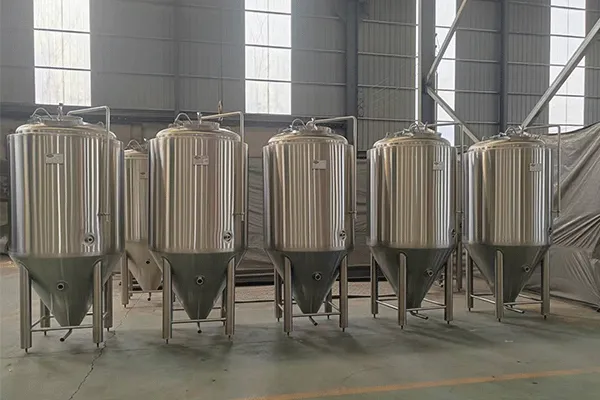
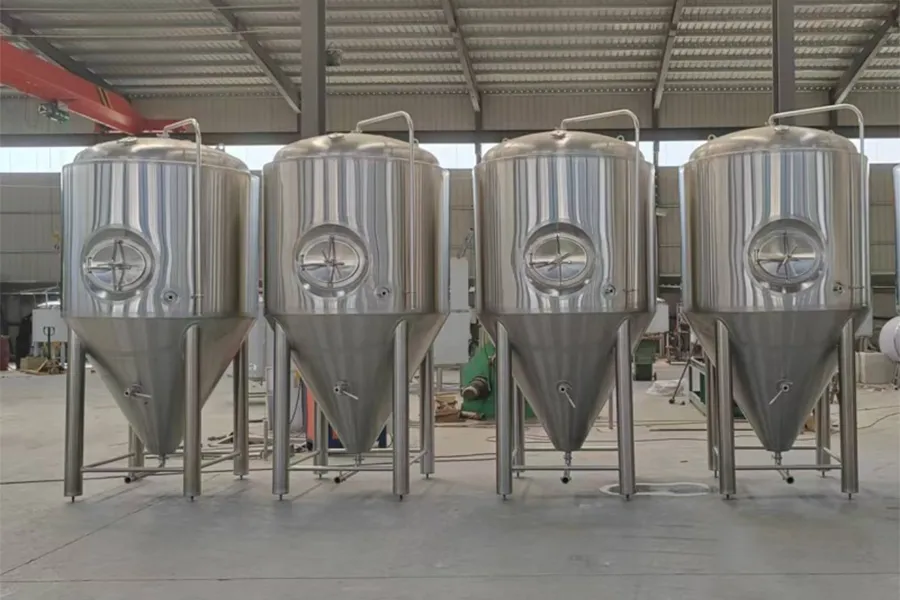
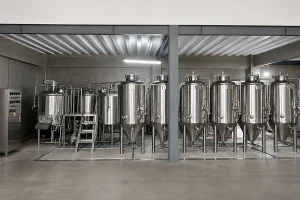
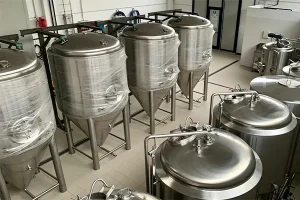
For homebrew, a plastic bucket, glass carboy, or stainless fermenter may be used to brew beer. For commercial breweries, stainless steel fermentation tanks are the standard choice because they are strong, sanitary, pressure-capable, and easier to integrate with glycol cooling. Fermentation temperature also matters. Too hot, and the beer may taste harsh. Too cold, and yeast may slow down or stop.
In our brewery equipment projects, the fermenter is never just “a tank.” It is a key piece of equipment that protects product quality. A good fermentation tank should have sanitary welds, smooth inner polishing, CIP cleaning coverage, pressure safety devices, temperature probes, cooling jackets, and valves placed for easy operation.
Why Are Sanitizer, Airlock, Thermometer, and Hydrometer So Important?
Sanitizer may be the cheapest tool in the brewing process, but it is one of the most important. Wort and beer can be damaged by unwanted microbes. Every bottle, valve, hose, airlock, fermenter, and transfer tool that touches wort and beer should be cleaned and sanitized before use.
An airlock lets carbon dioxide escape while helping protect the fermenter from outside air. A thermometer helps you track mash temperature, cooling temperature, and fermentation temperature. A hydrometer measures sugar density in wort and beer, which helps the brewer monitor fermentation and estimate alcohol content. The American Homebrewers Association notes that you technically do not need a hydrometer, but it helps monitor fermentation and calculate alcohol content.
Some brewers also use a refractometer. It needs only a small sample and is useful during the brew day, especially before fermentation. However, once alcohol is present, readings need correction. For a new brewer, a hydrometer is often simpler. For a professional brewery, both instruments may be useful for quality control.
Do You Need a Chiller for Hot Wort?
A chiller cools hot wort quickly after the boil. This matters because yeast should be added only when the wort reaches the correct fermentation temperature. Cooling also helps reduce the time wort spends in a danger zone where contamination risk can increase.
For homebrewing, a chiller may be optional for small extract brewing, but it becomes more useful as batch size grows. For all-grain brewing or larger batches, a wort chiller saves time and improves consistency. The American Homebrewers Association lists a wort chiller as optional in some beginner and BIAB equipment lists, but it is a common upgrade for smoother brewing.
In a brewery, cooling is not optional. Commercial systems usually use a plate heat exchanger connected to cold water and glycol. The goal is simple: move hot wort from the kettle or whirlpool into the fermenter at the right temperature, quickly and safely.
What Equipment Is Needed for Extract Brewing, BIAB, and All-Grain Brewing?
Different brewing methods need different equipment. Extract brewing is the simplest. You use malt extract instead of mashing grain from scratch. This means you can make beer with a brew pot, fermenter, airlock, thermometer, hydrometer, sanitizer, and bottle equipment. The AHA extract brewing guide lists a boil pot, spoon, thermometer, fermenter and airlock, siphon, bottling equipment, and hydrometer.
BIAB means “brew in a bag.” It is a simple form of all-grain brewing. You mash malt in a grain bag inside the kettle, then lift the bag out before boiling. BIAB is popular because it needs less additional equipment than a traditional all-grain setup. A full all-grain brew system may include a mash tun, kettle, sparge water vessel, lauter system, chiller, valves, and brew pump.
For commercial breweries, all-grain brewing is standard. The brewhouse may be 2-vessel, 3-vessel, 4-vessel, or larger. The right design depends on batch size, beer recipe, available space, steam or electric heating, labor level, and expansion plan.
| Brewing Method | Main Equipment Used | Best For |
|---|---|---|
| Extract brewing | Brew pot, fermenter, airlock, bottle filler | Beginners |
| BIAB | Kettle, grain bag, chiller, fermenter | Small all-grain batches |
| Traditional all-grain | Mash tun, kettle, sparge water tank, chiller | Advanced home brewers |
| Commercial brewing | Brewhouse, fermentation tanks, glycol, CIP, packaging | Breweries and brewpubs |
How Do Bottles, Kegs, Beer Line, and Packaging Equipment Work?
After fermentation, beer needs to be packaged. For homebrew, beer bottles are common. You use a bottle filler, caps, and priming sugar to make carbonated beer. This method is affordable, but it takes time. Bottles must be cleaned, sanitized, filled, capped, and conditioned.
A keg system is faster and easier for many brewers. You transfer finished beer into a keg, carbonate it with CO₂, and serve beer through a beer line and faucet. For a taproom or brewpub, beer dispensing becomes a quality issue, not just a service detail. The Brewers Association draught resources cover system components, design, dispense pressure, gas balance, pouring, and sanitation.
Commercial packaging equipment can include keg washers, keg fillers, beer canning lines, bottling machines, labeling machines, conveyors, and inspection systems. If you need dispensing equipment such as beer faucets, beer towers, beer line, and cold room systems, plan them with your brewing capacity from the start.
What Is the Difference Between Homebrew Equipment and Brewery Equipment?
Homebrew equipment helps you make a small batch of beer. It is usually affordable, simple, and easy to store. A home brewery may produce 5 gallons at a time, while a commercial brewery may produce hundreds or thousands of liters per batch.
Brewery equipment must handle more pressure, more cleaning, more heat, more transfers, and more production hours. Stainless steel construction, sanitary valves, CIP spray balls, pressure relief valves, glycol jackets, PLC controls, and safe working platforms become important. The bigger the brewery, the more important layout becomes.
For example, a brewpub may need a 500L or 1000L brewhouse with several fermentation tanks. A growing craft beer producer may need a 20HL or 30HL brew system with more cellar capacity. A beverage startup may need flexible tanks for beer, cider, kombucha, cold brew coffee, or other drinks.
How Can a Custom Stainless Steel Brew System Improve Production?
A custom brew system helps match the equipment to the real business plan. Not every brewer needs the same tank volume, heating method, automation level, or packaging line. A small taproom may need compact equipment. A commercial brewery may need high-output tanks, CIP cleaning, glycol cooling, and room for expansion.
As a professional brewery and beverage equipment manufacturing plant, we design systems around production targets, floor space, workflow, utility conditions, and the beer you want to brew. This can include customized brewhouse systems, fermentation tanks, bright beer tanks, cooling systems, CIP systems, control panels, and packaging equipment.
The value is not only in the metal. It is in the planning. A good layout can reduce walking distance, lower cleaning time, improve safety, and make the brewing process easier for staff. That is why project investors and engineering contractors often need a complete turnkey brewery solution instead of buying separate tanks one by one.
What Should You Prepare Before You Need to Open a Brewery?
Before you need to open a brewery, do not start with equipment first. Start with the business model. Will you sell beer in a taproom, distribute kegs, package cans, or supply restaurants? Your sales plan decides your batch size, fermenter quantity, packaging equipment, and cold storage needs.
Next, prepare a capacity plan. A simple question helps: how many liters or barrels do you need per week? From there, you can calculate brewhouse size, fermentation time, number of tanks, and future expansion. If fermentation takes longer for some beer styles, you may need more fermenters instead of a bigger kettle.
You should also prepare utility information: steam, electricity, water, drainage, glycol cooling, compressed air, floor load, ceiling height, and door size. These details help the equipment manufacturer design a system that fits your building and reduces project risk.
FAQs About Beer Brewing Equipment
What is the most important piece of equipment for brewing beer?
The fermenter is one of the most important pieces because it protects the wort during fermentation. But the kettle, sanitizer, thermometer, airlock, and hydrometer are also essential. Brewing is a system, so one weak tool can affect the whole batch.
Do I need a kettle to brew beer?
Yes, you need a kettle or brew pot to heat water, boil wort, and add hop. Beginners can use a smaller pot for extract beer, but all-grain brewing usually needs a larger kettle.
Do I need a hydrometer?
You can brew without one, but you need a hydrometer if you want to measure fermentation progress and estimate alcohol content. It helps you know whether the yeast has finished its work.
What is the easiest way to start brewing?
Extract brewing is usually the easiest method. You need fewer tools, less time, and less space. A starter kit, kettle, fermenter, airlock, sanitizer, bottle filler, and beer bottles are enough for many beginners.
What equipment do commercial breweries need?
A commercial brewery usually needs a brewhouse, fermentation tanks, bright beer tanks, glycol cooling system, CIP cleaning system, pumps, valves, control system, and packaging equipment. Depending on the business model, it may also need kegging, bottling, canning, or beer dispensing equipment.
Can one brew system make beer, cider, kombucha, and cold brew coffee?
Some tanks and processing systems can be adapted for different beverages, but the design must match the product. Beer, cider, kombucha, wine, distillery products, and cold brew coffee may need different tank structures, cleaning methods, temperature control, and sanitary requirements.
Key Takeaways
To brew beer, you need a kettle, fermenter, airlock, thermometer, hydrometer, sanitizer, transfer tools, and bottle or keg system.
Extract brewing is the easiest way to start brewing.
BIAB and all-grain brewing need more control, more space, and often a larger stainless steel kettle.
A chiller helps cool hot wort quickly and makes the brew day easier.
Fermentation quality depends on the fermenter, yeast health, sanitation, and fermentation temperature.
Bottles are simple for homebrew, while kegs and beer line systems are better for fast service.
Commercial brewery equipment should be planned around batch size, layout, utilities, cleaning, and future growth.
A custom stainless steel brew system can reduce project risk and support stable long-term production.
For brewpubs, microbreweries, beverage startups, kombucha producers, cideries, wineries, distilleries, and engineering contractors, turnkey planning is often safer than buying equipment piece by piece.