Buying a brewhouse that is too small can leave you short of beer. Buying one that is too large can tie up cash and floor space before sales justify it. The right size starts with a sales forecast, then matches each brew day to the tanks, people, and packaging needed to deliver it.
To choose a brewery size, estimate how much beer you expect to sell each year, divide that goal into a realistic weekly brewing schedule, and check whether your fermenters can hold each batch long enough. Then allow for product losses, peak demand, packaging, and growth. The brewhouse alone does not determine how much beer you can sell.
What do we mean by “brewery size”?
People use brewery size to describe several different things: the volume made in one brew, the amount the site can make in a year, or the physical space occupied by the equipment. These numbers are related, but they are not interchangeable. A 10 hL brewhouse, for example, describes a nominal volume per brew. It does not promise a set yearly output.
For planning, keep four figures separate:
| Measure | What it tells you | Main question |
|---|---|---|
| Brewhouse volume | Wort made in one brew | How large is each brew? |
| Tank volume and count | Beer that can occupy the cellar at once | Can each brew move into a free tank? |
| Annual output | Beer the site can make over a year | Does the schedule meet the sales goal? |
| Packaged or saleable volume | Beer available to customers after losses | Is there enough to fulfill orders? |
A supplier may describe a system by its vessel size, while a brewer thinks in terms of finished beer. Ask for both numbers. Wort can be lost during transfers, and finished volume can fall again during packaging. Your own recipes, equipment design, and process records should set the allowances.
How much beer do you plan to sell?
Start with customers, not a catalogue. Estimate sales through your taproom, direct accounts, distributors, and packaged products separately. A forecast for a new brewery should reflect likely demand in its first year as well as a later growth target. A business plan built only around the busiest summer weekend will overstate what you need for the rest of the year.
Convert those sales targets into a weekly production plan. A simple starting calculation is:
Required weekly saleable volume = annual sales target ÷ selling weeks
Then add a clearly stated allowance for beer that will not reach a customer. For example, a brewery aiming to sell 500 hL in 50 weeks needs an average of 10 hL of saleable beer per week. If its planning assumption is a 10% total loss, it would need roughly 11.1 hL of production volume per week. The 10% here is an illustration, not a standard loss rate; replace it with a figure supported by your process or pilot runs.
Seasonality matters. If half of your yearly demand arrives during a few busy months, an average week hides the pressure on your tanks. Build a second schedule for peak weeks, and decide whether you will increase brew frequency, hold inventory, add vessels, or accept a tighter product range.
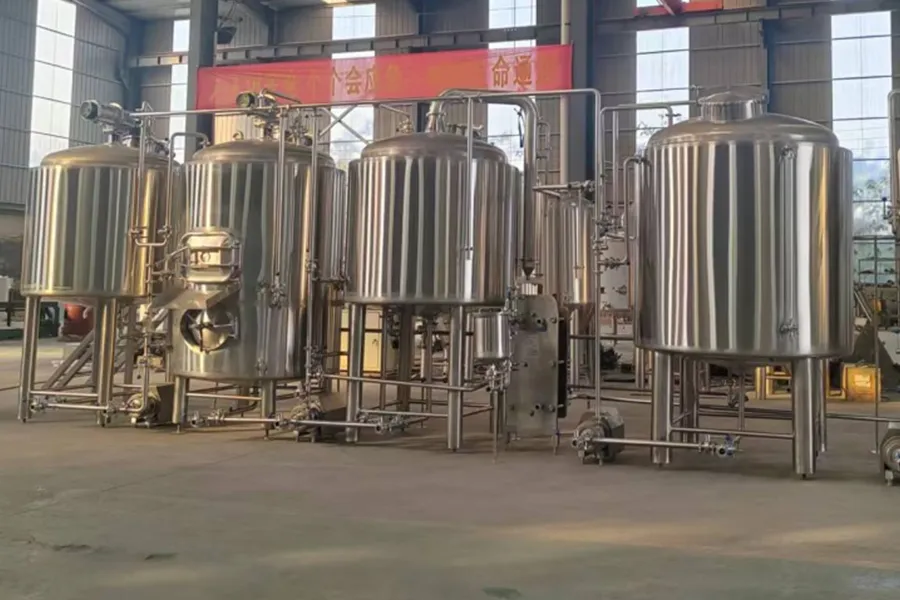
Which brewery types need different capacity plans?
A brewpub or taproom serving mainly on site may value variety and fresh rotation more than large runs of one recipe. Smaller batches can make it easier to introduce a new beer without holding too much stock. For a production brewery selling mostly into distribution, repeatable output, packaging time, and finished-goods storage may carry more weight.
The same distinction applies across craft breweries. A site with six frequently changing taps may need more separate fermenters than one that makes the same two beers at the same weekly volume. Tank count gives the first site room to keep recipes apart; larger vessels may serve the second site more efficiently.
Your sales model can change after opening a brewery. A startup might begin with draft sales and add cans later. Plan where a packaging line, cold storage, and finished pallets could go, even if you will buy that equipment in a later phase. Expansion space is useful only if the building’s access, drainage, and utilities can serve it.
How do you choose a brewhouse size?
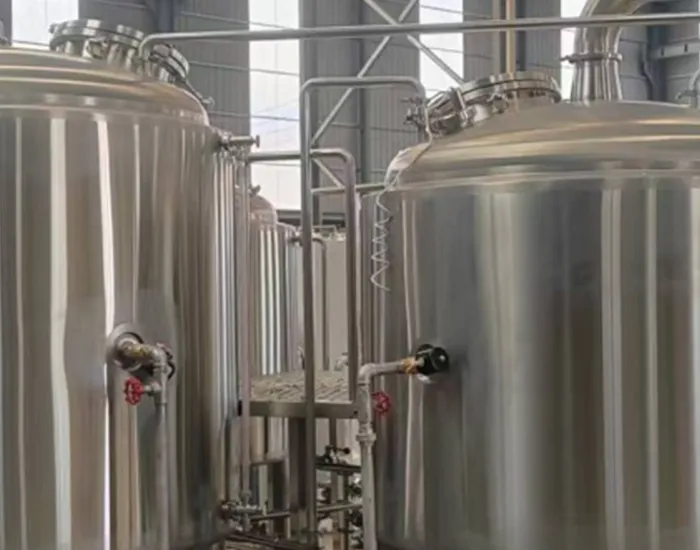
Divide the volume you need to produce in a busy week by the number of brews your team can realistically complete. If you need about 20 hL of wort per week and can brew twice, a 10 hL brewhouse is a sensible size to examine. If you can reliably brew once, you would need to examine a larger system or change the operating plan.
Use a real calendar. Allow time for preparation, mash and boil, transfer, cleaning, maintenance, staff breaks, and unexpected delays. Ask how long one brew day takes with the proposed vessel layout and whether your team could complete a second brew that day. A theoretical maximum based on back-to-back brews is a poor everyday target if the people or utilities cannot support it.
Also check what the quoted volume means. The size of the brewhouse might refer to vessel capacity, nominal wort output, or a target based on a particular recipe. A high-strength beer may produce a different saleable volume than a lower-strength one on the same system. Ask the manufacturer to state its assumptions for grain loading, wort volume, and operating schedule.
How many fermenters does a brewery need?
This is often the deciding question. A brewhouse can make wort in hours, but a fermenter stays occupied through fermentation and any conditioning, transfer, or cleaning steps carried out in that vessel. If there is no suitable tank free, the next planned brew cannot go ahead. A sizing guide published by equipment specialist MG Newell likewise works backward from desired yearly output, tank cycles, and the number of brews needed to fill each vessel.
Make a tank calendar for each beer style. Enter the day wort goes in, the expected transfer date, and the time required to clean and prepare the vessel. Include slower products, such as a lager that needs a longer maturation plan. Tank availability depends on days occupied, not just litres installed.
Here is a simplified example, offered as a planning exercise:
| Item | Example assumption |
|---|---|
| Wort made per brew | 10 hL |
| Brewing schedule | 2 brews per week |
| Time each fermenter is occupied | 14 days, including turnaround |
| Minimum volume occupied in a steady schedule | About 40 hL |
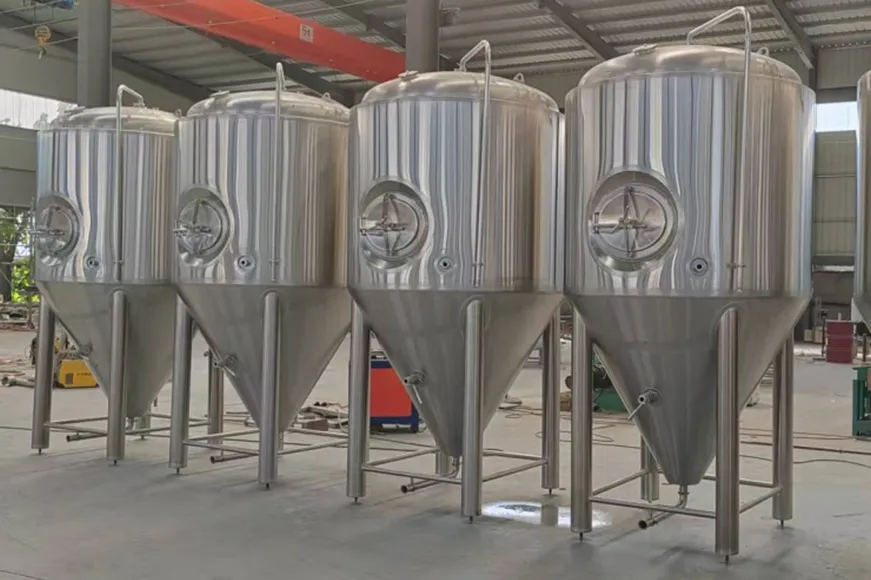
That result does not automatically mean four 10 hL fermenters are the final specification. Separate recipes, staggered transfers, slower products, maintenance, and peak sales can all change the number or mix of vessels. Put the proposed schedule on a calendar before ordering tanks.
What limits annual beer production besides the brewhouse?
The smallest practical step in your process sets the pace. You may be able to brew twice in a day, yet still miss the yearly target if fermenters remain full, a bright beer vessel is unavailable, or packaging runs only once a month. Calculate brewing capacity alongside tank cycles and packaging throughput, using the same working weeks for each.
Utilities can impose their own limits. The heat source must support the intended brew schedule; cooling must handle wort chilling and occupied tanks; water supply and drainage must suit cleaning as well as production. A larger brewhouse can increase peak demand on those services even if annual production rises only modestly.
Labour is equally real. If one brewer also orders materials, manages quality, serves customers, and fills kegs, the maximum number of brews on paper is unlikely to be the normal schedule. Write down who performs each task and when. This turns an attractive capacity claim into a workable operating plan.
How much production space and storage should you allow?
Measure the complete workflow, not just the equipment footprints. Ingredients must arrive and move to the brewhouse. Staff need safe access around vessels for operation and cleaning. Empty containers must have a place to wait, and full ones need a clear path out. Equipment and storage plans should include doors, ceiling height, service access, drains, and room to move loaded pallets where relevant.
Map the route of ingredients, wort, finished beer, and waste on a floor plan. If their paths repeatedly cross a narrow work area, daily work becomes harder as volume grows. Place utilities and cleaning connections where staff can use them without dragging hoses across busy routes.
Leave realistic space for future changes. An extra tank position is valuable when it has a usable drain, suitable cooling connections, and room for installation. Floor space alone is not expansion capacity. Before committing to a building or a brewery build, have the equipment team and local professionals check the proposed layout and applicable site requirements.
How does beer packaging affect system size?
Draft, cans, and bottles create different work schedules. A taproom pouring mainly draft beer may need frequent keg filling and washing. A brewery shipping cans may need longer packaging sessions, more finished-goods storage, and enough beer ready to make each run worthwhile. The amount of beer in a vessel is only part of the packaging calculation.
Include packaging losses when comparing planned brews with sales. Track how much beer enters the process and how much ends up in filled containers. For U.S. planning, one barrel of beer is defined as 31 U.S. gallons, about 117.3 litres; use consistent units when comparing barrel-based sales forecasts with hL equipment quotes.
Timing deserves its own line on the calendar. If finished beer waits for a packaging slot, it may occupy a vessel needed for the next brew. A larger brewery may therefore need more finished-beer holding or more frequent packaging before it needs a larger brewhouse. Model that decision with your actual order pattern.
When should you choose a larger brewery?
Choose a larger system when the forecast shows a sustained need for it and the rest of the site can support it. Repeatedly running extra shifts to meet confirmed orders is a stronger reason than an optimistic first-year projection. Compare the cost of a larger brewhouse with alternatives such as additional fermenters, a better brew schedule, or staged expansion.
There is a trade-off. A larger brew can use staff time efficiently when demand for that recipe is steady. It can also leave you holding too much of a slow-selling product. If you want several small seasonal releases, a larger brewhouse may reduce your flexibility unless the system can handle those smaller recipes well.
We recommend testing at least three scenarios before purchase: a cautious launch, the most likely sales case, and a credible growth case. In each, calculate the beer you can produce, the beer you can package, and the beer customers are likely to buy. That exercise helps new brewery owners see whether they need a bigger system now or a clear path to add capacity later.
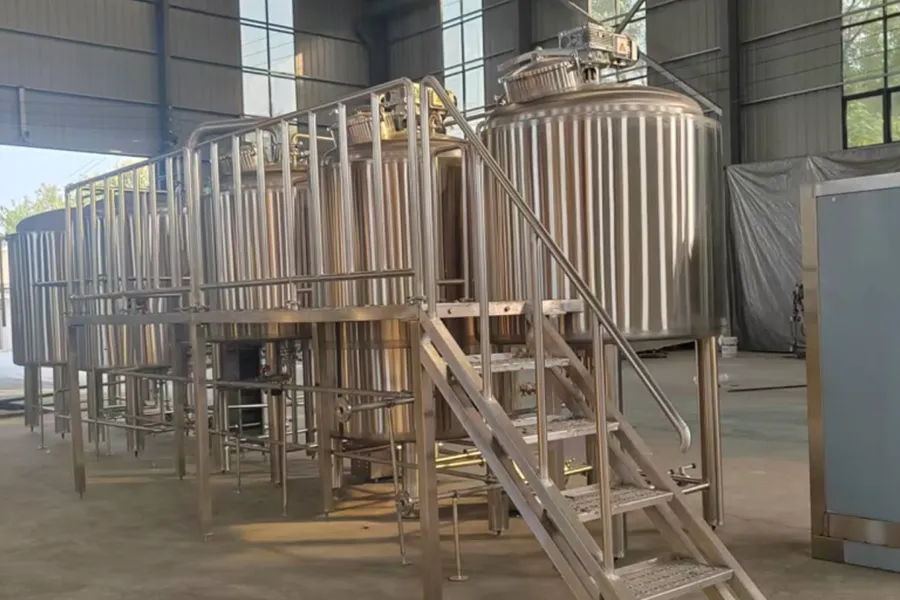
What should you ask a brewery equipment manufacturer before ordering?
Share a brief that describes your sales target, recipes, planned brew frequency, packaging method, available building, and growth horizon. A brewery equipment manufacturer can then propose a matched brewing system and tank plan rather than a vessel size in isolation. Ask for a drawing that shows the complete production flow.
Use these questions to compare proposals:
- What finished wort volume per brew is the proposed system designed to deliver, and under what recipe assumptions?
- How many brews can the specified vessels and utilities support in a normal working day?
- Which tank sizes and quantities fit our recipe mix and occupancy calendar?
- What are the water, heating, cooling, electrical, drainage, and installation requirements?
- What does the quoted equipment list include, and what must we source separately?
- How will commissioning, operator training, spare parts, and after-sales support work at our site?
- Where can we add tank or packaging capacity if sales grow?
As a manufacturer of customized stainless steel brewhouses, fermenters, and turnkey brewery systems, we would use those answers to review the full project: sanitary design, capacity, layout, installation, and future service. A useful proposal should show its assumptions. That makes it easier for your team, investors, and contractors to check whether the recommendation fits your business.
Frequently asked questions
Is a 10 hL brewhouse enough to start a brewery?
It can be, depending on sales volume, brew frequency, recipe mix, tank availability, and staffing. For example, two 10 hL brews a week provide a different operating plan from one brew a week. Build a weekly production and tank calendar before deciding whether that size fits.
Should every fermenter match my brewhouse volume?
No. Matching volumes can make single-brew fills straightforward, while larger vessels may hold multiple brews of the same recipe. Mixed vessel sizes can also give a brewery room for both core beers and smaller releases. Check fill levels, scheduling, and equipment specifications with the supplier.
Can I increase output without replacing my brewhouse?
Possibly. If the brewhouse has unused days and your bottleneck is occupied tanks, adding suitable fermenters may increase output. If tanks stand empty because the brewing team cannot make enough wort, the answer may be different. Identify the constraint before buying equipment.
How far ahead should I plan for growth?
Create a launch plan and a separate growth scenario tied to plausible sales. Reserve usable space and utility options where the cost is reasonable. You do not need to buy every future vessel on day one, but later installation should be possible without disrupting the whole site.
Does the same sizing method work for other beverages?
The method—start with sales, map each production step, and check how long vessels remain occupied—also helps with cider, kombucha, cold brew coffee, and other beverages. Their recipes, cleaning needs, processing times, and packaging requirements differ, so do not reuse beer tank schedules without checking the actual process.
Key points to remember
- Start with a credible sales forecast and calculate both average and peak weekly demand.
- Size the brewhouse around a realistic brew schedule, including people, cleaning, and utilities.
- Use a tank calendar to test fermenter count, recipe variety, and vessel turnaround.
- Check packaging and storage before treating nominal brewing volume as saleable beer.
- Request a complete, assumption-based proposal covering equipment, layout, installation, and room to grow.
If you have a sales target and a draft floor plan, share them with us. We can help turn those numbers into a practical brewhouse, tank, and turnkey equipment plan for your brewery.