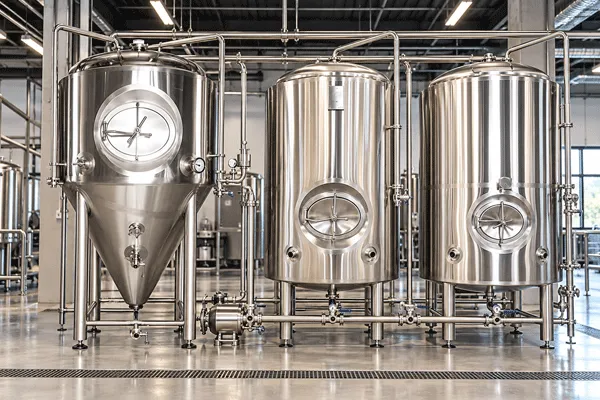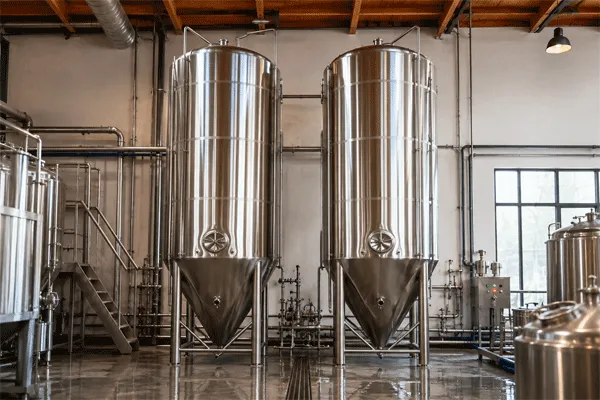
An undersized or poorly designed heating system can slow brew days, create uneven temperature control, and increase operating costs. A steam-heated brewhouse offers controlled, indirect heat, but the boiler, jackets, pipelines, valves, and condensate return must work together.
В варочном цехе с паровым нагревом используется котёл или парогенератор для производства пара, который по изолированным трубам поступает в рубашки или змеевики вокруг пивоваренных ёмкостей. При конденсации пар передаёт тепло через стенку ёмкости затору или суслу. Регулирующие клапаны контролируют подачу тепла, а конденсатоотводчики удаляют конденсат.
1. What Is a Steam-Heated Brewhouse?
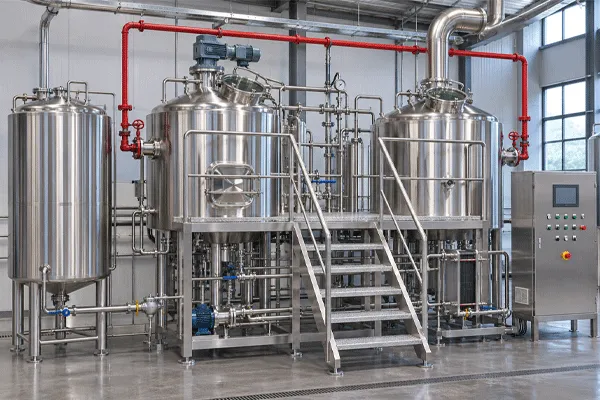
A steam-heated brewhouse is a brewing system that uses steam as its main heat source for mashing, wort heating, and boiling. Instead of placing a burner directly beneath the kettle or installing heating elements inside the vessel, the system transfers heat through a jacket or coil surrounding the brewing tank.
Базовая система включает несколько компонентов:
-
Steam boiler: Produces steam by heating treated water.
-
Паропроводы: транспортируют пар от котла к пивоваренным ёмкостям.
-
Паровые рубашки: создают замкнутое пространство вокруг ёмкости для передачи тепла.
-
Регулирующие клапаны: регулируют подачу пара в соответствии с требованиями к нагреву.
-
Temperature sensors: Monitor the temperature of the brewing liquid.
-
Steam traps: Remove condensed water while keeping useful steam inside the system.
-
Condensate return pipes: Carry collected water back to the boiler system when a return arrangement is used.
This arrangement allows the brewery to use one central heating source for several vessels. Depending on the equipment configuration, steam can supply heat to a mash tun, brew kettle, or hot liquor tank (HLT).
For коммерческих пивоварен, главное преимущество заключается не просто в высокой тепловой мощности. Оно состоит в возможности контролировать подвод тепла на разных этапах пивоварения, сохраняя теплоноситель отделённым от продукта.
2. How Does a Steam Boiler or Steam Generator Work?
The steam boiler is the starting point of the heating process. It receives water, applies energy, and produces steam at a designed operating pressure and temperature.
Depending on the brewery’s location and utility conditions, the boiler may use natural gas, LPG, electricity, or another approved energy source. An electric steam generator can also provide steam for smaller installations. The correct choice depends on available utilities, required steam output, local regulations, and operating costs.
Основной рабочий процесс выглядит следующим образом:
-
Вода поступает в котёл через регулируемую систему подачи питательной воды.
-
Источник тепла повышает температуру воды.
-
Вода превращается в пар.
-
Steam collects and moves into the distribution pipeline.
-
Требования к нагреву варочного котла и желаемое время разогрева.
-
Mash temperature adjustment requirements.
-
Hot liquor tank recovery time.
-
Количество сосудов, работающих одновременно.
-
Потери в системе распределения пара.
-
Ожидаемое расширение производства в будущем.
The system delivers steam to the brewing vessels as needed.
Котёл должен обеспечивать достаточно пара для покрытия пикового спроса пивоварни на нагрев. Это важно, поскольку нескольким ёмкостям может одновременно требоваться тепло. Например, пивоварня может нагревать воду для затирания, пока другая ёмкость готовится к кипячению сусла.
При расчёте мощности котла учитывайте:
A boiler should be selected according to calculated steam demand, not simply the volume of the brewhouse. The equipment manufacturer should provide the required steam consumption and operating conditions so a qualified local boiler supplier can size the unit correctly.
3. Как пар нагревает варочный котёл?
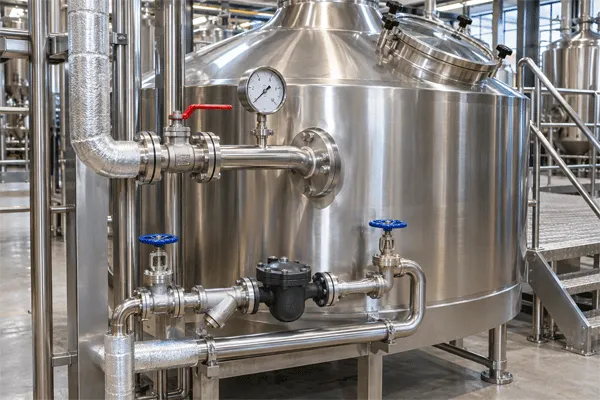
Паровая рубашка — одна из важнейших частей пивоварочного сосуда с паровым нагревом.
Это замкнутое пространство, выполненное вокруг части котла или резервуара. Пар поступает в рубашку через входное соединение и распространяется по зоне нагрева. Передавая энергию стенке сосуда из нержавеющей стали, он постепенно конденсируется в воду.
The vessel wall then transfers this heat to the liquid inside.
This is called indirect heat transfer because steam does not normally mix with the wort. The brewing liquid remains inside the product vessel, while steam stays within the separate jacket.
Процесс состоит из трёх основных этапов:
| Этап | What Happens | Результат |
|---|---|---|
| Подача пара | Пар поступает в рубашку | Heating area receives thermal energy |
| Конденсация | Пар отдаёт скрытую теплоту и превращается в воду | Vessel wall becomes hot |
| Теплопередача | Heat passes through the stainless steel wall | Mash or wort temperature increases |
One important benefit is heat distribution. A properly designed jacket provides a larger heating surface than a small concentrated heat source. This helps the brewery achieve controlled temperature increases.
The jacket design, heating area, steam pressure, vessel geometry, and liquid circulation all affect performance.
For this reason, the heating system should be designed together with the kettle rather than selected as an independent component.
4. Как работают регулирование давления и температуры пара?
Давление пара влияет на его температуру насыщения и, следовательно, на доступную разность температур для теплопередачи. Однако более высокое давление не означает автоматически лучшую эффективность пивоварения.
Рубашка сосуда, соединительные трубы, клапаны и предохранительные устройства должны быть рассчитаны на заданные условия эксплуатации.
Типичный процесс управления работает следующим образом:
-
Датчик температуры измеряет температуру жидкости.
-
Контроллер сравнивает измеренное значение с заданным.
-
Управляющий сигнал регулирует клапан подачи пара.
-
More or less steam enters the jacket.
-
The heating rate changes according to the process demand.
For example, during mash heating, the controller can regulate steam input to help reach a target temperature without excessive temperature changes.
Во время кипячения сусла система может обеспечивать тепло, необходимое для поддержания требуемой интенсивности кипения.
Современные системы могут использовать ПЛК-автоматизацию, датчики температуры и автоматизированные клапаны для управления этими операциями. Ручные или полуавтоматические системы также могут быть подходящими в зависимости от масштаба производства и требований операторов.
Important: Operators should never increase steam pressure beyond the approved design limits to speed up heating. Pressure gauges, pressure-reducing valves, relief devices, and other safety controls must match the engineered system.
Для профессионального пивоваренного оборудования регулирование температуры и безопасность по давлению следует рассматривать совместно.
5. Why Are Condensate Return and Steam Traps Important?
Когда пар передаёт тепло через рубашку, он снова превращается в жидкую воду. Эта вода называется конденсатом.
Если конденсат остаётся внутри рубашки, он может уменьшить эффективную площадь нагрева и препятствовать теплопередаче. Недостаточный отвод также может вызвать нестабильный нагрев и гидроудары, создающие шум и потенциально опасные скачки давления в трубопроводах.
Поэтому для паровой системы необходимы правильно подобранные конденсатоотводчики.
A steam trap performs three important functions:
-
-
Отводит конденсат из паровой рубашки.
-
Prevents unnecessary loss of live steam.
-
Помогает поддерживать стабильную теплопередачу.
Затем конденсат может поступать в сборную линию и, если система рассчитана на это, возвращаться в контур питательной воды котла.
Полная комплектация может включать:
-
Steam supply pipeline
-
Фильтр и сепаратор
-
Pressure-reducing valve
-
Регулирующий клапан подачи пара
-
Jacket inlet
-
Выход конденсата
-
Конденсатоотводчик
-
Линия возврата конденсата
Трубопроводы также следует изолировать, чтобы снизить теплопотери и улучшить условия эксплуатации.
Таким образом, хорошо спроектированной паровой системе требуется не только котёл и рубашка. Контур конденсата не менее важен.
6. Where Is Steam Heating Used During the Brewing Process?
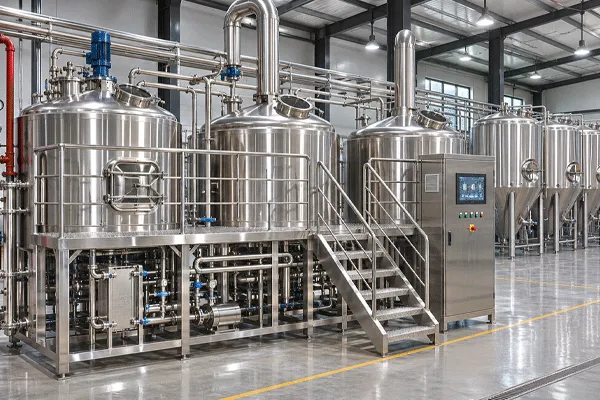
Паровой нагрев может использоваться на нескольких этапах процесса пивоварения. Его применение зависит от количества ёмкостей и конфигурации оборудования.
Затирание
During mashing, the brewer mixes crushed malt with hot water. Some mash tuns use steam jackets to adjust the temperature during different mash rests. Controlled heating helps the brewer follow the recipe’s temperature schedule.
Wort boiling
Варочный котёл — ещё одна важная область применения. Пар поступает в рубашку котла и передаёт тепло через стенку сосуда. Система обеспечивает энергию, необходимую для доведения сусла до кипения и поддержания требуемых условий кипения.
Hot liquor preparation
The hot liquor tank stores heated brewing water. Depending on the system design, steam heating can bring water to the required temperature before it is used for mashing, sparging, or cleaning.
Multiple-vessel operation
In a larger brewery, different vessels may need heat at different times. A central steam boiler can supply several heating points through a properly sized distribution network.
|
Brewing Stage |
Steam Heating Application |
Основное назначение |
|---|---|---|
| Затирание | Рубашка заторного чана | Temperature adjustment |
| Wort boiling | Brew kettle jacket | Bring wort to boiling temperature |
| Подготовка воды | Рубашка или змеевик HLT | Heat brewing water |
| Обеспечение мойки | Система горячего водоснабжения | Подготовка горячей воды для мойки |
Точная конфигурация зависит от пивоваренной системы. Не каждой ёмкости требуется паровая рубашка, и некоторые пивоварни используют отдельные системы нагрева для разных операций.
7. Пар, электричество или прямой огонь: в чём различия?
Пар, электрический нагрев и прямой огонь — три распространённых варианта нагрева для пивоваренного оборудования. Каждый из них имеет разные требования к установке и эксплуатационные характеристики.
Оптимальный вариант зависит от размера пивоварни, доступных инженерных коммуникаций, производственного графика и инвестиционного бюджета.
| Сравнение | Паровое отопление | Электрическое отопление | Прямой огневой нагрев |
|---|---|---|---|
| Источник тепла | Паровой котёл или парогенератор | Electrical power | Газ или другое разрешённое топливо |
| Теплопередача | Рубашка или змеевик | Elements or designed heating assembly | Горелка и топка |
| Контроль температуры | Регулирование расхода и давления пара | Управление электрической мощностью | Управление мощностью горелки |
| Установка | Котёл и система распределения пара | Электрическая инфраструктура | Топливная система и система отвода дымовых газов |
| Несколько сосудов | Can serve several vessels | Зависит от конструкции электрической системы | Usually requires individual burners |
| Main consideration | Управление котлом и конденсатом | Connected electrical load | Безопасность горения и вентиляции |
Паровое отопление
Steam heating is commonly used in professional multi-vessel breweries. A central boiler can provide heat to several vessels, and the jacket arrangement supports controlled indirect heating.
Однако монтаж котла, водоподготовка, проверка оборудования, работающего под давлением, и обслуживание паропроводов усложняют систему.
Электрическое отопление
Электрический нагрев может быть подходящим решением для небольших пивоварен и пивных ресторанов, где имеется достаточная электрическая инфраструктура.
Это позволяет избежать необходимости в котле, работающем на сгораемом топливе, хотя системы большой производительности могут требовать значительной электрической мощности и подходящего распределительного оборудования.
Прямой огневой нагрев
Direct fire uses a gas burner to generate heat beneath or around the kettle through a designed fire box.
Система требует надлежащей подачи воздуха для горения, вытяжной вентиляции, управления горелкой и средств защиты. Распределение тепла и конструкция сосуда должны быть тщательно спроектированы, чтобы уменьшить локальный перегрев.
The term electric vs. steam vs. direct fire should therefore be evaluated from the complete installation perspective, not just the purchase price of the kettle.
ZPET offers customized brewhouse configurations with all three heating options. You can explore the available systems on the Brewhouse Systems product page.
8. Какие инженерные и защитные системы требуются для парового нагрева в пивоварне?
A steam-heated brewery needs more supporting infrastructure than the brewing vessels themselves.
Котельную следует проектировать в соответствии с требованиями производителя котла и местными нормами для оборудования, работающего под давлением. Проект может требовать надлежащей вентиляции, воздуха для горения, водоподготовки, дренажа, электрических подключений и доступа для технического обслуживания.
The steam distribution system also needs correct pipe sizing and insulation. Long steam lines can increase heat loss and create additional condensate management requirements.
Ключевые компоненты включают:
| Компонент | Функция |
|---|---|
| Котёл или парогенератор | Производит пар |
| Feedwater treatment | Помогает контролировать образование накипи и коррозию |
| Steam header | Distributes steam |
| Pressure-reducing valve | Controls downstream pressure |
| Safety relief valve | Protects equipment against excessive pressure |
| Манометр | Displays operating pressure |
| Датчик температуры | Monitors process temperature |
| Конденсатоотводчик | Removes condensate |
| Возврат конденсата | Recovers collected water where designed |
Safety is essential because steam systems contain hot fluid under pressure.
The boiler and jacket must meet applicable pressure equipment requirements. Depending on the installation location, local inspection, registration, operator qualification, and periodic maintenance may also be required.
Never treat a standard stainless steel brewing tank as a pressure-rated steam vessel unless its design and documentation specifically support that service.
9. What Do Real ZPET Steam-Heated Brewery Projects Show?
ZPET’s existing brewery projects demonstrate how steam heating can be integrated into different brewing capacities and equipment configurations.
These examples are useful because the heating method is only one part of the complete brewery design.
300L Brewery Equipment Project in the Philippines
The 300L brewery project uses steam-heated brewing vessels with steam inlet and outlet connections. The configuration also includes a hot liquor tank, sanitary pumps, valves, and supporting equipment.
The steam jacket provides indirect heat transfer to support stable wort heating.
Read the 300L Brewery Equipment Project.
500L Two-Vessel Brewhouse Project
This project features a 500L two-vessel brewhouse, a separate hot water tank, and a fermentation area.
The steam heating arrangement is integrated into the brewhouse, while the separate hot water tank supports brewing water preparation.
Read the 500L Two-Vessel Brewing System Project.
Australia 3000L Commercial Brewery Project
For a larger production requirement, ZPET supplied an Australian customer with a 3000L three-vessel brewhouse featuring steam heating and PLC control.
The project also included 3000L stainless steel fermentation tanks with side manways.
This example shows how steam heating can be integrated into a larger automated brewing system with dedicated fermentation capacity.
Read the Australia 3000L Brewery Equipment Project.
These projects illustrate that the same heating principle can be adapted to different capacities. The boiler, steam distribution, vessel jackets, and controls must be matched to each individual brewery.
10. How Do You Choose the Right Steam Heating System for Your Brewery?
Choosing a heating source requires a complete review of the brewery’s production requirements and available infrastructure.
A small craft brewery may not need a large boiler. A commercial brewery running several batches per day may benefit from a central steam system that serves multiple vessels.
Before selecting equipment, evaluate the following:
1. Production capacity
Calculate the required batch volume and number of batches per day. This helps determine the heating load and required steam output.
2. Brewhouse configuration
A two-vessel system may have different simultaneous heating demands from a three- or four-vessel system. Consider the full process schedule.
3. Boiler capacity
Calculate peak steam consumption based on vessel heating requirements, heat-up time, and simultaneous operation.
4. Building conditions
Check available space for the boiler room, steam pipelines, ventilation, drainage, and maintenance access.
5. Local utilities and regulations
Compare electricity and fuel costs, water availability, boiler installation requirements, and local pressure-equipment rules.
6. Automation requirements
Decide whether manual valves, semi-automatic control, or PLC-based temperature management is suitable.
A practical purchasing checklist
Before confirming a steam-heated brewhouse order, request the following information from your manufacturer:
-
Vessel capacity and working volume
-
Steam jacket heating area
-
Required steam pressure at the equipment inlet
-
Steam consumption under defined operating conditions
-
Recommended boiler output
-
Steam inlet and condensate outlet connections
-
Control valve and temperature sensor configuration
-
Safety device specifications
-
Electrical requirements
-
Cleaning and maintenance instructions
-
Installation drawings and utility connection diagrams
Also confirm whether the boiler, steam pipelines, installation materials, and commissioning services are included in the quotation.
The boiler is often supplied separately because it requires local installation and regulatory approval. ZPET can help define the required steam conditions and equipment interfaces so the brewery can coordinate with a qualified local boiler supplier.
As a professional brewery equipment manufacturer, we focus on customized stainless steel brewing systems, fermentation tanks, and complete brewery configurations. Our goal is to match the heating method with the actual production process rather than offer the same arrangement to every customer.
Explore ZPET’s Microbrewery and Commercial Plant Solutions to learn more about integrated brewery planning.
Часто задаваемые вопросы
Does steam enter the beer during brewing?
No. In a standard indirect steam-heated brewhouse, steam remains inside the jacket or heating coil and transfers heat through the stainless steel wall. It does not mix with the wort.
What is the difference between a steam boiler and a steam generator?
Both produce steam for heating. Their construction, capacity, operating design, and installation requirements can differ. The appropriate choice depends on the required steam output, operating conditions, available utilities, and local regulations.
Can one steam boiler heat multiple brewing vessels?
Yes. A properly sized central steam system can supply several vessels through a distribution network. However, boiler capacity must account for peak simultaneous demand rather than adding vessel capacities alone.
Does a steam-heated brewhouse need a steam trap?
Yes. Steam traps remove condensate from the steam jacket and associated pipelines while preventing unnecessary loss of live steam. Correct condensate removal supports stable heat transfer.
Is steam heating better than electric heating for a brewery?
Neither is universally better. Steam heating is often suitable for larger multi-vessel systems, while electric heating can be practical for smaller breweries with sufficient electrical capacity. The decision depends on production scale, installation cost, energy prices, and available utilities.
Is the steam boiler included when purchasing brewery equipment?
Not always. Some manufacturers supply the boiler separately because local installation, inspection, and approval may be required. Buyers should confirm the boiler scope and required steam specifications before signing the equipment contract.
Основные выводы
-
A steam-heated brewhouse uses a boiler or generator to produce steam.
-
Steam transfers heat through jackets or coils without normally contacting the wort.
-
Steam condensation releases heat through the stainless steel vessel wall.
-
Control valves and temperature sensors regulate heating performance.
-
Steam traps remove condensate and help maintain efficient heat transfer.
-
Boiler capacity must match the brewery’s peak steam demand.
-
Steam, electric, and direct-fire heating each have different installation requirements.
-
Boiler safety, pressure ratings, ventilation, and local regulations must be considered.
-
ZPET offers customized steam, electric, and direct-fire brewhouse configurations.
-
The right heating system should match production capacity, vessel configuration, available utilities, and future brewery expansion.
Planning a new brewery or upgrading your existing brewhouse? Contact ZPET with your target batch capacity, vessel configuration, and local utility conditions. Our team can help develop a customized brewing system and heating solution for your project.