Небольшая пивоварня может производить хорошее пиво и без отдельного брайт-танка, однако использование каждого ферментера для ферментации, кондиционирования, карбонизации и хранения со временем может замедлить производство. Правильный выбор зависит от того, как часто вы варите пиво, как его упаковываете и насколько быстро вам нужно освобождать ферментеры.
Небольшой пивоварне не всегда нужен брайт-танк. Пивной ресторан или тапрум с небольшими объёмами производства зачастую может использовать рассчитанные на давление юнитанки для ферментации и карбонизации. Отдельный брайт-танк становится полезнее, когда растёт объём упаковки, ферментеры остаются занятыми в ожидании готового пива или пивоварне нужны более стабильные карбонизация, осветление, подача и планирование производства.
1. What Does a Brite Tank Actually Add to a Small Brewery?
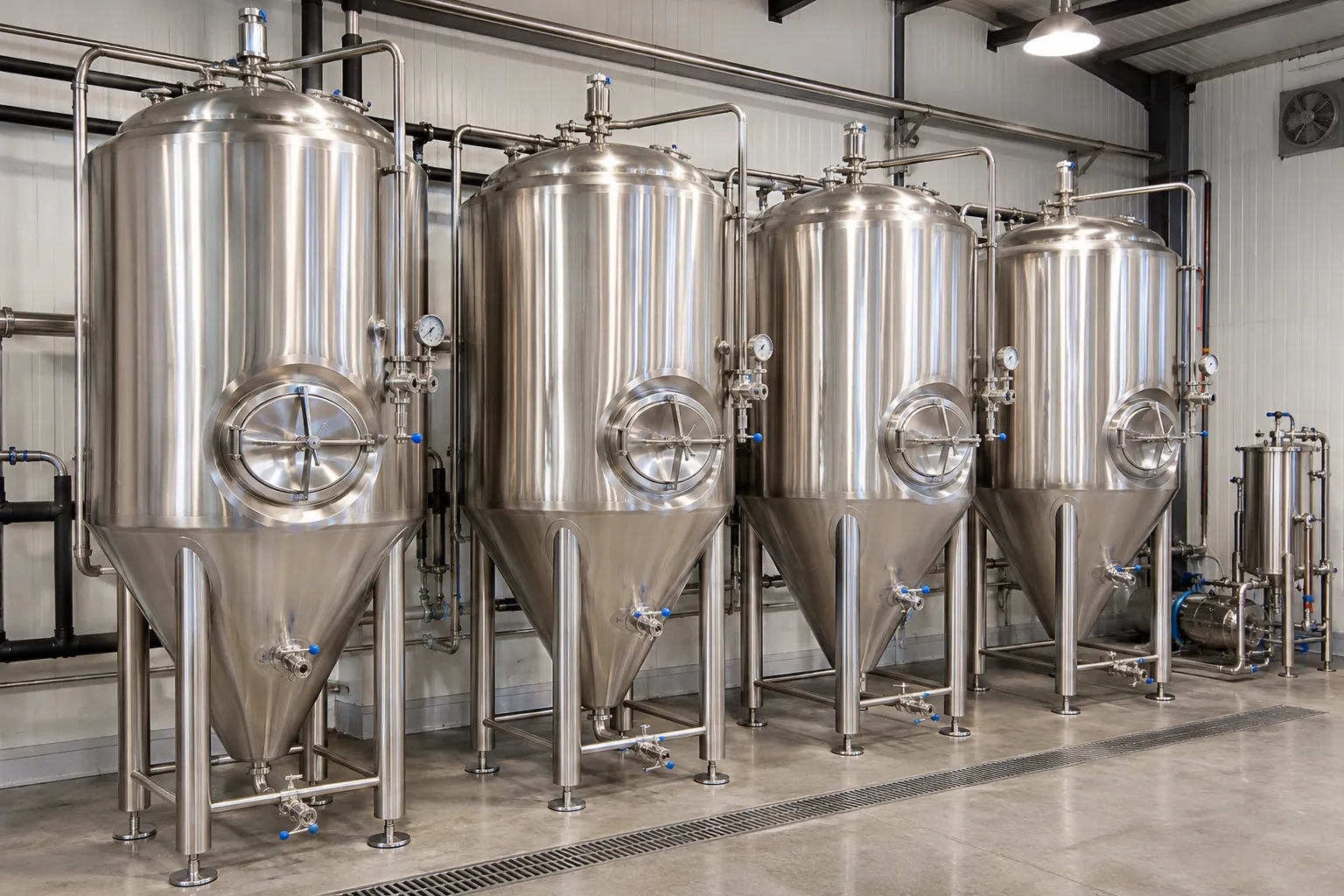
Брайт-танк, также называемый bright tank или brite beer tank, — это рассчитанный на давление пивной танк, используемый после основного этапа ферментации. Он предоставляет пивовару отдельное место для карбонизации, осветления, холодного хранения, созревания и подготовки к подаче или упаковке.
Это определение простое. Коммерческая ценность важнее.
Главное преимущество состоит в том, что готовая партия больше не должна занимать ферментер в ожидании следующего этапа. Как только пиво готово покинуть ферментацию, пивовар может перекачать его в брайт-танк. Затем ферментационный танк можно очистить и заполнить следующей варкой.
Для небольшого производства это может изменить весь график производства.
Consider two breweries with four fermenters.
У пивоварни A нет брит-танка. Каждый ферментер остаётся занятым на протяжении брожения, созревания, карбонизации и ожидания розлива.
Пивоварня B располагает выделенным брайт-танком. После завершения ферментации и необходимых этапов кондиционирования подходящее пиво можно перекачать дальше, благодаря чему ферментер освобождается раньше.
Общее количество ферментационных танков не изменилось.
А вот эффективная производственная мощность — изменилась.
Это главная причина, по которой при планировании оборудования для небольшой коммерческой пивоварни стоит обратить внимание на брайт-танк.
2. Может ли небольшая пивоварня работать без брит-танка?
Да.
Многие небольшие пивоварни могут работать без него, особенно на раннем этапе развития бизнеса.
Современный уник-танк, рассчитанный на работу под давлением, может объединять несколько этапов в одной ёмкости. Пивовар может сбраживать сусло, охлаждать пиво, давать дрожжам и осадку отстояться, карбонизировать пиво, если конструкция танка это позволяет, а затем переливать готовое пиво в кеги.
Такая схема может хорошо подойти для:
- Нанопивоварни
- Небольшие пивные рестораны
- Тапрумы с ограниченным производством
- Пивоварни, варящие всего несколько партий в неделю
- Предприятия с крайне ограниченной площадью
- Стартапы, стремящиеся контролировать первоначальные инвестиции в оборудование
Для таких предприятий покупка ещё одного пивного танка лишь потому, что им пользуются более крупные пивоварни, может быть финансово нецелесообразной.
Ключевой вопрос не в следующем:
“Do professional breweries use brite tanks?”
Вместо этого спросите:
“Is the lack of a brite tank limiting my production?”
Если пивоварня может завершать каждую партию в юнитанке, упаковывать её по графику, очищать ферментер и удовлетворять спрос, отдельный танк для финишной обработки может иметь ограниченную немедленную ценность.
Именно поэтому мы не рекомендуем добавлять оборудование лишь для того, чтобы пивоварня выглядела более укомплектованной.
Каждый танк должен решать реальную производственную задачу.
3. Когда уник-танк начинает становиться узким местом производства?
Юнитанк позволяет сэкономить на оборудовании и перекачках, но имеет одно неизбежное ограничение:
While finished beer remains inside it, you cannot fill that tank with the next batch.
Представьте, что цикл брожения занимает 12 дней.
Ферментация завершена, но пиво остаётся в танке ещё на четыре дня для холодного кондиционирования, карбонизации и планирования упаковки.
The actual tank occupancy is now:
12 дней + 4 дня = 16 дней
При шести уник-танках эти дополнительные четыре дня повторяются по всему отделению дображивания.
Со временем это может сократить количество партий, которые варочный цех может отправлять на ферментацию.
Простое сравнение занятости танков
| Этап производства | Рабочий процесс только с юнитанками | Процесс с отдельным брит-танком |
|---|---|---|
| Брожение | 12 дней | 12 дней |
| Финальная выдержка в холоде | 2 дня | Можно перекачать в брайт-танк |
| Газирование | 1 день | Форфас |
| Ожидание упаковки | 1 день | Форфас |
| Ферментер занят | Около 16 дней | Потенциально ближе к 12 дням |
| Приём следующей варки | Позже | Раньше |
Это лишь наглядный пример. Фактическое время брожения, созревания и карбонизации зависит от рецепта и технологии.
Тем не менее этот принцип крайне важен.
When finished beer remains in a fermenter only because the packaging line is not ready, you are using expensive fermentation capacity as finished-beer storage.
Именно в этот момент использование отдельного танка часто начинает обретать смысл.
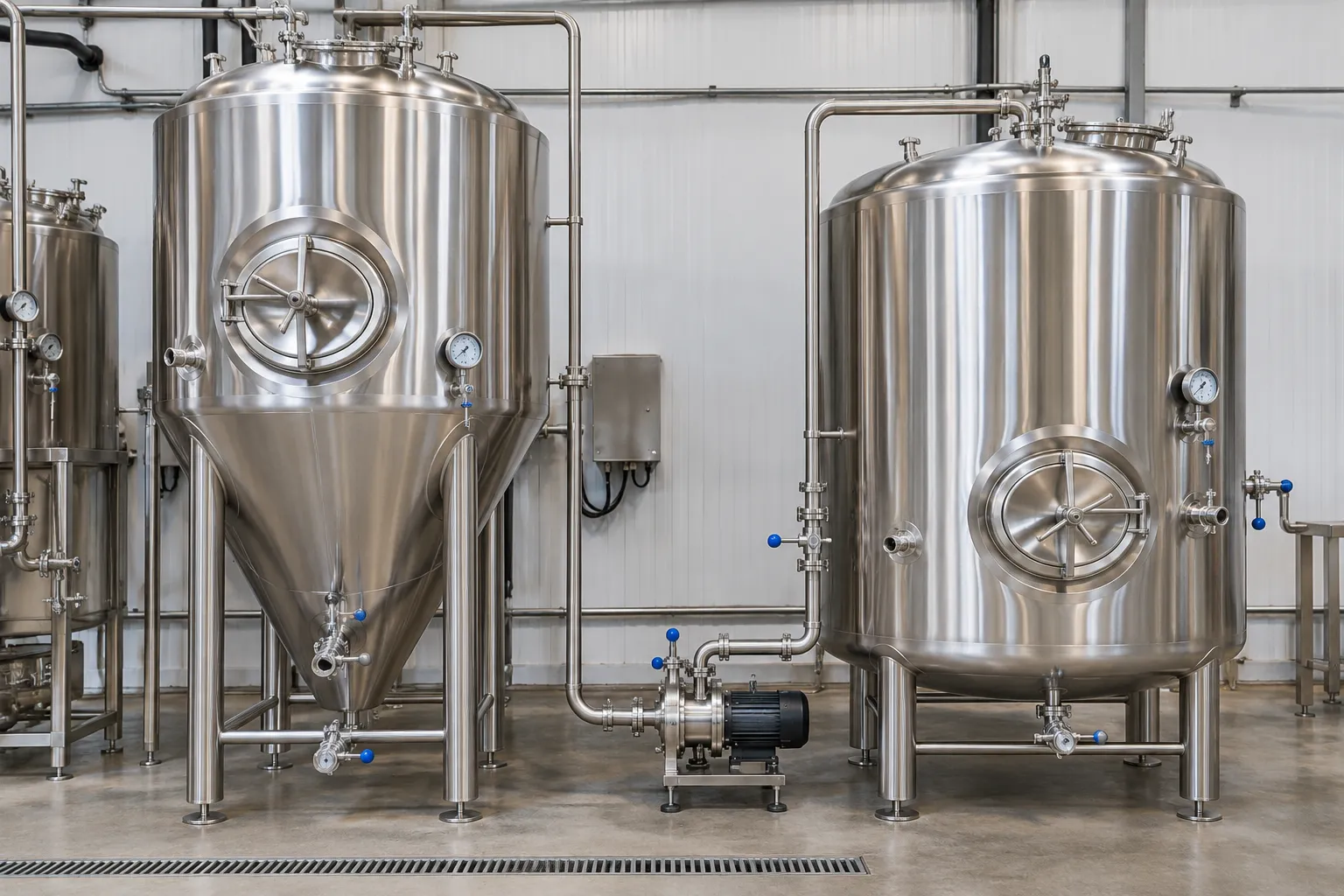
4. Помогает ли форфас варить больше пива без покупки дополнительных ферментеров?
Sometimes, yes.
Это один из самых весомых аргументов в пользу установки брайт-танка на действующей малой пивоварне.
Suppose you have:
- Варочный порядок 10 BBL
- 6 × 10 BBL fermenters
- 3 brews per week
- Ограниченное количество дней розлива
If each fermenter stays occupied after fermentation while beer waits to be kegged or canned, the brewhouse may eventually run out of available fermentation capacity.
У вас есть несколько возможных решений:
- Buy another fermenter.
- Снизить частоту варок.
- Фасовать чаще.
- Перевод готового пива в отдельный форфас (брайт-танк).
Четвёртый вариант иногда позволяет увеличить доступную мощность для брожения без добавления нескольких новых ёмкостей для брожения.
Это не означает, что один форфас чисто математически заменяет несколько ферментеров. Реальная выгода зависит от того, на сколько дней он сокращает время занятости ферментера.
A better way to evaluate the investment is:
Освобождённые дни работы ферментера в месяц × средняя стоимость продукции за эти дни
Если новая ёмкость освобождает достаточно времени брожения для выпуска большего объёма товарного пива, она может обеспечить более высокую отдачу, чем покупка ещё одного ферментера.
This is why a brite tank often becomes more valuable as a small brewery moves from casual production to a fixed weekly schedule.
5. Лучше ли брайт-танк для карбонизации, чем унитанк?
Both vessels can support carbonation when properly designed and pressure-rated.
Основное различие — в организации рабочих процессов и контроле.
Выделенный брайт-танк даёт пивовару ёмкость, основная задача которой — работа с готовым пивом. Это помогает упростить стандартизацию карбонизации, поскольку брожение уже завершено или почти завершено, и танк можно задействовать исключительно для холодной финишной обработки.
A typical setup may include:
- Камень для карбонизации
- CO₂ connection
- Манометр
- Защита от избыточного давления
- Пробоотборный клапан
- Охлаждающая рубашка
- Контроль температуры
- Санитарный выход для пива
Carbon dioxide solubility in beer depends strongly on temperature and pressure. The Brewers Association notes that proper carbonation and beer quality depend on maintaining the correct relationship between beer temperature and applied pressure.
Это важно независимо от того, где вы карбонизируете пиво — в уник-танке или брит-танке.
Специальный танк не обеспечивает лучшую карбонизацию сам по себе. Он лишь дает пивовару отдельный, контролируемый этап производства для достижения и поддержания заданного уровня карбонизации, не занимая при этом ферментер.
Для тапрума, разливающего множество сортов напрямую, такой дополнительный контроль также помогает точнее прогнозировать готовность пива.
6. Does a Brite Tank Make Beer Clearer?
Он может способствовать осветлению, но само название «brite» не должно вводить в заблуждение.
Форфас не делает мутное пиво кристально прозрачным автоматически.
Прозрачность пива зависит от:
- Стиль пива
- Штамм дрожжей
- Холодная выдержка (колд кондиционинг)
- Содержание белка
- Hop material
- Fining methods
- Filtration, if used
- Centrifugation, if used
- Settling time
- Температура
After fermentation, remaining yeast and other particles may continue to settle. Cold beer generally supports this clarification process.
The brite tank provides a controlled place for this final stage.
For a naturally hazy beer, clarity may not even be the brewer’s goal.
For a lager or another product where the final appearance should be bright and stable, the tank may play a more important role in the clarification process.
So the correct statement is:
A brite tank supports clarification. It is not a substitute for the complete clarification process.
This distinction matters when selecting brewery equipment because buyers sometimes expect one tank to solve every product-quality problem.
Equipment helps control the process.
It does not replace good brewing practice.
7. Brewpub, Taproom, or Packaging Brewery: Who Needs a Brite Tank Most?
The answer changes with the business model.
Small Brewpub
A brewpub that produces one or two batches each week and serves almost everything onsite may not need a dedicated brite tank immediately.
A unitank-focused system may be more practical.
Advantages include:
- Fewer tanks
- Более низкие первоначальные инвестиции
- Less floor space
- Fewer transfers
- Simple operating workflow
If beer moves directly from the unitank to kegs or serving tanks, production may remain manageable.
Busy Taproom
A busy taproom with several rotating beers can benefit from one or more finishing tanks if fermenters regularly wait for taps, kegs, or service capacity.
A serving tank may also make sense depending on the draft system.
Here, the question becomes inventory management.
The brewery may want finished beer ready for service while new beer is already fermenting.
Small Packaging Brewery
This is where a dedicated tank often becomes more valuable.
If beer is routinely:
- Kegged
- Canned
- Bottled
- Sent to distributors
the packaging line usually operates on a schedule.
A batch may finish fermentation on Tuesday but the packaging crew may not run until Thursday.
Without separate storage, the fermenter stays occupied.
With a brite tank, finished beer can move forward while the fermenter returns to production.
Quick Decision Table
| Тип пивоварни | Приоритет форфаса |
|---|---|
| Nano brewery, very low output | Низкий |
| Небольшой пивной ресторан | Low to medium |
| Taproom with frequent brewing | Средний |
| Микропивоварня with keg distribution | Medium to high |
| Brewery with canning/bottling | Высокий |
| Growing production brewery | Высокий |
The table is a planning framework, not a fixed rule.
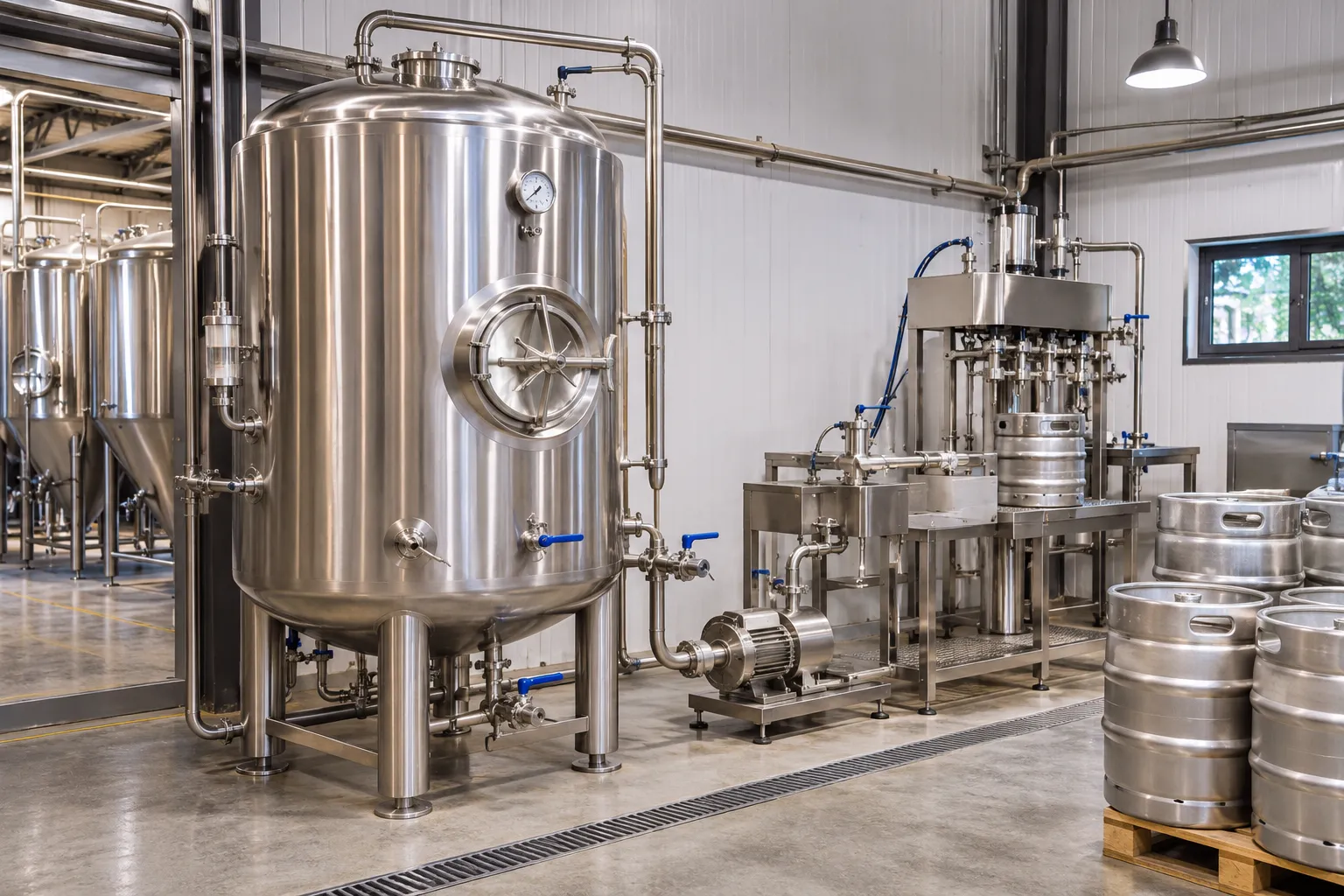
8. How Many Brite Tanks Does a Small Brewery Need?
Many small breweries do not need one bright tank for every fermenter.
The ratio is usually much lower because a brite tank normally holds beer for less time than fermentation vessels do.
Imagine:
- Fermentation tank occupancy: 14 days
- Brite tank occupancy: 2 days
A single brite beer tank may therefore serve several fermentation tanks over the same production period.
A useful planning formula is:
Required brite capacity ≈ beer entering finishing during the busiest packaging window
Do not calculate it only from total annual beer production.
Instead, look at your actual weekly workflow.
For example:
Example A
A small brewery packages one 10 BBL batch at a time.
A single 10 BBL working-volume bright tank may be enough if production dates do not overlap.
Example B
Two 10 BBL batches frequently need finishing at the same time.
The brewery might consider:
- 2 × 10 BBL brite tanks, or
- 1 × appropriately sized 20 BBL tank where batching and product compatibility permit
Example C
The brewery sells several different beers simultaneously.
Two smaller tanks may provide more flexibility than one large tank because two beer styles can remain separate.
Tank capacity should therefore match:
batch size + beer mix + packaging schedule + finished-beer dwell time
Not simply the size of the brewhouse.
9. Should a Brite Tank Match the Brewhouse or Fermenter Size?
Often, matching the normal packaged batch is a practical starting point.
If you normally transfer a 10 BBL finished batch, a tank with enough working capacity for that beer volume makes operational sense.
However, there are exceptions.
Some breweries use larger fermentation tanks that receive two brewhouse batches. In that case, the bright tank may also need to handle the larger finished batch.
Other breweries split one large batch across different packaging formats or serving locations.
The important measurements are:
- Рабочий объем
- Gross tank volume
- Normal transfer volume
- Required headspace
- Packaging batch
- Serving inventory
Do not buy a tank simply because its label says “10 BBL.”
Ask the supplier what that number represents.
For a pressure-rated beer tank, also confirm:
- Расчётное давление
- Operating pressure
- PRV configuration
- Камень для карбонизации
- Охлаждающая рубашка
- Изоляция
- CIP device
- Beer outlet
- Sampling connection
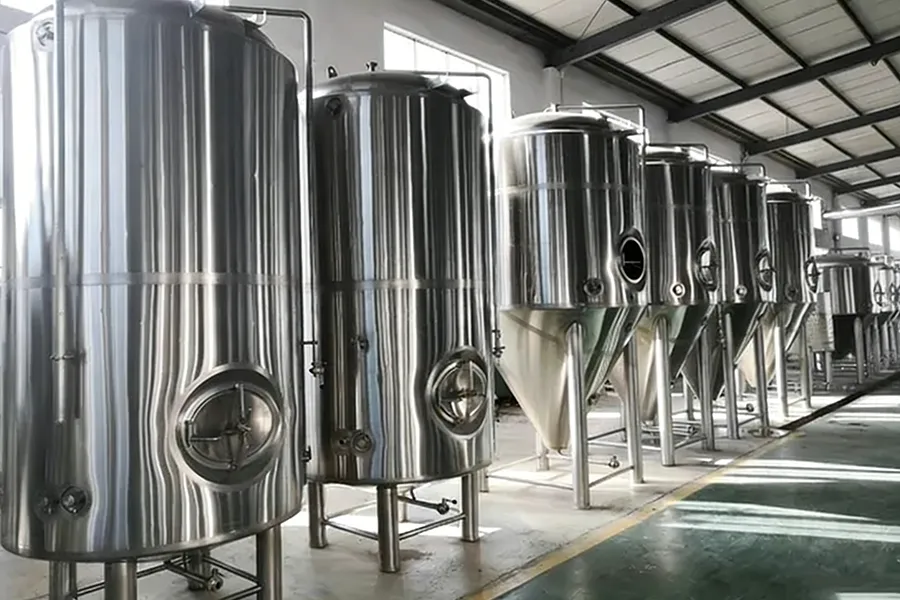
ZPET’s current bright beer tank range includes vertical and horizontal configurations, pressure-rated carbonation equipment, cooling jackets, and options designed for direct serving or packaging workflows.
The final configuration should follow how you actually move beer through the brewery.
10. What Is the Difference Between a Brite Tank, Serving Tank, and Lagering Tank?
These vessels can overlap in function, but they are not always the same.
Форфас (Brite Tank)
Main roles:
- Газирование
- Clarification
- Финальное кондиционирование
- Хранение готового пива
- Packaging preparation
Serving Tank
A serving tank holds finished beer for direct draft service.
Some brewpubs use serving tanks connected directly to taps. This can reduce keg handling and provide useful storage behind the bar or in a cold room.
A brite tank may also serve beer directly when the system is designed for it.
Lagering Tank
A lagering tank is used for cold maturation.
Traditional lagering may require longer cold storage before beer is ready. Depending on the process, the brewery may use:
- Унитанки
- Dedicated lagering tanks
- Horizontal storage tanks
- Емкости для светлого пива
The best choice depends on tank availability and the beer’s required maturation schedule.
Do not create extra transfers just because the equipment has different names.
Design the process backward from the finished product.
For some small breweries, one pressure-rated unitank can handle many stages.
For others, separating fermentation, lagering, and finished-beer storage creates a much more efficient cellar.
11. When Is Buying Another Fermenter Better Than Buying a Brite Tank?
This is one of the most important questions for a growing small brewery.
Suppose your production is constrained.
Should you buy:
another fermenter
или
a brite tank?
The answer depends on where the bottleneck occurs.
Buy another fermenter when:
- Fermentation itself is using all available capacity.
- Beer requires long fermentation or maturation inside the fermentation vessels.
- You want to produce more different beer styles simultaneously.
- Finished beer already moves quickly into kegs or cans.
- Packaging is not delaying tank turnover.
Consider a brite tank when:
- Fermentation finishes but tanks remain occupied waiting for packaging.
- Carbonation is inconsistent between batches.
- You want a dedicated finished-beer buffer.
- Your canning or bottling line operates only on certain days.
- Fermenters are frequently used as temporary storage tanks.
- You need better separation between fermentation and packaging operations.
Simplified decision tree
Are fermenters full because yeast is still actively fermenting beer?
→ Add fermentation capacity.
Are fermenters full because finished beer has nowhere to go?
→ A brite tank may solve the bigger problem.
That distinction can prevent unnecessary equipment spending.
12. How Do CIP, Glycol, and Pressure Requirements Change the Decision?
A bright tank adds more than another stainless steel vessel.
It adds another piece of equipment to the brewery’s utility system.
Glycol
The tank may require cooling to keep beer at the required temperature during carbonation, clarification, storage, or serving.
Your glycol chiller must have enough reserve capacity.
CIP
The tank needs regular cleaning and sanitation between batches.
A professional CIP process should reach:
- Tank interior
- Камень для карбонизации
- Valves
- Spray device
- Beer outlet
- Sample connection
- Product lines
Cleaning and maintenance must fit into the production schedule.
Давление
Carbonation and finished-beer holding can involve pressure.
The tank must be designed to withstand its intended operating conditions and include appropriate pressure-relief protection.
Do not compare tanks based only on price and capacity.
For B2B buyers, a proper equipment review should include:
| Артикул | Check Before Purchasing |
|---|---|
| Working capacity | Matches packaged batch |
| Материал | Пищевая нержавеющая сталь |
| Pressure rating | Matches process requirements |
| Газирование | Correct stone and gas connections |
| Охлаждение | Suitable jacket and glycol load |
| CIP | Proper cleaning coverage |
| Outlet | Compatible with packaging/serving |
| Управление | Temperature and pressure monitoring |
| Установка | Access, drains, piping, utilities |
This is especially important when adding the tank to an existing brewery rather than designing a completely new cellar.
13. Small Brewery Case Studies: When Does a Brite Tank Make Sense?
The following examples are planning scenarios, not claims about specific customer projects.
Case 1: 3 BBL Taproom
Production: 2 brews per week
Sales: Almost all onsite
Packaging: Mainly kegs
Cellar: 5 pressure-rated unitanks
Likely decision:
No separate brite tank initially.
The unitanks provide enough capacity, and packaging is simple. Floor space may be more valuable than another piece of specialized equipment.
Case 2: 7 BBL Brewpub
Production: 3 brews per week
Sales: Taproom + local keg accounts
Problem: Finished beer sometimes waits several days inside fermenters
Likely decision:
One 7 BBL brite tank becomes worth evaluating.
The goal is not simply clearer beer. It is releasing бродильные ёмкости faster.
Case 3: 10 BBL Microbrewery
Production: 3–4 brews per week
Sales: Taproom + kegs + cans
Packaging: Canning one or two days per week
Likely decision:
Dedicated brite capacity is increasingly valuable.
Finished beer can be prepared for the packaging line while fermentation vessels return to production.
Case 4: Lager-Focused Small Brewery
Production: Moderate
Beer style: Lager-heavy
Constraint: Long cold maturation
Here, simply adding one bright tank may not solve the problem.
The brewery should evaluate total lagering and finished-beer capacity together.
This is why equipment configuration must follow the production model.
14. How Should You Choose the Right Brite Tank for a Small Brewery?
Start with your weekly production.
Then work through the process step by step.
Ask:
How large is each finished batch?
This determines basic tank capacity.
Как часто вы осуществляете упаковку?
If packaging happens once weekly, you may need more finished-beer buffer capacity than a brewery packaging every day.
How many beer styles need to stay separate?
More styles may favor multiple smaller tanks.
Are unitanks currently delaying the next brew?
If yes, calculate how many fermenter days a dedicated finishing tank could release.
Will the tank serve beer directly?
If yes, serving connections and cellar layout become important.
Do you need carbonation in the tank?
Confirm the tank is properly pressure-rated and equipped with the required carbonation hardware.
Is glycol capacity available?
Adding a jacketed tank without checking the cooling system can create another bottleneck.
Can your CIP system clean it efficiently?
More tanks mean more cleaning cycles.
At ZPET, we design brewery tanks as part of a complete production flow. The goal is to match the brewhouse, fermentation tanks, bright beer tanks, glycol system, CIP, packaging line, and building layout rather than selecting each vessel independently.
That is especially important for a small brewery because every square meter and every equipment investment matters.
FAQs About Brite Tanks for Small Breweries
Does every small brewery need a brite tank?
No. Small breweries using pressure-rated unitanks may ferment, condition, carbonate, and hold beer in the same vessel. A brite tank becomes more useful when finished beer starts blocking fermentation capacity or when packaging and serving require a separate finished-beer stage.
Can I carbonate beer in a unitank instead?
Yes, when the unitank is designed and pressure-rated for carbonation. A separate brite tank is not mandatory simply to carbonate beer.
Will a brite tank make my beer taste better?
Not automatically. It gives the brewer more control over carbonation, clarification, storage, and workflow. Beer quality still depends on recipe, fermentation, oxygen control, sanitation, temperature, and proper handling.
Can I serve beer directly from a brite tank?
Yes, some brewery systems use bright beer tanks for direct serving when the tank, draft system, pressure, cooling, and connections are designed for that purpose.
How many brite tanks should a small brewery have?
Many small breweries can begin with one tank. The required number depends on batch size, packaging frequency, number of beer styles, and how long each batch stays in the finishing stage.
Should I buy a brite tank or another fermenter first?
If active fermentation is the bottleneck, buy more fermentation capacity. If completed beer is keeping fermenters occupied while waiting for carbonation, packaging, or service, a brite tank may provide greater production value.
Основные выводы
- A small brewery does not automatically need a brite tank.
- Pressure-rated unitanks can combine fermentation, conditioning, and carbonation for low-volume operations.
- A separate brite tank becomes more valuable when finished beer keeps fermenters occupied.
- The main business benefit is often faster fermenter turnover, not simply clearer beer.
- Brewpubs with low packaging volume may operate efficiently without one.
- Breweries using regular kegging, canning, or bottling schedules are more likely to benefit.
- A brite tank can support carbonation, clarification, maturation, storage, serving, and packaging preparation.
- Carbonation depends on correct beer temperature and pressure, not simply owning a bright tank.
- A bright tank does not replace good fermentation, filtration, sanitation, or oxygen-control practices.
- Match the tank capacity to the finished batch and packaging schedule, not only the brewhouse size.
- Before buying another fermenter, determine whether the real bottleneck is fermentation or finished-beer storage.
- Check glycol, CIP, pressure rating, floor space, packaging connections, and utility capacity before adding another tank.
- As production grows, separating fermentation from finishing can make the entire brewery easier to schedule.
For a new small brewery, the smartest approach is not to install every possible piece of brewery equipment on day one. Build a system that meets today’s production needs while making tomorrow’s expansion practical.
At ZPET, we manufacture customized stainless steel brewhouses, fermentation tanks, brite beer tanks, cooling systems, and turnkey brewery solutions for commercial B2B projects.
If you are deciding whether your brewery needs a brite tank, send us your brewhouse batch size, number of fermenters, brews per week, beer styles, packaging method, available floor space, and expected production growth. We can help compare a unitank-only cellar with a separate fermenter-and-brite-tank configuration and determine which approach fits your actual workflow.