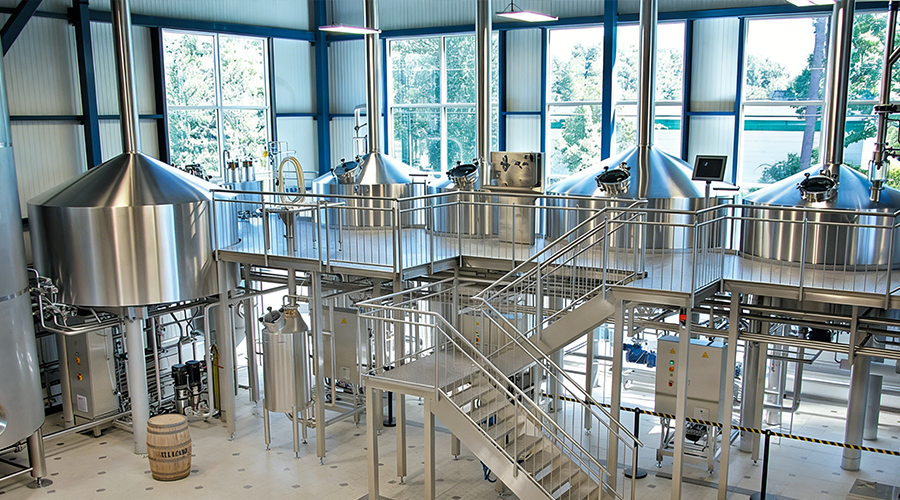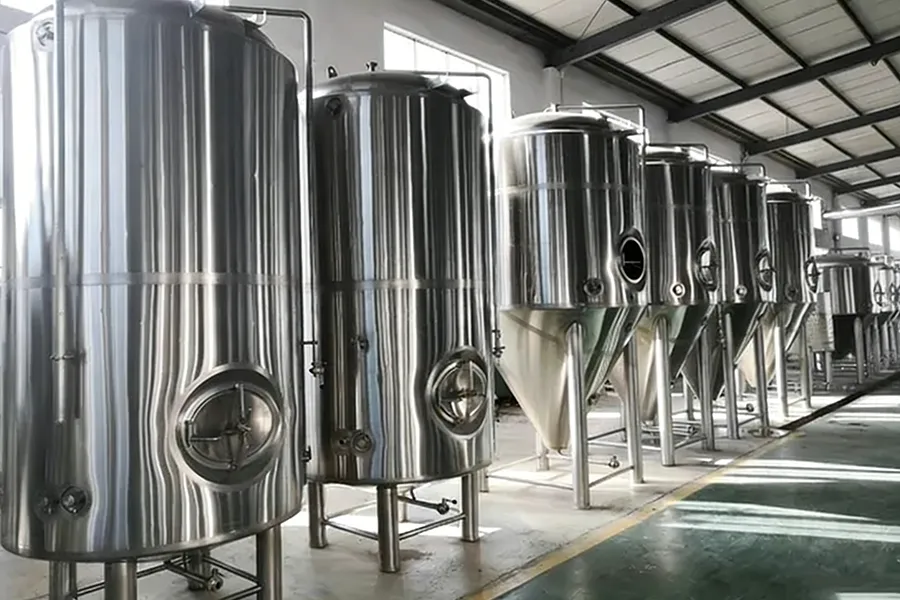
Elegir una clasificación de presión incorrecta para el tanque de fermentación puede provocar daños en el equipo, un funcionamiento inseguro y costosos retrasos en la producción. Un tanque que funciona para la fermentación normal puede no ser adecuado para el spunding, la carbonatación o las transferencias de cerveza presurizadas. Comprender los requisitos de presión antes de comprar ayuda a proteger tanto la cerveza como la inversión en la cervecería.
Un tanque de fermentación de cerveza debe soportar la presión máxima exigida por el proceso previsto, dentro de sus límites operativos documentados. No existe un valor seguro de PSI universal para todos los fermentadores. La fermentación bajo presión, el spunding, el cold crashing y las transferencias cerradas tienen requisitos diferentes. Confirme siempre la presión de diseño del recipiente, la presión de trabajo, el ajuste de la válvula de alivio, la protección contra vacío y las normas de seguridad aplicables antes de su puesta en marcha.
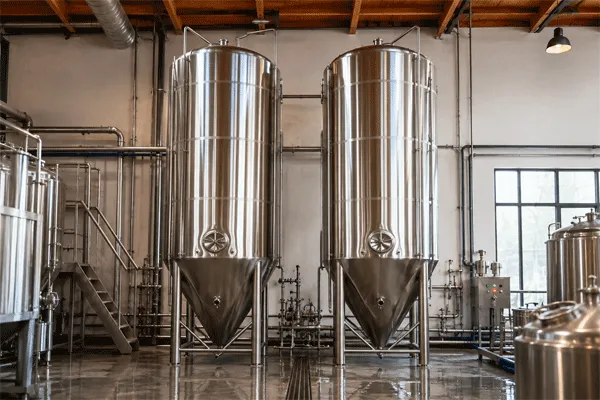
1. ¿Qué presión debe soportar un tanque de fermentación de cerveza?
La presión correcta depende de cómo se utilizará el tanque de fermentación.
Un cervecero que permite que el dióxido de carbono escape a través de un respiradero correctamente diseñado puede necesitar una configuración de recipiente diferente a la de quien planea fermentar a presión, capturar la carbonatación natural o transferir la cerveza a un barril presurizado.
Para una cervecería comercial, el primer paso es definir el proceso en lugar de limitarse a elegir un valor en PSI.
Un recipiente de fermentación puede necesitar soportar:
- Fermentación normal con liberación controlada de CO₂
- Fermentación bajo presión
- Carbonatación natural mediante spunding
- Enfriamiento rápido
- Transferencia cerrada de cerveza
- Acondicionamiento presurizado
- Conexión a un tanque brite
- Limpieza y enjuague CIP
Cada operación impone exigencias diferentes al equipo.
El actual de ZPET Tanques de fermentación La gama incluye opciones de unitanques con clasificación de presión, válvulas sanitarias, camisas de enfriamiento y sistemas de fermentación comerciales personalizables.
Sin embargo, la capacidad de presión máxima anunciada para una familia de productos nunca debe considerarse como la clasificación certificada de cada tanque de esa gama.
Los documentos de ingeniería aprobados para el recipiente exacto determinan sus límites operativos seguros.
Esta distinción es especialmente importante para los compradores internacionales que adquieren equipos de elaboración de cerveza para diferentes mercados.
2. ¿Cuál es la diferencia entre presión de trabajo, presión de diseño y clasificación de presión del tanque?
Muchas cotizaciones de equipos para cervecerías incluyen varias cifras de presión.
Estas cifras no son intercambiables.
Comprender la diferencia es una de las partes más importantes al seleccionar un fermentador comercial presurizado.
| Término de presión | Significado | Por qué es importante |
|---|---|---|
| Presión de operación normal | Presión utilizada durante una operación de elaboración definida | Debe permanecer dentro de los límites operativos aprobados |
| Presión de diseño | Presión utilizada como base de diseño de ingeniería | No equivale automáticamente a la presión de operación permitida |
| Presión máxima de trabajo permitida (MAWP) | Presión máxima permitida bajo condiciones de diseño especificadas | Importante para el funcionamiento certificado de recipientes a presión |
| Punto de ajuste de spunding | Presión a la que el dispositivo de control del proceso comienza a liberar gas | Controla la presión de fermentación; no es una clasificación de seguridad |
| Punto de ajuste del alivio de seguridad | Ajuste del dispositivo de alivio de presión de protección | Debe ser compatible con los límites aprobados del recipiente |
| Presión de prueba | Presión utilizada durante una prueba de aceptación especificada | No constituye una autorización para operar a esa presión |
| Presión de la camisa | Presión en la camisa de calentamiento o enfriamiento | Independiente de la presión dentro del tanque de cerveza |
| Clasificación de vacío | Presión diferencial negativa permitida | Ayuda a evitar el colapso del tanque |
For example, imagine a hypothetical tank with a documented maximum allowable working pressure of 1.5 bar gauge.
That does not mean every batch should ferment at 1.5 bar. The normal process setpoint may be lower, depending on the beer recipe and approved operating procedure.
Likewise, a test performed above normal operating pressure does not increase the tank’s permitted pressure rating.
Do not confuse glycol jacket pressure with product-side pressure
A commercial fermenter often has two separate pressure systems.
El primero es el espacio interior que contiene la cerveza y el gas de fermentación.
The second is the cooling jacket circulating glycol.
A specification stating that the glycol jacket has a 3-bar pressure rating does not establish that the beer chamber can safely operate at 3 bar.
Always ask the supplier to list both ratings separately.
For an example of how fermentation and bright beer tank specifications differ, see ZPET’s Especificaciones de los tanques de elaboración de cerveza a escala industrial: fermentadores frente a tanques de almacenamiento.
3. How Does Pressure Fermentation Work in a Commercial Brewing System?
During normal beer fermentation, yeast converts fermentable sugars into alcohol and CO₂.
In a vented system, carbon dioxide leaves through a suitable blowoff or vent arrangement.
During pressure fermentation, a rated vessel and controlled gas-release system retain some of that CO₂, creating positive pressure inside the tank.
Una válvula de spunding puede controlar la presión liberando el exceso de gas en un punto de ajuste del proceso especificado.
The basic process involves:
- Wort enters the sanitized fermenter.
- The brewer pitches the selected yeast.
- Active fermentation produces CO₂.
- The pressure-control arrangement manages gas release.
- The brewer monitors fermentation temperature, gravity, and pressure.
- The beer progresses toward conditioning, carbonation, or transfer.
A pressure fermentation system must also include independent protection against excessive pressure.
The spunding valve is primarily a process-control device. It should not be treated as a replacement for a properly specified safety relief system.
Why do brewers use pressure fermentation?
Potential reasons include:
- Controlled CO₂ retention
- Reduced oxygen exposure during suitable closed operations
- Carbonatación natural mediante spunding
- Mayor control sobre ciertos compuestos aromáticos derivados de la levadura
- More flexible closed-transfer arrangements
- Combining fermentation and conditioning in a compatible unitank
However, pressure fermentation does not automatically create faster fermentation or better beer.
The results depend on the yeast strain, recipe, temperature, pressure profile, and process conditions.
El cervecero debe decidir si la presión favorece el estilo de cerveza previsto antes de seleccionar el método de operación.
4. ¿Cómo afecta la presión de fermentación a la levadura, la producción de ésteres y el sabor de la cerveza?
Yeast responds to both its environment and the amount of dissolved carbon dioxide.
Higher CO₂ pressure can influence yeast growth and the production of flavor-active compounds.
One important group is esters.
Esters contribute fruity notes to many beer styles. Depending on the yeast strain and recipe, these flavors may include banana, pear, apple, or other fruit-like aromas.
La investigación publicada en el Revista del Instituto de Elaboración de Cerveza found that temperature and pressure affect yeast growth and ester production during lager fermentation.
The study showed that increased dissolved CO₂ could reduce ester production through its effects on yeast growth.
Esto tiene implicaciones prácticas.
Fermentación de lager
Some brewers use controlled pressure to manage fermentation characteristics and retain CO₂.
However, lager production still requires careful control over yeast activity, fermentation temperature, maturation, and unwanted flavor compounds.
La presión por sí sola no sustituye esos controles.
Ale fermentation
Para una pale ale u otro estilo de cerveza en el que sean importantes los aromas afrutados derivados de la levadura, una presión excesiva en una etapa inadecuada puede reducir el perfil de ésteres deseado.
This is particularly relevant when the brewer wants expressive fermentation character.
Yeast strain matters
Different yeast strains can react differently to similar conditions.
A pressure profile suitable for one lager strain should not automatically be applied to a different ale strain.
A commercial brewery should therefore validate pressure settings through its recipe-development and quality-control procedures.
The goal is consistent beer quality, not simply higher tank pressure.
5. What Pressure Should You Use for Lager, Ale, and Different Beer Styles?
There is no single fermentation pressure that works for every beer recipe.
Some brewing discussions mention values such as 10 PSI for certain pressure fermentation applications. That figure is only an example of a possible process setpoint in an appropriately rated system, not a general recommendation.
The equipment must be suitable for the planned pressure, and the recipe must support the chosen conditions.
A useful planning framework is:
| Beer Style or Process | Main Pressure Consideration | Equipment Priority |
|---|---|---|
| Traditional ale | Preserve desired yeast character | Reliable venting and temperature control |
| Pressure-fermented lager | Manage pressure alongside yeast and temperature | Rated fermenter and validated process controls |
| Fruity pale ale | Avoid unwanted suppression of ester formation | Flexible pressure-control options |
| Dry-hopped beer | Manage oxygen exposure and gas release | Sanitary ports and suitable gas handling |
| Naturally carbonated beer | Retain selected fermentation CO₂ | Spunding arrangement with independent relief protection |
| Beer for closed transfer | Maintain suitable transfer conditions | Rated tank, gas regulator, receiver, and transfer line |
This table identifies the engineering decision, not an operating recipe.
A brewer should establish the actual fermentation pressure based on product trials, yeast guidance, equipment documentation, and approved procedures.
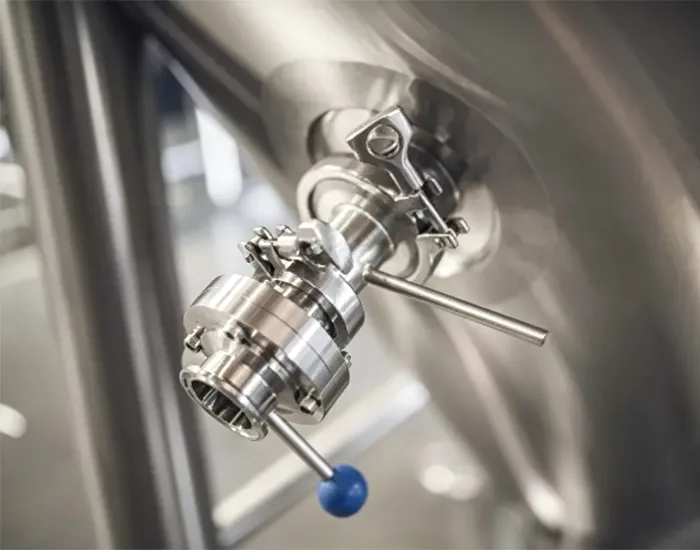
Should you ferment lagers under pressure?
Controlled pressure can be suitable for certain lager programs.
But temperature, yeast health, wort composition, and fermentation progress remain critical.
A brewery should not assume that higher pressure automatically allows every lager to ferment at higher temperatures without affecting flavor.
Different fermentation requirements call for different process controls.
That is why equipment flexibility is often more valuable than a single advertised maximum PSI figure.
6. Why Does a Pressure Fermenter Need a Spunding Valve and Safety Relief Valve?
A pressure-rated tank needs both process control and safety protection.
These serve different purposes.
Spunding valve
The spunding valve controls gas release during a selected fermentation or carbonation process.
When pressure rises above its process setpoint, the valve allows gas to escape.
This can help manage CO₂ retention.
Válvula de alivio de presión
A pressure relief valve, or PRV, protects the tank against excessive pressure when properly designed, installed, maintained, and sized for the credible pressure sources.
A safety relief device is not simply another way to adjust fermentation flavor.
It is protective equipment.
Vacuum protection
A tank can also be damaged by negative pressure.
For example, vacuum conditions can develop during rapid cooling or inappropriate cleaning and rinsing procedures.
A suitable vacuum relief arrangement helps protect the vessel against collapse.
The exact legal requirements depend on equipment design and the local jurisdiction.
Never interpret the 15 PSI regulatory threshold as permission to operate an unrated tank at 15 PSI.
An unrated or lower-rated tank may require a substantially lower operating limit.
For a commercial fermentation system, buyers should confirm that pressure-control and protective devices are compatible with the actual vessel rating.
7. What Happens During Cold Crashing and Pressure Changes?
Cold crashing reduces beer temperature after fermentation.
This helps yeast and other particles settle, supporting clarification and preparation for later processing.
However, reducing temperature also changes the pressure inside a closed fermentation vessel.
As gas cools and CO₂ dissolves into the beer, headspace pressure can fall.
If the tank does not have suitable gas management and vacuum protection, negative pressure may develop.
That creates a risk that is different from overpressure.
Why vacuum protection matters
A stainless steel tank can be strong against internal pressure but less resistant to external pressure.
An improperly protected vessel may deform or collapse if the pressure outside becomes significantly greater than the pressure inside.
The problem can also occur during cleaning.
For example, rapid cooling or condensation after hot cleaning can create negative pressure.
This is why tank engineering should address both:
Positive pressure protection + Negative pressure protection
A manufacturer should provide the documented pressure and vacuum capabilities of the vessel and its protective equipment.
For commercial breweries, pressure management should remain reliable during fermentation, cooling, transfer, and cleaning—not only during active fermentation.
8. How Do Dry Hopping, CO₂, and Closed Transfers Affect Fermenter Pressure?
Dry hopping introduces additional process considerations because hops may be added after fermentation has started.
In a pressurized system, the brewer must account for the pressure inside the tank and use equipment designed for the intended hop-addition method.
A standard open hatch should never be treated as a safe way to add hops to a pressurized vessel.
Commercial breweries may use engineered hop-dosing systems and controlled procedures to manage oxygen exposure, gas movement, and operator safety.
Dry hopping can also introduce additional gas-release or foaming considerations.
The process should be evaluated as part of the full fermentation system.
Closed transfer to a keg or bright beer tank
A brewery may transfer beer from a rated fermenter to another suitable vessel using CO₂ and a controlled pressure difference.
The goal is to move beer while limiting unwanted oxygen pickup.
The receiving keg or tank, hoses, valves, fittings, and regulators must also be suitable for the transfer conditions.
A safe pressure-rated fermenter does not make an unsuitable receiving vessel safe.
The brewer must consider:
- Fermenter pressure limit
- Receiving vessel pressure rating
- Differential pressure
- Gas regulator
- Transfer-line design
- Protección de alivio de presión
- Beer temperature
- Exposición al oxígeno
- Cleaning and sanitation
These details become especially important when a brewery moves from direct kegging to more advanced packaging.
A properly integrated system helps protect beer quality during transfer without depending on excessive pressure.
9. Can You Pressure Ferment in a Keg Instead of a Conical Fermenter?
Some homebrewers use pressure-rated kegs for experimental fermentation.
A Cornelius keg, often called a Corny keg, or another pressure-rated keg design may be suitable for certain small-scale applications when the complete setup is engineered and operated within its approved limits.
However, not every keg or fitting arrangement is appropriate for fermentation.
Foam, yeast, and trub can obstruct small openings or affect gas-release equipment.
A dip tube designed for serving finished beer may also be unsuitable for transferring beer containing sediment.
What changes at commercial scale?
A commercial conical fermenter is designed around larger working volumes, sanitary cleaning, yeast handling, and process control.
Compared with a small home brewing setup, commercial equipment may include:
- Stainless steel pressure-rated vessel
- Conical yeast collection area
- Dedicated sampling connection
- Temperature-control jacket
- Glycol cooling connections
- Equipo CIP
- Process monitoring
- Appropriate pressure and vacuum protection
The brewer may also need automation for larger or more frequent batches.
For a commercial brewery, the question is not whether pressure fermentation can work in a keg.
It is whether the selected fermentation equipment can safely and consistently support the production plan.
A properly specified conical fermenter or unitank is generally a more practical option for repeatable commercial beer production.
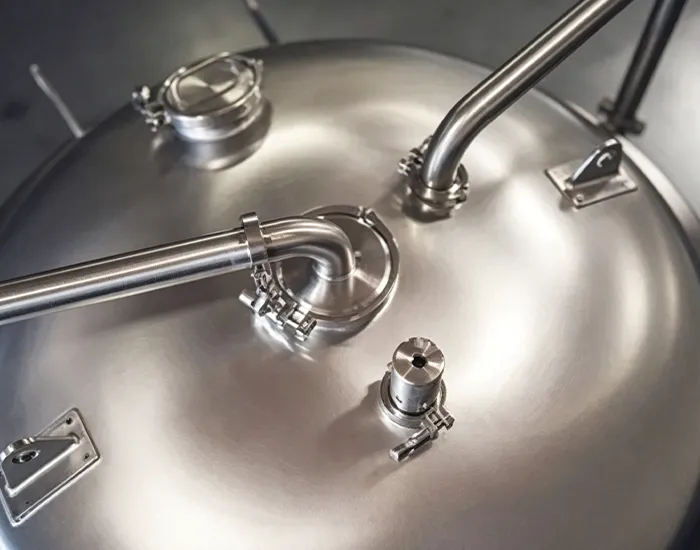
10. How Should a Brewery Specify Fermenter Pressure Before Purchasing?
Pressure requirements should be included in the original equipment specification.
Buyers should not wait until installation to discover that the selected tank cannot support a planned process.
At ZPET, we recommend reviewing fermentation pressure requirements together with tank capacity, cooling, sanitary fittings, and the entire brewery layout.
Commercial fermentation tank specification checklist
| Especificación | What the Buyer Should Confirm |
|---|---|
| Volumen de trabajo | Actual beer volume the tank will handle |
| Total volume | Internal vessel capacity and fermentation headspace |
| Intended processes | Fermentation, spunding, carbonation, transfer, cleaning |
| Presión de operación | Approved range for each planned operation |
| Design pressure / MAWP | Documented vessel pressure capability |
| Clasificación de vacío | Presión diferencial negativa permitida |
| PRV | Appropriate independent relief device |
| Spunding system | Suitable fermentation pressure control |
| Manómetro | Correct range and accuracy |
| Temperature sensors | Reliable process monitoring |
| Camisa de glicol | Cooling capacity and separate jacket pressure rating |
| Tank material | Appropriate sanitary stainless steel |
| Conexiones | Compatible sanitary valves and fittings |
| CIP | Cleaning coverage and pressure/vacuum considerations |
| Documentación | Drawings, test records, inspection, and required certifications |
| Destination market | Applicable local pressure-vessel rules |
Why the pressure specification matters
A tank may be suitable for ordinary vented fermentation but unsuitable for a planned carbonation or pressure-transfer operation.
If the buyer later adds a new process, the vessel and its protective equipment may need another engineering review.
It is much easier to establish the required pressure capability before fabrication.
What about ZPET pressure-rated fermentation tanks?
ZPET offers customized stainless steel fermentation tanks and unitank configurations with pressure-related options.
Our product information includes pressure-rated unitanks, pressure relief equipment, sanitary connections, and cooling jackets.
Some published product ranges indicate higher pressure capabilities, but those figures describe specific configurations or available options—not a universal rating for all ZPET vessels.
The final quotation should identify the approved pressure and vacuum conditions for the actual tank being supplied.
Explore nuestras commercial fermentation tanks and unitanks.
11. What Should a Commercial Brewery Check Before Using Pressure Fermentation?
Buying a pressure-capable vessel is only the first step.
The brewery also needs a repeatable operating procedure.
Before introducing a new pressure fermentation process, the responsible team should review the vessel documentation, approved limits, gas system, relief protection, and cleaning arrangements.
Important considerations include:
- Approved fermentation pressure profile
- Yeast strain and pitching plan
- Temperatura de fermentación
- Spunding control method
- Independent pressure relief
- Vacuum protection
- Gauge and regulator condition
- Dry-hop procedures
- Cold-crash gas management
- Closed-transfer arrangement
- CO₂ monitoring and ventilation
- Staff training
- Emergency response procedures
Pressure fermentation process review
| Process Stage | Main Control Question |
|---|---|
| Wort filling | Is the tank prepared, sanitized, and correctly configured? |
| Yeast pitching | Does the selected process support healthy yeast growth? |
| Fermentación activa | Are pressure and temperature within approved limits? |
| Spunding | Is excess CO₂ managed independently of safety relief? |
| Adición de lúpulo en seco | Is the addition method suitable for the tank conditions? |
| Enfriamiento rápido | Is negative pressure prevented? |
| Beer transfer | Are both vessels and transfer components appropriately rated? |
| CIP | Are pressure and vacuum risks addressed during cleaning? |
Pressure fermentation can provide operational flexibility, but it should be introduced through controlled process development.
A commercial brewer should record results and compare them with the brewery’s existing beer quality standards.
The goal is reliable, repeatable beer production.
12. How Can ZPET Help You Choose a Pressure-Rated Fermentation System?
Every brewery has different production requirements.
A small brewpub may need compact stainless steel unitanks for fermentation and conditioning.
A growing craft brewery may need larger pressure-rated conical fermenters, dedicated brite tanks, and more advanced glycol control.
A regional production brewery may require automated fermentation systems, larger batch capacity, integrated CIP, and more detailed equipment documentation.
The correct solution depends on several connected factors.
Example: A 10 BBL brewery planning pressure fermentation
Consider a hypothetical 10 BBL brewery that wants to produce:
- A core lager
- A pale ale
- A dry-hopped IPA
- Seasonal specialty beers
The brewery plans to use natural carbonation for selected products and closed transfers to a packaging area.
Before choosing fermentation tanks, the project should define:
- Which recipes will use pressure fermentation?
- What operating pressure profile has the brewer validated?
- Will carbonation take place in the fermenter or a brite tank?
- How will dry hopping be handled?
- What cold-crashing conditions are required?
- What pressure is required for the transfer system?
- What tank pressure and vacuum ratings are necessary?
- What safety documentation is required in the destination country?
These answers determine the specification.
They may also influence whether the project should use pressure-rated unitanks, separate conical fermentation vessels, or a combination of fermenters and bright beer tanks.
A larger nominal pressure rating is not always a better investment.
The better choice is a correctly engineered tank that meets the actual process needs.
Customized brewery engineering from ZPET
ZPET manufactures stainless steel brewhouse systems, fermentation tanks, bright beer tanks, and turnkey brewery equipment for international B2B projects.
Our equipment offering includes customized vessel configurations, cooling systems, sanitary fittings, and process-control options.
For projects involving pressure fermentation, engineering details should be confirmed in the equipment specification and technical drawings before manufacturing.
You can also explore our Depósitos de cerveza brillantes when the production process requires separate carbonation, conditioning, or packaging preparation.
Planning a new pressure fermentation system?
Ponte en contacto con ZPET with your brewery capacity, tank volume, beer styles, intended pressure processes, available utilities, and destination country.
We can help review suitable fermentation tank configurations and develop a project-specific equipment proposal.
Frequently Asked Questions About Beer Fermentation Tank Pressure
What PSI should a beer fermentation tank be rated for?
The tank should have a documented pressure rating suitable for the maximum conditions expected in its intended process. There is no universal PSI value for every fermenter. The approved operating pressure, relief settings, vessel certification, and local requirements must be verified for the exact equipment.
Is 10 PSI safe for pressure fermentation?
Not automatically. Ten PSI may be used as a process setpoint in some appropriately rated fermentation systems, but it is unsafe to assume every tank can handle that pressure. Confirm the specific manufacturer’s operating limits and the suitability of the complete pressure-control arrangement.
Does pressure fermentation make beer ferment faster?
Not necessarily. Increased dissolved CO₂ can influence yeast activity and, under some conditions, reduce yeast growth or alter fermentation behavior. Pressure should not be used as a substitute for proper pitching, yeast nutrition, and temperature control.
Can a lager be fermented under pressure?
Yes, some lager production processes use controlled pressure. However, the correct pressure profile depends on the yeast strain, fermentation temperature, recipe, and desired flavor. Pressure fermentation should be validated rather than applied as one standard recipe to every lager.
What is the difference between a spunding valve and a pressure relief valve?
A spunding valve manages pressure during the brewing process. A properly engineered pressure relief device protects the vessel against excessive pressure. A process-control spunding valve should not replace independent safety protection.
Can a pressure fermenter also carbonate beer?
Yes, when it is designed and rated for that operation. Some commercial unitanks support fermentation, conditioning, and carbonation in the same vessel. The approved vessel pressure, carbonation system, temperature, and safety equipment must all match the process.
Can a fermentation tank collapse during cold crashing?
Yes. A tank without appropriate vacuum protection can be damaged by negative pressure during cooling or other operations. Vacuum rating and relief capacity should be reviewed during equipment selection.
Puntos clave
- There is no single safe fermentation pressure for every beer tank.
- Select pressure capability according to the intended brewery process.
- Working pressure, design pressure, MAWP, relief settings, and test pressure are different specifications.
- Glycol jacket pressure must not be confused with the pressure rating of the beer chamber.
- Pressure fermentation can affect yeast growth and ester production.
- Lager and ale fermentation may require different pressure-control strategies.
- A spunding valve is a process-control device, not a substitute for independent pressure relief.
- Cold crashing and CIP can create vacuum risks.
- Closed transfers require suitable pressure ratings throughout the connected system.
- The receiving keg, brite tank, fittings, and piping must also be appropriate.
- A 10 PSI example is not a universal safe operating recommendation.
- Pressure-vessel requirements depend on equipment design and the destination market.
- Request project-specific pressure documentation before purchasing or operating commercial fermentation equipment.
- A correctly specified fermentation tank should support safe operation, consistent beer quality, and future production needs.
At ZPET, we provide customized stainless steel fermentation tanks, pressure-rated unitanks, brewhouse systems, and complete brewery solutions for global B2B customers.
Contact our team to discuss your fermentation tank pressure requirements and receive a project-specific equipment proposal.