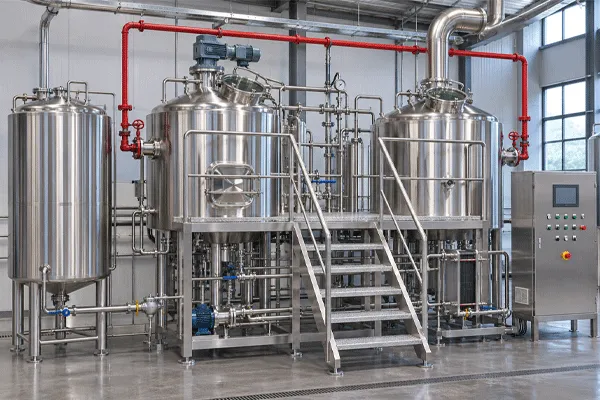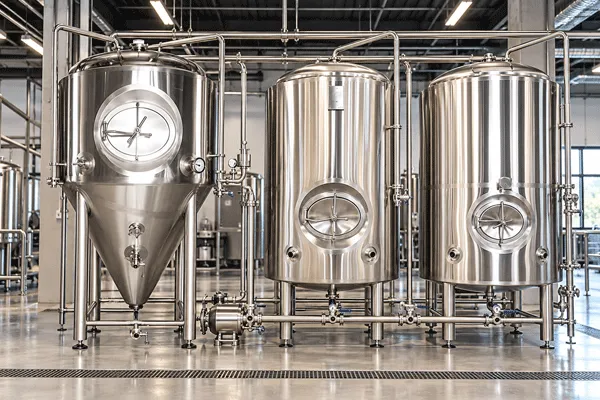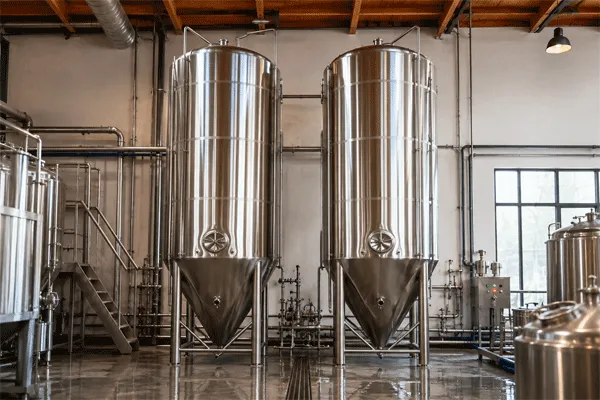
Microbrewery equipment at the 7-30 BBL tier is a system, not a single purchase: a brewhouse, a fermentation and bright beer tank cellar, a glycol loop, a CIP loop, and a control layer that ties them together. Most first-time buyers price the brewhouse first and treat the other four as an afterthought — which is where budgets and timelines usually go wrong.
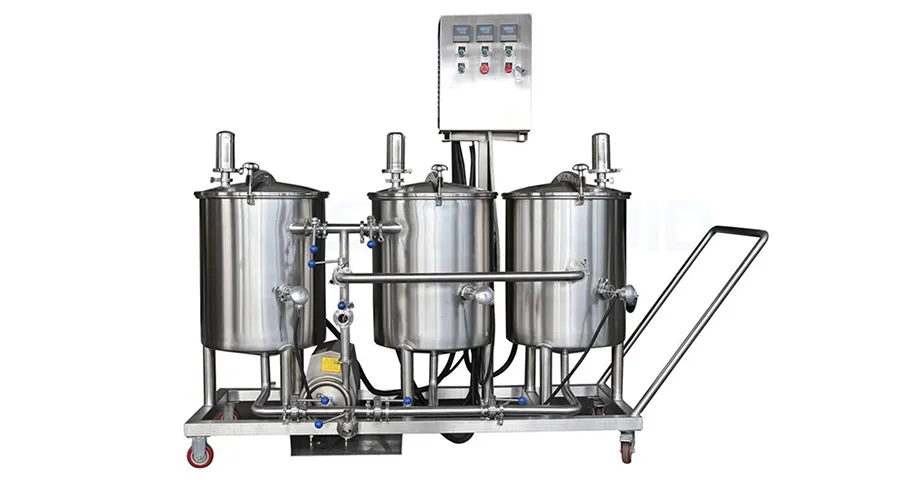
What “Microbrewery Equipment” Actually Covers
Search results and vendor pages under this term mostly show a brewhouse — the mash tun, kettle, and whirlpool that produce wort. That’s one piece of a 7-30 BBL microbrewery system, not the whole thing. A working system at this tier also needs somewhere for that wort to ferment and condition (the cellar), a way to hold fermentation and cold-crash temperatures (glycol), a way to clean tanks and lines between batches (CIP), and something coordinating all three (controls).
Skipping any one of these in the initial spec doesn’t just mean a follow-up purchase later. It means the follow-up purchase has to match interface points — pipe sizes, glycol supply temperature, CIP circuit length — that were fixed by the first vendor’s equipment, whether or not that vendor is involved in round two.
I cinque sottosistemi e come dipendono l’uno dall’altro
A microbrewery system only works as a system if each piece is sized against the others, not against a target batch volume in isolation.
- Brewhousesets batch size and brew frequency, which in turn sets how much fermentation capacity the cellar needs and how often the glycol loop has to handle a wort knockdown load on top of active fermentation.
- La cantina (serbatoi di fermentazione e serbatoi per birra brillante) determina il carico termico totale del glicole che il refrigeratore deve gestire, mentre il numero e la geometria dei suoi serbatoi determinano la durata di funzionamento del circuito CIP per ciclo.
- Il circuito del glicole deve essere dimensionato per la peggiore combinazione realistica di fermentazione attiva, cold crash e raffreddamento del mosto in corso contemporaneamente, non per un singolo serbatoio isolato.
- Il circuito CIP deve raggiungere una velocità di pulizia adeguata nel percorso più lungo e nel recipiente più grande della cantina, non solo nella sala cottura.
- I controlli integrano i dati di sensori e valvole di tutti e quattro in un’unica interfaccia, e il livello di automazione per cui vale la pena pagare a questa fascia dipende più dai piani del personale che dalle dimensioni del lotto.
The rest of this guide walks through each piece with the sizing questions that actually determine whether they work together.
Brewhouse: Vessel Count and Heat Source
At the 7-30 BBL tier, brewhouses typically run 3-vessel to 4-vessel configurations (mash/lauter, kettle/whirlpool, and sometimes a separate hot liquor tank), heated by steam or electric elements. Direct-fire heating, common at the smaller nano and pilot tiers, is less common at this scale because of the surface area and burn-risk considerations that come with larger kettle volumes.
The heat source decision made here isn’t isolated. Steam heating requires a boiler and steam distribution, which adds a utility interface the cellar and CIP loop don’t touch but the facility’s overall plant sizing does. Electric heating simplifies utilities but changes boil vigor and evaporation rate compared to steam — a detail that matters more for recipe consistency than for capacity planning, but shows up the first time a brewer tries to reproduce a pilot-scale recipe at production volume.
Cellar: Fermentation Tanks and Bright Beer Tanks
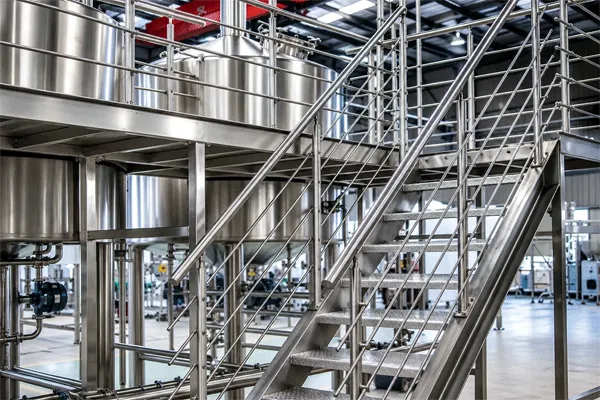
Vasche di fermentazione e serbatoi di birra luminosi at this tier share the same specification baseline: SS304/316L construction, 0.4 μm mirror-polish interior finish, dimple cooling jacket, optional side manway, and pressure testing, backed by a 10-year structural warranty on the vessel work. The design decision that actually matters for a 7-30 BBL buyer isn’t the finish spec — most vendors converge on similar numbers — it’s tank count relative to brew frequency.
A single sala di cottura feeding too few fermenters creates a bottleneck: the brewhouse sits idle waiting for tank space to free up, which is the opposite of what a “high-efficiency” microbrewery system is supposed to deliver. As a rough starting point, a brewery running one brew day per fermentation cycle needs enough fermenters to hold at least two to three cycles’ worth of beer in various stages (active fermentation, conditioning, and one being cleaned or awaiting transfer) before it becomes brewhouse-limited rather than cellar-limited. The right ratio depends on fermentation length for the beer styles being brewed and how often the brewhouse actually runs, which is a conversation worth having with a vendor before tank count gets fixed.
Circuito del glicole: dimensionare per la combinazione peggiore, non per la giornata media
Glycol chiller sizing is where under-specification shows up fastest, because the failure mode isn’t a missing part — it’s a chiller that runs but can’t keep up once more than one tank needs cooling at the same time.
A commonly used engineering rule of thumb for active fermentation heat load is roughly 280 BTU per degree Plato per barrel over a 70-hour fermentation window; a 20 BBL batch at 15°P works out to roughly (280 × 15 × 20) ÷ 70 ≈ 1,200 BTU/hr for that single tank in steady active fermentation. That’s a manageable number on its own. The problem is that real breweries rarely run one tank in isolation — a cold crash on one fermenter, active fermentation in two others, and a hot wort knockdown into a fourth can all land on the same afternoon, and the chiller has to handle that combined load, not the single-tank average.
Two variables change the number more than most first-time buyers expect: tank insulation (an insulated jacket meaningfully reduces standing heat gain) and ambient temperature in the brewhouse space. A chiller sized for a temperature-controlled facility will underperform in a hot, poorly ventilated production space, which is a facility question that has nothing to do with the equipment spec sheet.
CIP: Loop Design, Not Just a Pump and a Tank
I sistemi di pulizia sul posto vengono trattati come un componente aggiuntivo standard più spesso di qualsiasi altro sottosistema in questo elenco, il che è un errore nella scala da 7 a 30 BBL, perché le tubazioni e le dimensioni dei serbatoi sono sufficientemente grandi affinché velocità insufficienti si manifestino realmente come residui visibili.
Sanitary process design conventions consistent with 3-A Sanitary Standards call for CIP circulation velocity of at least 5 ft/s (1.5 m/s) to sustain the turbulent flow that mechanically scrubs interior surfaces — lower velocities can leave laminar zones where residue simply doesn’t get moved. A CIP pump and supply tank sized around the brewhouse’s smaller lines will often fail to reach that velocity in the cellar’s larger bright beer tank connections, which is exactly the kind of mismatch that shows up only after the system is already installed.
The practical fix is sizing the CIP loop around the largest vessel and longest run in the system — typically the bright beer tank or the largest fermenter — rather than around whatever pipe diameter the brewhouse happens to use.
Controls: Where Automation Earns Its Keep at This Tier
L’automazione completa PLC/HMI è standard nella fascia commerciale da 40 BBL in su commercialeier, where continuous, multi-shift operation makes manual monitoring impractical. At 7-30 BBL, the calculation is different. A microbrewery running one or two brew days a week with a small crew often gets more value from targeted automation — temperature control on fermenters, automated CIP cycle sequencing — than from a fully integrated HMI covering every subsystem.
The interface question matters here too: whatever controls layer gets specified needs to actually talk to the glycol chiller’s own control panel and the brewhouse’s temperature probes, not run as three separate systems that happen to sit in the same room. That integration point is worth confirming with a vendor in writing before ordering, not assumed to work because all the individual components are automation-capable.
Sequencing a Microbrewery System Purchase
- Fix brewhouse batch size and target brew frequency first.Everything downstream sizes against these two numbers.
- Size the cellar to brewhouse throughput, not to a round tank count — work backward from how many brew cycles need to be in-progress simultaneously without idling the brewhouse.
- Calcolate il carico di glicole per il peggior scenario simultaneo realistico (cold crash più fermentazione attiva più raffreddamento del mosto), non per la giornata media.
- Progettate il circuito CIP in funzione del recipiente più grande e del percorso più lungo, verificando la velocità minima di circolazione anziché presumere che la dimensione della pompa cresca linearmente con il numero di serbatoi.
- Decide the controls layer against labor plans, not against what’s technically available at the next tier up.
- Confermate i requisiti di conformità per l’esportazione del mercato di destinazione prima della fabbricazione — PED (CE) per l’Europa, UL/cUL per i quadri di controllo nordamericani, AS1210 per l’Australia — poiché adeguare la conformità dopo la fabbricazione è molto più costoso che progettarla fin dall’inizio.
Buying One System vs. Assembling One from Multiple Vendors
Alcuni birrifici acquistano la sala cottura da un produttore e la cantina, il glicole e il CIP da altri, di solito cercando il prezzo più basso per ogni singolo componente. Rispetto a un sistema chiavi in mano di un unico fornitore, questo approccio può ridurre sulla carta il prezzo di listino, ma trasferisce il rischio delle interfacce sull’acquirente.
The single-vendor route means brewhouse output rate, cellar tank connections, glycol supply lines, and CIP loop diameters get engineered against each other before fabrication starts — which is the practical meaning behind 3D layout engineering completed before the order is placed, rather than each vendor engineering their own piece in isolation. The tradeoff is less room to individually price-shop each subsystem against the cheapest available option.
L’approccio con più fornitori può risultare vincente sul prezzo delle singole voci, ma ogni interfaccia tra fornitori — raccordi per tubi, compatibilità dei segnali di controllo, temperatura di mandata e portata del glicole — diventa qualcosa che l’acquirente deve specificare e verificare autonomamente, poiché nessun singolo fornitore è responsabile del fatto che i componenti siano effettivamente compatibili tra loro. Per un acquirente alla prima esperienza senza supporto ingegneristico interno, è facile sottovalutare questo onere di verifica finché la squadra di installazione non si trova sul posto con collegamenti non compatibili.
Cosa chiedere a un fornitore prima di firmare
- Does the quote include a 3D facility layout showing brewhouse, cellar, glycol, and CIP interface points, or only the brewhouse?
- Quale fonte di calore utilizza la sala cottura e coincide con le utenze già disponibili o previste presso il sito?
- What glycol load calculation was the chiller sized against — single-tank average or worst-case simultaneous operation?
- Quale velocità di circolazione CIP è prevista dalla progettazione del circuito e rispetto a quale recipiente?
- What compliance standards is the system engineered to meet for the intended export market?
On pricing: microbrewery systems at this tier are quoted per project rather than off a published price list, since brewhouse configuration, tank count, and automation level all move the total. Factory-direct pricing without distributor markup is a fair general expectation from a manufacturer selling directly, but any specific number requires a quote against an actual spec — a listed range on a vendor page without that context isn’t especially useful for budgeting.
Domande frequenti
Q: What’s included in “microbrewery equipment”?
Nella fascia 7-30 BBL, un sistema completo include la sala cottura (ammostamento/filtrazione, caldaia/whirlpool), una cantina di serbatoi di fermentazione e di birra chiara, un circuito di refrigerazione a glicole, un circuito di pulizia CIP e un livello di controllo che li collega. Molte pagine dei fornitori associate a questo termine di ricerca mostrano solo attrezzature per la sala cottura.
D: Di quanti fermentatori ha bisogno un microbirrificio da 7-30 BBL?
Enough to hold two to three brew cycles’ worth of beer across active fermentation, conditioning, and cleaning/transfer stages without idling the brewhouse — the exact count depends on fermentation length for the beer styles being brewed and how often the brewhouse runs.
D: L'automazione PLC/HMI è necessaria a questa scala?
Non sempre. L'automazione completa diventa più vantaggiosa a partire da 40 BBL, dove il funzionamento continuo su più turni rende impraticabile il monitoraggio manuale. Tra 7 e 30 BBL, l'automazione mirata della temperatura di fermentazione e della sequenza CIP offre spesso un valore maggiore per ogni euro rispetto a un sistema completamente integrato.
D: Il dimensionamento del glicole cresce linearmente con il numero di serbatoi?
No. Dipende dalla combinazione realistica più gravosa di carichi simultanei — cold crash, fermentazione attiva e raffreddamento del mosto che avvengono nello stesso momento — oltre che da variabili specifiche dell'impianto, come l'isolamento e la temperatura ambiente.