David Zhang | Founder & CEO, ZPET Last reviewed: September 4, 2026 · Reviewed by David Zhang, Founder & CEO
A 4 BBL brewing system is a nanobrewery-scale brewhouse that produces roughly 4 barrels — about 470 L — per batch, built for brewpubs, taprooms, and proof-of-concept breweries. The number describes the brewhouse kettle alone. Fermentation, bright tank, and cellar capacity are sized separately, and they need to match your production target, not just the brewhouse.
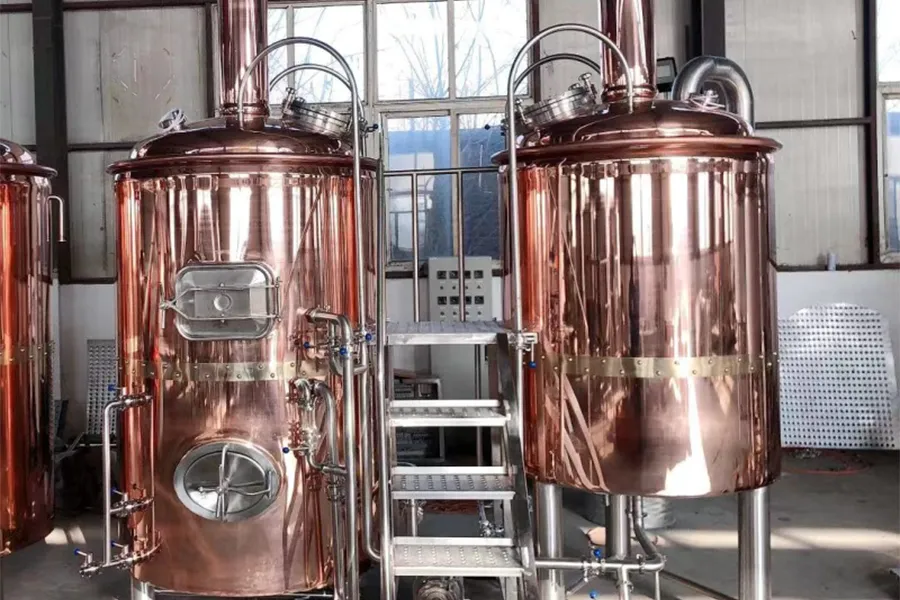
What “4 BBL” Actually Refers To
BBL (US beer barrel) is the standard capacity unit used across North American brewing, equal to 31 US gallons or roughly 117.3 liters — a convention the Brewers Association uses in its industry capacity tiers and production statistics. A “4 BBL system” almost always means a 4 BBL brewhouse: the mash tun, kettle, and hot liquor tank sized to produce about 470 L of wort per brew cycle.
That’s a different number from your annual output. A single 4 BBL brewhouse, brewed on a normal weekly schedule, can support well over 500 BBL a year of finished beer — the ceiling depends on fermentation and cellar capacity, not the brewhouse itself. This distinction trips up a lot of first-time buyers, and it’s the most common sizing mistake covered further down.
What’s Actually in a 4 BBL Nanobrewery Package
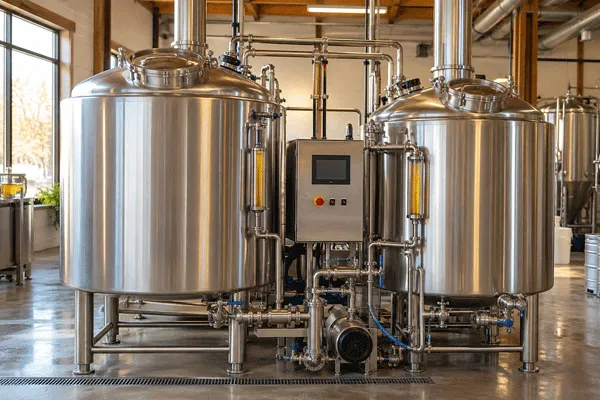
A complete 4 BBL system typically includes:
- Пивоварня— 2-vessel or 3-vessel configuration (combined mash/lauter tun plus kettle/whirlpool, or separated), steam, electric, or direct-fire heating
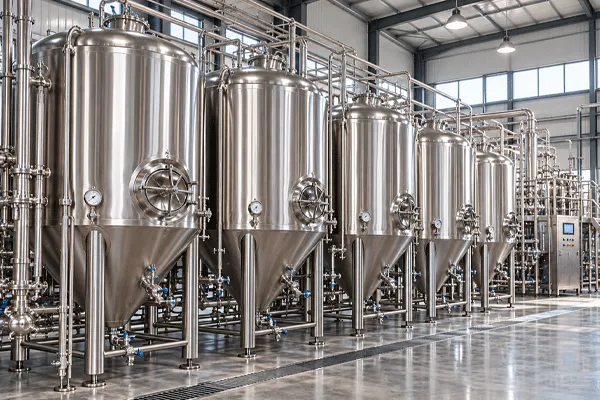
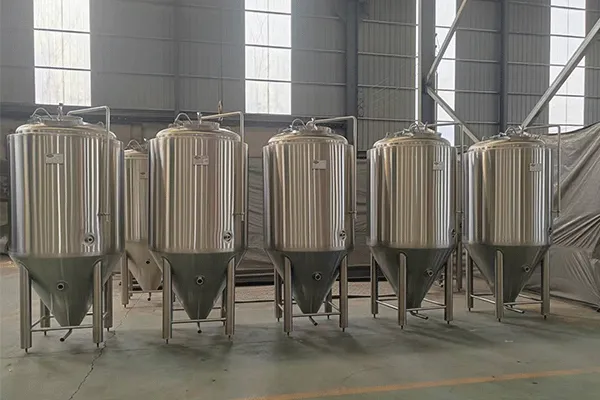
- Ферментационные баки— sized in multiples of the brewhouse batch (e.g., 2–4 x 4 BBL fermenters for weekly rotation)
- Емкости для светлого пива— same construction spec as fermenters, used for carbonation and serving-ready conditioning
- Glycol chilling— sized to the combined jacket area of fermenters and BBTs, not just the brewhouse
- CIP setup— a cleaning-in-place tank and pump, sometimes combined with the hot liquor tank on smaller builds
- Controls— manual valve/thermometer setups on the smallest rigs, PLC/HMI touch panels as batch size and vessel count grow
On ZPET’s Nanobrewery Equipment line (1–5 BBL), the positioning is intentionally narrow: minimal start-up investment and a footprint that fits into an existing retail or restaurant space, rather than a scaled-down version of a commercial plant.
ZPET 4 BBL Nanobrewery Specifications
| Параметр | Spec |
| Batch size | 4 BBL (approx. 470 L) per brew cycle |
| Product line | Nanobrewery Equipment (1–5 BBL range) |
| Vessel configuration | 2-vessel or 3-vessel brewhouse |
| Отопление | Паровой / электрический / с прямым нагревом |
| Материал | SS304 / SS316L санитарного класса |
| Surface finish | Зеркальная полировка с точностью 0,4 мкм |
| Сварка | TIG / double-sided argon arc welding; CNC laser-cut components |
| Тестирование | Spectrometer material analysis, 24-hour pressure hold test, X-ray weld inspection, 5-step QC |
| Warranty | 10-year structural warranty |
| Compliance | Engineered to meet PED (CE), UL/cUL, and AS1210 requirements |
Layout drawings and vessel dimensions are confirmed per order against the buyer’s actual floor plan and ceiling height — a 4 BBL system going into a converted retail unit has different clearance constraints than one going into a purpose-built brewhouse room, so exact footprint dimensions aren’t fixed until the site survey is done.
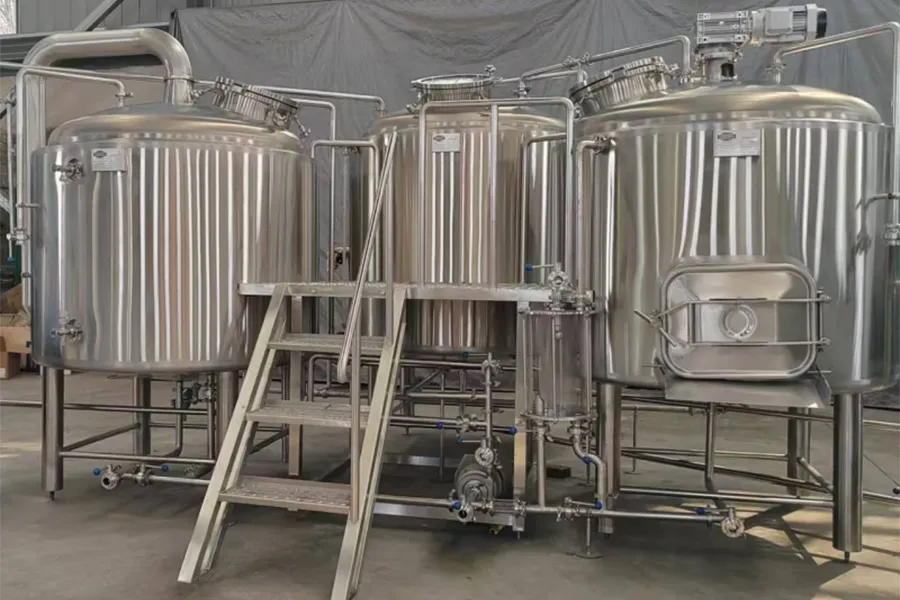
Planning the Physical Space and Utilities
Four things determine whether a 4 BBL system fits before it ships:
- Floor footprint.Account for the brewhouse frame, fermenter/BBT clearance for cleaning access, and a walkway wide enough for keg or cask movement — not just the equipment’s stated dimensions.
- Высота потолка.Fermenter height plus a manway clearance above it is the usual constraint in retrofitted spaces; measure to the lowest overhead obstruction, not the nominal ceiling.
- Drainage and water.A floor drain rated for CIP discharge volume, plus hot and cold water supply lines sized for mash and sparge water demand.
- Electric-heated brewhouses draw significantly more amperage than steam or direct-fire units; confirm panel capacity with an electrician before ordering, not after delivery.
ZPET’s engineering process front-loads this: 3D layout drawings and technical flow charts are produced against the buyer’s building footprint and utility specs before fabrication starts, which is where most footprint mismatches get caught — on paper, not on the install day.
The Sizing Mistake That Costs the Most Later
The most common error isn’t choosing too small a brewhouse — it’s under-sizing fermentation and cellar capacity relative to it. A 4 BBL brewhouse run on a weekly schedule needs roughly 4–6 fermenters cycling through fermentation, conditioning, and cleaning stages to keep pace without idle brew days. Buyers who purchase a 4 BBL brewhouse with only two fermenters often find themselves brewing every other week regardless of demand, because the cellar — not the brewhouse — is the actual bottleneck.
The fix is to size fermentation and BBT capacity around your intended brew frequency at the outset, even if it means phasing in fermenters over the first year rather than buying the full cellar on day one.
How This Compares to Assembled Nano Rigs
A meaningful share of nano-scale systems on the market are assembled from separately sourced components — a kettle from one supplier, a control panel from a separate panel builder, tanks from another vendor — rather than engineered and fabricated as one system. That approach can lower upfront cost, but it also means warranty coverage, weld quality, and dimensional tolerances vary by component rather than being backed by a single manufacturer. A factory-direct, single-source build removes that coordination risk: one warranty period, one welding standard across every vessel, and one point of contact if something needs adjustment after installation.
Warranty and Compliance: What “Engineered to Meet” Means
ZPET’s 4 BBL systems carry a 10-year structural warranty, backed by double-sided TIG argon arc welding, SS304/316L construction, and a 24-hour pressure hold test on every vessel — not by a marketing claim alone.
On compliance: ZPET’s equipment is engineered to meet PED (CE), UL/cUL, and AS1210 requirements. That phrase matters legally. “Engineered to meet” means the equipment is designed and built to those standards’ technical requirements; it is not the same claim as holding a third-party certification issued against a specific standard. If your import process requires a certified document rather than a design-standard, confirm directly what documentation your customs broker or site inspector will accept before ordering.
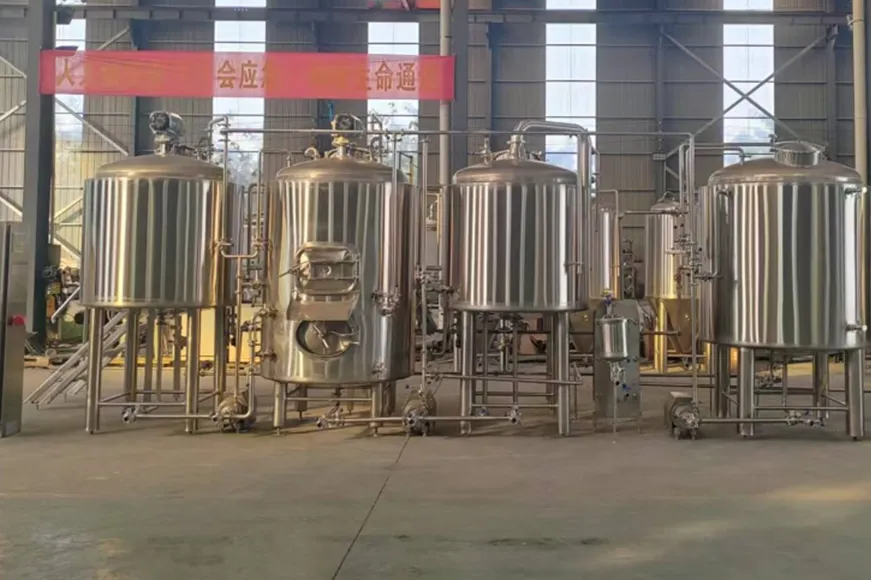
What Drives the Price
ZPET doesn’t publish price lists, and for a 4 BBL system the reason is straightforward: vessel count, heating method, control automation level, and shipping destination all move the number independently. A 2-vessel manual system costs meaningfully less than a 3-vessel PLC-controlled build of the same batch size, and freight to a landlocked destination adds a different cost layer than a coastal port delivery.
What buyers can expect either way is factory-direct pricing — no trading-company markup sitting between the fabrication cost and the quote. For an exact number, a request-a-quote conversation with your building footprint, target brew frequency, and destination country will get a usable figure faster than any published range would.
Часто задаваемые вопросы
Q: How many barrels of beer does a 4 BBL system produce per year?
A: That depends on brew frequency and fermenter count, not the brewhouse size alone. A 4 BBL brewhouse brewed weekly with adequate fermentation capacity can support several hundred BBL annually; the brewhouse itself doesn’t cap annual output.
Q: Is a 4 BBL system enough for a brewpub, or should I start bigger?
A: For an on-site brewpub selling primarily through its own taproom, 4 BBL is a common starting point. If distribution beyond the taproom is part of the plan from day one, sizing fermentation capacity generously — or starting at 7 BBL — avoids an early upgrade cycle.
Q: What’s the difference between a 2-vessel and 3-vessel 4 BBL brewhouse?
A: A 2-vessel system combines the mash/lauter tun and kettle/whirlpool into fewer tanks, which saves floor space and cost but extends brew day length since one vessel handles two functions sequentially. A 3-vessel system separates these functions, shortening brew day at the cost of a larger footprint.
Q: Does a 4 BBL system need a dedicated electrical service?
A: Electric-heated brewhouses usually do — draw requirements are higher than most existing restaurant or retail electrical panels support. Steam and direct-fire heating reduce electrical demand but add their own utility requirements (a boiler or gas line). Confirm with an electrician before finalizing heating method.
Q: Can fermenters and bright tanks be added later, or do they need to be ordered with the brewhouse?
A: They can be phased in, though ordering the full cellar footprint at once — even if fabrication is staged — keeps dimensions and jacket sizing consistent across all vessels rather than mixing specs from different production runs.