Starting a professional cidery requires more than good apples and traditional recipes. Many cider makers struggle with inconsistent quality, limited production capacity, and unsuitable equipment when moving from small batches to commercial production. Without the right cider making equipment, controlling fermentation, flavor, hygiene, and efficiency becomes difficult.
Commercial cider brewing equipment provides professional cider makers with complete solutions for apple processing, juice extraction, fermentation, storage, filtration, and packaging, helping produce consistent high-quality hard cider at different production scales.
План статьи
1. What Is Commercial Cider Brewing Equipment and Why Does It Matter?
2. What Essential Cider Making Equipment Does a Professional Cidery Need?
3. How Does a Cider Press Improve Commercial Cider Production?
4. Why Are Stainless Steel Fermentation Tanks Important for Cider Brewing?
5. How Does Fermentation Equipment Control Hard Cider Quality?
6. What Equipment Is Needed for Bottling and Packaging Cider?
7. How Can Cider Makers Scale Up From Small Production to Commercial Manufacturing?
8. What Factors Should You Consider When Selecting Commercial Cider Equipment?
9. How Does a Complete Cider Brewing System Support Modern Beverage Production?
10. Frequently Asked Questions About Commercial Cider Brewing Equipment
What Is Commercial Cider Brewing Equipment and Why Does It Matter?
The global demand for craft beverages continues to grow, and cider has become an attractive category for breweries, beverage startups, wineries, and independent cider makers. However, producing commercial cider requires a carefully designed production process rather than simply expanding home brewing methods.
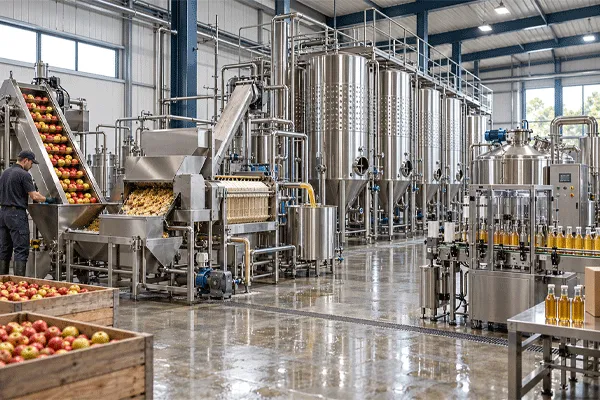
Professional commercial cider brewing equipment is designed to handle larger production volumes while maintaining stable quality. A complete system normally covers apple preparation, juice extraction, fermentation, clarification, storage, and packaging. Compared with basic home setups, commercial systems provide better sanitation, stronger temperature control, and higher repeatability.
For a modern cidery, equipment selection directly affects production efficiency and product quality. A well-designed system helps reduce waste, improve processing capacity, and create consistent flavor profiles across every batch.
A professional cider equipment solution usually includes:
| Production Stage | Equipment Used | Main Purpose |
|---|---|---|
| Apple preparation | Crusher, washer, sorting equipment | Prepare apples before juice extraction |
| Juice extraction | Apple press, belt press, hydraulic presses | Extract clean juice efficiently |
| Fermentation | Stainless steel fermenter, fermentation tanks | Convert sugar into alcohol |
| Maturation | Storage tanks, variable capacity tanks | Develop cider flavor |
| Clarification | Filtration equipment | Improve appearance and stability |
| Packaging | Bottle filler, capper, keg system | Prepare finished products |
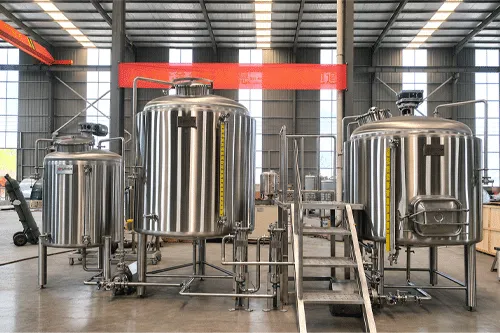
As a professional brewery and beverage equipment manufacturing plant, we provide customized stainless steel brewing systems, fermentation tanks, brewhouse systems, and turnkey beverage solutions for global B2B customers. Our experience in beverage processing allows us to design equipment based on production goals, available space, and future scaling plans.
For cider makers entering commercial production, choosing the right equipment at the beginning can prevent expensive upgrades later.
What Essential Cider Making Equipment Does a Professional Cidery Need?
A successful cider production process depends on matching each production step with the correct equipment. While small producers may start with a simple cider making kit, commercial cider producers require durable and sanitary systems that can operate continuously.
The essential equipment needed for professional cider production includes:
- Apple crusher and preparation equipment
- Juice press system
- Stainless steel fermentation tank
- Cooling and temperature control system
- Storage tanks
- Filtration equipment
- Bottle filling machine
- Capping equipment
- Keg filling system
The apple preparation stage influences the final cider quality. A high-efficiency crusher helps break down apples evenly before pressing, improving juice extraction while protecting natural flavor compounds.
The press is one of the most important parts of the production line. Depending on the required output, cider makers may select traditional basket presses, bladder presses, hydraulic presses, or industrial belt press systems. Larger producers usually prefer automated solutions because they provide stable performance and reduce manual labor.
A professional system also requires food-grade materials. Stainless steel is widely used because it is corrosion-resistant, easy to clean, and suitable for beverage applications. This helps maintain hygiene throughout the cider brewing process.
Different businesses have different needs:
| Producer Type | Recommended Equipment Solution |
|---|---|
| Small-scale producers | Compact cider production equipment |
| Craft cider makers | Stainless steel fermentation system with packaging equipment |
| Commercial cider brands | Complete cider production line |
| Beverage investors | Customized turnkey cider factory solution |
Whether producing traditional apple cider, premium cider, or other fermented beverages, equipment should be designed around the expected production volume and business goals.
How Does a Cider Press Improve Commercial Cider Production?
The press plays a critical role in the cider production process because it determines how efficiently juice can be extracted from apples. A high-quality press helps cider makers achieve better yield while maintaining natural flavor and aroma.
Traditional producers may use manual pressing methods, but commercial operations require stronger and more efficient solutions. Modern cider presses are designed for continuous operation, improved sanitation, and higher output.
Common types of cider presses include:
| Press Type | Заявка |
|---|---|
| Hydraulic press | Small to medium commercial production |
| Bladder press | Gentle extraction for premium cider |
| Belt press | Large-scale commercial cider production |
| Traditional basket press | Craft and specialty production |
A belt press is often selected by larger cider producers because it provides continuous juice extraction and supports higher processing capacity. Meanwhile, hydraulic presses are popular among craft producers who focus on quality and smaller production volumes.
The right press improves more than efficiency. It also helps protect cider flavor by reducing excessive oxidation and controlling extraction pressure.
For example, a craft cidery producing seasonal apple cider may choose a smaller hydraulic press, while a commercial producer supplying supermarkets may require automated pressing equipment connected with a complete production line.
When designing a cider system, our engineers evaluate apple varieties, expected batch size, processing speed, and future expansion requirements to recommend suitable equipment.
Why Are Stainless Steel Fermentation Tanks Important for Cider Brewing?
Fermentation is where apple juice becomes finished cider. During this stage, yeast converts natural sugar into alcohol while creating the unique aroma and taste characteristics of the beverage.
For professional cider makers, fermentation stability is one of the most important production factors. Poor temperature control or unsuitable tanks can affect yeast activity, flavor development, and product consistency.
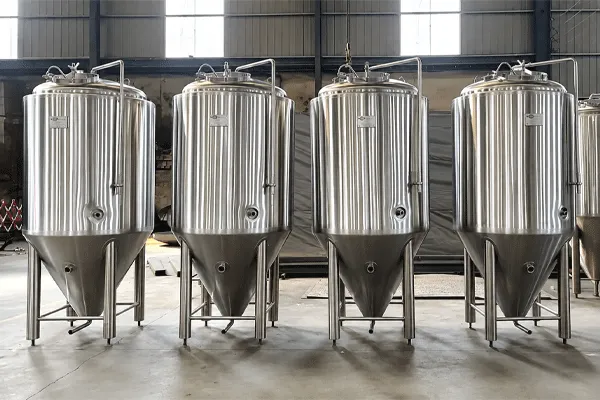
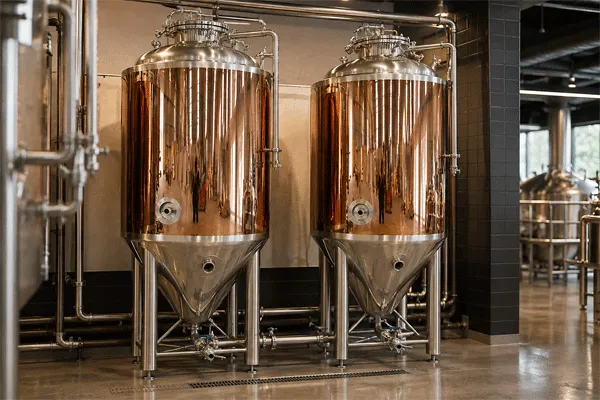
Stainless steel fermentation tanks are widely used in commercial cider brewing because they provide:
- Excellent corrosion resistance
- Easy cleaning and maintenance
- Food-grade production conditions
- Long service life
- Stable fermentation performance
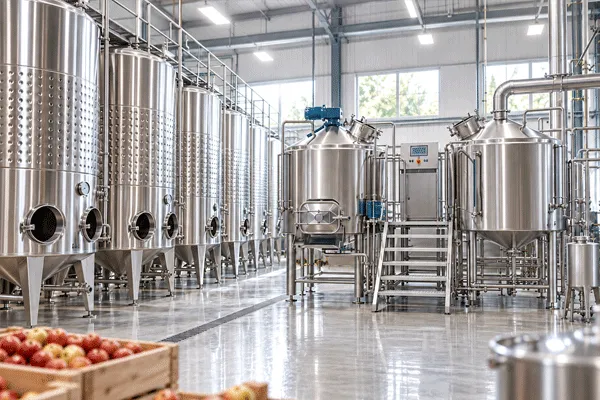
A commercial fermenter is usually equipped with features such as cooling jackets, temperature monitoring, sampling valves, pressure control systems, and an airlock connection.
Temperature control is especially important because yeast performs differently under different conditions. Maintaining a stable fermentation environment helps cider makers achieve predictable results from batch to batch.
A professional fermentation system may include:
| Equipment | Function |
|---|---|
| Fermenter | Main fermentation vessel |
| Fermentation tank | Controlled alcohol production |
| Brite tanks | Clarification and final conditioning |
| Storage tanks | Product holding before packaging |
For larger projects, customers may require multiple tanks working together. For example, a 2000L cider production system may include several fermentation tanks, storage vessels, filtration units, and packaging equipment.
Our customized stainless steel fermentation solutions are designed for cideries, breweries, wineries, and beverage manufacturers that need reliable long-term production.
How Does Fermentation Equipment Control Hard Cider Quality?
The quality of hard cider depends heavily on fermentation management. Even when using the same apple varieties, differences in yeast selection, temperature, oxygen exposure, and fermentation time can create completely different results.
Professional fermentation equipment allows cider makers to control these variables more accurately.
A complete fermentation system may include:
- Ферментационные баки
- Cooling systems
- Temperature sensors
- Airlock systems
- Pressure control components
- Cleaning connections
An airlock prevents unwanted contamination while allowing fermentation gases to escape. This simple component is especially important during active fermentation.
Many new producers start with home cider or homebrew methods and later discover that scaling production requires better control. Commercial systems provide the stability needed for consistent quality cider.
During the brewing process, professional cider makers monitor:
| Параметр | Importance |
|---|---|
| Temperature | Controls yeast activity |
| Sugar level | Determines alcohol content |
| Acidity | Influences flavor balance |
| Fermentation time | Affects final taste |
| Clarity | Improves appearance |
Using a hydrometer helps measure sugar conversion and track fermentation progress. Combined with proper fermentation tanks and filtration, this allows producers to create repeatable products.
For businesses producing multiple beverages, including cider, kombucha, wine, or hard seltzer, flexible beverage equipment provides additional value by supporting different production requirements.
What Equipment Is Needed for Bottling and Packaging Cider?
After fermentation and clarification, the finished cider needs a reliable packaging process. Packaging is not only about appearance; it also protects product quality, extends shelf life, and ensures customers receive a consistent beverage experience.
For commercial cider makers, packaging equipment should match production volume and sales channels. A small craft cidery selling locally may need a compact bottle filler and capper, while a large producer supplying retailers may require an automated packaging system.
Typical cider packaging equipment includes:
| Equipment | Function |
|---|---|
| Bottle filler | Transfers finished cider into bottles with controlled filling volume |
| Capper | Provides secure bottle sealing during capping |
| Keg filling system | Supports draft cider distribution |
| Labeling equipment | Applies product labels for retail sales |
| Packaging line | Improves efficiency for commercial production |
A professional bottle filler helps reduce oxygen exposure during filling, which is important because oxidation can negatively affect cider flavor and freshness. The capper ensures a tight seal and protects the product during transportation.
For craft cider producers, bottle conditioning and secondary fermentation may also be considered. This process allows additional flavor development and carbonation, creating unique products for specialty markets.
Modern commercial cider equipment can be customized based on:
- Bottle size and packaging format
- Production capacity
- Carbonation requirements
- Distribution method
- Future expansion plans
As a beverage equipment manufacturer, we help customers integrate fermentation tanks, filtration systems, filling machines, and storage solutions into a complete production workflow.
How Can Cider Makers Scale Up From Small Production to Commercial Manufacturing?
Many successful cider brands begin with small-scale production. They may start with home cider experiments, a small cider kit, or limited craft production. However, when demand increases, production challenges quickly appear.
Scaling up requires more than purchasing larger tanks. A professional expansion plan should consider raw material handling, production layout, fermentation capacity, packaging efficiency, and future growth.
A typical scaling pathway looks like this:
| Production Stage | Equipment Focus |
|---|---|
| Home cider | Basic tools and small fermentation containers |
| Craft cidery | Small commercial fermentation system |
| Growing brand | Multiple fermenters and packaging equipment |
| Commercial producer | Complete cider production line |
For example, a growing cidery may upgrade from a single fermenter to multiple stainless steel fermentation tanks, allowing several batches to ferment simultaneously.
Scaling also requires flexible equipment design. Variable capacity tanks allow producers to adjust production according to seasonal apple availability and market demand.
A modern commercial system may include:
- Multiple fermentation vessels
- Automated cleaning systems
- Temperature-controlled storage
- Filtration equipment
- Professional packaging equipment
Our engineering team works with cider makers to design systems based on current requirements while leaving room for future expansion. This approach reduces investment risks and helps businesses grow steadily.
What Factors Should You Consider When Selecting Commercial Cider Equipment?
Selecting the right cider equipment is one of the most important decisions for a new or expanding cidery. A low-cost solution may appear attractive initially, but unsuitable equipment can create higher operating costs and production problems later.
Before purchasing equipment, cider makers should evaluate several factors.
1. Production Capacity
The first consideration is output requirements. A small craft producer may need a compact system, while an industrial producer requires larger processing capacity.
Important questions include:
- How many liters should each batch produce?
- How many batches will be produced monthly?
- Is future expansion expected?
A 2000L production system, for example, requires different tank sizes and workflow planning compared with a small craft installation.
2. Material Quality
Food-grade stainless steel is the preferred material for professional beverage production because it is durable, hygienic, and easy to maintain.
High-quality materials help:
- Prevent contamination
- Simplify cleaning
- Extend equipment life
- Maintain beverage quality
3. Production Process Design
A complete cider production process should connect each stage smoothly:
Apple preparation → Crushing → Pressing → Juice treatment → Fermentation → Filtration → Packaging
Poor layout can increase labor costs and reduce efficiency.
4. Customization Capability
Every cidery has different requirements. Equipment designed for a winery may not perfectly match a cider producer. Customized solutions allow better integration with local production conditions.
When selecting the right supplier, consider:
- Engineering experience
- Custom manufacturing ability
- Installation support
- Spare parts availability
- After-sales service
A reliable equipment partner does more than sell machines. They help build a production system.
How Does a Complete Cider Brewing System Support Modern Beverage Production?
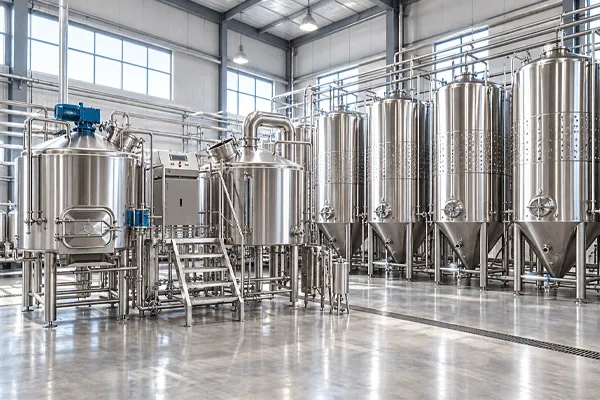
A complete cider система заваривания combines multiple pieces of equipment into one coordinated production solution. Instead of purchasing individual machines from different suppliers, cider makers can improve efficiency by working with one experienced manufacturer.
A turnkey system may include:
- Apple processing equipment
- Press systems
- Fermentation equipment
- Storage tanks
- Filtration systems
- Bottling equipment
- Cleaning systems
This integrated approach helps avoid compatibility problems between different machines.
For professional cider producers, a complete system provides several advantages:
Better Production Control
Integrated systems allow operators to monitor fermentation, temperature, and product movement more effectively.
Improved Product Consistency
A controlled environment helps produce consistent flavor, aroma, and alcohol levels.
Easier Expansion
Modular equipment design allows producers to add tanks or upgrade production capacity later.
Reduced Project Risk
Experienced manufacturers can provide layout planning, technical support, installation guidance, and long-term service.
As a professional brewery and beverage equipment manufacturing plant, we provide customized stainless steel brewing systems, fermentation tanks, brewhouse systems, and turnkey beverage solutions for global B2B customers.
Our solutions support:
- Craft breweries
- Brewpubs
- Taprooms
- Microbreweries
- Commercial breweries
- Beverage startups
- Kombucha producers
- Cideries
- Wineries
- Distilleries
- Cold brew coffee producers
- Engineering contractors
Whether you need a standalone fermenter or a complete cider production line, selecting an experienced manufacturer can make your investment more reliable.
Case Study: Customized Stainless Steel Cider Production Solution
A beverage startup planned to enter the premium cider market and required equipment that could support both initial production and future expansion.
The customer needed:
- Stable fermentation control
- Food-grade stainless steel tanks
- Flexible production capacity
- Professional packaging support
Based on the production goals, a customized solution was designed including fermentation tanks, storage tanks, filtration equipment, and packaging components.
The final system helped the customer improve:
| Improvement Area | Result |
|---|---|
| Production stability | More consistent cider quality |
| Hygiene control | Easier cleaning and maintenance |
| Capacity planning | Ready for future expansion |
| Workflow efficiency | Reduced manual handling |
This type of project demonstrates why professional cider equipment selection is essential for long-term business growth.
Frequently Asked Questions About Commercial Cider Brewing Equipment
What equipment do I need to start commercial cider production?
A commercial cider production setup usually requires apple preparation equipment, a press, fermentation tanks, filtration equipment, storage tanks, and packaging machines. The exact configuration depends on production volume, product style, and business goals.
Can cider equipment also be used for other beverages?
Yes. Many stainless steel beverage systems can support products such as wine, kombucha, cold brew coffee, and other fermented beverages. Flexible equipment design allows producers to expand their product range.
What is the difference between home cider equipment and commercial cider equipment?
Home cider equipment is designed for small experiments and limited batches. Commercial cider equipment focuses on higher capacity, food-grade materials, automation, sanitation, and consistent production results.
How long does cider fermentation usually take?
The fermentation period depends on yeast selection, temperature, recipe design, and desired flavor profile. Professional fermentation tanks allow cider makers to control conditions and achieve repeatable results.
Why is stainless steel commonly used for cider fermentation tanks?
Stainless steel is popular because it is durable, corrosion-resistant, easy to clean, and suitable for food and beverage applications. It helps maintain hygienic production conditions.
Can you customize a complete cider brewing system?
Yes. Professional manufacturers can customize equipment based on production capacity, factory layout, beverage type, and future expansion plans. Customized solutions help cider makers build efficient and reliable production facilities.
Final Summary: Key Things to Remember About Commercial Cider Brewing Equipment
- Commercial cider production requires more than traditional recipes; it needs professional equipment and process control.
- A complete cider brewing system should include apple processing, pressing, fermentation, filtration, storage, and packaging solutions.
- The press, fermenter, and stainless steel tanks are critical components that influence final cider quality.
- Temperature control and fermentation management help cider makers achieve consistent results.
- Packaging equipment such as a bottle filler and capper protects product quality before distribution.
- Selecting the right cider making equipment early helps reduce future upgrade costs.
- Customized commercial equipment supports different production scales, from craft cider makers to large beverage companies.
- Working with an experienced beverage equipment manufacturer helps ensure reliable design, installation, and long-term support.