A professional brewing system should be selected as one connected process rather than as a collection of large vessels. Start with target batch volume, brew frequency, recipes, utilities, cellar turnover and packaging needs. Then compare vessel configuration, heating, controls, cleaning, maintenance access and future expansion against the building and operating team.
Define the production brief
Document batch size, brews per week, beer styles, fermentation time, conditioning time, packaging format and expected expansion. Keep nominal vessel volume separate from working volume and usable wort volume. This prevents a brewhouse that appears adequate from becoming a cellar or packaging bottleneck.
Choose the process configuration
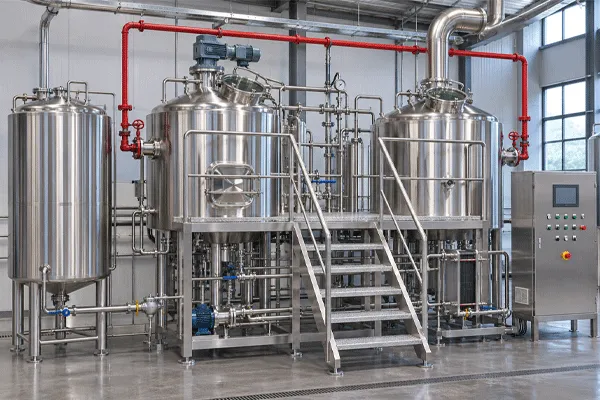
Compare two-vessel, three-vessel and four-vessel layouts against recipe complexity and brew-day sequence. A simpler arrangement can reduce footprint and operator steps, while additional vessels may support more parallel work. The correct choice depends on throughput, staffing, building clearance and the process schedule.
Ознакомьтесь с brewhouse systems range and compare it with оборудование для мини-пивоварен прежде чем окончательно определять количество ёмкостей.
Specify heating and utilities
Ask suppliers for a complete utility schedule covering electrical service, steam or gas requirements, water, drainage, ventilation, compressed air and cooling duty. Confirm voltage and phase, floor loading, ceiling height, access routes and service clearances. Heating choice should fit the site’s available infrastructure and local code review.
Plan the cold side with the brewhouse
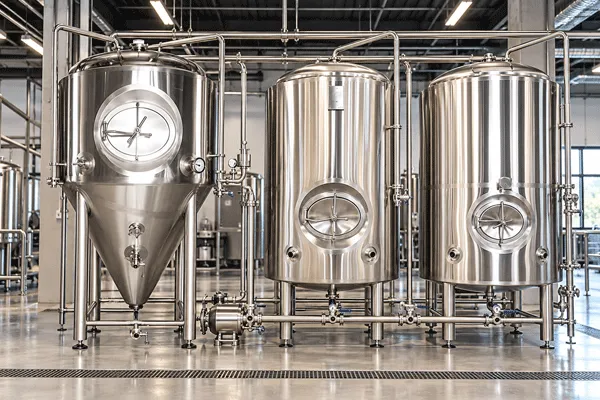
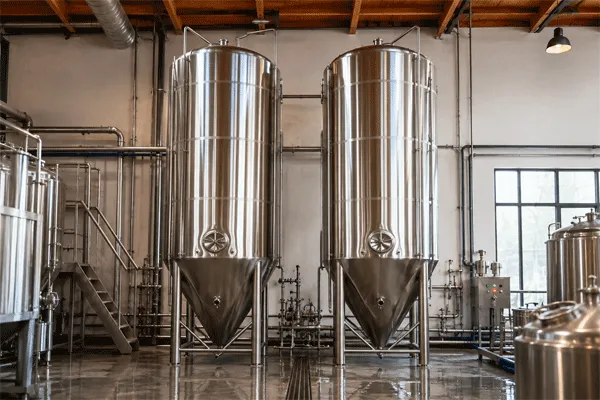
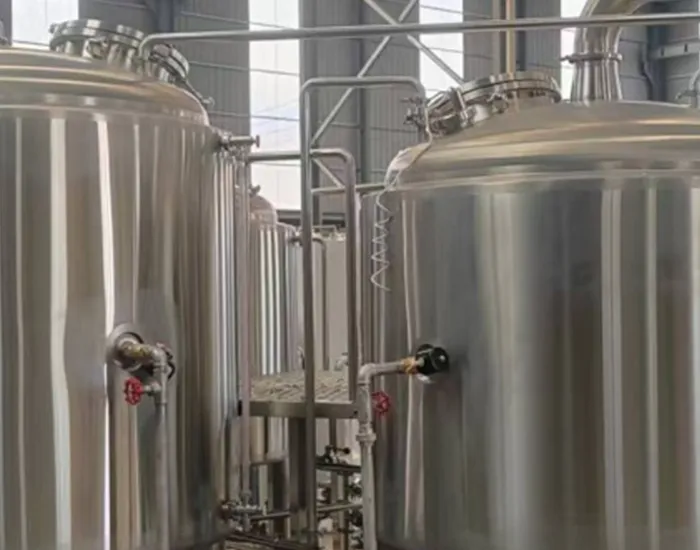
Fermenters, bright beer tanks, glycol cooling and cleaning capacity should be sized against the brew calendar. A professional system is balanced only when the cellar can receive, ferment, condition and release beer at the planned rhythm. Use the бродильные ёмкости page as a starting point for the cold-side scope.
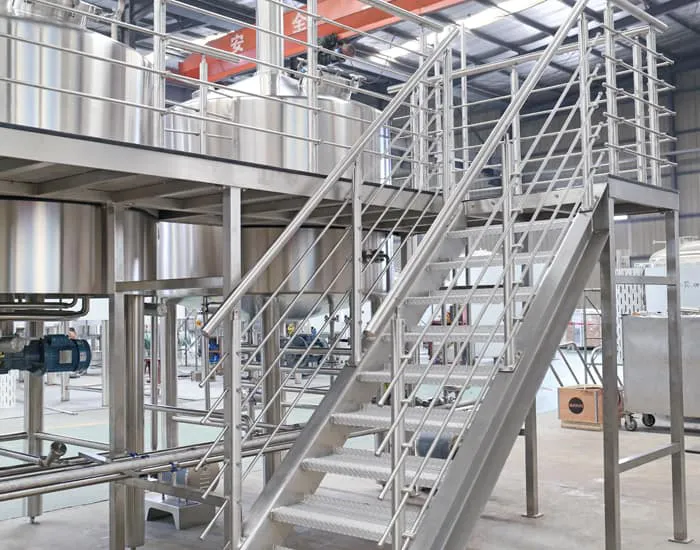
Review controls and cleaning
Specify temperature measurement, pump interlocks, alarms, emergency stops, manual fallback and the sequence of operations. Confirm spray-device coverage, drainability, sample points, manway access and cleaning connections. Request acceptance tests that reflect the actual process rather than relying on a control-panel screenshot.
Compare supplier scope
Сопоставляйте коммерческие предложения по ёмкостям, насосам, клапанам, источнику тепла, охлаждению, системам управления, платформам, трубопроводам, изоляции, монтажу, пусконаладке, обучению, запасным частям, перевозке и условиям гарантии. Запрашивайте технологические схемы, чертежи общей компоновки, спецификации патрубков, перечни инженерных ресурсов и инструкции по обслуживанию. Чётко отмечайте каждое исключение.
Распространенные ошибки в технических заданиях
- Comparing nominal vessel volume without working-volume definitions.
- Choosing the brewhouse before confirming utilities and access.
- Ignoring fermentation and bright-tank turnover.
- Leaving installation boundaries and documentation undefined.
- Assuming automation removes the need for operator procedures and manual recovery.
Часто задаваемые вопросы
What makes a brewing system professional?
It is specified around repeatable commercial production, sanitary process flow, maintainable utilities, documented controls and a coordinated cellar and packaging plan.
Сколько ёмкостей следует выбрать пивоварне?
Выберите конфигурацию, соответствующую частоте варок, сложности рецептур, численности персонала, доступной площади и планам расширения. Большее количество ёмкостей не всегда лучше.
What should be confirmed before ordering?
Подтвердите технологическую схему, рабочие объёмы, перечень инженерных ресурсов, компоновку, сервисные зазоры, исключения из объёма поставки, приёмочные испытания и пакет документации.
Спланируйте систему до запроса коммерческого предложения
Передайте проектной команде целевые объёмы выпуска, рецептуры, размеры здания и доступные инженерные ресурсы, чтобы разработать конфигурацию для конкретного проекта. Для согласованного рассмотрения, contact the ZPET project team.