Great wine can fail before fermentation even begins if the equipment is hard to clean, poorly sized, or unable to control temperature. That problem grows with every larger batch. The solution is to choose winemaking equipment around sanitation, production volume, wine style, and the complete process from grape to bottle.
The essential equipment needed for winemaking includes grape processing equipment, a fermenter, temperature control, pumps, hoses, hydrometer and test tools, storage or aging tanks, filtration equipment, and bottling equipment. Home winemaking may use buckets, carboys, siphons, airlocks, bottles, corks, and a corker, while commercial wineries normally use sanitary stainless steel tanks, crushers, presses, pumps, cooling systems, CIP systems, filters, and automated fillers.
The right equipment depends on what you want to produce.
Someone learning to make wine at home may start with a small fermenting bucket and a glass carboy. A commercial winemaker processing several tons of fresh grapes needs a very different system: sanitary stainless steel tanks, temperature control, transfer pumps, filtration, cleaning equipment, and a reliable bottling line.
As a professional brewery and beverage equipment manufacturing plant, we also manufacture customized stainless steel systems for wineries, cideries, kombucha plants, and other fermented beverage projects. From our project experience, one rule matters most:
Do not buy individual tanks first. Map the winemaking process from fresh fruit to finished bottle, then size each piece of equipment around the same production plan.
That approach improves quality, reduces unnecessary handling, and makes future expansion much easier.
What Are the Main Stages of the Winemaking Process?
Before choosing equipment, understand what the equipment must do.
The basic winemaking process follows a clear flow:
Fresh grapes or fruit → Sorting → Crushing/Destemming → Pressing → Fermentation → Racking → Aging → Stabilization/Filtration → Bottling
The exact sequence changes depending on the types of wine being produced.
For white wine, grapes are commonly crushed and pressed before alcoholic fermentation, so juice is separated from skins early.
For red wine, the juice usually ferments together with grape skins. This extracts color, tannins, and flavor. Pressing often happens later.
The main process stages and equipment look like this:
| Process Stage | Typical Equipment |
|---|---|
| Fruit receiving | Bins, sorting table |
| Crushing | Crusher/destemmer |
| Pressing | Basket, bladder, or pneumatic press |
| Primary fermentation | Fermenter |
| Temperature control | Glycol chiller / jacketed tank |
| Monitoring | Hydrometer, test jar, pH meter |
| Transfer | Pump, hoses, siphon |
| Secondary fermentation / aging | Tank, barrel, carboy |
| Clarification | Filter, fining equipment |
| Stabilization | Cooling system |
| Bottling | Filler, corker, capper |
| Storage | Bottle racks / wine racks |
| Sanitation | CIP system, cleaning tools, sanitizer |
UC Davis describes wine production as a process involving juice preparation, fermentation, filtration, aging, analysis, and sanitation rather than fermentation alone.
This is why good equipment planning must cover the process from start to finish.
What Equipment Is Needed to Process Fresh Grapes?
If you are making wine from fresh grapes, the first equipment handles the raw fruit.
For a very small batch, a home winemaker may crush grapes manually. A commercial winery normally uses equipment designed to process fruit quickly while limiting unnecessary damage and contamination.
Typical grape-handling equipment includes:
- Harvest bins
- Sorting table
- Grape elevator
- Crusher
- Destemmer
- Crusher-destemmer combination
- Must pump
- Wine press
A crusher breaks the berries so juice can be released.
A destemmer separates grapes from stems. This is especially useful when making grape wine, because excess stem material can affect tannin and flavor.
For red wine, crushed grapes, juice, skins, and seeds may enter the fermentation tank together.
For white wine, pressing generally occurs earlier so the juice can ferment separately from skins.
The press is therefore one of the most important pieces of wine making equipment for a winery using fresh fruit.
Commercial presses may include:
- Basket presses
- Bladder presses
- Pneumatic membrane presses
The correct model depends on daily processing volume, grape variety, desired extraction, and labor.
For fruit winemaking, the processing equipment may need modification because apples, berries, pears, and other fruits behave differently from wine grapes.
What Type of Fermenter Do You Need to Make Wine?
The fermenter is at the center of the winery.
During alcoholic fermentation, yeast converts sugars in grape juice into alcohol, carbon dioxide, heat, and many flavor compounds.
UC Davis emphasizes that fermentation management involves temperature, yeast choice, nutrient additions, pH, oxygen, sanitation, and continuous monitoring.
For home winemaking, the fermenter may be:
- A food-grade bucket with a lid
- A glass or plastic carboy
- Another food-safe vessel
A simple bucket with a lid can work well for initial fermentation because it gives easy access for stirring and managing fruit solids.
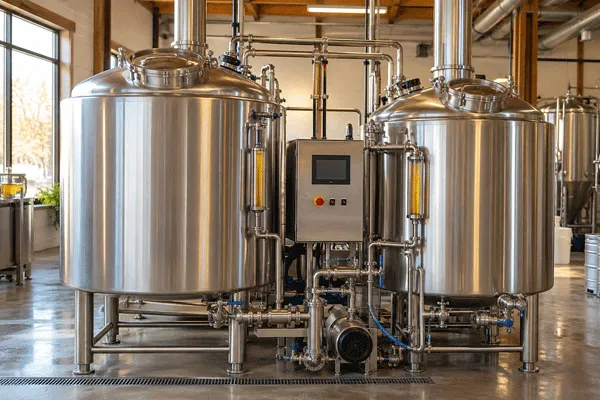
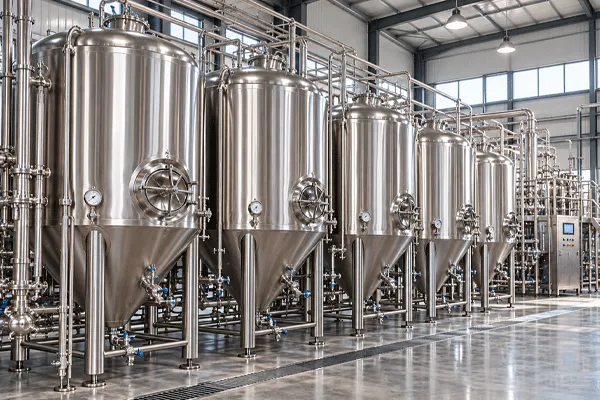
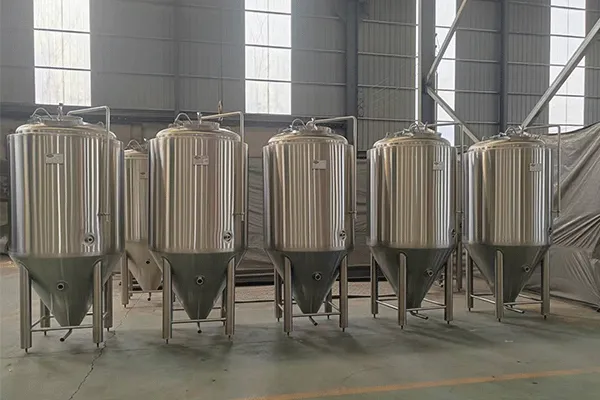
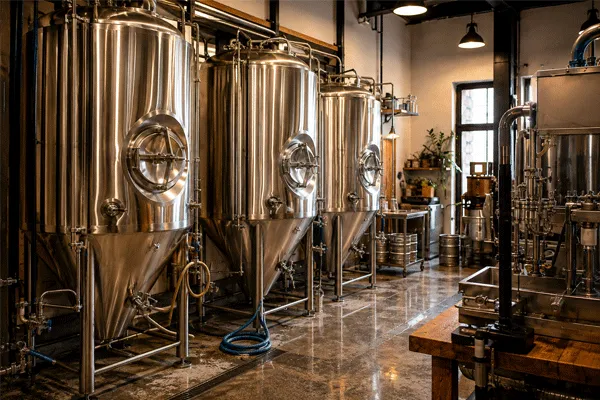
For commercial production, we strongly prefer properly designed stainless steel tanks.
Why stainless steel?
Sanitary stainless steel offers:
- Easy cleaning
- Long service life
- Smooth product-contact surfaces
- Good temperature-control compatibility
- Low oxygen permeability
- Strong resistance to routine winery chemicals
- Customizable fittings
- Reliable pressure options where required
A commercial wine fermentation tank may include:
- Охлаждающая рубашка
- Temperature probe
- Sampling valve
- Люк
- Drain outlet
- Level indication
- Pressure/vacuum protection
- CIP spray device
- Racking port
For red wine, specialized tanks may also include larger doors or systems that help manage skins and solids.
The best material is not simply plastic or stainless steel based on price. Match the tank to batch size, cleaning method, wine style, and expected service life.
Why Is Temperature-Control Equipment Essential for Fermentation?
Fermentation produces heat.
If temperature rises too far, yeast performance and wine aroma can suffer. Temperature also changes the speed of fermentation.
Penn State Extension notes that typical fermentation temperature targets differ by style, with white wines generally fermented cooler than red wines; it also highlights temperature control as an important tool for protecting aroma and quality.
For a professional winery, temperature control usually requires:
- Jacketed бродильные ёмкости
- Glycol chiller
- Glycol piping
- Temperature sensors
- Solenoid valves
- Digital controller
- Insulated piping
A cooling jacket built into the tank allows cold glycol to remove heat without direct contact with your wine.
This gives the winemaker much more control.
For example, the production team can manage:
- Initial fermentation
- Slow aromatic fermentations
- Red wine temperature
- Cold stabilization
- Storage temperature
A small batch may survive with ambient temperature control. As production grows, that becomes risky.
One tank may warm faster than another. A warm production room can also push multiple fermenters outside the desired range.
Temperature-controlled резервуары из нержавеющей стали help ensure each batch follows a repeatable production program.
What Are a Hydrometer, Test Jar, and Acid Test Kit Used For?
Large tanks get attention because they look impressive.
Small laboratory tools can be just as important.
A hydrometer measures the density, or specific gravity, of a liquid. In wine production, changes in specific gravity can help a winemaker track sugar consumption as yeast ferments the juice.
Used with a test jar, the hydrometer helps answer practical questions such as:
- Has fermentation started?
- Is fermentation slowing?
- Is residual sugar still present?
- Has fermentation is complete been confirmed?
Specific gravity can also help estimate potential or approximate alcohol content, although professional wineries may use more precise laboratory methods when required.
An acid test kit is useful because acidity has a major influence on wine balance, microbial stability, and taste.
Common winery measurements include:
- pH
- Titratable acidity
- Sugar/Brix
- Temperature
- Sulfur dioxide
- Alcohol
- Dissolved oxygen in more advanced facilities
Penn State notes that acidity contributes directly to flavor and preservation and that different fruits may require different acid management.
Good wine is not made by guessing.
A small testing station is an important part of the essential tools for both home and commercial winemakers.
Do You Need an Airlock for Wine Fermentation?
For home winemaking, an airlock is one of the simplest useful accessories.
It allows carbon dioxide produced during fermentation to escape while helping reduce exposure to outside air and contaminants.
A stopper and airlock are commonly used on a carboy during secondary fermentation or aging.
This helps keep contaminants from entering the fermenter while still allowing gas pressure to escape.
For commercial stainless steel tanks, the same function may be handled through more engineered equipment, such as:
- Vent valves
- Pressure/vacuum relief devices
- Blow-off arrangements
- Variable-capacity tank lids
- Tank gas-management fittings
It is also important to take carbon dioxide seriously.
Fermentation can release substantial CO₂. UC Davis notes that winery facilities require proper airflow because fermentation-generated carbon dioxide can become hazardous at high concentrations.
So commercial fermentation-room design should also consider:
- Ventilation
- CO₂ monitoring
- Safe tank-entry procedures
- Worker training
An airlock protects the product.
Ventilation protects people.
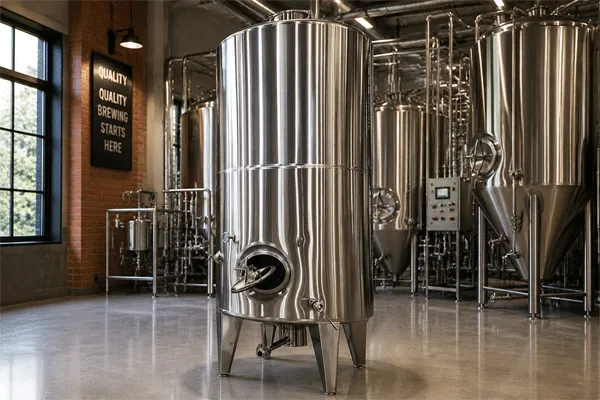
What Equipment Is Used to Transfer and Rack Wine?
After fermentation, the wine often needs to move from one container to another.
This is known as racking when wine is moved away from settled yeast and solids.
For home winemaking, common siphoning equipment includes:
- Auto-siphon
- Food-grade tubing
- Racking cane
- Hose clamp
A siphon allows a winemaker to transfer wine while leaving much of the sediment at the bottom.
The goal is to move wine without disturbing the sediment more than necessary.
For commercial wineries, gravity is not always practical.
Instead, stainless or sanitary pumps may transfer wine between:
- Ферментационные баки
- Storage tanks
- Barrels
- Brite/conditioning tanks
- Filtration systems
- Bottling lines
Pump selection matters.
A transfer system should move wine gently enough to avoid unnecessary oxygen pickup or physical stress.
Commercial systems may use:
- Centrifugal pumps
- Positive-displacement pumps
- Flexible-impeller pumps
- Peristaltic pumps
The exact choice depends on whether you are moving clear wine, must, juice, or solids.
Sanitary hoses, clamps, gaskets, and fittings are also important. Small components are easy to ignore, but every surface touching wine becomes part of the hygienic system.
What Equipment Is Needed for Secondary Fermentation and Aging?
After primary fermentation, wine often enters a maturation phase.
Depending on the style, this may involve:
- Secondary fermentation
- Malolactic fermentation
- Clarification
- Aging
- Stabilization
A home winemaker may use a gallon glass carboy or another glass or plastic carboy.
Commercial winemakers typically use:
- Stainless steel aging tanks
- Oak barrels
- Variable-volume tanks
- Temperature-controlled storage tanks
Multiple carboys can work for small-scale experiments, but they become inefficient at commercial volume.
A stainless steel tank offers better scalability and easier sanitation.
Barrels, however, serve a different purpose.
Oak barrels can influence:
- Aroma
- Tannin
- Texture
- Oxygen exposure
- Flavor development
A winery may therefore combine stainless steel and barrel aging rather than choosing only one.
The correct aging system depends heavily on the desired finished wine.
For some crisp white or fruit wine styles, stainless steel may preserve fresh character.
For other styles, oak is part of the product identity.
Why Are Cleaning and Sanitizing Tools Essential Winemaking Equipment?
If I had to choose one area where new beverage producers should never reduce their budget too far, it would be sanitation.
UC Davis calls cleaning and sanitation fundamental to wine quality control and recommends cleaning equipment after use and sanitizing product-contact equipment before use.
There is an important difference:
Cleaning removes visible and chemical residues.
Sanitizing reduces microorganisms after the surface has been properly cleaned.
You cannot effectively sanitize dirty equipment.
Basic home home winemaking equipment may include:
- Cleaning brushes
- Spray bottle
- Approved cleaner
- Sanitizer
- Bottle washer
- Drying rack
Commercial wineries may add:
- CIP skid
- CIP pump
- Spray balls
- Chemical dosing
- Hot-water system
- Hose stations
- Floor drains
- Foam-cleaning equipment
Always clean and sanitize equipment before use according to the appropriate procedure.
This applies to:
- Tanks
- Hoses
- Pumps
- Sample valves
- Fillers
- Bottles where applicable
- Small fittings
A beautiful fermenter cannot protect a wine if a contaminated transfer hose is connected to it.
Sanitation should be designed into the winery layout.
What Filtration and Clarification Equipment Does a Winery Need?
Not every wine follows the same clarification process.
Some producers prefer minimal filtration. Others require very clear, stable wine before packaging.
Common options include:
- Settling
- Racking
- Fining
- Plate filtration
- Cartridge filtration
- Crossflow filtration
- Membrane filtration
The correct system depends on:
- Product style
- Production volume
- Required clarity
- Microbial objectives
- Packaging method
Filtration takes place after much of the fermentation and aging work is complete, so poor handling here can damage a valuable batch.
Commercial filtration systems should therefore be sized to provide a practical flow rate without becoming a bottleneck.
A winery producing 20,000 liters per day should not rely on filtration equipment designed for a hobby producer.
The same principle applies across the complete project:
The slowest process step can control the capacity of the whole winery.
That is why we size tanks, pumps, filtration, cooling, and packaging as one connected system rather than isolated machines.
What Equipment Is Needed for Bottling Wine?
Once the wine is stable and ready, packaging begins.
For home winemakers, bottling may require only:
- Clean wine bottles
- Siphon
- Bottling wand
- Corks and a corker
- Labels
- Bottle rack
A basic manual corker pushes the cork securely into the bottle.
For commercial wineries, bottling can involve a complete line.
Typical equipment includes:
- Bottle rinser
- Bottle filler
- Cork inserter or capper
- Capsule applicator
- Labeling machine
- Date/batch coder
- Conveyor
- Packing station
The selected wine bottle closure depends on product positioning and market requirements.
Common closures include:
- Natural cork
- Technical cork
- Synthetic cork
- Screw cap
Bottle filling should minimize unnecessary oxygen pickup.
After filling, the bottle also needs proper storage conditions.
A small producer may use simple wine racks.
A larger producer may need:
- Pallet storage
- Finished-goods warehouse
- Temperature-controlled bottle storage
- Wine fridge or cold storage for special applications
Packaging equipment should match the speed of the winery.
A fast fermentation department combined with an extremely slow bottling line creates finished-wine inventory problems.
What Equipment Do You Need for Home Winemaking?
For someone who wants to make wine at home, the equipment list can remain quite simple.
A practical beginner setup might include:
- Food-safe primary fermenter
- Carboy
- Stopper and airlock
- Hydrometer
- Test jar
- Siphon
- Tubing
- Funnel
- Thermometer
- Cleaner and sanitizer
- Wine bottles
- Corks
- Corker
Penn State also identifies storage and fermentation containers, a hydrometer, funnel, and tubing as common equipment for small-scale wine production.
This is enough to get you started and understand the basic fermentation cycle.
If you are following a beginners guide to making homemade wine, keep the first setup simple.
Learn to control:
- Sanitation
- Fermentation
- Temperature
- Specific gravity
- Transfers
- Bottling
Then add more winemaking tools as your skill increases.
A beginner does not need a commercial bottling line.
A commercial winery should not rely on hobby equipment.
Scale matters.
How Does Commercial Wine Making Equipment Differ From Home Equipment?
The process is similar.
The engineering is not.
Both home and commercial systems need to:
- Hold wine
- Control contamination
- Manage fermentation
- Transfer liquid
- Package the final product
But commercial wine making needs higher levels of:
- Вместимость
- Repeatability
- Sanitary design
- Temperature control
- Автоматизация
- Durability
- Worker safety
- Cleaning efficiency
Compare the two:
| Function | Home Scale | Commercial Scale |
|---|---|---|
| Primary fermenter | Bucket/carboy | Stainless tank |
| Transfer | Siphon | Sanitary pump |
| Охлаждение | Room control | Glycol jackets |
| Тестирование | Hydrometer | Winery lab |
| Очистка | Руководство | Система CIP |
| Фильтрация | Small filter | Commercial filtration |
| Filling | Bottling wand | Filling line |
| Corking | Manual corker | Automated corker |
| Storage | Bottle rack | Warehouse |
A commercial winery may process hundreds or thousands of times more product.
That changes the required equipment to ensure consistent quality.
This is why scaling home recipes directly into commercial tanks often creates problems.
Production flow has to be redesigned.
How Should Commercial Winemakers Choose the Right Winemaking Equipment?
Start with production capacity.
Not tank appearance.
When helping customers select the right winemaking equipment, we normally ask:
- Какие сорта вина вы будете производить?
- Will you use fresh grapes, juice, or concentrate?
- What is annual production?
- What is the largest harvest-day volume?
- What is the typical batch size?
- How long will fermentation take?
- Will you barrel-age wine?
- What packaging format will you use?
- How much automation do you want?
- Do you expect to expand?
These answers determine the real equipment needed.
For example, imagine a winery planning to process 10 tons of grapes per day.
The project needs more than a fermentation tank.
It also needs enough crushing and pressing capacity to handle fruit before quality declines, enough tank volume to hold must, enough cooling capacity to control active fermentation, and enough pumps and piping to keep transfers moving.
The same logic applies to a small batch winery.
The numbers are smaller, but the production flow still needs balance.
What Should a Turnkey Commercial Winery System Include?
For B2B buyers, buying tanks separately can create compatibility problems later.
A better solution is to think in systems.
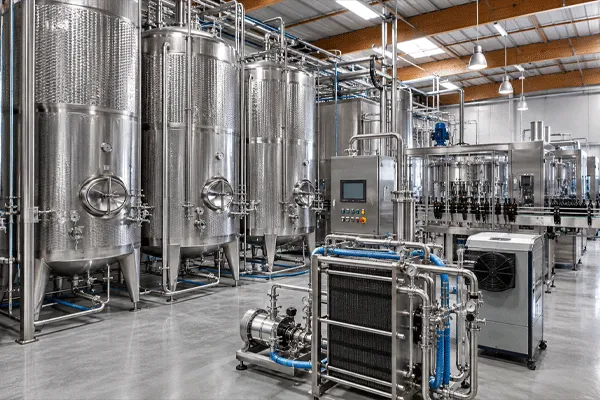
A complete commercial winery may include:
Grape reception
- Sorting table
- Crusher-destemmer
- Press
- Must pumps
Fermentation
- Stainless steel fermenters
- Temperature-control jackets
- Sampling and racking valves
- Controls
Охлаждение
- Glycol chiller
- Glycol tank
- Circulation pumps
- Insulated piping
Transfer
- Sanitary pumps
- Hoses
- Stainless piping
- Valves
Очистка
- CIP unit
- Hot-water system
- Chemical dosing
- Drainage
Finishing
- Storage tanks
- Фильтрация
- Stabilization equipment
Packaging
- Bottle rinser
- Filler
- Corker
- Capper
- Labeler
This is where customized manufacturing becomes especially valuable.
As a professional stainless steel beverage equipment manufacturer, we can customize:
- Tank capacity
- Tank diameter and height
- Cooling-jacket configuration
- Manways
- Valves
- Системы CIP
- Piping
- Controls
- Platform layout
- Packaging interfaces
The goal is not simply to provide everything you need to make wine.
The goal is to make sure every part works together.
FAQs About Equipment for Winemaking
What is the most important piece of equipment for winemaking?
The fermenter is central because alcoholic fermentation happens there, but no single piece works alone. Sanitation equipment, temperature control, transfer tools, and testing instruments are also essential to consistent wine quality.
Can I use plastic equipment to make wine?
Yes, suitable food-grade plastic can be used for small-scale home winemaking, especially for primary fermentation. Commercial wineries usually prefer stainless steel because it is durable, sanitary, scalable, and easier to integrate with cooling and CIP systems.
Do I need a hydrometer to make wine?
A hydrometer is strongly recommended. It helps monitor specific gravity and track fermentation progress instead of relying only on bubbles or taste.
Do I need both a fermenter and a carboy?
For home production, many people use a bucket for initial fermentation and a carboy for secondary fermentation or aging. Commercial wineries typically replace both functions with appropriately designed tanks.
Do I need an airlock for wine?
Small closed fermenters and carboys commonly use an airlock. Commercial tanks generally use professional vent or pressure-control fittings that serve a similar gas-management purpose.
What equipment do I need to make wine from grapes?
To make wine from grapes at commercial scale, typical equipment includes receiving bins, sorting equipment, crusher-destemmer, press, fermentation tanks, cooling system, pumps, sanitary hoses, testing tools, filtration equipment, cleaning systems, and a bottling line.