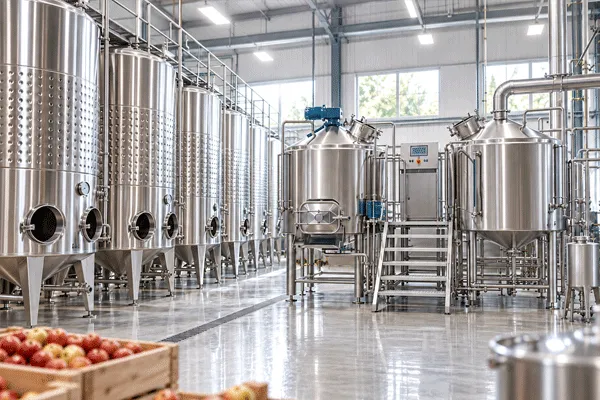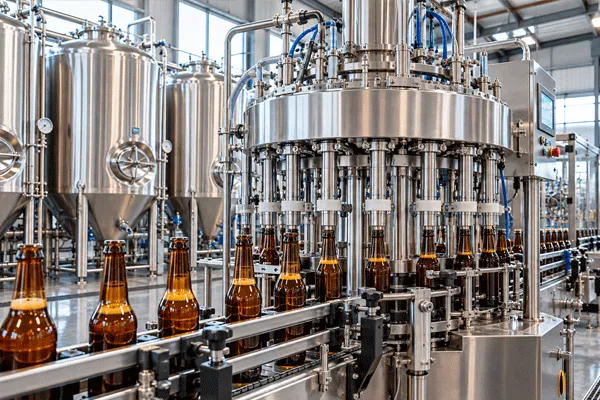
Many beverage projects fail before the first batch because the equipment is too small, too complex, or poorly planned. That leads to wasted space, unstable flavor, and higher costs. A well-engineered beer brewing system solves this by matching capacity, process, layout, and future growth.
A beer brewing system is a complete equipment setup used to mash grain, produce wort, boil with hop additions, cool the liquid, and transfer it to a fermenter. For craft breweries, brewpubs, taprooms, and beverage startups, the best system balances sanitary design, stable temperature control, efficient cleaning, and scalable production.
План статьи
- What Is a Beer Brewing System and Why Does It Matter?
- How Does an All-in-One Brewing System Compare with Commercial Brewery Equipment?
- What Should a Brewer Know Before Choosing All-Grain Brewing Systems?
- Why Are Mash, Grain, Wort, and Boil Control So Important?
- Should You Choose an Electric Brewing System, Burner, 120V, or 240V Setup?
- How Do Pump, Hose, Basket, Drain, and Recirculation Design Affect Efficiency?
- What Role Does Temperature Control Play in Fermentation and Flavor?
- How Can Compact Nano and Pilot Systems Support Craft Beer Growth?
- What Accessories, Chiller Options, and Control Panel Features Are Worth Considering?
- What Are the Pros and Cons of Homebrew-Style Systems vs Professional-Grade Brewery Equipment?
- How Should Investors Plan a Turnkey Brewery or Beverage Project?
- FAQs About Beer Brewing Systems
- Основные выводы
What Is a Beer Brewing System and Why Does It Matter?
A beer brewing system is the heart of any beer production project. It turns malt, water, yeast, and hop ingredients into a controlled beverage process. In simple words, it helps a brewer make the same product again and again without guessing each step.
For a small taproom, the system may start with a simple kettle, a mill, and one fermenter. For a growing brewery, it may include a brewhouse, hot liquor tank, lauter tun, whirlpool, glycol cooling, CIP cleaning, and multiple fermentation tanks. The real goal is not just to brew. The goal is to produce safe, stable, and repeatable drinks.
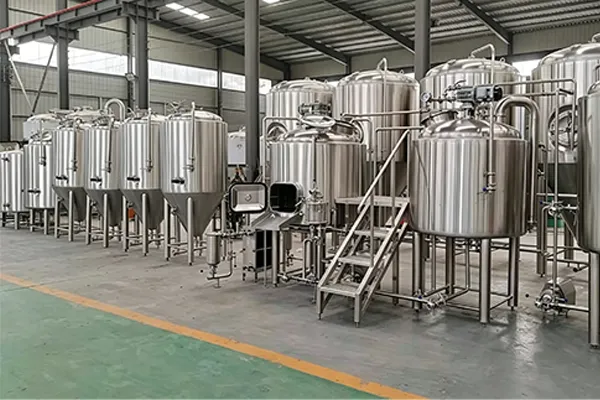
As a professional stainless steel equipment manufacturing plant, we often see buyers focus only on tank size. That is not enough. A good brewing system must fit the room, the recipe, the batch plan, the cleaning method, and the business model. Equipment is not only metal. It is production logic.
How Does an All-in-One Brewing System Compare with Commercial Brewery Equipment?
An all-in-one system is popular because it puts several steps into one vessel. It can be useful for home brewing, recipe testing, training, or small experimental work. Many homebrewers like this format because it saves space and offers simplicity.
Brands such as Clawhammer, Anvil, Brewzilla, Blichmann, Robobrew, Spike, and Anvil Foundry have helped many people understand the basics of brewing beer. These all-in-one systems often include a built-in heater, pump, basket, and control panel. They are portable, easy to learn, and good for early-stage testing.
But commercial brewing has different needs. A craft beer business must think about daily output, cleaning time, operator safety, energy use, tank turnover, and customer service. A homebrewing kit may teach the process, but a professional brewery needs stronger engineering, sanitary welding, stable heating, better flow paths, and long-term support.
What Should a Brewer Know Before Choosing All-Grain Brewing Systems?
All-grain brewing systems give the brewer more control over flavor, body, color, and mouthfeel. Instead of using extract only, the process starts from malted grain. This creates more freedom, but it also requires better planning.
The key points are water-to-grain ratio, mash temperature, lauter performance, and wort clarity. If these are not controlled, the final drink may taste thin, harsh, sweet, or inconsistent. Small errors can grow into big problems when the batch size increases from 5 gallon to 5 bbl or more.
For B2B buyers, the smart question is not “Can this system make beer?” The better question is “Can this system make the same beer every week with less waste and less labor?” That is why all-grain brewing systems for commercial use should be designed around repeatability, cleaning, and scale.
Why Are Mash, Grain, Wort, and Boil Control So Important?
The mash is where starch becomes sugar. This step decides much of the final body and alcohol potential. If the temperature is not stable, the brewer may lose efficiency and flavor balance.
After the mash, the sweet liquid is called wort. It needs clean transfer, proper boiling, and controlled whirlpool movement. The boil helps remove unwanted compounds, build bitterness, and prepare the liquid for cooling. Hop timing also matters because early additions bring bitterness while late additions bring aroma.
A well-designed brewhouse makes these steps easier. It supports smooth flow, good heat transfer, easy cleaning, and clear operation. In our experience, many new projects do not fail because of the recipe. They fail because the process is hard to repeat.
Simple Process Chart
| Stage | Main Purpose | Equipment Concern |
| Фрезерование | Break malt for sugar access | Consistent crush, not too fine |
| Mashing | Convert starch to sugar | Stable temperature and mixing |
| Lautering | Separate liquid from solids | False bottom, flow, clarity |
| Boiling | Sterilize and build flavor | Heating power and evaporation |
| Whirlpool | Separate solids | Tangential flow and geometry |
| Охлаждение | Prepare for yeast | Chiller capacity and sanitation |
| Fermenting | Turn sugar into alcohol | Tank pressure, cooling, hygiene |
Should You Choose an Electric Brewing System, Burner, 120V, or 240V Setup?
An electric brewing system is common in small spaces because it is cleaner and easier to control than an open flame. For indoor projects, electric heating can reduce heat loss and improve safety. It also fits many compact rooms where gas ventilation is difficult.
A 120v unit may work for small test volumes, but it usually heats more slowly. A 240v setup gives stronger power and faster recovery. A gas burner can still be useful in some locations, but it needs ventilation, safety planning, and local approval.
For a commercial brewery, we do not choose power only by price. We calculate volume, heat-up time, utility limits, steam access, local code, and operator workflow. That calculation protects the investor from buying a system that looks affordable but slows every brew day.
How Do Pump, Hose, Basket, Drain, and Recirculation Design Affect Efficiency?
The pump is more than a small accessory. It moves liquid through the system and affects flow speed, cleaning, and safety. If the pump is too weak, transfer takes too long. If it is too strong, it may compact the grain bed or create process problems.
A hose should be food-grade, heat resistant, and easy to remove for cleaning. The drain should sit in the right position so the operator can empty tanks without leaving liquid behind. A basket system can simplify BIAB-style operation, but the lifting method must be safe when the load is hot and heavy.
Recirculation can improve temperature balance and clarity when designed well. Poor recirculation, however, can create channeling, dry spots, or pump blockage. For professional projects, we focus on pipe diameter, valve position, cleanability, and operator comfort.
What Role Does Temperature Control Play in Fermentation and Flavor?
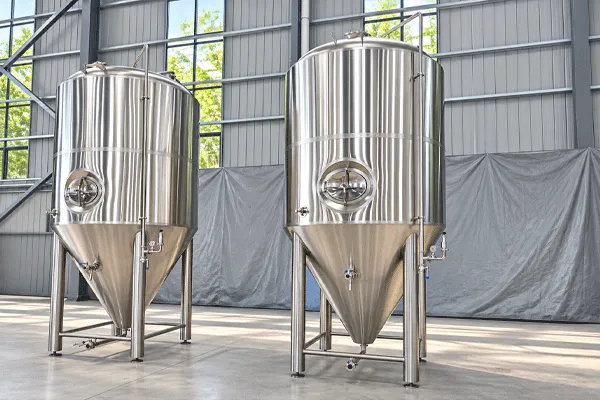
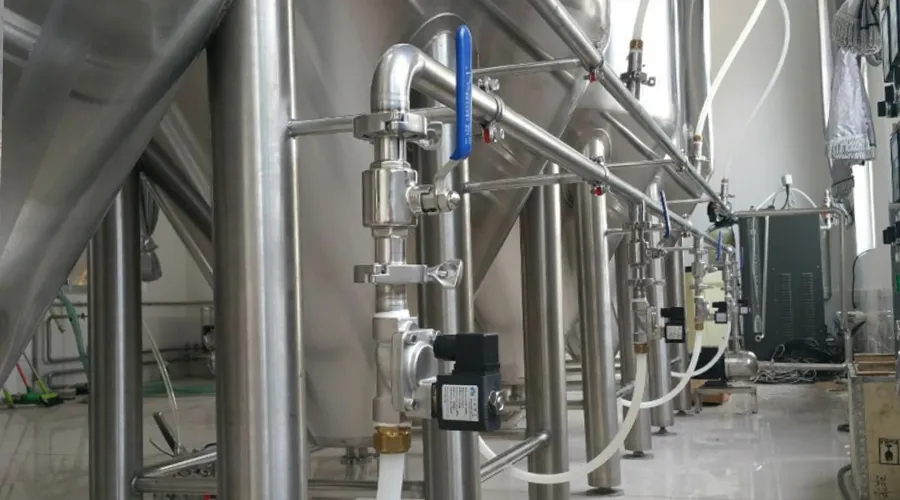
Fermentation is where yeast creates alcohol, aroma, and many key flavor compounds. A stable fermentation temperature helps reduce off-flavors and supports a cleaner result. This is why a conical tank with cooling jacket is often a major upgrade from a simple container.
The Brewers Association places strong focus on quality programs, process improvement, and preventive maintenance as production increases. Its quality resources note that better maintenance can improve process quality and reduce downtime. You can read more from the Brewers Association Quality Resource Hub.
For beverage producers beyond beer, this is also important. Kombucha, cider, wine, cold brew coffee, and other fermented drinks all benefit from clean tanks, controlled cooling, and sanitary transfer. Good equipment does not replace skill. It helps skill become repeatable.
How Can Compact Nano and Pilot Systems Support Craft Beer Growth?
A compact nano system can help a startup test recipes, train staff, and serve a small taproom. It can also help a larger brewery develop seasonal products without interrupting main production. This is useful when market demand changes quickly.
According to the Brewers Association, U.S. beer production and imports were down 5.7% in 2025, while craft brewer volume sales declined 4%. Craft still held a 13.4% share of the U.S. beer market by volume. These numbers show that the market is more competitive, not dead. You can review the data on the Brewers Association National Beer Sales & Production Data.
For investors, this means equipment planning must be careful. A small system can reduce risk, but it should not block growth. A smart design leaves space for more tanks, better cooling, packaging, and future beverage lines.
What Accessories, Chiller Options, and Control Panel Features Are Worth Considering?
A chiller is one of the most important parts of the process. An immersion chiller may work for small homebrew volumes, but a plate heat exchanger or glycol system is usually better for commercial work. Fast cooling reduces risk and helps move the batch into the fermenter at the right time.
Useful accessories may include sight glass, sample valve, pressure gauge, spray ball, manway, temperature probe, CIP port, transfer arm, and sanitary fittings. Each accessory should make work easier, not only make the system look advanced.
The control panel should be simple to read and safe to use. Operators need clear buttons, stable sensors, and logical alarms. In professional-grade systems, automation can support consistency, but manual operation should still be possible when needed.
What Are the Pros and Cons of Homebrew-Style Systems vs Professional-Grade Brewery Equipment?
Homebrew-style equipment has clear benefits. It is lower cost, easy to move, and fast to learn. It is good for recipe testing, small events, and early training. For a beginner, this can be a helpful first step.
The limits are also clear. Small systems may have weaker pumps, slower heating, less sanitary design, and limited capacity. They may not support daily production, strong cleaning chemicals, or commercial inspection needs. This is where pros and cons matter.
Professional stainless steel brewery equipment is built for long service life, cleaning, pressure control, and higher production. Standards matter. 3-A Sanitary Standards explains that sanitary standards and accepted practices focus on the design, fabrication, installation, and cleanability of food equipment and systems. You can learn more from 3-A Sanitary Standards and Accepted Practices.
How Should Investors Plan a Turnkey Brewery or Beverage Project?
A turnkey brewery is not just a list of tanks. It is a complete plan that includes capacity, utilities, layout, installation, training, and after-sales service. For global B2B customers, this reduces project risk.
Before choosing equipment, investors should answer five questions:
- What is the target monthly output?
- What drink types will be produced?
- How many SKUs are planned in the first year?
- Is the business focused on taproom sales, distribution, or contract production?
- What space, power, steam, water, drainage, and cooling are available?
Regulation also matters. In the United States, the TTB provides brewery operation requirements related to tax, bonds, records, and legal operation. Project owners should review official guidance such as the TTB Requirements for Brewery Operations and consult local professionals.
Example Project Planning Model
| Project Type | Common Goal | Suggested Equipment Focus |
| Пивоварня-паб | Fresh drinks for on-site sales | Compact brewhouse, bright tank, taproom flow |
| Микропивоварня | Local distribution and taproom | Scalable cellar, packaging space, CIP |
| Kombucha startup | Controlled fermentation | Sanitary tanks, cooling, gentle transfer |
| Winery or cidery | Fruit-based beverage production | Fermentation tanks, clarification, storage |
| Distillery | Mash and fermentation before distilling | Mash system, ferment tanks, transfer pumps |
| Contractor project | Full plant delivery | Layout, utilities, installation support |
Why Should Sanitary Stainless Steel Design Be a Priority?
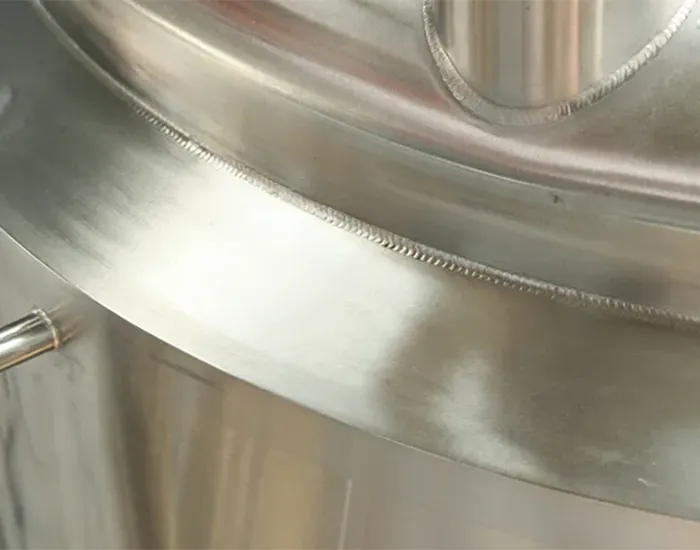
Beverage equipment must be easy to clean. Dead corners, rough welds, poor valve placement, and low-quality fittings can trap liquid and create quality problems. That is why sanitary stainless steel design is not a luxury. It is a basic requirement.
For higher hygienic needs, ASME BPE covers design, materials, fabrication, inspection, testing, and certification for bioprocessing and other hygienic equipment applications. While not every brewery project requires ASME BPE, the principle is useful: clean design protects product quality. See the ASME BPE overview.
As a manufacturing plant, we pay close attention to weld quality, polishing, tank geometry, jacket design, pipe routing, and cleaning access. These details are not always visible in a photo, but they matter every day in production.
How Can a Better System Improve Customer Experience and Long-Term Growth?
Good equipment helps the beverage business serve better drinks with less stress. It reduces downtime, supports cleaner flavor, and helps staff follow the same steps every time. The customer may never see the brewhouse, but they can taste the result.
The Brewers Association Draught Beer Quality Manual focuses on line cleaning, draught system design, pressure balance, gas balance, pouring, and sanitation. Its goal is to help beer reach the glass as the brewer intended. You can find the resource through the Brewers Association Draught Beer Quality Manual.
For business owners, this connects equipment to sales. Better production supports better service. Better service supports repeat customers. Repeat customers support sustainable growth.
FAQs About Beer Brewing Systems
What size beer brewing system should a startup choose?
A startup should choose capacity based on sales plan, tap count, distribution goals, and available space. Many brewpubs begin with a small to mid-size system and add бродильные ёмкости later. The safest choice is a system that supports current demand but leaves room for growth.
Is an all-in-one system enough for a commercial brewery?
Usually, no. An all-in-one system is useful for testing, training, and very small production, but commercial brewing needs stronger cleaning, higher output, better sanitary design, and reliable service support. It can be a first step, not the final plant.
What is the difference between BIAB and a traditional brewhouse?
BIAB means “brew in a bag.” It uses one main vessel and a bag or basket to hold the grain. A traditional brewhouse separates major steps into dedicated tanks, which can improve workflow, scale, and process control.
Why is stainless steel used for brewery tanks?
Stainless steel is strong, cleanable, and corrosion resistant. It also supports sanitary welding and polished surfaces. For beverage production, this helps protect flavor and makes cleaning easier.
How important is a chiller in the brewing process?
A chiller is very important because hot wort must cool quickly before yeast is added. Slow cooling can increase risk and reduce production speed. Commercial systems often use plate heat exchangers and glycol cooling for better control.
Can one brewery system produce beer, cider, kombucha, and cold brew coffee?
Yes, but the system must be planned carefully. Different beverages may need different fermentation temperatures, cleaning methods, tank pressure ratings, and transfer paths. A customized design is better than forcing every product through the same workflow.
Основные выводы
- A beer brewing system should match your recipe, room, capacity, labor, and growth plan.
- All-in-one systems are useful for learning and testing, but commercial projects need stronger engineering.
- All-grain production gives more flavor control, but it requires stable process management.
- Mash temperature, wort flow, cooling, and fermentation control have a direct effect on quality.
- Pumps, hoses, drains, baskets, and valves should be chosen for safety and cleanability.
- Sanitary stainless steel design protects product quality and supports long-term operation.
- A turnkey project should include layout, utilities, installation, training, and after-sales support.
- For B2B beverage producers, the right equipment is not only a purchase. It is a business foundation.