Water quality problems are becoming more common. Tap water may contain minerals, impurities, or unwanted contaminants that affect taste and daily use. Many families and businesses need a reliable way to produce cleaner water without depending only on bottled water. A water distiller offers a simple solution by using natural evaporation and condensation to create purified water.
A water distiller is a device that uses heating and condensation to remove impurities from water. It works by turning water into steam, separating contaminants, and collecting condensed vapor as distilled water. Countertop water distillers are popular for home use because they provide fresh, clean water conveniently.
План статьи
What Is a Water Distiller and How Does It Work?
How Does a Water Distiller Work to Produce Pure Water?
What Does a Water Distiller Remove From Tap Water?
Why Are Water Distillers for Home Becoming Popular?
What Is a Countertop Water Distiller and Who Needs It?
How Is Distilled Water Used in Daily Life and Industry?
What Are the Basics of a Water Distiller Machine?
How to Choose the Right Water Distiller for Your Needs?
How to Maintain a Water Distiller for Long-Term Performance?
Water Distiller vs Water Filter: Which Water Purification Method Is Better?
What Is a Water Distiller and How Does It Work?
A water distiller is a water purification device designed to produce clean water through the process of evaporation and condensation. Unlike ordinary filtration systems that only trap some particles, water distillation separates water from many dissolved solids, minerals, and impurities.
The principle behind a water distiller is simple. Water is placed into a boiling chamber, where heat is applied until the water reaches boiling temperature. The water vapor then moves through a cooling system, where it turns back into liquid form. The collected liquid is distilled water.
Modern manufacturers develop different types of equipment, including compact home models and larger commercial water distillation systems. A countertop water distiller is designed for personal use, while industrial units can support laboratories, medical facilities, food production, and beverage applications.
For beverage manufacturers, water quality directly affects product taste, stability, and consistency. This is why many professional facilities pay close attention to water treatment before brewing or beverage production.
| Type | Main Application | Typical User |
|---|---|---|
| Countertop water distiller | Household water production | Families, offices |
| Automatic water distiller | Continuous operation | Small businesses, laboratories |
| Commercial water distillation system | Large-scale production | Beverage factories, industries |
A reliable water distiller provides a controlled method to produce purified water without relying entirely on external water suppliers.
How Does a Water Distiller Work to Produce Pure Water?
Understanding how a water distiller work helps users choose the right equipment. The process is based on a natural cycle that has existed for millions of years.
During operation, incoming water enters the boiling chamber. When the water is heated, the molecules change from liquid into vapor. Because many contaminants cannot evaporate at the same temperature, they remain behind while the cleaner vapor moves forward.
The main stages include:
- Water filling
Source water is added into the boiling chamber. - Heating process
Water is heated until it becomes steam. - Steam separation
Water vapor moves away from heavier contaminants. - Cooling and condensation
The vapor becomes liquid again. - Collection process
Distilled water is collected for use.
The process of water distillation mimics the way nature naturally purifies and redistributes water. Rain formation follows a similar cycle where evaporation removes many impurities before condensation occurs.
A quality water distiller provides several benefits:
- Stable water purity
- Reduced dependence on bottled water
- Better control over water quality
- Convenient access to clean water at home or work
Many users choose a stainless steel water distiller because stainless steel provides durability, corrosion resistance, and easy cleaning. For example, a 304 stainless steel countertop distiller is commonly selected for long-term household applications.
What Does a Water Distiller Remove From Tap Water?
Many people ask: What can a water distiller remove?
The answer depends on the water source and equipment design. Generally, a water distiller removes many dissolved substances and contaminants by separating water vapor from unwanted materials.
A quality water distiller may remove:
| Removed Substance | Explanation |
|---|---|
| Heavy metals | Metals that remain in the boiling chamber |
| Dissolved minerals | Calcium and magnesium from hard water |
| Many microorganisms | Reduced through boiling and separation |
| Chemical residues | Certain non-volatile compounds |
| Unwanted particles | Left behind during evaporation |
For households using tap water, mineral buildup and unpleasant taste are common concerns. Hard water contains higher levels of calcium and magnesium, which can create scale inside appliances.
A water distiller does not simply filter water. Instead, it changes water into vapor and collects the purified liquid afterward. This allows users to create cleaner water without depending only on a traditional water filter system.
However, users should understand that no single water purification method solves every possible water problem. Proper testing of the water source is always recommended before selecting equipment.
Why Are Water Distillers for Home Becoming Popular?
Demand for water distillers for home has increased because people want more control over their drinking water quality.
Many households are concerned about inconsistent municipal water quality, plastic waste from bottled water, and the long-term cost of purchasing packaged water. A home water distiller provides a reusable solution that allows families to produce distilled water whenever needed.
Compared with bottled water, producing distilled water at home offers several advantages:
- No repeated plastic bottle purchases
- Lower long-term operating cost
- Convenient water production
- Better control over water handling
A typical countertop model may produce several liters per cycle, depending on its capacity. Some models are designed around a gallon capacity, making them suitable for daily household use.
Common users include:
- Families who want cleaner drinking water
- Offices requiring purified water
- People using steam appliances
- Hobby users needing mineral-free water
- Small laboratories
A home water distiller is especially useful in areas where tap water contains high mineral content. It helps users produce fresh water whenever needed instead of storing large amounts of bottled water.
For beverage producers and startups, water quality is even more important. Coffee producers, breweries, kombucha companies, and beverage brands often require controlled water characteristics because water directly influences flavor and production consistency.
What Is a Countertop Water Distiller and Who Needs It?
A countertop water distiller is a compact water distillation machine designed to fit on a kitchen counter, office desk, or small workspace.
Compared with large industrial systems, countertop models focus on convenience and simple operation. They normally include a heating chamber, condenser, collection container, and control panel.
A typical countertop distiller offers:
| Особенность | Benefit |
|---|---|
| Compact size | Easy installation |
| Automatic operation | Simple daily use |
| Stainless steel structure | Durable and hygienic |
| Low maintenance design | Convenient cleaning |
Many modern models include automatic control functions. An automatic water distiller can manage heating cycles, temperature control, and shutoff functions without constant monitoring.
For example, a 750w countertop water purifier or a 750w distilled water maker machine is commonly designed for efficient home operation while maintaining stable performance.
When choosing a countertop distiller, users should consider:
- Daily water demand
- Material quality
- Energy consumption
- Cleaning requirements
- Production speed
A good countertop water solution should balance convenience, durability, and water purity.
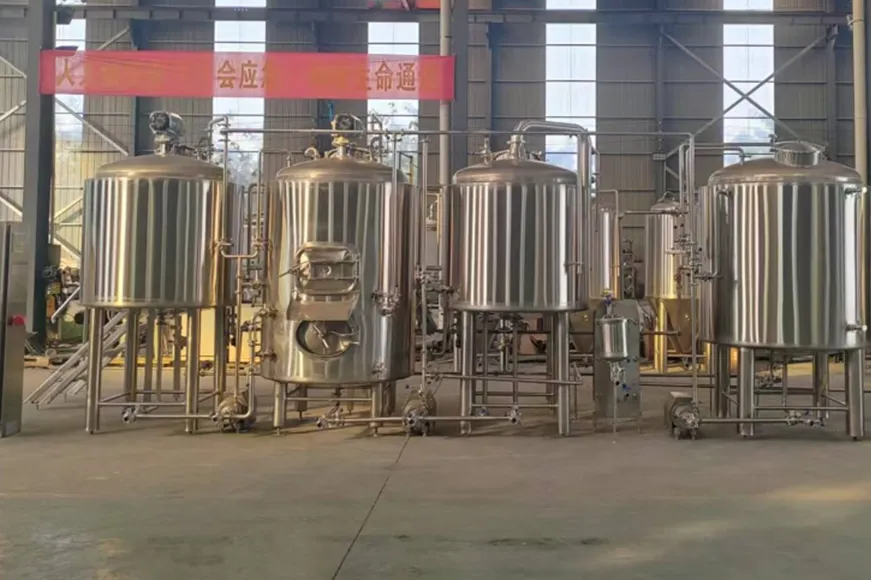
For professional applications, manufacturers also develop customized stainless steel equipment solutions. Beverage companies often require larger systems with precise control, sanitary design, and integration with production lines.
How Is Distilled Water Used in Daily Life and Industry?
Many people know distilled water as a type of clean drinking water, but its applications extend far beyond household use. Because it contains fewer dissolved minerals and impurities, distilled water can be used in many situations where water quality control is important.
For home users, common applications include drinking, cooking, humidifiers, steam irons, and certain appliances. Some users choose use distilled water because it helps reduce mineral deposits and extends equipment life.
In commercial industries, water quality is often directly connected with product performance. Breweries, beverage factories, laboratories, and food manufacturers carefully manage water composition because water affects taste, processing stability, and final product quality.
Common applications include:
| Заявка | Why Distilled Water Is Used |
|---|---|
| Drinking water | Provides controlled water quality |
| Coffee production | Reduces mineral impact on flavor |
| Laboratory work | Supports accurate testing |
| Medical equipment | Helps prevent mineral buildup |
| Beverage production | Improves consistency |
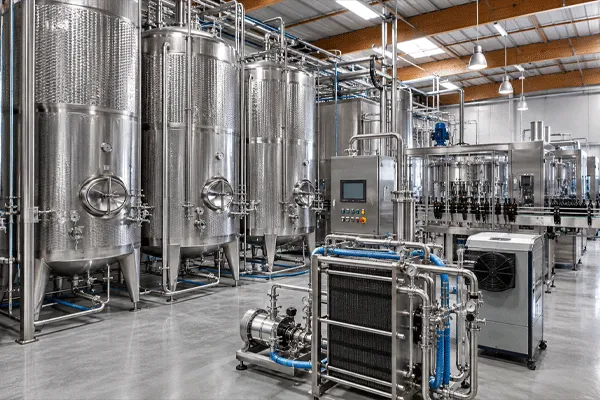
For beverage manufacturers, controlling water quality is a key part of production planning. A professional brewery or beverage factory may combine stainless steel processing equipment with advanced water treatment systems to maintain stable production standards.
Water is one of the main ingredients in beverages. Whether producing beer, kombucha, cider, cold brew coffee, or functional drinks, consistent water quality helps companies achieve repeatable results.
A well-designed water distillation system can support businesses that require reliable purified water while reducing dependence on external water suppliers.
What Are the Basics of a Water Distiller Machine?
Understanding the basics of a water distiller helps users understand how equipment performance is determined.
A complete water distiller machine usually contains several important components:
| Компонент | Function |
|---|---|
| Boiling chamber | Heats incoming water |
| Heating element | Provides energy for evaporation |
| Condenser | Cools vapor into liquid |
| Collection container | Stores distilled water |
| Control system | Manages operation |
The boiling chamber is one of the most important parts because it directly contacts the source water. High-quality machines often use stainless steel materials to improve durability and hygiene.
A stainless steel water distiller is popular because stainless steel provides:
- Corrosion resistance
- Easy cleaning
- Long service life
- Stable performance
During operation, water is heated until water evaporates and changes into vapor. The vapor travels through the cooling system, where distilled water is collected.
Different machines have different capacities. A small household model may produce a few liters daily, while commercial equipment can produce much larger volumes.
Important specifications include:
- Вместимость
- Power consumption
- Material quality
- Production speed
- Automatic control functions
For example, a machine designed for home use may focus on convenience, while industrial customers may require a customized water purification system integrated into a complete beverage production line.
How to Choose the Right Water Distiller for Your Needs?
Choosing the right water distiller depends on your water requirements, usage environment, and expected output.
Before buying a water, users should evaluate several factors instead of choosing only based on price.
1. Consider Water Production Capacity
Capacity is one of the most important factors.
A household may only need several liters per day, while a commercial customer may need continuous production.
Common capacity considerations:
- Small countertop models: personal use
- Medium systems: offices and small businesses
- Large systems: industrial applications
If you need a larger output, check the production rate, such as gallon capacity or gallons produced per cycle.
2. Check Material Quality
Material directly affects durability.
A high-quality 304 stainless steel countertop distiller provides excellent corrosion resistance and is suitable for long-term operation.
Stainless steel equipment is especially important in beverage applications because hygiene standards are strict.
3. Compare Automatic Functions
An automatic water distiller reduces manual operation.
Useful features include:
- Automatic shutoff
- Temperature monitoring
- Overheating protection
- Easy operation
These functions improve safety and user experience.
4. Understand Your Water Source
Different water sources create different challenges.
For example:
- Hard water creates mineral deposits
- High mineral content increases cleaning frequency
- Poor-quality water may require additional treatment
Understanding your water source helps determine whether you need only distillation or a complete water purification solution.
How to Maintain a Water Distiller for Long-Term Performance?
Proper water distiller maintenance is essential for stable performance and longer equipment life.
Although distillation removes many contaminants, minerals and residues may remain inside the boiling chamber. Regular cleaning prevents buildup and keeps the equipment operating efficiently.
Recommended maintenance practices include:
Clean the Boiling Chamber Regularly
Minerals from hard water can accumulate over time. Cleaning the chamber helps maintain heating efficiency.
Replace or Clean Filters When Required
Some models include additional filters to improve performance. Follow manufacturer recommendations for replacement schedules.
Check Components
Inspect:
- Heating elements
- Condenser pipes
- Collection containers
- Electrical connections
Keep the Equipment Dry When Not Used
After cleaning, allow components to dry completely before storage.
A properly maintained machine can provide reliable performance for years.
For commercial users, maintenance planning is even more important. Beverage factories, breweries, and processing facilities usually require preventive maintenance schedules to avoid production interruptions.
Professional equipment manufacturers often provide:
- Installation guidance
- Operation training
- Spare parts support
- Technical assistance
This service approach helps customers reduce downtime and improve production reliability.
Water Distiller vs Water Filter: Which Water Purification Method Is Better?
Many consumers compare a water filter with a water distiller because both improve water quality, but they use different methods.
A water filter works by physically trapping particles and reducing certain substances. A water distiller uses evaporation and condensation to separate water from many dissolved materials.
| Comparison | Water Distiller | Water Filter |
|---|---|---|
| Main process | Evaporation and condensation | Фильтрация |
| Removes minerals | Usually yes | Depends on filter type |
| Energy required | Requires heating | Usually no heating |
| Вывод | Дистиллированная вода | Фильтрованная вода |
| Maintenance | Cleaning chamber | Replacing filters |
A water filter system can be convenient for daily household use, especially when users mainly want improved taste.
However, a water distiller provides a different approach. It creates water through separation rather than only filtering.
The best choice depends on your goal:
- Need basic improvement? A filter may be enough.
- Need higher water purity? Consider distillation.
- Need production-grade water? Choose a professional water purification system.
For beverage manufacturers, breweries, and commercial users, selecting the correct water treatment method is critical because water quality affects the entire production process.
How Does a Water Distiller Compare With Other Water Purification Methods?
Modern consumers have many choices, including reverse osmosis systems, bottled water, and traditional filters.
Each method has advantages.
| Method | Advantage | Limitation |
|---|---|---|
| Bottled water | Convenient | Higher cost and plastic waste |
| Water filter | Simple operation | Limited removal capability |
| Reverse osmosis | High purification | Requires filter replacement |
| Water distiller | Produces distilled water | Requires energy |
Water distillation has been used for generations because it follows a natural purification process.
A water distiller provides a way to produce water without depending on disposable bottles or complicated systems.
For companies, especially beverage startups and craft producers, water treatment decisions should match production goals.
A brewery producing premium products may require carefully controlled water characteristics. A beverage startup may need flexible equipment that can grow with future demand.
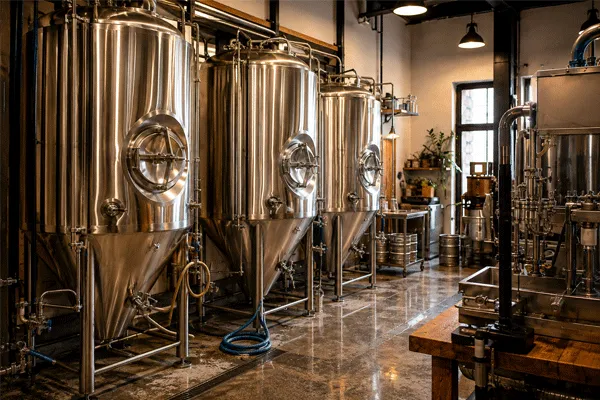
Manufacturers that provide customized stainless steel beverage equipment often help customers design complete solutions, including:
- Brewing systems
- Ферментационные баки
- Water treatment equipment
- Filling systems
- Production layout planning
This integrated approach reduces project risk and improves operational efficiency.
Frequently Asked Questions About Water Distillers
Is distilled water safe for drinking?
Yes, drinking distilled water is generally considered safe when produced and stored properly. Many people choose distilled water because it contains fewer dissolved minerals and impurities.
However, overall diet and mineral intake should also be considered.
How long does a water distiller take to produce water?
The production time depends on the machine size, heating power, and capacity.
A small countertop model may take several hours to produce a batch, while commercial systems can produce much larger amounts faster.
Can a water distiller remove hard water problems?
Yes. A water distiller can significantly reduce minerals associated with hard water because many minerals remain behind during evaporation.
What is the difference between distilled water and purified water?
Purified water describes water that has gone through a treatment process, while distilled water specifically uses evaporation and condensation.
Distillation is one type of water purification method.
How much electricity does a water distiller use?
Energy consumption depends on capacity and design.
For example, a small 750w water unit is designed for household operation, while larger commercial systems require different power configurations.
Can I make distilled water at home?
Yes. A home system allows users to make distilled water conveniently. Many people use a countertop distiller to produce distilled water at home for drinking and household applications.
Final Summary: Key Things to Remember About Water Distillers
- A water distiller produces clean water through evaporation and condensation.
- The equipment separates water from many dissolved minerals and contaminants.
- A countertop water distiller is a practical choice for homes and small offices.
- Commercial users should consider customized water treatment solutions based on production needs.
- Stainless steel construction improves durability, hygiene, and service life.
- Water distillation is different from traditional filtration and offers unique purification advantages.
- Regular water distiller maintenance helps maintain stable performance.
- Choosing the right equipment depends on water source, capacity requirements, and application.
- Beverage manufacturers, breweries, and food producers benefit from reliable water quality control.
- A professional equipment supplier can provide customized solutions from water treatment to complete beverage production systems.